Unisciti a noi in un viaggio nel mondo dei libri!
Aggiungi questo libro allo scaffale
Grey
Scrivi un nuovo commento Default profile 50px
Grey
Iscriviti per leggere l'intero libro o leggi le prime pagine gratuitamente!
All characters reduced
Split Ticket Voting - How Voters Shape Politics by Choosing Across Party Lines - cover

Split Ticket Voting - How Voters Shape Politics by Choosing Across Party Lines

Fouad Sabry

Casa editrice: One Billion Knowledgeable

  • 0
  • 0
  • 0

Sinossi

Are you passionate about electoral behavior? Explore "Split Ticket Voting," a vital contribution to Political Science that unveils voter decision-making and political strategy in modern democracies. This book is tailored for professionals, students, and anyone eager to deepen their understanding of electoral dynamics.
 
1: Split-ticket Voting: Examine the concept of split-ticket voting, where voters select candidates from different parties, and its electoral impact.
 
2: Plurality Voting: Learn how plurality voting works, along with its pros and cons compared to other methods.
 
3: Proportional Representation: Discover how proportional representation affects political diversity and party systems.
 
4: Electoral Fusion: Explore electoral fusion, where multiple parties support one candidate, and its strategic implications.
 
5: Solid South: Investigate the Solid South's historical significance and its lasting impact on U.S. politics.
 
6: Southern Democrats: Analyze the evolution of Southern Democrats and their role in American political landscapes.
 
7: Elections in Georgia: Gain insights into Georgia's electoral history and political trends.
 
8: Elections in California: Understand the unique features of California's elections and their national implications.
 
9: Politics of Oklahoma: Examine Oklahoma's political dynamics and election patterns for a regional perspective.
 
10: Elections in New Hampshire: Learn about New Hampshire's influential elections and their impact on national narratives.
 
11: Australian Senate: Compare U.S. practices with the Australian Senate’s electoral system and its results.
 
12: 2004 United States Elections: Review key moments of the 2004 elections and their future implications.
 
13: 2010 United States Elections: Analyze shifts in voter behavior and party strategies during the 2010 elections.
 
14: Elections in Vermont: Understand Vermont's unique electoral trends and political culture.
 
15: 2012 United States Elections: Examine factors that influenced the 2012 elections and their political impact.
 
16: 1996 United States Elections: Revisit the 1996 elections and their historical context for later developments.
 
17: Elections in Alabama: Investigate electoral trends and shifts in Alabama's political landscape.
 
18: 1860 United States Elections: Explore the pivotal role of the historic 1860 elections in American history.
 
19: 1853–54 Massachusetts Gubernatorial Election: Delve into this mid-19th century election's implications for Massachusetts politics.
 
20: 1851–52 Massachusetts Gubernatorial Election: Analyze the earlier Massachusetts gubernatorial election and its significance.
 
21: 2022 Maryland Elections: Review trends and developments in the 2022 Maryland elections.
 
"Split Ticket Voting" offers essential insights into electoral behavior, making it a valuable resource for understanding political dynamics.
Disponibile da: 16/10/2024.
Lunghezza di stampa: 268 pagine.

Altri libri che potrebbero interessarti

  • German Late War Armored Fighting Vehicles - World War II AFV Plans - cover

    German Late War Armored Fighting...

    George Bradford

    • 0
    • 0
    • 0
    For modelers and WWIl enthusiasts, a collection of scale drawings of German combat vehicles.   For armor modeling and military vehicle enthusiasts, this volume is filled with fine-scale drawings of Germany’s late war armored vehicles including:     • Pz. Kpfw. V Panther Tank  • Pz. Kpfw. VI Tiger I and II  • Pz. Jager Elephant Tank Destroyer  • Sd.Kfz. 234/2 “Puma” Armored Car  • Jagdtiger with Henschel suspension  • And dozens more . . . 
    Mostra libro
  • You Got In! Now What? - 100 Insights into Finding Your Best Life in College - cover

    You Got In! Now What? - 100...

    James T. Hamilton

    • 0
    • 0
    • 0
    Once you've been admitted to college, the next step is to develop a strategy of how to find your best life there. But for decades, Professor James T. Hamilton has seen students struggle with their college journey. Some avoid challenging experiences, follow a path of familiar expectations, and rely on shortcuts. Others aim for perfection, ignore their friends and health, labor over what subjects to study, and neglect spending time outside the classroom. The pressure to make college valuable and interesting can feel overwhelming. 


    If only students could learn how others have navigated these challenges. You could ask alums to look back on friendships and college-to-career paths and provide advice. Now, you don't have to wish because You Got In! Now What? tackles the burning questions you have. 


    Hamilton designs lessons to help you find purpose, manage time, maintain friendships and family relationships, stay physically and mentally healthy, and choose classes, majors, and careers. Each lesson is accompanied by an essay based on research and reflections from students, alums, and professors to provide observations for how you can embrace the best that college has to offer. With these insights, you'll explore new ideas, meet people, have adventures, and most importantly, beyond just earning a degree, get an education.
    Mostra libro
  • Hate Speech on Social Media: A Global Approach - cover

    Hate Speech on Social Media: A...

    Branco Di Fátima, Allen...

    • 0
    • 0
    • 0
    This book explores the nature of hate speech on social media. Readers will find chapters written by 21 authors from 18 universities or research centers. It includes researchers from 11 countries, prioritizing a diversity of approaches from the Global North and Global South – Brazil, Cyprus, Ethiopia, Germany, Nigeria, Portugal, South Africa, Spain, Switzerland, Turkey, and the USA. The analyses herein involve the realities in an even larger number of countries, given the transnational approach of some of these studies.
    One can find a preview of the chapters at the beginning of the book, with abstracts organized in a separate section. It is evident that the authors study the impact of recent events on hate speech – the Covid-19 pandemic, Russia- Ukraine war, the refugee crisis – and recurrent attacks on minority groups such as women, immigrants, or the LGBTQ+ community. The authors employ classic and digital research methods, using quantitative and qualitative data gathered from platforms like Telegram, Facebook, Instagram, Twitter, and YouTube. As a result, readers will encounter taxonomic proposals, new methodological approaches, theoretical frameworks, and mapping of behavioral patterns.
    Mostra libro
  • Honesty: The Light of Truth - Living Authentically and Transparently - cover

    Honesty: The Light of Truth -...

    Esther Jameson

    • 0
    • 0
    • 0
    Honesty is often considered a fundamental virtue, a cornerstone upon which trust, respect, and meaningful relationships are built. At its core, honesty means being truthful with oneself and others. It is the practice of aligning our words, actions, and thoughts with the truth, regardless of how uncomfortable or inconvenient it may be. Without honesty, connections with others become shallow, and personal integrity is compromised. In this chapter, we explore the foundational aspects of honesty and its significance in both our personal lives and society. 
    To understand honesty fully, we must first examine what it entails. It is not merely about avoiding lies; it is about living in alignment with the truth, expressing ourselves openly, and being transparent in our actions. Honesty goes beyond just telling the truth when asked—it involves a deep commitment to truth in every aspect of our lives. This means that our words, our actions, and our thoughts should reflect what is genuinely real, without embellishment or deceit. 
    The importance of honesty cannot be overstated. When we are honest, we cultivate trust—both with others and within ourselves. Trust is the bedrock of any healthy relationship, whether personal or professional. Without honesty, trust erodes, leading to misunderstandings, broken relationships, and a sense of disconnection. Moreover, honesty fosters a sense of clarity and peace within ourselves. When we live truthfully, we are no longer burdened by the weight of deceit or the need to maintain false facades. We are free to be ourselves, unencumbered by the fear of being exposed or found out.
    Mostra libro
  • The Babylon Bee Guide to Democracy - cover

    The Babylon Bee Guide to Democracy

    The Babylon Bee

    • 0
    • 0
    • 0
    In this book, America's favorite satirists take you into a world you might have thought was beyond parody—politics. From closed-door meetings of bureaucrats deciding the fates of millions to preposterous lies from the campaign trail, The Bee skewers our political overlords with matchless wit. In this guide, you’ll learn how to rig an election, how to stage an insurrection, which political party you should join, and more—everything you need to fully participate in the worst political system of all time (except for all the others).
    Mostra libro
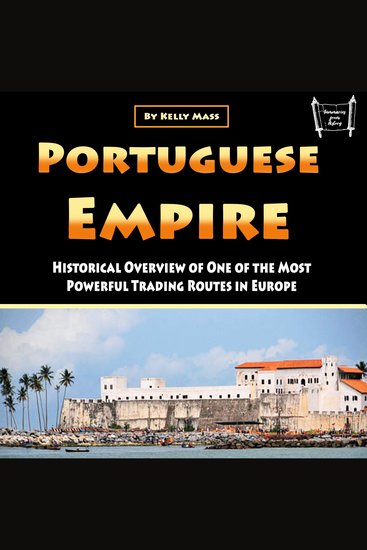
  • Portuguese Empire - Historical Overview of One of the Most Powerful Trading Routes in Europe - cover

    Portuguese Empire - Historical...

    Kelly Mass

    • 0
    • 0
    • 0
    The Portuguese Empire comprised a vast network of colonies, factories, and overseas territories established by Portugal. Beginning with the capture of Ceuta in North Africa in 1415 and continuing until the handover of sovereignty over Macau to China in 1999, it stands as one of the longest-lasting empires in European history. The empire's roots can be traced back to the 15th century, and by the early 16th century, it had established a global presence with strategic bases in North and South America, Africa, Asia, and Oceania. 
    The rise of the Portuguese Empire coincided with the dawn of the Age of Discovery, a period characterized by exploration and expansion. Following the Reconquista, which concluded in 1492, Portuguese sailors embarked on expeditions along the African coast and the Atlantic archipelagos starting in 1418. Leveraging advancements in navigation, mapping, and maritime technology, particularly the caravel—a vessel adept at oceanic travel—they aimed to uncover a sea route to the lucrative spice trade of the East. Key milestones during this era included Bartolomeu Dias’s successful rounding of the Cape of Good Hope in 1488 and Vasco da Gama’s historic arrival in India in 1498. Around 1500, Pedro Álvares Cabral arrived at the shores of Brazil, either by chance or as part of a broader imperial strategy.
    Mostra libro