Unisciti a noi in un viaggio nel mondo dei libri!
Aggiungi questo libro allo scaffale
Grey
Scrivi un nuovo commento Default profile 50px
Grey
Iscriviti per leggere l'intero libro o leggi le prime pagine gratuitamente!
All characters reduced
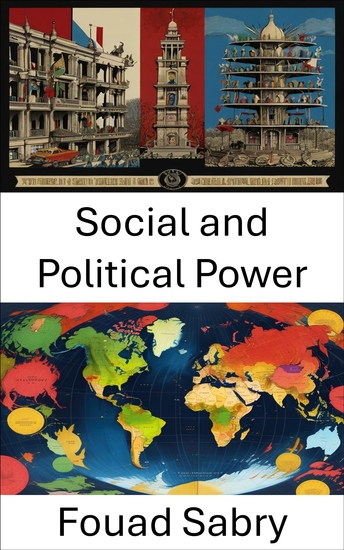
Social and Political Power - Exploring Influence and Authority in Modern Governance - cover

Social and Political Power - Exploring Influence and Authority in Modern Governance

Fouad Sabry

Casa editrice: One Billion Knowledgeable

  • 0
  • 0
  • 0

Sinossi

Unlock the intricate world of power dynamics with Social and Political Power, an essential resource in the Political Science series. This book offers a deep understanding of how social hierarchies and political influence shape governance and society. It covers leadership, psychological manipulation, and the nuances of power in various social structures. Discover key strategies and insights into the forces that drive societal change.
 
1: Power (Social and Political): Understand how social and political power influences decisions and societal frameworks.
 
2: Persuasion: Learn how persuasion shapes public opinion and policymaking.
 
3: Social Psychology: Explore social psychology’s role in political behavior.
 
4: Leadership: Investigate how leadership styles affect political and social systems.
 
5: Interpersonal Relationships: Examine how personal dynamics influence political and social power.
 
6: Attitude (Psychology): Understand how attitudes form and shape political and social actions.
 
7: Abuse: Discover the impact of power abuse on individuals and institutions.
 
8: Social Influence: Analyze how social influence drives political movements and societal change.
 
9: Locus of Control: Examine how control affects responses to social and political forces.
 
10: Political Psychology: Understand cognitive processes behind political beliefs and actions.
 
11: Social Dominance Orientation: Learn about social dominance’s role in perpetuating hierarchies.
 
12: Social Psychology (Sociology): See how societal structures influence psychological behaviors.
 
13: Compliance (Psychology): Explore compliance in social and political settings.
 
14: French and Raven’s Bases of Power: Study French and Raven’s power bases and their applications.
 
15: Manipulation (Psychology): Investigate psychological manipulation’s role in personal and political relationships.
 
16: Traumatic Bonding: Understand traumatic bonding’s impact on power and relationships.
 
17: Interdependence Theory: Explore mutual influence between individuals and institutions.
 
18: Conflict (Process): Analyze conflict’s role in power struggles and resolutions.
 
19: Abusive Power and Control: Examine the destructive effects of abusive power on governance.
 
20: Machiavellianism (Psychology): Study Machiavellianism’s role in political manipulation.
 
21: Dual Strategies Theory: Understand dual strategies theory in navigating power dynamics.
 
This book goes beyond basic concepts, offering deep insights into power in both overt and subtle forms. Gain a thorough comprehension of political science and the social mechanisms that shape power interactions in modern society.
Disponibile da: 15/10/2024.
Lunghezza di stampa: 346 pagine.

Altri libri che potrebbero interessarti

  • Rebel - My Escape from Saudi Arabia to Freedom - cover

    Rebel - My Escape from Saudi...

    Rahaf Mohammed

    • 0
    • 0
    • 0
    A gripping memoir of bravery and sacrifice by a young woman whose escape from her abusive family and an oppressive culture in Saudi Arabia captivated the world 
     In early 2019, after three years of careful planning, Rahaf Mohammed finally escaped her abusive family in Saudi Arabia—but made it only to Bangkok before being stripped of her passport. If forced to return home, she was sure she would be killed, like other rebel women in her country. As men pounded at the door of her barricaded hotel room, she opened a Twitter account. The teenager reached out to the world, and the world answered—she gained 45,000 followers in one day, and those followers helped her seek asylum in the West. 
    Now Rahaf Mohammed tells her remarkable story in her own words, revealing untold truths about life in the closed kingdom, where young women are brought up in a repressive system that puts them under the legal control of a male guardian. Raised with immense financial privilege but under the control of her male relatives—including her high-profile politician father—she endured an abusive childhood in which oppression and deceit were the norm. 
    Moving from Rahaf’s early days on the underground online network of Saudi runaways, who use coded entries to learn how to flee the brutalities of their homeland, to her solo escape to Canada, Rebel is a breathtaking and life-affirming memoir about one woman’s tenacious pursuit of freedom. 
    Mostra libro
  • The Art Of War - The Classic Work With Comprehensive Annotations From The Greatest Chinese Commentators - cover

    The Art Of War - The Classic...

    Lionel Giles, Sun Tzu

    • 0
    • 0
    • 0
    There are many versions of this work in English, and it is included as a useful reflection once one has pondered Daoism’s key texts. The title is properly ‘'Sun Tzu's Military Method'. It was written at the time of the Dao and Zhuang Zi, several centuries before the Lieh Tzu. For fifteen hundred years, it was part of China’s canonical strategic anthology, which became known as the Seven Military Classics.In modern Anglophone culture it is often the only strategic text someone has read, supplanting and exceeding the previous dominant strategic text (von Clausewitz’s On War, 1832, tr. 1874). Leaders from Mao Zedong and Takeda Shingen to Võ Nguyên Giáp and Norman Schwarzkopf Jr. have explicitly acknowledged the book’s influence on them. This translation is notably the second major version of it in English. It follows a translation by Everard Ferguson Calthrop that Giles found deeply contemptible, as one can see from the introduction. It is important to note that most scholars do not consider the Art of War one of the classic Daoist texts. While it is a product and application of the philosophy, it is more of an exegetical monograph than a consideration of the philosophical underpinnings of Daoism. Much like the Zhuang Zi, it takes the core ideas and realizes them in specific practical situations. It does so with such certainty that many contest it as a ‘true’ Daoist work. As you will see from the discussions embedded elsewhere, the key Daoist texts value contradiction and paradox far too much to be as procedurally simple as the Art of War is.It is not clear that this criticism is fair, however. A much kinder perspective is that Daoism’s great failure is in its apparent lack of any utilitarian or social value. While Confucianism provides a balance, Sun Tzu’s work attempts to build a more practical version of Daoism than the key texts allow for.
    Mostra libro
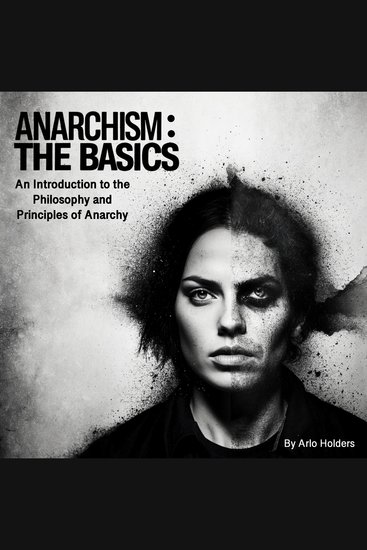
  • Anarchism: The Basics - An Introduction to the Philosophy and Principles of Anarchy - cover

    Anarchism: The Basics - An...

    Arlo Holders

    • 0
    • 0
    • 0
    Anarchism is often misunderstood as simply chaos or disorder, but it is, in fact, a political and philosophical ideology that seeks the abolition of unjust systems of power, particularly the state and hierarchical structures. At its core, anarchism advocates for a society based on voluntary cooperation, mutual aid, and the dismantling of coercive institutions. It emphasizes individual freedom, collective responsibility, and the rejection of authority in all its forms, whether governmental, economic, or social. 
    The roots of anarchist thought can be traced back to the early 19th century, with thinkers like Pierre-Joseph Proudhon, who famously declared that "property is theft," and later, figures like Mikhail Bakunin and Peter Kropotkin. These early anarchists critiqued the existing state, capitalism, and organized religion, arguing that they were inherently oppressive and exploitative. Anarchism, for these thinkers, was not just about rejecting government, but also about challenging societal norms that perpetuate inequality and injustice. 
    One of the most important aspects of anarchism is its emphasis on direct action and the creation of alternative systems of organization. Anarchists believe that meaningful change does not come from traditional political structures like elections or parliamentary processes, but through grassroots action and community-based solutions. This can involve protests, strikes, and other forms of resistance, but also the establishment of cooperative enterprises, mutual aid networks, and non-hierarchical communities.
    Mostra libro
  • End of Poverty The: Book Summary & Analysis - cover

    End of Poverty The: Book Summary...

    Briefly Summaries

    • 0
    • 0
    • 0
    This is a concise summary and analysis of The End of Poverty, by Jeffrey D. Sachs.
     
    It is not the original book and is not affiliated with or endorsed by Jeffrey D. Sachs.
     
    Ideal those seeking a quick and insightful overview.
     
    The End of Poverty explores the critical steps required to eradicate extreme poverty in the world within a generation. Combining economic expertise with compelling narratives, this transformative book outlines how targeted aid, investment in infrastructure, and sustainable development practices can uplift the world's poorest communities. From real-world success stories to bold strategies, this book offers an actionable roadmap to address global inequality and build a more equitable future.
    Mostra libro
  • Liberalism In the Classical Tradition - cover

    Liberalism In the Classical...

    Ludwig Von Mises

    • 0
    • 0
    • 0
    "Liberalism In the Classical Tradition" is a seminal work written by Ludwig von Mises, an Austrian economist and philosopher. Originally published in 1927 as "Die Gemeinwirtschaft: Untersuchungen über den Sozialismus" (Socialism: An Economic and Sociological Analysis), it was later translated into English in 1962. The book provides a comprehensive defense of classical liberalism, focusing on the principles of individual liberty, free markets, and limited government. Ludwig von Mises argues against socialism and interventionism, emphasizing the importance of private property, voluntary exchange, and the market process. He explores the economic and moral foundations of classical liberalism and critiques alternative political and economic systems. Mises contends that individual freedom and property rights are essential for human flourishing and the prosperity of society.
    Mostra libro
  • Social Justice for the Sensitive Soul - How to Change the World in Quiet Ways - cover

    Social Justice for the Sensitive...

    Dorcas Cheng-Tozun

    • 0
    • 0
    • 0
    Social justice work, we often assume, is raised voices and raised fists. But what does it look like for those of us who don't feel comfortable battling in the trenches? Sustaining justice work can be particularly challenging for the sensitive, and it requires a deep level of self-awareness. 


    In Social Justice for the Sensitive Soul, writer Dorcas Cheng-Tozun offers six possible pathways for sensitive types: Connectors: relational activists whose interactions and conversations build the social capital necessary for change; Creatives: artists and creators whose work inspires, sheds light, makes connections, and brings issues into the public consciousness; Record Keepers: archivists who preserve essential information and hold our collective memory and history; Builders: inventors, programmers, and engineers who center empathy as they develop society-changing products and technologies; Equippers: educators, mentors, and elders who build skills and knowledge within movements and shepherd the next generation of changemakers; and Researchers: data-driven individuals who utilize information as a persuasive tool to effect change and propose options for improvement. 


    Cheng-Tozun expands the possibilities of how to have a positive social impact, affirming the particular gifts and talents that sensitive souls offer to a hurting world.
    Mostra libro