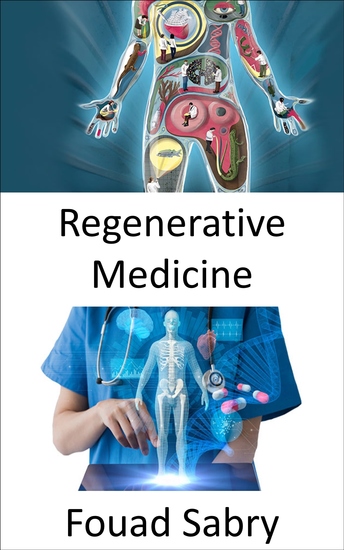
Regenerative Medicine - Restoring organ’s function lost due to aging disease damage or defects
Fouad Sabry
Casa editrice: One Billion Knowledgeable
Sinossi
What Is Regenerative Medicine

The "process of replacing, altering, or regenerating human or animal cells, tissues, or organs to restore or establish normal function" is what regenerative medicine is all about. This area offers the possibility of engineering damaged tissues and organs by activating the body's own repair systems to achieve effective healing in tissues or organs that were previously irreparable.

How You Will Benefit

(I) Insights, and validations about the following topics:

Chapter 1: Regenerative medicine

Chapter 2: Stem cell

Chapter 3: Artificial organ

Chapter 4: Hematopoietic stem cell transplantation

Chapter 5: Embryonic stem cell

Chapter 6: Cell therapy

Chapter 7: Cord blood

Chapter 8: Adult stem cell

Chapter 9: Stem-cell line

Chapter 10: Stem cell controversy

Chapter 11: Stem-cell therapy

Chapter 12: Amniotic epithelial cell

Chapter 13: Explant culture

Chapter 14: Nova Southeastern University College of Dental Medicine

Chapter 15: Neural tissue engineering

Chapter 16: Dental pulp stem cell

Chapter 17: Clinical uses of mesenchymal stem cells

Chapter 18: Regenerative endodontics

Chapter 19: Regeneration in humans

Chapter 20: Spinal cord injury research

Chapter 21: Shimon Slavin

(II) Answering the public top questions about regenerative medicine.

(III) Real world examples for the usage of regenerative medicine in many fields.

(IV) 17 appendices to explain, briefly, 266 emerging technologies in each industry to have 360-degree full understanding of regenerative medicine' technologies.

Who This Book Is For

Professionals, undergraduate and graduate students, enthusiasts, hobbyists, and those who want to go beyond basic knowledge or information for any kind of regenerative medicine.
Disponibile da: 05/10/2022.
Lunghezza di stampa: 313 pagine.