

Unisciti a noi in un viaggio nel mondo dei libri!
Aggiungi questo libro allo scaffale
Grey
Scrivi un nuovo commento Default profile 50px
Grey
Iscriviti per leggere l'intero libro o leggi le prime pagine gratuitamente!
All characters reduced
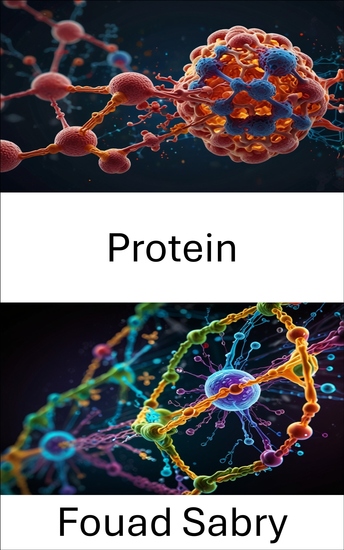
Protein - Structural Dynamics and Functional Interactions at the Molecular Level - cover

Protein - Structural Dynamics and Functional Interactions at the Molecular Level

Fouad Sabry

Casa editrice: One Billion Knowledgeable

  • 0
  • 0
  • 0

Sinossi

"Protein" is a comprehensive exploration of the molecular foundations of proteins, offering an indepth look at the biochemical and biophysical aspects of these crucial molecules. In the field of Molecular Biophysics, understanding proteins is not just an academic pursuit but essential for advancing research in biochemistry, biotechnology, and medicine. This book is designed for professionals, undergraduate and graduate students, as well as enthusiasts and hobbyists who seek a deep dive into the complex world of proteins.
 
Chapters Brief Overview:
 
1: Protein: An introduction to the fundamental role of proteins in biological systems, detailing their diversity and functions.
 
2: Protein primary structure: A detailed look at amino acid sequences and how they define protein function.
 
3: Protein biosynthesis: Explores the intricate process of translating genetic information into functional proteins.
 
4: Protein targeting: Covers the mechanisms by which proteins are directed to specific locations within a cell.
 
5: Ribosome: Delve into the ribosome's structure and its role in protein synthesis.
 
6: Central dogma of molecular biology: Explains how genetic information flows from DNA to RNA to protein, forming the basis of molecular biology.
 
7: Fluorescent tag: Discusses the application of fluorescent labels to study proteins in realtime, advancing cellular biology research.
 
8: Translation (biology): Details the process by which ribosomes synthesize proteins, turning genetic code into functional molecules.
 
9: Biomolecule: Introduces the concept of biomolecules, emphasizing proteins as key players in cellular functions.
 
10: Structural bioinformatics: Highlights how computational tools are used to predict and analyze protein structures.
 
11: Protein structure: Examines the hierarchical organization of proteins, from primary to quaternary structure, and its implications.
 
12: Chemical biology: Explores the intersection of chemistry and biology, with a focus on protein interactions.
 
13: Intrinsically disordered proteins: Investigates proteins that lack a fixed structure and their functional importance in cell biology.
 
14: Gene product: Discusses the end result of gene expression, focusing on proteins as the primary gene products.
 
15: ATPbinding motif: Details the ATPbinding motifs within proteins and their role in energy transfer.
 
16: Biomolecular structure: Explores the broader concept of biomolecular structures, highlighting their relevance to protein function.
 
17: Molecular biophysics: Provides insights into how physical principles are applied to understand the behavior of proteins and other biomolecules.
 
18: Protein metabolism: Discusses the processes by which proteins are synthesized, degraded, and recycled in cells.
 
19: History of RNA biology: Traces the development of RNA biology, connecting it to the understanding of protein function.
 
20: Amino acid: Explores the building blocks of proteins, focusing on their chemical properties and how they determine protein function.
 
21: Posttranslational modification: Examines the chemical modifications proteins undergo after translation, affecting their activity and function.
 
By reading "Protein," you will not only gain crucial insights into the biophysics of proteins but also deepen your understanding of their vital roles in biological systems. This knowledge is pivotal in fields ranging from biotechnology to medicine, offering value far beyond the cost of this book. The fusion of theory and application makes it indispensable for anyone passionate about molecular biophysics and the cuttingedge research driving scientific progress.
Disponibile da: 12/03/2025.
Lunghezza di stampa: 322 pagine.

Altri libri che potrebbero interessarti

  • Aircraft Systems - cover

    Aircraft Systems

    Facundo Conforti

    • 0
    • 0
    • 0
    This audiobook is narrated by an AI Voice.   
    Aircraft Systems have been an under explored subject in flight academies. The truth is, a pilot must be familiar with each of their aircraft's systems before commencing their initial flights. 
    	In this work, you will learn everything about the basic systems of the main light or small aircraft: landing gear, tires, flight controls, fuel, electricity, cables and control rods, control surfaces, and all the key systems that make up your aircraft’s equipment. 
    	Learning aircraft systems should take place during the initial flight hours for aviation students. This will provide them with the necessary tools to understand what is happening with the operation of each of these systems at all times. A particular skill that will maximize safety in flight operations. 
    	All of us, as human beings, need to understand how our body functions to identify deficiencies and stay healthy. As pilots, we need to understand how our aircraft systems work to identify malfunctions and manage emergencies efficiently and safely.
    Mostra libro
  • Killer Tech - and the Drive to Save Humanity - cover

    Killer Tech - and the Drive to...

    Mark Stross

    • 0
    • 0
    • 0
    In Killer Tech and the Drive to Save Humanity, Mark Stross presents a gripping exploration of our entanglement with technology in a world where digital platforms increasingly dictate our lives. With thought-provoking insights and real-life anecdotes, Mark unveils the hidden costs of our digital addiction and challenges readers to reconsider their relationship with technology.The message is clear: "If you're not paying for the product, you are the product." Mark sheds light on how tech giants, corporations, and algorithms categorize and manipulate us, turning us into "users" and stripping away our humanity. But he doesn't just point out the problems; he provides a road map for taking back control.As the pace of technological change accelerates, Mark offers guardrails to help us navigate this uncertain new world. Killer Tech goes beyond the obvious and delves into the fascinating rise of virtual worlds, NFTs, deepfakes, UFOs, and the blurry line between the real and the virtual. He challenges us to consider a digital bill of rights and the need to take charge of our data and online personas.Killer Tech is a wake-up call, a call to action, and a promise of empowerment. It is your guide to making informed choices, reshaping your digital destiny, and reclaiming your humanity.Author: Mark StrossNarrated by Douglas Martin
    Mostra libro
  • When Your Neurons Dance - The Story of a Doctor With Parkinson's Disease - cover

    When Your Neurons Dance - The...

    Jonny Acheson

    • 0
    • 0
    • 0
    As an Emergency Medicine consultant in one of the busiest departments in the United Kingdom, Dr. Jonny Acheson loved his job. Fueled by adrenaline, he treated and cared for some of the sickest patients who came through the doors. 
     
    In 2016, when he was forty-one, he was diagnosed with Parkinson's, a progressive neurological condition for which there is no cure. 
     
    He found it increasingly difficult to multitask in his fast-paced world. The environment that he thrived in made his symptoms worse. Parkinson's challenged his professional identity as an emergency doctor, and he didn't know what to do. 
     
    When Your Neurons Dance is about how he is adapting over time with support around him—how he looked to the past to help him in the present, embracing change as new doors opened both inside and outside medicine. 
     
    Ultimately as a doctor practicing with Parkinson's, he found a way to give back, despite a condition that always takes away.
    Mostra libro
  • Distributed Databases - Design Implementation and Management in Modern System - cover

    Distributed Databases - Design...

    May Sherry

    • 0
    • 0
    • 0
    In an era where data is generated at unprecedented speeds and volumes, understanding how to efficiently manage and distribute this data is crucial. Distributed Databases: Design, Implementation, and Management in Modern Systems provides a comprehensive guide to mastering the complex world of distributed databases, equipping readers with the knowledge and tools needed to navigate and excel in this dynamic field. 
    This book offers a deep dive into the core principles and practices that underpin distributed database systems, blending theoretical insights with practical applications. It begins with an exploration of fundamental concepts and architectural considerations, laying the groundwork for a detailed examination of data distribution, replication, and consistency. 
    Distributed Databases: Design, Implementation, and Management in Modern Systems empowers you to build robust, efficient, and scalable data systems for today’s data-driven world. 
     
    Mostra libro
  • Nightstalkers - The Wright Project and the 868th Bomb Squadron in World War II - cover

    Nightstalkers - The Wright...

    Richard Phillip Lawless

    • 0
    • 0
    • 0
    “Takes the reader into the Pacific war and offers a front-row seat to the exploits of the Wright Project and their highly innovative technology.” —War History Network 
     
    In August 1943, a highly classified US Army Air Force unit, code-named the “Wright Project,” departed Langley Field for Guadalcanal in the South Pacific to join the fight against the Empire of Japan. Operating independently, under sealed orders drafted at the highest levels of Army Air Force, the Wright Project was unique, both in terms of the war-fighting capabilities provided by classified systems the ten B-24 Liberators of this small group of airmen brought to the war, and in the success these “crash-built” technologies allowed. The Wright airmen would fly only at night, usually as lone hunters of enemy ships. In so doing they would pave the way for the United States to enter and dominate a new dimension of war in the air for generations to come.  
     
    This is their story, from humble beginnings at MIT’s Radiation Lab and hunting U-boats off America’s eastern shore, through to the campaigns of the war in the Pacific in their two-year march toward Tokyo. The Wright Project would prove itself to be a combat leader many times over and an outstanding technology innovator, evolving to become the 868th Bomb Squadron.  
     
    Comprehensive and highly personal, this story can now be revealed for the very first time, based on official sources, and interviews with the young men who flew into the night. 
     
    “A limber romp across the world of electronics and into the history of World War II.” —ARGunners.com
    Mostra libro
  • Endocrinology - Hormones Metabolism and Disease - cover

    Endocrinology - Hormones...

    Ava Westwood

    • 0
    • 0
    • 0
    Endocrinology is the branch of medicine and biology that deals with the study of the endocrine system, which includes glands and organs that secrete hormones into the bloodstream. These hormones are chemical messengers that help regulate various bodily functions, including metabolism, growth, reproduction, and mood. The endocrine system works in concert with the nervous system to maintain homeostasis, the body’s internal balance, and respond to external stimuli. 
    At the core of the endocrine system are the endocrine glands, which include the hypothalamus, pituitary gland, thyroid gland, adrenal glands, pancreas, ovaries, and testes. Each of these glands produces specific hormones that target various organs and tissues throughout the body. The hypothalamus, located in the brain, acts as the command center for the endocrine system. It sends signals to the pituitary gland, which in turn regulates other glands. The thyroid gland, for example, produces thyroid hormones that control metabolism, while the adrenal glands release corticosteroids and catecholamines in response to stress. 
    One of the defining characteristics of the endocrine system is its regulation through feedback mechanisms, primarily negative feedback loops. In these loops, the secretion of a hormone is reduced or increased based on the levels of that hormone in the blood. For example, when blood glucose levels rise, the pancreas secretes insulin to lower them. Once glucose levels return to normal, insulin secretion decreases. These feedback systems help the body adapt to changing conditions and maintain a stable internal environment.
    Mostra libro
