Unisciti a noi in un viaggio nel mondo dei libri!
Aggiungi questo libro allo scaffale
Grey
Scrivi un nuovo commento Default profile 50px
Grey
Iscriviti per leggere l'intero libro o leggi le prime pagine gratuitamente!
All characters reduced
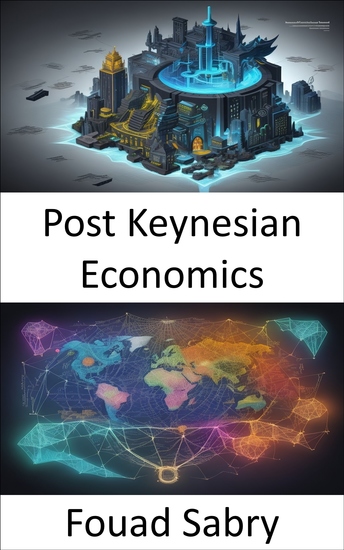
Post Keynesian Economics - Unlocking the Dynamics of Prosperous Economies a Post Keynesian Perspective - cover

Post Keynesian Economics - Unlocking the Dynamics of Prosperous Economies a Post Keynesian Perspective

Fouad Sabry

Casa editrice: One Billion Knowledgeable

  • 0
  • 0
  • 0

Sinossi

What is Post Keynesian Economics
 
Post-Keynesian economics is a school of thinking in economics that has its roots in John Maynard Keynes's General Theory. Subsequent growth of this school of thought has been heavily impacted by the works of Micha? Kalecki, Joan Robinson, Nicholas Kaldor, Sidney Weintraub, Paul Davidson, Piero Sraffa, and Jan Kregel. A historian by the name of Robert Skidelsky contends that the post-Keynesian school has maintained the spirit of Keynes's original work better than any other school. This approach to economics is considered to be unorthodox.
 
How you will benefit
 
(I) Insights, and validations about the following topics:
 
Chapter 1: Post-Keynesian economics
 
Chapter 2: Keynesian economics
 
Chapter 3: Piero Sraffa
 
Chapter 4: Effective demand
 
Chapter 5: Liquidity trap
 
Chapter 6: Alfred Eichner
 
Chapter 7: Modern monetary theory
 
Chapter 8: Hyman Minsky
 
Chapter 9: Paul Davidson (economist)
 
Chapter 10: Luigi Pasinetti
 
Chapter 11: Keynesian Revolution
 
Chapter 12: History of macroeconomic thought
 
Chapter 13: Athanasios Asimakopulos
 
Chapter 14: Thomas Palley
 
Chapter 15: Anwar Shaikh (economist)
 
Chapter 16: Economic bubble
 
Chapter 17: Marc Lavoie
 
Chapter 18: Victoria Chick
 
Chapter 19: Cambridge Journal of Economics
 
Chapter 20: Stock-flow consistent model
 
Chapter 21: Marxism and Keynesian economics
 
(II) Answering the public top questions about post keynesian economics.
 
(III) Real world examples for the usage of post keynesian economics in many fields.
 
Who this book is for
 
Professionals, undergraduate and graduate students, enthusiasts, hobbyists, and those who want to go beyond basic knowledge or information for any kind of Post Keynesian Economics.
Disponibile da: 01/02/2024.
Lunghezza di stampa: 251 pagine.

Altri libri che potrebbero interessarti

  • Connecting Your Present to Your Potential - Every Moment Counts - cover

    Connecting Your Present to Your...

    Victoria David

    • 0
    • 0
    • 0
    Are you living in the gap between who you are now and who you know you can be? It's time to close it. Connecting Your Present to Your Potential is a powerful guide that shows you how to stop waiting for the "right time" and start leveraging the power of every single moment. This book isn't about grand gestures or overnight transformations; it's about the small, intentional actions you take daily that build momentum toward your goals. Through practical strategies and inspiring stories, you’ll learn to identify your purpose, overcome the obstacles holding you back, and create a life of meaning and impact. Your potential isn't in the future—it’s in the present, waiting for you to connect with it.
    Mostra libro
  • Summary: Unreasonable Hospitality - The Remarkable Power of Giving People More than They Expect by Will Guidara: Key Takeaways Summary & Analysis Included - cover

    Summary: Unreasonable...

    Brooks Bryant

    • 0
    • 0
    • 0
    Disclaimer: This is not the official book, but a summary & it does not accompany the official. 
    Our summary unravels Guidara's relentless pursuit of excellence, diving deep into the extraordinary lengths he advocates for to create unforgettable experiences for guests. Drawing from his well of experiences, he shares both exhilarating successes and the teachings harvested from failures, crafting a narrative that is as honest as it is inspiring. 
    As you immerse yourself into our detailed summary, you'll discover the philosophy that is "unreasonable hospitality" — a term coined to embody the kind of service that goes beyond mere satisfaction, venturing into a realm where every interaction is curated to exceed expectations, fostering connections that resonate on a deeper, more personal level. Guidara paints a vision of hospitality where empathy reigns supreme, where every detail is an opportunity to showcase love and respect, engendering a sense of community and a haven of warmth and acceptance. 
    Guidara presents not just a book, but a heartfelt invitation to readers from all walks of life to embrace the principles of "unreasonable hospitality," encouraging you to carry the torch forward in creating environments filled with kindness, understanding, and above all, a relentless pursuit of excellence. 
    As you navigate through our summary of "Unreasonable Hospitality," you will find it to be more than just a guide; it is a calling to elevate the everyday experiences, to see the ordinary through a lens of extraordinary potential and to foster environments that resonate with love, respect, and the true essence of human connection. 
    Prepare yourself to be transformed as our summary takes you through a compelling journey, urging individuals and establishments alike to transcend the norm and to forge experiences that remain etched in hearts forever, a true testament to the transformative power of "unreasonable hospitality."
    Mostra libro
  • The Holodomor - Stalin's Famine Genocide - cover

    The Holodomor - Stalin's Famine...

    Sarah Willards

    • 0
    • 0
    • 0
    The Holodomor, one of the most tragic events in Ukrainian history, refers to the man-made famine that devastated Ukraine from 1932 to 1933. The name "Holodomor" itself is derived from two Ukrainian words: "holod," meaning hunger, and "moryty," meaning extermination. This term emphasizes the belief that the famine was deliberately engineered by Joseph Stalin's Soviet government as part of a broader effort to suppress Ukrainian nationalism and enforce Soviet control. 
    The historical context of the Holodomor is deeply intertwined with the policies of Soviet Russia during the early 20th century. Under Stalin’s rule, the Soviet Union sought rapid industrialization and forced collectivization of agriculture, a process that involved the consolidation of individual farms into large collective ones. These policies were highly disruptive and led to widespread resistance, especially in Ukraine, where peasants valued their land and traditional agricultural practices. 
    In response to this resistance, Stalin imposed harsh measures on Ukraine, including the confiscation of grain, livestock, and other foodstuffs, which were sent to feed other parts of the Soviet Union. This created a devastating shortage of food in Ukraine, which was compounded by the harsh climate and poor harvests. Despite the widespread suffering and starvation, the Soviet government did little to alleviate the crisis and instead imposed strict controls on food distribution. In some cases, officials even enforced internal borders, preventing starving people from fleeing to neighboring regions in search of food.
    Mostra libro
  • Who Rocked the Boat? - A Story about Navigating the Inevitability of Change - cover

    Who Rocked the Boat? - A Story...

    Curtis Bateman

    • 0
    • 0
    • 0
    In this FranklinCovey book on responding to change, explore your own experiences with change using a river journey parable as a point of reference. Take this voyage and discover timeless principles and timely results from an industry leader who has helped numerous organizations turn disruptive change into individual and collective opportunity. 


    We all travel along various rivers in life, which means at any moment we can find ourselves navigating their uncertainty—whether a global pandemic, a new boss, a shift in employment, business restructuring, a new role on a team, the birth of a child, divorce, or responding to a setback on a project or personal goal. 


    Change is going to happen. It's a fact of life. Understanding your reactions and making good choices could make the difference between capitalizing on an opportunity or resisting and missing an important chance. 


    While every change is unique, there is a predictable pattern to change, and understanding this pattern and building the skills to navigate it is often the difference between success and failure. The FranklinCovey Change Model provides the structure necessary to orient, ground, and gain clarity about change.
    Mostra libro
  • From Vision to Reality - The Essential Guide to Starting a Nonprofit - cover

    From Vision to Reality - The...

    Neils Ribeiro-Yemofio

    • 0
    • 0
    • 0
    After consulting with hundreds of entrepreneurs, I have decided to combine all of the best practices amassed throughout the years into this handbook. 
    Through this handbook you'll learn to: 
    Determine if a Nonprofit is Right for You 
    Bring Together Your Board of Directors 
    Create Your Bylaws 
    Understand Conflict Of Interest 
    Grasp the Basics of Fundraising 
    File Registration Forms 
    If you purchased this handbook, that means you have an idea for change that has been brewing in your head for some time OR you're curious about how nonprofits work. Either way, you're in the right place. 
    My approach to this handbook is to simplify the complex, give you a little insight into each of the steps, and give you enough directions to start your nonprofit organization TODAY.
    Mostra libro
  • HBR's 10 Must Reads 2015 - The Definitive Management Ideas of the Year from Harvard Business Review (with bonus McKinsey Award Winning article "The Focused Leader") - cover

    HBR's 10 Must Reads 2015 - The...

    Clayton M. Christensen, Renée...

    • 0
    • 0
    • 0
    A year's worth of management wisdom, all in one place. 


    We've combed through ideas, insights, and best practices from the past year of Harvard Business Review to help you get up to speed fast on the freshest, most relevant thinking driving business today. With authors from Clayton Christensen to Roger Martin and company examples from Netflix to Unilever, this volume brings the most current and important management conversations to your fingertips. 


    This book will inspire you to: lead by focusing your attention on the right things; import new management practices into your organization the right way—whether they come from other companies or across the globe; better manage your organization's—and your leaders'—time; rethink vital functions such as HR and marketing; move from a yearly planning cycle to building a winning strategy; and make long-term organizational decisions with an eye to national and global economic trends.
    Mostra libro