Unisciti a noi in un viaggio nel mondo dei libri!
Aggiungi questo libro allo scaffale
Grey
Scrivi un nuovo commento Default profile 50px
Grey
Iscriviti per leggere l'intero libro o leggi le prime pagine gratuitamente!
All characters reduced
Political Campaign - Strategies and Tactics in Modern Electoral Contests - cover

Political Campaign - Strategies and Tactics in Modern Electoral Contests

Fouad Sabry

Casa editrice: One Billion Knowledgeable

  • 0
  • 0
  • 0

Sinossi

Unlock the secrets of modern political campaigns with "Political Campaign," a crucial addition to the "Political Science" series. This book delves into how campaigns shape democracies, influence voter behavior, and impact electoral results. It offers invaluable insights for students, professionals, and enthusiasts into the art and science of political campaigning.
 
1: Political Campaign – Fundamentals of campaign structure, objectives, and their role in democracy.
 
2: Plurality Voting – Insights into plurality voting, its benefits, and impact on strategies.
 
3: Opinion Poll – The role of opinion polls in shaping campaign strategies and outcomes.
 
4: Voter Turnout – Factors affecting voter turnout and its implications for campaigns.
 
5: Direct Election – Analysis of direct elections and their impact on campaign dynamics.
 
6: Negative Campaigning – Tactics and consequences of negative campaigning on public perception.
 
7: Canvassing – Strategies for effective canvassing and mobilizing voter support.
 
8: Attack Ad – Use of attack ads, their psychological impact, and effectiveness.
 
9: Get Out The Vote – Strategies and importance of get-out-the-vote efforts.
 
10: Campaign Advertising – Various forms of campaign advertising and their effectiveness.
 
11: Hispanic and Latino Americans in Politics – Influence of Hispanic and Latino Americans on campaigns.
 
12: Voter Turnout in United States Presidential Elections – Trends and factors affecting presidential election turnout.
 
13: Elections in Minnesota – Unique aspects of Minnesota’s electoral processes and strategies.
 
14: United States Presidential Election – Complexities of presidential campaigns and electoral success factors.
 
15: Latino Vote – The growing importance of the Latino vote in campaigns.
 
16: Voting Behavior – Psychological and social factors influencing voting behavior and strategies.
 
17: Sexism in American Political Elections – Challenges and effects of sexism in campaigns.
 
18: Economic Voting – Role of economic conditions in shaping voter preferences.
 
19: Social Media in the 2020 United States Presidential Election – Impact of social media on modern campaigns.
 
20: Political Cognition – Cognitive psychology’s role in campaign strategies and voter decisions.
 
21: Voter Turnout in the European Parliament Elections – Trends and strategies in European elections.
 
"Political Campaign" is more than a book; it's an investment in understanding political strategy and voter engagement. Enhance your knowledge in political science with this comprehensive guide.
Disponibile da: 12/09/2024.
Lunghezza di stampa: 269 pagine.
Altri libri che potrebbero interessarti

  • Mercantilism Explained - The Economic Theory and Its Influence on Colonial Expansion - cover

    Mercantilism Explained - The...

    Arlo Holders

    • 0
    • 0
    • 0
    Mercantilism, a dominant economic theory from the 16th to the 18th century, played a pivotal role in shaping the economic and political landscape of early modern Europe. Rooted in the belief that a nation's wealth and power were measured by its stockpile of precious metals, particularly gold and silver, mercantilism emphasized the importance of maintaining a favorable balance of trade. Nations sought to maximize exports while minimizing imports, often employing protectionist policies to achieve this goal. This approach reflected the belief that global wealth was finite, creating fierce competition among nations to secure the largest share of resources and economic advantage. 
    The historical context of mercantilism is deeply intertwined with the Age of Exploration and the rise of powerful nation-states. During this period, European powers such as Spain, Portugal, England, France, and the Netherlands expanded their empires overseas, establishing colonies that served as both sources of raw materials and markets for finished goods. These colonies were central to mercantilist strategies, enabling mother countries to extract wealth and resources while controlling trade to their advantage. This symbiotic relationship between mercantilism and colonial expansion would shape the geopolitical dynamics of the time, fueling rivalries and conflicts between competing empires. 
    Central to mercantilism was the role of government intervention in the economy. Unlike modern free-market principles, mercantilist policies relied heavily on state control to regulate trade and protect domestic industries. Governments imposed tariffs on imported goods, subsidized local production, and established monopolies through chartered companies to ensure economic self-sufficiency and reduce dependence on foreign powers. This top-down approach sought to consolidate economic power within the state, reinforcing the notion that national prosperity and security were interconnected.
    Mostra libro
  • The Case of Emily V - cover

    The Case of Emily V

    Keith Oatley

    • 0
    • 0
    • 0
    "Part diary, part scientific journal, part detective story, part love story: The Case of Emily V is thoroughly post-modern in its deliberate blurring of the distinction between fact and fiction, its cavalier blending of literary genres. But Oatley's first novel … also resembles old 19th-century literature. His characters are dynamic, his storylines complex and suspenseful, his soial commentary broad and integral to the plot." - Marie Campbell, Quill& Quire Quotables
    Mostra libro
  • The Habsburg Empire - Central Europe's Dynastic Rule - cover

    The Habsburg Empire - Central...

    Nova Ashford

    • 0
    • 0
    • 0
    The Habsburg Dynasty, one of the most influential and enduring families in European history, laid the foundation for an empire that would dominate much of Central Europe for over six centuries. The family’s rise to power was not a result of military conquest or economic dominance, but rather strategic marriages, political alliances, and a series of calculated moves that allowed them to amass territories and influence across Europe. At the heart of the Habsburg's success was their ability to use dynastic marriages to expand their reach, securing land, titles, and influence through the marriages of their children to powerful European houses. 
    The origins of the Habsburgs can be traced to the 11th century, with the rise of the family’s first significant member, Radbot, a nobleman from what is now Switzerland. However, it was not until the 13th century that the Habsburgs began their ascent to prominence under the leadership of Rudolf I. In 1273, Rudolf was elected King of Germany, marking the beginning of the Habsburgs' long reign in Central Europe. This election not only established their position within the Holy Roman Empire but also set the stage for their future expansion. 
    The key to their continued rise lay in the Habsburgs’ unparalleled ability to form advantageous marriages. Rather than relying on military might, the family expanded its territorial holdings through strategic unions with other royal and noble families. One of the most significant of these marriages was that of Maximilian I in 1477 to Mary of Burgundy, which brought the Habsburgs the rich territories of the Burgundian Netherlands. This marriage effectively linked the Habsburgs with the wealth and influence of the Low Countries, establishing them as key players in European politics.
    Mostra libro
  • What Is Stoicism? - A Brief and Accessible Overview - cover

    What Is Stoicism? - A Brief and...

    Tanner Campbell, Kai Whiting

    • 0
    • 0
    • 0
    An easy, jargon-free introduction to stoicism that covers the full range of stoic thought in a single compact volume 
     
    Divided into short chapters that can be read in brief sittings, What Is Stoicism? compiles two millennia of Stoic thought into simple conversational prose. This whistle-stop tour of Stoicism covers a surprising number of core topics: 
     
    • the three pillars of Stoic philosophy: logic, physics, and ethics 
    • the ultimate goal of Stoicism: virtue 
    • the Stoic concept of circles of concern: our individual obligations to our family, community, and world 
    • the Stoic ideal of living in accordance with nature 
     
    Readers will come to appreciate the vitality of Stoicism and realize how the wisdom of the past can meet the challenges of the present and the future.
    Mostra libro
  • How One Brain Chemical Fuels Our Desires and Shapes Humanity - Elevate Your Understanding! Discover how one brain chemical fuels desires and shapes humanity with engaging audio lessons - cover

    How One Brain Chemical Fuels Our...

    Thaddeus Larkwood

    • 0
    • 0
    • 0
    How One Brain Chemical Fuels Our Desires and Shapes Humanity 
    ⭐⭐ Simplified Audio Guide ⭐⭐ 
    Are you eager to delve into the intricacies of human behavior and understand the underlying chemical drivers of our desires? 
    Searching for a comprehensive resource that encapsulates all you need to understand how a single brain chemical can shape humanity? 
    Your quest ends here! 
    This guide acts as your ultimate companion for deepening your understanding, applying your knowledge, and engaging with practical insights. With this, you are set for success. 
    Updated Content to Include the Latest Research Findings and Insights 
    Key features of this enriched guide: 
    - Profound insights about the role of brain chemicals in shaping human behavior 
    - Detailed explanation of how one specific chemical drives our desires 
    - Effective strategies for understanding and applying these principles 
    Our guide stands out for its comprehensive coverage, ensuring your profound understanding. Concepts aren't merely touched upon; they are explored in depth with precision. 
    Please note that this guide is an independent resource for your benefit. 
    Designed with clarity and simplicity, our guide ensures smooth transitions between topics. Say goodbye to dense jargon and embrace clear, precise, and technically accurate content. 
    So, why wait? Click the BUY NOW button, secure your guide, and begin your journey to mastering how brain chemicals fuel our desires and shape humanity! 
    Discover, Learn, and Apply. Embrace the journey to understanding the brain's most fascinating driver of behavior.
    Mostra libro
  • Wu - The Chinese Empress Who Schemed Seduced and Murdered Her Way to Become a Living God - cover

    Wu - The Chinese Empress Who...

    Jonathan Clements

    • 0
    • 0
    • 0
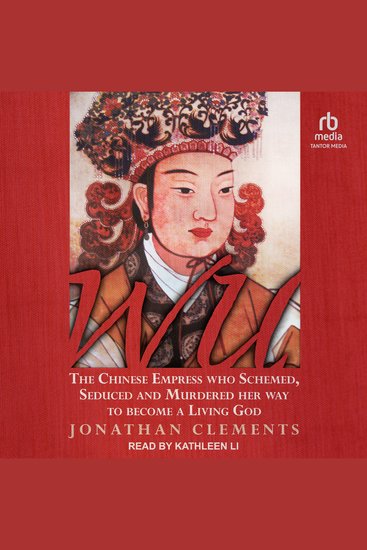
    Empress Wu Zetian (624-705 AD) was the only woman to be the sovereign ruler of imperial China. A teenage concubine of the Tang Emperor Taizong, she seduced his son while the emperor lay dying. Recalled from a nunnery as part of an intricate court power-game, she caused the deaths of two lady rivals, before securing her enthronement as the Emperor Gaozong's consort. She ruled in the name of her husband and two eldest sons, presiding over the pinnacle of the Silk Road, before proclaiming herself the founder of a new dynasty. Worshipped as the Sage Mother of Mankind and reviled as the Treacherous Fox, she was deposed aged 79, after angry courtiers murdered her two young lovers. The subject of countless books, plays, and films, Empress Wu remains a feminist icon and a bugbear of Chinese conservatism. Jonathan Clements weighs the evidence of her life and legacy: so charismatic that she could rise from nothing to the height of medieval power, so hated that her own children left her tombstone blank.
    Mostra libro