¡Acompáñanos a viajar por el mundo de los libros!
Añadir este libro a la estantería
Grey
Escribe un nuevo comentario Default profile 50px
Grey
Suscríbete para leer el libro completo o lee las primeras páginas gratis.
All characters reduced
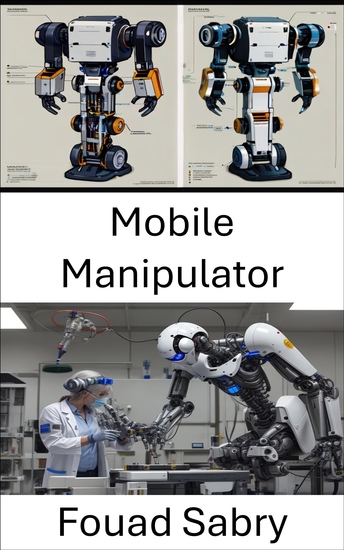
Mobile Manipulator - Designing Adaptive Systems for Dynamic Environments - cover

Mobile Manipulator - Designing Adaptive Systems for Dynamic Environments

Fouad Sabry

Editorial: One Billion Knowledgeable

  • 0
  • 0
  • 0

Sinopsis

In the rapidly advancing world of robotics, understanding the interplay between mobile systems and manipulators is key to shaping the future of automation, from industries to healthcare. Mobile Manipulator by Fouad Sabry offers an indepth exploration of this critical field, presenting cuttingedge technologies and theoretical frameworks that will benefit professionals, students, enthusiasts, and anyone interested in the evolving landscape of robotics science
 
Chapters Brief Overview:
 
1: Mobile manipulator: Explore the integration of mobility and manipulation in robotics, the foundation of versatile autonomous systems
 
2: Robot: Delve into the essential components and classifications of robots, setting the stage for more complex robotic systems
 
3: Mobile robot: Understand the design and functionality of robots capable of movement, essential for dynamic task execution in varied environments
 
4: Selfreconfiguring modular robot: Learn about robots that can change their structure to adapt to different tasks, expanding their utility
 
5: Virtual fixture: Discover how virtual fixtures assist robots in performing precise, complex tasks, blending software and hardware seamlessly
 
6: Adaptable robotics: Investigate robots designed for adaptability, crucial for evolving needs in unpredictable environments
 
7: Agricultural robot: Examine the role of robots in modernizing agriculture, from harvesting to crop monitoring, enhancing productivity
 
8: Cyber–physical system: Understand the integration of physical systems with computational algorithms, forming the backbone of advanced robotic systems
 
9: Gerd Hirzinger: Gain insight into Gerd Hirzinger’s contributions to robotics, including innovations in space robotics and manipulator technology
 
10: Robotics: A comprehensive overview of robotics, exploring foundational concepts and ongoing innovations in the field
 
11: Opensource robotics: Learn about the opensource movement in robotics, empowering creators and accelerating the pace of innovation globally
 
12: Cobot: Explore collaborative robots designed to work alongside humans, enhancing productivity while ensuring safety
 
13: MiroSurge: Study the MiroSurge system, an innovative platform for minimally invasive surgery, blending robotics and healthcare
 
14: Robotnik Automation: Discover Robotnik’s contributions to industrial automation, from design to implementation of robotic solutions
 
15: Masakatsu Fujie: Investigate the work of Masakatsu Fujie, a leader in flexible and adaptive robotic systems, pushing the boundaries of robotic technology
 
16: Oussama Khatib: Understand the pioneering work of Oussama Khatib in humanrobot interaction, including developments in robotics for realworld applications
 
17: Cloud robotics: Explore how cloud computing is transforming robotics, enabling access to data, processing power, and shared resources
 
18: Articulated soft robotics: Examine the growing field of soft robotics, with its applications in delicate operations and flexible interactions with the environment
 
19: Sami Haddadin: Learn about Sami Haddadin’s advancements in robotics, particularly in safety and robothuman interaction
 
20: Android (robot): Dive into the development of humanoid robots that mimic human appearance and behavior, exploring their potential in various sectors
 
21: Humanoid robot: Study the intricate design and applications of humanoid robots, paving the way for robots that closely resemble humans in appearance and function
 
Mobile Manipulator is a mustread for professionals seeking to stay ahead in robotics, as well as for students and enthusiasts aiming to build a strong understanding of this dynamic field. Its interdisciplinary approach not only offers technical knowledge but also engages with the ethical, social, and practical aspects of robotics.
Disponible desde: 22/01/2025.
Longitud de impresión: 237 páginas.

Otros libros que te pueden interesar

  • Machine Learning Basics for Beginners - A Comprehensive Guide to Understanding and Applying Machine Learning - cover

    Machine Learning Basics for...

    Prabhakar Veeraraghavan

    • 0
    • 0
    • 0
    Do you Want to add 'Machine Learning' skills to your LinkedIn profile? Are you ready to embark on the journey of Machine Learning from Basics? If Yes, then this book is for you! 
    Whether you're a curious novice or a tech enthusiast eager to dive into the realm of artificial intelligence, this book is your key to understanding the fundamental concepts that power the future.   
    This book provides the intricacies of Machine Learning with our 10 meticulously crafted chapters. Begin your journey with a warm welcome in the 'Introduction,' paving the way for a seamless exploration of the foundational principles in 'Foundations of Machine Learning’.  
    Navigate through the crucial terrain of 'Data Preprocessing and Feature Engineering' as you learn the essential techniques to refine and optimize your datasets. Take the leap into 'Building Your First Model,' where you'll witness the magic unfold as you breathe life into your machine learning project. 
    Unlock the power of predictive modeling with 'Supervised Learning Techniques,' and then delve into the mysteries of pattern recognition with 'Unsupervised Learning Techniques.' Our step-by-step approach ensures that even the most complex concepts become clear and accessible.  
    Venture into the future with 'Introduction to Deep Learning,' demystifying the advanced techniques that drive cutting-edge applications, and navigate the ethical dimensions of machine learning. Wrap up your learning journey with a glimpse into 'Future Trends in Machine Learning,' ensuring you stay ahead of the curve in this dynamic and ever-evolving field.
    Ver libro
  • Micrographia - cover

    Micrographia

    Robert Hooke

    • 0
    • 0
    • 0
    Robert Hooke's Micrographia is a groundbreaking work in the history of science, renowned for its pioneering observations and exquisite illustrations of the microscopic world. First published in 1665, it stands as one of the most influential scientific texts of the 17th century, inspiring generations of natural philosophers, scientists, and curious minds.
    
    In Micrographia, Hooke documents his meticulous observations using one of the earliest microscopes, revealing details of nature invisible to the naked eye. From the intricate structure of plants and insects to the delicate patterns of everyday materials, Hooke's work uncovers the astonishing complexity and beauty of the natural world. Most famously, he coined the term "cell" to describe the basic structural units of living organisms, laying the foundation for modern biology.
    
    The book is celebrated not only for its scientific insights but also for its detailed illustrations. Hooke's copperplate engravings bring the microscopic world to life, combining artistic skill with scientific accuracy. These images allowed readers of his time—and readers today—to see a previously hidden universe, transforming the way humanity perceives the natural world.
    
    Micrographia is more than a catalog of observations; it is a testament to curiosity, careful experimentation, and the power of technology to expand human understanding. Hooke's keen eye, methodical approach, and eloquent descriptions make the work both a scientific milestone and a literary achievement. His exploration of the microscopic world challenges readers to marvel at the complexity of life and the wonders of creation.
    
    Essential for students of science, history, and literature, Micrographia remains a timeless work that celebrates the intersection of observation, invention, and imagination. It continues to inspire curiosity, demonstrating how careful study and innovative tools can reveal the hidden structures and patterns that govern the natural world.
    Ver libro
  • Regression Analysis Guide - Regression Analysis Guide - cover

    Regression Analysis Guide -...

    Daniel Garfield

    • 0
    • 0
    • 0
    In the age of artificial intelligence, data engineering plays a pivotal role in shaping the future. This comprehensive guide, "AI Data Engineering for Beginners," takes you on a journey through the core principles and practices that underpin the data-driven world of AI. Whether you're an aspiring data engineer, a curious enthusiast, or a student eager to understand the inner workings of AI, this book is your passport to the realm of data. 
    This book bridges the gap between AI theory and practical implementation. With a wealth of real-world examples and hands-on guidance, you'll not only grasp the foundations of AI data engineering but also be ready to tackle your own AI projects. As the world becomes increasingly data-driven, your ability to shape, manage, and leverage data will be a sought-after skill, and "AI Data Engineering for Beginners" is your essential toolkit to step confidently into this exciting field. Whether you dream of revolutionizing industries or simply want to understand the tech shaping our world, this book is your starting point in mastering the data behind the AI revolution. 
      
     
    Ver libro
  • IGNOU BCA Fundamentals of Computer Networks Previous Year Unsolved Papers BCS 041 - cover

    IGNOU BCA Fundamentals of...

    Manish Soni

    • 0
    • 0
    • 0
    The IGNOU BCA Fundamentals of Computer Networks Previous Year Unsolved Papers BCS 041 plays a pivotal role in laying the groundwork for students to understand the essential concepts of modern communication systems. In today’s digital era, where data transmission and networking are integral to nearly every technological operation, a solid grasp of networking principles is crucial for aspiring IT professionals. 
    "IGNOU BCA Fundamentals of Computer Networks Previous Year Unsolved Papers BCS 041" has been carefully compiled to serve as an effective academic resource for students preparing for this core course. This book offers a rich collection of unsolved question papers from previous examinations, providing learners with an opportunity to engage with actual exam content and enhance their comprehension of key topics such as network architectures, the OSI and TCP/IP models, IP addressing, routing techniques, transmission media, and network protocols. 
    The unsolved nature of these papers is intended to promote active learning and independent problem-solving. By attempting these questions, students can evaluate their understanding, identify areas of improvement, and build the confidence needed to excel in examinations. Additionally, this resource helps students simulate the exam environment, improving their time management and analytical thinking skills. 
    Beyond exam preparation, this book is also valuable for educators and trainers who wish to design mock tests, assignments, or classroom discussions based on real exam questions. 
    We extend our sincere appreciation to the students, faculty members, and reviewers whose contributions and feedback have played a significant role in shaping this compilation. We hope that this book becomes a reliable study companion and a stepping stone toward academic and professional success in the ever-evolving field of computer networks.
    Ver libro
  • Olympic Titanic Britannic - The Anatomy and Evolution of the Olympic Class - cover

    Olympic Titanic Britannic - The...

    Simon Mills

    • 0
    • 0
    • 0
    The Titanic. The Britannic. The Olympic. They are some of the most famous ships in history, but for the wrong reasons. 


    The Olympic Class liners were conceived as the largest, grandest ships ever to set sail. Of the three ships built, the first only lost the record for being the largest because she was beaten by the second, and they were both beaten by the third. The class was meant to secure the White Star Line's reputation as the greatest shipping company on earth. Instead, with the loss of both the Titanic and the Britannic in their first year of service, it guaranteed White Star's infamy. 


    This unique book tells the extraordinary story of these three extraordinary ships from the bottom up, starting with their conception and construction (and later their modification) and following their very different careers. Behind the technical details of these magnificent ships lies a tragic human story—not just of the lives lost aboard the Titanic and Britannic, but of the designers pushing the limits beyond what was actually possible, engineers unable to prepare for every twist of fate, and ship owners and crew who truly believed a ship could be unsinkable.
    Ver libro
  • Trolling Ourselves to Death - Democracy in the Age of Social Media (Oxford Studies in Digital Politics) - cover

    Trolling Ourselves to Death -...

    Jason Hannan

    • 0
    • 0
    • 0
    Almost forty years ago, Neil Postman argued that television had brought about a fundamental transformation to democracy. By turning entertainment into our supreme ideology, television had recreated public discourse in its image and converted democracy into show business. In Trolling Ourselves to Death, Jason Hannan builds on Postman's classic thesis, arguing that we are now not so much amusing, as trolling ourselves to death. 


    Contrary to the popular view of the troll as an exclusively anonymous online prankster, Hannan asserts that trolls have emerged from the cave, so to speak. Trolls now include politicians, performers, patriots, and protesters. What was once a mysterious phenomenon limited to the darker corners of the Internet has since gone mainstream, eroding our public culture and changing the rules of democratic politics. 


    Synthesizing media ecology with historical materialism, Hannan explores the disturbing rise of political unreason in the form of mass trolling and sheds light on the proliferation of disinformation, conspiracy theory, "cancel culture," and digital violence. Taking inspiration from Robert Brandom's innovative reading of Georg Wilhelm Friedrich Hegel, Trolling Ourselves to Death makes a case for building "a spirit of trust" to curb the epidemic of mass distrust that feeds the plague of political trolling.
    Ver libro