Unisciti a noi in un viaggio nel mondo dei libri!
Aggiungi questo libro allo scaffale
Grey
Scrivi un nuovo commento Default profile 50px
Grey
Iscriviti per leggere l'intero libro o leggi le prime pagine gratuitamente!
All characters reduced
Minority Government - Navigating Leadership and Power in Unstable Coalitions - cover

Minority Government - Navigating Leadership and Power in Unstable Coalitions

Fouad Sabry

Casa editrice: One Billion Knowledgeable

  • 0
  • 0
  • 0

Sinossi

Dive into the intricate world of parliamentary politics with Minority Government, a key addition to the "Political Science" series. This analysis offers essential insights into the strategies and challenges of governing with a minority, crucial for understanding political stability, policy-making, and coalition building in modern democracies.
 
Chapters Brief Overview:
 
1: Minority Government - Learn about the formation and mechanics of minority governments.
 
2: Coalition Government - Discover how coalitions relate to minority governance.
 
3: Bloc Québécois - Explore its influence on federal politics in Canada.
 
4: By-election - Understand the impact of by-elections on parliamentary composition.
 
5: National Unity Government - Investigate their role during political crises.
 
6: Crossbencher - See how crossbenchers shape parliamentary votes.
 
7: Snap Election - Discover snap elections and their effects on power shifts.
 
8: Lib–Lab Pact - Analyze this historical pact’s effect on minority governance.
 
9: Federal Minority Governments in Canada - Gain insights into their history and challenges.
 
10: Confidence and Supply - Learn about agreements essential for minority stability.
 
11: Politics of Bulgaria - Understand minority government functions in Bulgaria.
 
12: Politics of Norway - Examine minority government operations in Norway.
 
13: British Columbia New Democratic Party - Discover its influence in shaping minority governments.
 
14: 2004 Canadian Federal Election - Review its impact on minority government.
 
15: List of Canadian Federal Parliaments - Access a detailed list for context.
 
16: 1925 Canadian Federal Election - Analyze a key event in minority government history.
 
17: Hung Parliament - Understand the implications of a hung parliament.
 
18: 2006 Canadian Federal Election - Explore its role in minority governance.
 
19: Balance of Power (Parliament) - Learn how parliamentary balance affects governance.
 
20: 2008–2009 Canadian Parliamentary Dispute - Investigate its significance for minority government.
 
21: 44th Canadian Parliament - Review the key events shaping minority governance.
 
After reading Minority Government, you will not only gain knowledge but also a deeper understanding of the intricate workings of parliamentary politics. This resource is ideal for students, professionals, and political enthusiasts, offering unmatched value for anyone looking to explore minority government dynamics.
Disponibile da: 01/10/2024.
Lunghezza di stampa: 337 pagine.

Altri libri che potrebbero interessarti

  • Unjust Debts - How Our Bankruptcy System Makes America More Unequal - cover

    Unjust Debts - How Our...

    Melissa B. Jacoby

    • 0
    • 0
    • 0
    Named one of the Best Summer Books in Economics by the Financial Times 


    A groundbreaking look at the hidden role of bankruptcy in perpetuating inequality in America 


    Bankruptcy is the busiest federal court in America. In theory, bankruptcy in America exists to cancel or restructure debts for people and companies that have way too many—a safety valve designed to provide a mechanism for restarting lives and businesses when things go wrong financially. 


    Legal scholar Melissa B. Jacoby shows how bankruptcy has also become an escape hatch for powerful individuals, corporations, and governments, contributing in unseen and poorly understood ways to race, gender, and class inequality in America. When cities go bankrupt, police unions enjoy added leverage while police brutality victims are denied a seat at the negotiating table; the system is more forgiving of civil rights abuses than of the parking tickets disproportionately distributed in African American neighborhoods. Unjust Debts reveals the hidden mechanisms by which bankruptcy impacts everything from sexual harassment to health care, police violence to employment discrimination, and the opioid crisis to gun violence.
    Mostra libro
  • Patrick Henry's Give Me Liberty or Give Me Death - cover

    Patrick Henry's Give Me Liberty...

    Patrick Henry

    • 0
    • 0
    • 0
    Patrick Henry’s Give Me Liberty or Give Me Death speech, delivered on March 23, 1775, is one of the most powerful orations in American history. Addressing the Virginia Convention, Henry’s passionate plea for freedom from British rule helped ignite the flames of the American Revolution. His bold declaration, “Give me liberty, or give me death!” has since become a symbol of the fight for independence and human rights. 
    Narrated by Gary Middleton, this audiobook brings Patrick Henry’s stirring words to life, capturing the intensity and urgency of the moment. Whether you’re a student of history or simply an admirer of powerful rhetoric, this speech is an essential listen for understanding the spirit of the American Revolution.
    Mostra libro
  • Stories are Weapons - Psychological Warfare and the American Mind - cover

    Stories are Weapons -...

    Annalee Newitz

    • 0
    • 0
    • 0
    In Stories Are Weapons, Annalee Newitz traces the way disinformation, propaganda, and violent threats have evolved from military weapons deployed against foreign adversaries into tools in domestic culture wars. Newitz delves into America's deep-rooted history with psychological operations, beginning with Benjamin Franklin's Revolutionary War–era fake newspaper and nineteenth-century wars on Indigenous nations, and reaching its apotheosis with the Cold War and twenty-first-century influence campaigns online. America's secret weapon has long been coercive storytelling. And there's a reason for that: operatives who shaped modern psychological warfare drew on their experiences as science fiction writers and in the advertising industry. 


    Now, through a weapons-transfer program long unacknowledged, psyops have found their way into the hands of culture warriors, transforming democratic debates into toxic wars over American identity. Newitz zeroes in on conflicts over race and intelligence, school board fights over LGBT students, and campaigns against feminist viewpoints, revealing how, in each case, specific groups of Americans are singled out and treated as enemies of the state. Crucially, Newitz delivers a powerful counternarrative, speaking with the researchers and activists who are outlining a pathway to achieving psychological disarmament and cultural peace.
    Mostra libro
  • Protests & Social Movements - Voices of Change and the Fight for Rights (4 in 1) - cover

    Protests & Social Movements -...

    Fredrich Hazelton

    • 0
    • 0
    • 0
    This book contains these 4 titles: 
    - The Arab Spring: The Arab Springs stands as one of the most transformative events of the 21st century, reshaping the political and social landscapes of the Middle East and North Africa. Triggered in December 2010 by the self-immolation of Mohamed Bouazizi in Tunisia, the movement quickly spread across the region, igniting a wave of protests, uprisings, and revolutions.  
    - The Dakota Access Pipeline Protests: The Dakota Access Pipeline (DAPL) protests were a defining moment in the intersection of environmental advocacy and Indigenous rights. Proposed to transport crude oil from the Bakken oil fields in North Dakota to Illinois, the pipeline’s route crossed sacred lands and the Missouri River, threatening water supplies and cultural heritage. While its proponents touted economic benefits and energy security, the project drew fierce resistance from the Standing Rock Sioux Tribe and their allies, sparking a global movement.  
    - The Hong Kong Protests: Hong Kong, a former British colony handed back to China in 1997, has long been a symbol of political and economic success. Its unique status under the "One Country, Two Systems" framework promised a high degree of autonomy, preserving its freedoms and capitalist economy for 50 years after the handover. However, in recent years, this promise has been put to the test, as Beijing's increasing influence over the region has sparked widespread protests and growing unrest. 
    - The MeToo Movement: The movement’s resonance stems from its powerful message: sexual harassment and assault are widespread issues that affect women and marginalized groups across all sectors of society, from entertainment to politics, from workplaces to homes.
    Mostra libro
  • Operation Northwoods: The History of the Controversial Government Plan to Stage False Flag Attacks on Americans and Blame Cuba - cover

    Operation Northwoods: The...

    Editors Charles River

    • 0
    • 0
    • 0
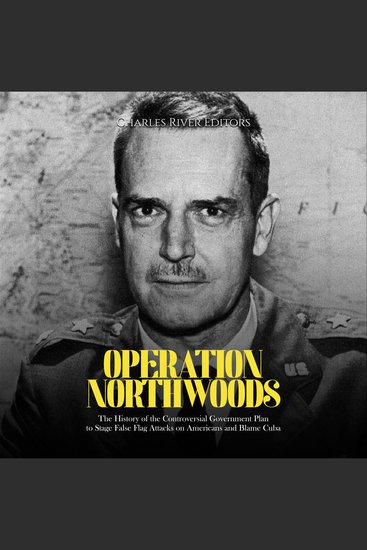
    Throughout the history of warfare, the practice of placing blame on innocent parties in order to justify attacking them has been a constant feature. In the 20th century, this practice began to be commonly referred to as a “false flag” operation. The essence of a false flag scenario is that it is conducted by one party or government and “made to appear as though another party sponsored it.”[1] In informal legal terminology, the practice is commonly referred to as a “stitch up”[2] or “setup.”[3] The modern use of this action based on deceit originated in the 16th century, typically when ships displayed the flags of a neutral or enemy country to hide their identities. 
    	The severity of false flag operations moves in tandem with the perceived danger. In the late 20th century, the Soviet Union constituted an ongoing threat to the United States, ideologically and militarily. When Fidel Castro, a Soviet sympathizer, came to power in Cuba in 1959, the presence of a communist extension of Soviet influence so near American shores caused great discomfort to the U.S. government. 
    	Some of the Cold War’s tensest moments involved Cuba, including the Bay of Pigs invasion and the Cuban Missile Crisis, amply demonstrating that throughout the early 1960s, alarmed individuals within the American government believed that the only way to handle Castro was by immediate elimination and a takeover of Cuba. They were pitted against more nuanced points of view held by others within the Kennedy administration. The Pentagon was of the general mind that in such a perilous environment, military decision-making should come to the front and civilians should withdraw, even the White House. Diplomacy was seen as being of little use by the Joint Chiefs of Staff against an encroaching Soviet superpower led by a political street fighter and his puppet situated just off the coast of Florida. 	This charged atmosphere would lead to one of the most controversial proposals in history.
    Mostra libro
  • Moscow Rules - What Drives Russia to Confront the West - cover

    Moscow Rules - What Drives...

    Keir Giles

    • 0
    • 0
    • 0
    From Moscow, the world looks different. It is through understanding how Russia sees the world—and its place in it—that the West can best meet the Russian challenge. 


    Russia and the West are like neighbors who never seem able to understand each other. A major reason, this book argues, is that Western leaders tend to think that Russia should act as a "rational" Western nation—even though Russian leaders for centuries have thought and acted based on their country's different history and traditions. Russia, through Western eyes, is unpredictable and irrational, when in fact its leaders almost always act in their own predictable and rational ways. For Western leaders to try to engage with Russia without attempting to understand how Russians look at the world is a recipe for repeated disappointment and crises. 


    Keir Giles, a senior expert on Russia at Britain's prestigious Chatham House, describes how Russian leaders have used consistent doctrinal and strategic approaches to the rest of the world. These approaches may seem alien in the West, but understanding them is essential for successful engagement with Moscow. Giles argues that understanding how Moscow's leaders think—not just Putin but his predecessors and eventual successors—will help counterparts in the West develop a less crisis-prone and more productive relationship with Russia.
    Mostra libro