Unisciti a noi in un viaggio nel mondo dei libri!
Aggiungi questo libro allo scaffale
Grey
Scrivi un nuovo commento Default profile 50px
Grey
Iscriviti per leggere l'intero libro o leggi le prime pagine gratuitamente!
All characters reduced
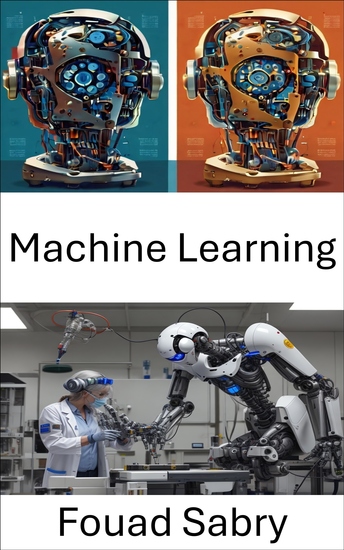
Machine Learning - Innovative Algorithms and Intelligent Systems for Robotics - cover

Machine Learning - Innovative Algorithms and Intelligent Systems for Robotics

Fouad Sabry

Casa editrice: One Billion Knowledgeable

  • 0
  • 0
  • 0

Sinossi

Explore the world of machine learning as it intersects with robotics science in this comprehensive guide. This book introduces readers to the foundational concepts of machine learning, demonstrating its critical role in modern robotics. Ideal for professionals, students, and enthusiasts alike, it offers a wellrounded insight into the field’s advancements, practical applications, and future potentials, making it a valuable resource for anyone invested in robotics and machine learning.
 
Chapters Brief Overview:
 
1: Machine Learning An overview of machine learning principles in robotics.
 
2: Artificial Intelligence Examines AI’s integral role in enhancing robotic capabilities.
 
3: Supervised Learning Delves into models where outcomes guide robotic decisions.
 
4: Neural Network (Machine Learning) Introduces neural network architectures for robots.
 
5: Pattern Recognition Covers the role of patterns in robot perception and decisionmaking.
 
6: Unsupervised Learning Explores datadriven insights for autonomous robotic functions.
 
7: Training, Validation, and Test Data Sets Examines data preparation for robotics applications.
 
8: MetaLearning (Computer Science) Discusses robots learning to optimize their own learning.
 
9: Hierarchical Temporal Memory Explores advanced memory models for robotics.
 
10: Data Analysis for Fraud Detection Illustrates machine learning in robotic security.
 
11: Types of Artificial Neural Networks Overview of neural networks applied in robotics.
 
12: Deep Learning Examines complex, multilayered networks for advanced robotics.
 
13: Learning Rule Reviews the learning principles applied to robotic intelligence.
 
14: Feature Learning Describes extracting meaningful patterns in robotics contexts.
 
15: Deep Belief Network Discusses deep belief structures for robotic learning.
 
16: Domain Adaptation Covers robots adapting to new environments and tasks.
 
17: Incremental Learning Shows robots’ ability to build on previous learning.
 
18: Explainable Artificial Intelligence Focuses on transparency in robot decisions.
 
19: SelfSupervised Learning Examines selfreliant learning methods in robotics.
 
20: Symbolic Artificial Intelligence Explores logicbased AI for robotics.
 
21: Neats and Scruffies Analyzes the structured and flexible approaches in robotics.
 
This book is not just a technical guide but an insightful journey through robotics science. As machine learning continues to transform the industry, this work provides both practical tools and theoretical insights, making the investment in this knowledge a smart choice for future innovators.
Disponibile da: 01/01/2025.
Lunghezza di stampa: 317 pagine.
Altri libri che potrebbero interessarti

  • Fenbendazole & Ivermectin Protocols - A Practical Guide for Cancer Patients and Caregivers: Updated Research Real-World Patterns and Clear Action Steps - cover

    Fenbendazole & Ivermectin...

    Daniel K. Harper, Rebecca J. Carter

    • 0
    • 0
    • 0
    Everything changes after a cancer diagnosis. Even clear conversations with doctors can leave patients, caregivers, and families with a quiet, persistent question: 
    Is there anything else we should be looking at? 
    That is where the late-night searching begins: endless tabs, online forums, remission stories, half-explained protocols, strong claims, and serious cautions. 
    Fenbendazole and ivermectin appear, often mixed with hope, confusion, and uncertainty. For many, the challenge is no longer finding more information. It is making sense of what they have already found. 
    What You’ll Get:Evidence in Plain English: What current research suggests, what it can’t prove, what remains uncertain, and how to interpret new information.The Joe Tippens Story in Context: Why it spread, why it matters, and how it fits with the evidence.Protocol Patterns Explained: Commonly discussed approaches and combination use, presented in a neutral reference format.Safety Checkpoints: Side effects, interaction risks, contraindications, monitoring considerations, warning signs, and common mistake patterns.Quality & Sourcing Guidance: Product quality, sourcing risks, and common pitfalls.Doctor Conversation Tools: Prompts, scripts, and questions to help you communicate clearly and use limited appointment time well.Treatment Integration Insights: How these drugs are sometimes discussed alongside other cancer-care approaches.Grounded Planning: Cost, access, timing, and practical decision-making considerations.Tables, Summaries & Key Takeaways: Designed for easier understanding and review.Bonus Chapter: Other repurposed drug candidates being explored in oncology research. 
    This is not a promise of a cure. It is not a shortcut around your care team. It is a serious, readable handbook designed to bring structure to one of the most confusing conversations in contemporary cancer care. 
    When everything feels uncertain, understanding is a powerful place to begin.
    Mostra libro
  • Second Wave The: Electrodynamic Intelligence - How Intelligence Emerges From Fields Not Code - cover

    Second Wave The: Electrodynamic...

    Dorian Aur

    • 0
    • 0
    • 0
    This audio provides just a gentle introduction to the book. You won’t find these insights listed on the back cover — think of it as a way to get a taste before diving into the full story
    Mostra libro
  • The Descent of Man and Selection in Relation to Sex Part 1 - cover

    The Descent of Man and Selection...

    Charles Darwin

    • 0
    • 0
    • 0
    A book on evolutionary theory by English naturalist Charles Darwin, first published in 1871. It was Darwin's second great book on evolutionary theory, following his 1859 work, On The Origin of Species. In The Descent of Man, Darwin applies evolutionary theory to human evolution, and details his theory of sexual selection. The book discusses many related issues, including evolutionary psychology, evolutionary ethics, differences between human races, differences between sexes, the superiority of men to women, and the relevance of the evolutionary theory to society.(Summary by Wikipedia)NOTE - In this audio version , many of Darwin's references to his sources have been omitted. People wishing to follow-up the references will find them all given in the text version.
    Mostra libro
  • America’s Most Notorious Natural Disasters - cover

    America’s Most Notorious Natural...

    Charles River Editors

    • 0
    • 0
    • 0
    It had taken about 40 years for Chicago to grow from a small settlement of about 300 people into a thriving metropolis with a population of 300,000, but in just two days in 1871, much of that progress was burned to the ground. In arguably the most famous fire in American history, a blaze in the southwestern section of Chicago began to burn out of control on the night of October 8, 1871.  
    In 2005, the world watched in horror as Hurricane Katrina decimated New Orleans, and the calamity seemed all the worse because many felt that technology had advanced far enough to prevent such tragedies, whether through advanced warning or engineering. However, the failure of human engineering like that seen in New Orleans was nothing new, and it had previously had even deadlier consequences in Johnstown, Pennsylvania. Although floods rarely get as much coverage as other kinds of natural disasters like volcanic explosions, the Johnstown Flood of 1889 has remained an exception due to the sheer destruction and magnitude of the disaster.  
    As bad as Hurricane Katrina was, the hurricane that struck Galveston, Texas on September 8, 1900 killed several times more people, with an estimated death toll between 6,000-12,000 people. Prior to advanced communications, few people knew about impending hurricanes except those closest to the site, and in the days before television, or even radio, catastrophic descriptions were merely recorded on paper, limiting an understanding of the immediate impact.   
    	On April 18, 1906, most of the residents of the city of San Francisco were sound asleep when the ground started to shake around 5:15 a.m., but what started as fairly soft tremors turned into a violent shaking in all directions. The earthquake lasted about a minute, but it had enough destructive force to divert the course of entire rivers and level much of the 9th largest city in America at the time. 
    Mostra libro
  • Rejoicing with Nature in Our Own Backyards - cover

    Rejoicing with Nature in Our Own...

    Margaret Renki

    • 0
    • 0
    • 0
    In this 2023 conversation with Justine Willis Toms, New York Times contributor Margaret Renkl suggests that we make an “untidy” garden that will nurture our soul and the natural world. She encourages us to fall in love with the natural companions in our lives: the spiders, the hummingbirds, crickets, and raccoons, and all the other species who are living right beside us. When we fall in love with them, we can't help but want to save them. Renkl suggests stepping out of our small world of computer screens, smartphones and TVs to step into the larger natural world, which is everywhere, just outside our front door.   
    Margaret Renkl is the author of:Late Migrations: A Natural History of Love and Loss (Milkweed Editions 2019)Graceland, At Last: Notes on Hope and Heartache from the American South. (Milkweed Editions 2021)The Comfort of Crows: A Backyard Year (Spiegel and Grau 2023) 
    Interview Date: 6/19/2023          Tags: Margaret Renkl, birding tradition, blue jays, crows, bird language, tadpoles, amphibians, frogs, toads, endocrine disruptors, chemical fertilizers, insecticides, pesticides, monarch butterflies, Methuselah generation, Roundup, glyphosate, pollinator plants, rabbits, manicured lawns, spiders, hummingbirds, walking, Ecology/Nature/Environment, Writing
    Mostra libro
  • Organic Gardening and Beekeeping - An A to Z Guide for Indoor and Outdoor Gardeners - cover

    Organic Gardening and Beekeeping...

    George S Kuhn

    • 0
    • 0
    • 0
    This book consists of two parts. The first part is for organic gardening and the second is for Beekeeping. Basically, you are getting two books in one. 
    Table of Contents :  
    Section 1: Organic Gardening 
    Introduction 
    Chapter 1: What is Organic Gardening? 
    Chapter 2: Where to Plant? 
    Chapter 3: Choosing What to Plant 
    Chapter 4: Getting What You Need 
    Chapter 5: Aquaponics and Hydroponics 
    Chapter 6: Preparing to Plant 
    Chapter 7: Preparing an Aquaponic or Hydroponic Garden 
    Chapter 8: Combining Indoor and Outdoor Gardening 
    Chapter 9: Managing Your Garden 
    Chapter 10: Knowing When to Harvest 
    Chapter 11: How to sell and find markets for core products 
    Section 2: Beekeeping 
    Chapter 1: Things to Consider Before Getting Started 
    Chapter 2: Tools & Equipment Needed For Beekeepers 
    Chapter 3: Best Location for a Beehive 
    Chapter 4: Setting Up The Beehive 
    Chapter 5: Best practices 
    Chapter 6: How to sell bee Honey 
    Listen to the Audioook Preview Sample and see if this book is for you.  
    You can get this book from all major online book retailers.
    Mostra libro