Unisciti a noi in un viaggio nel mondo dei libri!
Aggiungi questo libro allo scaffale
Grey
Scrivi un nuovo commento Default profile 50px
Grey
Iscriviti per leggere l'intero libro o leggi le prime pagine gratuitamente!
All characters reduced
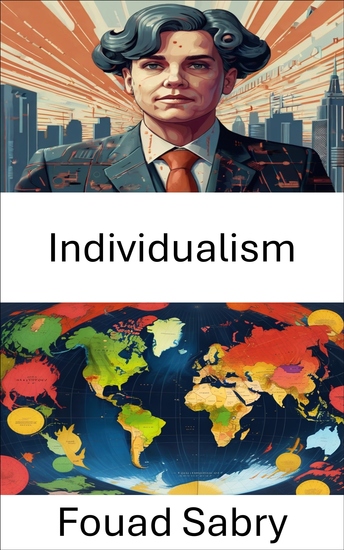
Individualism - Exploring Personal Freedom and Autonomy in Modern Governance - cover

Individualism - Exploring Personal Freedom and Autonomy in Modern Governance

Fouad Sabry

Casa editrice: One Billion Knowledgeable

  • 0
  • 0
  • 0

Sinossi

Explore the impact of personal freedom with Individualism, a key addition to the Political Science series. This book examines how individualism has influenced modern governance and societal structures.
 
1: Individualism - Understand its foundational principles and role in shaping political ideologies.
 
2: Anarcho-capitalism - Explore how individualism intersects with laissez-faire capitalism.
 
3: Individualist Anarchism - Investigate this branch’s focus on personal freedom.
 
4: Max Stirner - Discover Stirner’s egoist anarchism and its influence.
 
5: Anarchism and Capitalism - Analyze their philosophical conflicts and intersections.
 
6: Left-libertarianism - Examine how it combines individualist principles with social justice.
 
7: Issues in Anarchism - Discuss key debates and challenges faced by individualist anarchists.
 
8: Individualist Anarchism in the U.S. - Trace its development and impact in America.
 
9: Law of Equal Liberty - Understand its implications for personal freedom.
 
10: Philosophical Anarchism - Explore its critique of state authority from an individualist perspective.
 
11: Outline of Anarchism - Get an overview of anarchist thought and its variations.
 
12: Outline of Libertarianism - Discover libertarianism’s core principles and alignment with individualism.
 
13: Egoist Anarchism - Investigate this focus on self-interest and personal autonomy.
 
14: Individualist Anarchism in Europe - Examine its evolution and influence across Europe.
 
15: Existentialist Anarchism - Merge existentialist philosophy with anarchist principles.
 
16: Types of Socialism - Understand various socialisms and their relation to individualism.
 
17: Social Anarchism - Contrast with individualist approaches to address collective needs.
 
18: Benjamin Tucker - Learn about his contributions and influence on American individualist thought.
 
19: Classless Society - Analyze this concept within individualist philosophy.
 
20: Anarchist Schools of Thought - Explore diverse schools and their connections to individualism.
 
21: Definition of Anarchism and Libertarianism - Clarify their definitions and relevance to individualist theory.
 
Individualism offers profound insights into personal freedom and self-reliance, providing exceptional value through its thorough exploration of key concepts and figures.
Disponibile da: 08/08/2024.
Lunghezza di stampa: 338 pagine.

Altri libri che potrebbero interessarti

  • Politics & Geopolitics - Shaping Nations and International Relations (6 in 1) - cover

    Politics & Geopolitics - Shaping...

    Fredrich Hazelton

    • 0
    • 0
    • 0
    This bundle contains these books: 
    - Brexit: The United Kingdom’s Historic Exit from the European Union 
    - The Expansion of the European Union: New Member States, Challenges, and the Future of European Integration  
    - The Iran Nuclear Deal: Negotiations, Sanctions, and the Quest for Regional Stability 
    - The Russian Annexation of Crimea: The 2014 Crisis and Its Geopolitical Consequences 
    - The Rise of China as a Global Power: Economic Growth, Trade Wars, and the Shift in Global Influence 
    - The Refugee Crisis: Displacement, Migration, and the Humanitarian Response 
    Get this discounted combo now!
    Mostra libro
  • Bad Company - Private Equity and the Death of the American Dream - cover

    Bad Company - Private Equity and...

    Megan Greenwell

    • 0
    • 0
    • 0
    A timely work of singular reportage and a damning indictment of the private equity industry told through the stories of four American workers whose lives and communities were upended by the ruinous effects of private equity takeovers. 
    Private equity runs our country, yet few Americans have any idea how ingrained it is in their lives. Private equity controls our hospitals, daycare centers, supermarket chains, voting machine manufacturers, local newspapers, nursing home operators, fertility clinics, and prisons. The industry even manages highways, municipal water systems, fire departments, emergency medical services, and owns a growing swath of commercial and residential real estate. 
    Private equity executives, meanwhile, are not only among the wealthiest people in American society, but have grown to become modern-day barons with outsized influence on our politics and legislation. CEOs of firms like Blackstone, Carlyle, KKR, and Apollo are rewarded with seats in the Senate and on the boards of the country’s most august institutions; meanwhile, entire communities are hollowed out as a result of their buyouts. Workers lose their jobs. Communities lose their institutions. Only private equity wins. 
    Acclaimed journalist Megan Greenwell’s Bad Company unearths the hidden story of private equity by examining the lives of four American workers that were devastated as private equity upended their employers and communities: a Toys R Us floor supervisor, a rural doctor, a local newspaper journalist, and an affordable housing organizer. Taken together, their individual experiences also pull back the curtain on a much larger project: how private equity reshaped the American economy to serve its own interests, creating a new class of billionaires while stripping ordinary people of their livelihoods, their health care, their homes, and their sense of security. 
    In the tradition of deeply human reportage like Matthew Desmond’s Evicted, Megan Greenwell pulls back the curtain on shadowy multibillion dollar private equity firms, telling a larger story about how private equity is reshaping the economy, disrupting communities, and hollowing out the very idea of the American dream itself. Timely and masterfully told, Bad Company is a forceful rebuke of America’s most consequential, yet least understood economic forces.
    Mostra libro
  • Good Trouble - Lessons from the Civil Rights Playbook - cover

    Good Trouble - Lessons from the...

    Christopher Noxon

    • 0
    • 0
    • 0
    Good Trouble is the helpful antidote to all the pessimism and name-calling that is permeating today’s political and social dialogues. Revisiting episodes from the civil rights movement of the 1950s and ’60s, it highlights the essential lessons that modern-day activists and the civically minded can extract and embrace in order to move forward and create change. In words and vivid pen-and-watercolor illustrations, journalist Christopher Noxon dives into the real stories behind the front lines of the Montgomery bus boycott and the Greensboro lunch counter sit-ins and notable figures such as Rosa Parks and Bayard Rustin, all while exploring the parallels between the civil rights movement era and the present moment. This thoughtful, fresh approach is sure to inspire conversation, action, and, most importantly, hope.
    Mostra libro
  • Sanctify Them in Truth - How the Church's Social Doctrine Addresses the Issues of Our Time - cover

    Sanctify Them in Truth - How the...

    Fr. Jeffrey Kirby S.T.D.

    • 0
    • 0
    • 0
    We live in a world that has become secularized, marked by ideology and partisanship. In such a world, how are we supposed to know what is right and wrong? As Christians, how are we supposed to approach the social issues of our day? With conflicting voices surrounding us, how can we hear and know the voice of Jesus Christ and receive His teachings? 
    As Christians, we seek to live the way of the Lord Jesus, but that’s easier said than done. We want to demonstrate the Lord’s love and kindness to all men and women, but we’re faced with issues that cause us to discern what that looks like and how it’s virtuously expressed. We want to do what is right and good, but trying to determine right and wrong can at times be confusing and unsettling. 
    The teaching authority of the Church is here to help. Appointed by Jesus Christ, our shepherds discern, interpret, and apply His teachings to our everyday lives. 
    The Church’s Social Doctrine, by Fr. Jeffrey Kirby, is an approachable, easy-to-read guide on eight of our most pressing social issues. The book applies divine wisdom and the guidance of the Church as it dissects oft-debated topics, presenting helpful teaching so that the reader knows how to navigate today’s contentious world with conviction and a clear conscience. 
    The book answers: 
    • Why is abortion above all other social issues in importance? 
    • Can immigration be both moral and limited? 
    • What is the Christian responsibility to the environment? 
    • How are we called to approach the LGBTQ+ movement? 
    • Is healthcare a human right? 
    • When can artificial nutrition and hydration be suspended for a dying relative? 
    • Is the Critical Race Theory within the bounds of justice? 
    • Why can’t women be ordained priests?
    Mostra libro
  • The Last Empire - Essays 1992-2000 - cover

    The Last Empire - Essays 1992-2000

    Gore Vidal

    • 0
    • 0
    • 0
    The Last Empire is a collection of provocative, witty, and eloquent essays by Gore Vidal about all things USA. In more than two dozen essays, Vidal brings his keen intellect, experience, and razor-edged wit to bear on an astonishing range of subjects, offering incisive observations about terrorism, civil liberties, the CIA, Al Gore, and the Clintons—interwoven with a rich tapestry of personal anecdote, critical insight, and historical detail. Erudite, forever curious, argumentative, irascible, and often very funny, Gore writes that the United States is, "a unique society in which we have free enterprise for the poor and socialism for the rich." The Last Empire is a sweeping coda to the still-existing conflicted vision of the American dream—leaving no need to imagine what trenchant barbs Vidal would have uttered concerning the state and level of discourse of American society right now.
    Mostra libro
  • American Epic - Reading the US Constitution - cover

    American Epic - Reading the US...

    Garrett Epps

    • 0
    • 0
    • 0
    In 1987, E. L. Doctorow celebrated the Constitution's bicentennial by reading it. "It is five thousand words long but reads like fifty thousand," he said. Distinguished legal scholar Garrett Epps disagrees. It's about 7,500 words. And Doctorow "missed a good deal of high rhetoric, many literary tropes, and even a trace of, if not wit, at least irony," he writes. 


    In American Epic, Epps takes us through a complete reading of the Constitution to achieve an appreciation of its power and a holistic understanding of what it says. In this book he seeks not to provide a definitive interpretation, but to listen to the language and ponder its meaning. He draws on four modes of reading: scriptural, legal, lyric, and epic. The Constitution's first three words, for example, sound spiritual—but Epps finds them to be more aspirational than prayer-like. He turns the Second Amendment into a poem to illuminate its ambiguity. He notices oddities and omissions. The Constitution lays out rules for presidential appointment of officers, for example, but not removal. Should the Senate approve each firing? Can it withdraw its "advice and consent" and force a resignation? And he challenges himself, as seen in his surprising discussion of the Defense of Marriage Act (DOMA) in light of Article 4, which orders states to give "full faith and credit" to the acts of other states.
    Mostra libro