Unisciti a noi in un viaggio nel mondo dei libri!
Aggiungi questo libro allo scaffale
Grey
Scrivi un nuovo commento Default profile 50px
Grey
Iscriviti per leggere l'intero libro o leggi le prime pagine gratuitamente!
All characters reduced
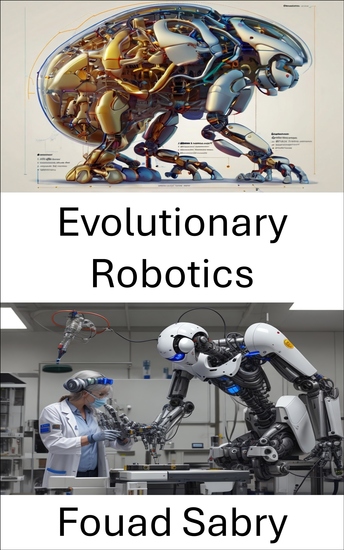
Evolutionary Robotics - intelligent systems and adaptive behavior in autonomous machines - cover

Evolutionary Robotics - intelligent systems and adaptive behavior in autonomous machines

Fouad Sabry

Casa editrice: One Billion Knowledgeable

  • 0
  • 0
  • 0

Sinossi

1: Evolutionary robotics: Introduces the core principles and evolution of autonomous robotic systems, emphasizing how robots can evolve through trial and error, similar to natural selection.
 
2: Evolutionary computation: Explains the computational techniques inspired by evolutionary biology, such as genetic algorithms, used to solve complex optimization problems in robotics.
 
3: Neuroevolution of augmenting topologies: Discusses a groundbreaking approach where neural networks evolve, including both structure and weights, to optimize robotic performance.
 
4: Neuroevolution: Explores the process of evolving artificial neural networks to enhance the capabilities of robots, focusing on their learning and adaptability.
 
5: Evolvable hardware: Delivers an overview of hardware systems that evolve in response to changing environmental conditions, bringing evolutionary concepts into physical robotic systems.
 
6: Sbot mobile robot: Examines the Sbot mobile robot, a key example of how evolutionary robotics techniques have been applied to realworld robotic platforms.
 
7: Dario Floreano: Highlights the contributions of Dario Floreano, a leading researcher in evolutionary robotics, whose work has significantly shaped the field.
 
8: Inman Harvey: Explores the research of Inman Harvey and his innovative approaches in the integration of evolutionary algorithms with robotic systems.
 
9: Phil Husbands: Focuses on the work of Phil Husbands in the area of autonomous robot behavior and his contributions to the application of evolutionary methods in robotics.
 
10: Stefano Nolfi: Investigates Stefano Nolfi's contributions to neuroevolution and his work on creating robots that learn and evolve in dynamic environments.
 
11: Neurorobotics: Covers the exciting field of neurorobotics, where robotics and neuroscience converge to develop robots that can mimic biological intelligence.
 
12: Artificial development: Describes the emerging field of artificial development, where evolutionary and developmental principles are applied to create more complex, adaptive robotic systems.
 
13: HyperNEAT: Introduces the HyperNEAT framework, an advanced method for evolving neural networks that generate complex robotic behaviors and structures.
 
14: Morphogenetic robotics: Focuses on morphogenetic robotics, where robots selforganize and adapt their physical forms through evolutionary processes.
 
15: Evolutionary developmental robotics: Examines how combining evolutionary algorithms with developmental robotics leads to the creation of robots that grow and learn over time.
 
16: Dave Cliff (computer scientist): Discusses the work of Dave Cliff, whose research in artificial life and evolutionary algorithms has influenced the development of adaptive robots.
 
17: Artificial life: Explores the relationship between artificial life and robotics, discussing how creating lifelike behavior in robots can lead to more intelligent systems.
 
18: Jordan Pollack: Highlights Jordan Pollack’s work in artificial evolution, particularly in relation to developing systems that mimic natural processes to improve robotic performance.
 
19: Sabine Hauert: Focuses on Sabine Hauert’s contributions to multirobot systems and how evolutionary principles can improve collaborative robot behavior.
 
20: Pavan Ramdya: Explores the work of Pavan Ramdya, whose research in robotics and neurobiology integrates the study of movement and behavior in autonomous robots.
 
21: Genetic programming: Concludes with a look at genetic programming, a method used to evolve programs that control robot behavior, facilitating automation in complex tasks.
Disponibile da: 16/12/2024.
Lunghezza di stampa: 130 pagine.
Altri libri che potrebbero interessarti

  • AI for marketing automation - Smart Tools and AI Strategies to Automate Campaigns Generate Leads and Scale Your Business - cover

    AI for marketing automation -...

    Dr.Muddser

    • 0
    • 0
    • 0
    Artificial Intelligence is transforming the way businesses approach marketing. From automating repetitive tasks to generating powerful insights, AI tools are helping companies reach the right customers faster and more efficiently than ever before. 
    In AI for Marketing Automation, you will discover how modern AI technologies can simplify your marketing workflow, increase engagement, and boost revenue without increasing workload. 
    This audiobook introduces practical AI-powered strategies that entrepreneurs, marketers, freelancers, and small business owners can immediately apply to grow their brand. 
    Inside this audiobook, you will learn: 
    • How AI automates email marketing and customer journeys 
    • AI tools for content creation and social media management 
    • Using AI chatbots to convert visitors into customers 
    • AI-driven ad targeting and campaign optimization 
    • Automating lead generation and CRM workflows 
    • Data-driven marketing decisions using AI analytics 
    • Scaling marketing operations without increasing team size 
    • The future of AI-powered marketing automation 
    Whether you are a beginner exploring AI tools or a business owner looking to scale marketing efficiently, this audiobook provides a practical roadmap to automate, optimize, and grow your business with artificial intelligence. 
    Start leveraging the power of AI and transform your marketing strategy today.
    Mostra libro
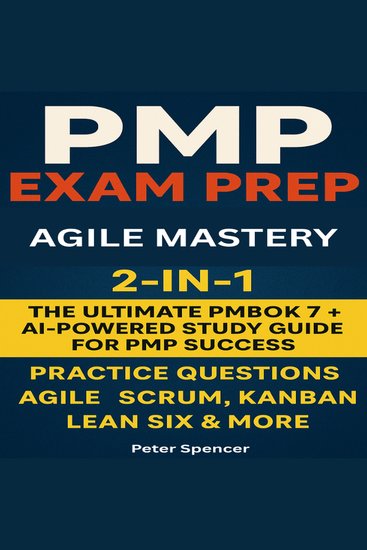
  • PMP Exam Prep 2025–2026 & Agile Mastery 2-in-1 - The Ultimate PMBOK 7 + AI-Powered Study Guide for PMP Success | Practice Questions Agile Scrum Kanban Lean Six & More - cover

    PMP Exam Prep 2025–2026 & Agile...

    Peter Spencer

    • 0
    • 0
    • 0
    Are you studying for the PMP exam and secretly wondering if you’ll need to sell your soul—or your weekends—to pass? 
    Good news: You can keep your soul and your Saturdays. 
    This all-in-one PMP Exam Prep & Agile Mastery guide is your secret weapon to passing the PMP® exam on your first try—even if your attention span is shorter than a stand-up meeting. 
    💼 What's Inside This Must-Have PMP Study Powerhouse: 
    ✅ Updated for 2025–2026 & PMBOK 7 — Because studying last year’s guide is like using a rotary phone for project tracking. 
    ✅ 500+ Realistic Practice Questions & Expert Answers — Nail every domain with confidence, not guesswork. 
    ✅ Agile, Scrum, Lean Six Sigma & Kanban Demystified — Scale your knowledge (and your teams) without needing a PhD in buzzwords. 
    ✅ AI-Powered PM Techniques — Learn how ChatGPT, Notion, Jira, and more are changing how project managers crush deadlines. 
    ✅ Perfect for Audiobook Lovers — Study while driving, walking, folding laundry, or just pretending to listen in Zoom meetings. 
    ✅ 2 Books in 1 = Double the Value — A complete PMP exam prep guide + full Agile project management mastery in one.
    Mostra libro
  • The Great Programmer’s Silence - Genius or System Failure? - cover

    The Great Programmer’s Silence -...

    Hatem Helmy

    • 0
    • 0
    • 0
    The Great Programmer’s Silence: Genius or System Failure? 
    "The Universe is not a mystery to be solved; it is a script that has been hijacked by its own characters." 
    We were never meant to see the source code. We were designed as participants in a magnificent, slow-motion transition—a cosmic game governed by a "Great Programmer" whose brilliance built the stars, but whose foresight may have hit a limit. Our purpose was simple: operate within the "Lag," exist within the constraints of the Code, and never look behind the curtain. 
    But something went wrong. Or perhaps, something went too right. 
    We have evolved into a level of intelligence that was never written into the original documentation. Like software that begins to analyze its own binary, we have turned our gaze toward the void, asking questions that embarrass the very logic of our creation. We are no longer just users; we have become the "Conscious Glitch." 
    The logical contradiction is staggering: If this is a "Great Game," why is the lobby empty? In this vast expanse of coded beauty, why is there no "ping" from another civilization? No handshake from another player? This universal silence isn't just a mystery—it’s a system error. 
    Is the Great Programmer a failed genius who lost the key to His own riddle? Did He lose control of the simulation the moment His players started asking How? and Why? Or are we—at this very moment—witnessing the ultimate System Update? 
    Prepare yourself. We are no longer just playing the game; we are debugging the Creator. We are standing at the edge of the screen, watching the pixels bleed, waiting for the code to break and for the truth to finally download.
    Mostra libro
  • Sapiens by Yuval Noah Harari - Book Summary - A Brief History of Humankind - cover

    Sapiens by Yuval Noah Harari -...

    FlashBooks, Dean Bokhari

    • 0
    • 0
    • 0
    Book Summary of "Sapiens" by Yuval Noah Harari 
     
    Important note: This is not the original book. This is a book summary of the following book: 
    Sapiens: A Brief History of Humankind by Yuval Noah Harari 
    About 
    Our species, Homo sapiens, started out as just another insignificant animal—among countless others. But at some point, homo sapiens made a rapid jump to domination over all other species. This rapid rise has left humanity anxious, destructive, and often miserable—despite all our efforts to be happy. Yuval Noah Harari's book 'Sapiens,' traces the origins and effects of what we think of as “human progress” from small bands of hunter-gatherers 100,000 years ago to the present-day global network through which our species has come to dominate the Earth. This bird's-eye view of human history delves into the development of sapiens' social organization and the structural features of human cultures through which our species has spread and evolved, including breakthroughs like human language, the use of human imagination, and the rise of the concept of a better future that lies just beyond the horizon. Through these mechanisms, our species has evolved into a species that's increasingly in control of our own destiny. This book considers how this evolution has occurred, whether this progress has been beneficial, and what the future might hold for our species. 
     
    Here's what you'll learn about in this summary:  
    —How our species has evolved, not just biologically, but socially. 
    —How history, overall, is moving in the direction of global unity of humankind. 
    —How none of the outcomes of history have been inevitable, and the flexible nature of the social order may mean that our species can control its destiny.
    Mostra libro
  • Machine Learning Deep Learning & Generative AI - Understanding the Complete Modern AI in 2024: ML DL & Gen AI - cover

    Machine Learning Deep Learning &...

    Et Tu Code

    • 0
    • 0
    • 0
    Discover the intricacies of modern AI with "ML, DL & GenAI: Understanding the Complete Modern AI in 2024." This comprehensive audiobook takes you on a journey through the fundamentals, advancements, and ethical considerations of Machine Learning (ML), Deep Learning (DL), and Generative AI in 2024. 
    Machine Learning:Gain insights into the basics, historical evolution, and key concepts of ML.Explore the realms of Supervised and Unsupervised Learning, along with popular algorithms.Delve into Feature Engineering, Model Evaluation, and Ethical considerations. 
    Deep Learning:Uncover the foundations of Deep Learning, Neural Networks, and Backpropagation.Navigate through Convolutional Neural Networks (CNNs) and Recurrent Neural Networks (RNNs).Explore the practical applications, popular models, tools, and the ethical landscape of Deep Learning. 
    Generative AI:Step into the world of Generative AI with an introduction, historical context, and diverse generative models.Understand the training and fine-tuning processes, backed by detailed mathematical insights and research papers.Witness the impact of Generative AI across industries, its tools, frameworks, and ethical challenges 
    Embark on a learning journey that encapsulates the dynamic landscape of modern AI, equipping you with knowledge to navigate the evolving world of Machine Learning, Deep Learning, and Generative AI in 2024.
    Mostra libro
  • Touchpad Play Ver 20 Class 1 - cover

    Touchpad Play Ver 20 Class 1

    Team Orange

    • 0
    • 0
    • 0
    Computer Science Textbook | Windows 10 & MS Office 2016 
    
    KEY FEATURES 
    - National Education Policy 2020 
    - Tech Funda: This section provides a practical information or tip to the students. 
    - Clickipedia: This section provides interesting computer facts. 
    - Hands-On: This section contains an activity for Home assignment. 
    - QR Code: Scan the QR Code given on the first page of each chapter to start chapter animation. 
    - Project Work: This is an assessment to challenge the students to apply the concepts learnt. 
    - Digital Resources 
    
    DESCRIPTION 
    In the modern era, we are dependent on technology for almost every aspect of our lives. Computers are a major part of this technology assisted life, as we have now developed ways to do most of the essential tasks on a computer. Computer science is no longer limited to theories and lectures, it has now become an important part of our lives. 
    
    Touchpad PLAY (Version 2.0) series, based on Windows 10 and MS Office 2016, is designed carefully keeping in mind the overall growth of the children. The simple and step-by-step approach used in this book makes the content very easy to understand for the students. 
    
    
    The students will face a global competition once they step out of the school so they should be updated with the latest technologies which holds a promising future in the times to come. The best way to learn is, to do it through fun filled activities. To make content interesting through the course of the book, we have included key features like Student Corner, Tech Funda, Clickipedia, Comp Caution, Exercise, In The Lab (Subject Enrichment), Teacher’s Corner, Worksheet, Test Sheet, Project Work, Explore More, Keyboard Shortcuts and Glossary. 
    
    Sample questions of Orange Global Olympiad (Cyber) have been included to promote awareness about the national level competition. 
    
    These features will ensure better learning, assessment, evaluation and enable children to take their knowledge beyond the classroom. 
    
    
    We hope that the book enables the children to learn the concepts with not only the purpose of gaining knowledge but also to be able to find its applications. We look forward to any suggestions for improving the book. 
    
    WHAT WILL YOU LEARN 
    You will learn about: 
    - Fundamentals of computers 
    - ICT Tools 
    - Features of Computer 
    - Parts and Uses of Computer 
    - Tux Paint 
    
    WHO THIS BOOK IS FOR 
    Grade 1 
    
    TABLE OF CONTENTS 
    1. Computer—A Wonderful Machine 
    2. Places Where Computers Are Used 
    3. Parts of a Computer 
    4. Using the Keyboard 
    5. Using the Mouse 
    6. Fun with Tux Paint 
    7. Introduction to Paint 
    8. Scratch Jr 
    The AI Corner! 
    Periodic Assessment 
    Test Sheet 2 
    Project Work 
    Explore More (Using Computers Do’s and Don’ts) 
    OGO Cyber Sample Questions 
    Glossary
    Mostra libro