Unisciti a noi in un viaggio nel mondo dei libri!
Aggiungi questo libro allo scaffale
Grey
Scrivi un nuovo commento Default profile 50px
Grey
Iscriviti per leggere l'intero libro o leggi le prime pagine gratuitamente!
All characters reduced
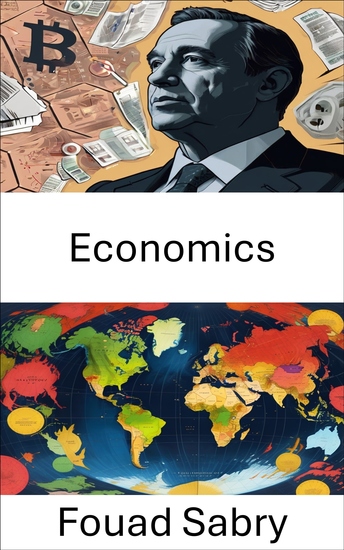
Economics - Insights into Global Financial Dynamics - cover

Economics - Insights into Global Financial Dynamics

Fouad Sabry

Casa editrice: One Billion Knowledgeable

  • 0
  • 0
  • 0

Sinossi

Explore the intricate world of Economics through the lens of Political Science with "Economics," a vital addition to understanding global markets, governance, and societal well-being. This comprehensive volume covers economic theories and policies, offering insights into their impact on our interconnected world.
 
Chapters Highlights:
 
- 1: Economics - Discover the foundational principles of Economics, highlighting its crucial role in shaping political landscapes and policy decisions.
 
- 2: Microeconomics - Learn how individual economic agents and markets function, influencing everyday choices and market interactions.
 
- 3: Macroeconomics - Understand national and global economic phenomena, from GDP fluctuations to inflation.
 
- 4: Kenneth Arrow - Examine Nobel laureate Kenneth Arrow's contributions to economic theory and policy debates.
 
- 5: Monetary base - Grasp the role of the monetary base in monetary policy and economic stability.
 
- 6: Neutrality of money - Explore money neutrality and its implications for long-term economic equilibrium.
 
- 7: John Eatwell - Gain insights from John Eatwell's work in economic theory, policy analysis, and institutional economics.
 
- 8: Liquidity preference - Investigate how liquidity preferences affect interest rates and financial decision-making.
 
- 9: Richard Kahn - Delve into Richard Kahn's contributions to aggregate demand and the multiplier effect.
 
- 10: Neoclassical synthesis - Understand the integration of classical and Keynesian economics in the 20th century.
 
- 11: John Eatwell, Baron Eatwell - Further explore John Eatwell's impact on economic policy and institutional economics.
 
- 12: Richard Kahn, Baron Kahn - Examine Richard Kahn's insights into income distribution and economic growth.
 
- 13: The New Palgrave Dictionary of Economics - Navigate economic concepts and theories with this extensive knowledge repository.
 
- 14: Lawrence E. Blume - Learn from Lawrence E. Blume's contributions to economic theory and methodology.
 
- 15: Involuntary unemployment - Analyze causes and consequences of involuntary unemployment and policy interventions.
 
- 16: Peter Kenneth Newman - Gain perspectives on economic development, globalization, and sustainable growth.
 
- 17: Scarcity - Understand the economic problem of scarcity and its implications for resource allocation and social welfare.
 
- 18: Demographic economics - Examine how population trends shape economic outcomes and policy challenges.
 
- 19: History of macroeconomic thought - Trace the evolution of macroeconomic ideas from classical economics to modern paradigms.
 
- 20: Murray Milgate - Engage with Murray Milgate's scholarly contributions to economic theory and policy.
 
- 21: Ross Starr - Explore Ross Starr's insights into economic growth, financial markets, and institutional roles.
 
"Economics" is essential for professionals, students, and enthusiasts seeking a deep understanding of economic principles and their real-world applications. This book addresses pressing economic questions and equips readers to navigate complex economic landscapes with clarity and confidence.
Disponibile da: 07/08/2024.
Lunghezza di stampa: 263 pagine.
Altri libri che potrebbero interessarti

  • Democratic Citizenship - A Continuous Approach to Proportionality in Political Participation - cover

    Democratic Citizenship - A...

    Gayatri kumari

    • 0
    • 0
    • 0
    Democratic Citizenship: A Continuous Approach to Proportionality in Political ParticipationIntroduction 
    Democratic citizenship is a fundamental concept that underpins the functioning of democratic societies. It encompasses the rights, responsibilities, and active participation of individuals in political and civic life. One of the critical aspects of democratic citizenship is ensuring proportionality in political participation, which means that all segments of society have an equal opportunity to engage in the political process. This continuous approach to proportionality is essential for maintaining a healthy, inclusive, and representative democracy.The Importance of Proportionality in Political Participation 
    Proportionality in political participation ensures that diverse voices and perspectives are heard and represented in the decision-making process. This inclusivity is vital for several reasons:Legitimacy and Trust:When political participation is proportional, the decisions made by elected officials are more likely to reflect the will of the people. This enhances the legitimacy of the government and fosters trust among citizens.Social Cohesion:Proportional political participation helps to bridge social divides by giving marginalized and minority groups a platform to express their concerns and contribute to policy-making. This can lead to greater social cohesion and reduced conflict.Innovation and Problem-Solving:Diverse participation brings a range of perspectives and ideas to the table, which can lead to more innovative solutions to societal problems.Challenges to Proportional Political Participation
    Mostra libro
  • What I Wish I Said - Confessions of a Columnist - cover

    What I Wish I Said - Confessions...

    Jaime Watt

    • 0
    • 0
    • 0
    Just as they do on those television cooking contests when the bell rings and the contestants’ hands go up, at four o’clock on Friday afternoon, the column is filed—ready or not—to the columnist’s horror, discomfort, or self-satisfaction. Regardless, one exigent and unrelenting thought remains: what you wish you’d said.
    		 
    Such is the life of a weekly newspaper columnist.
    		 
    Unable to ignore the urge any longer, in What I Wish I Said: Confessions of a Columnist, author Jaime Watt has collected forty-eight of his most eye-opening, illuminating, and provocative Toronto Star columns and with humour, candour, and wit, he’s responded to each with what he wishes he’d said. The collection also features contributions from former senator and columnist André Pratte and from journalist and former editor-in-chief of the Toronto Star Michael Cooke.
    		 
    Widely regarded as Canada’s leading high-stakes communications strategist and the architect of groundbreaking campaigns that transformed politics with their boldness and creativity, Watt brings his insight to bear on some of the most vexing and consequential issues in Canadian life by reappraising his past work.
    		 
    Across six topical subject areas—civil liberties and human rights, portraits of leaders, the Liberal Party in power, the Conservative Party in opposition, the Donald Trump presidency, and the COVID-19 crisis—this subtle yet accessible collection offers a distinctive look at recent times. Whether he got it right or wrong, Watt pulls no punches when it comes to critiquing—and at times lambasting—his past columns.
    		 
    Revisiting his best and worst takes, Watt and his co-author Breen Wilkinson look at what might have been said in the columns he has been writing for more than seven years. And as he does, Watt challenges with new perspectives and ideas, inviting readers to consider what they wish they might have said, to consider how their points of views, and even their values, may have changed with time.
    Mostra libro
  • Why AI Undermines Democracy and What to Do About It - cover

    Why AI Undermines Democracy and...

    Mark Coeckelbergh

    • 0
    • 0
    • 0
    Across the world, AI is used as a tool for political manipulation and totalitarian repression. Stories about AI are often stories of polarization, discrimination, surveillance, and oppression. Is democracy in danger? And can we do anything about it? 


    In this compelling and balanced book, Mark Coeckelbergh reveals the key risks posed by AI for democracy. He argues that AI, as currently used and developed, undermines fundamental principles on which liberal democracies are founded, such as freedom and equality. How can we make democracy more resilient in the face of AI? And, more positively, what can AI do for democracy? Coeckelbergh advocates not only for more democratic technologies, but also for new political institutions and a renewal of education to ensure that AI promotes, rather than hinders, the common good for the twenty-first century. 


    Why AI Undermines Democracy and What to Do About It is a must-listen for anyone who is concerned about the fate of democracy.
    Mostra libro
  • Defeating Jihadist Terrorism - cover

    Defeating Jihadist Terrorism

    Jacques Baud

    • 0
    • 0
    • 0
    Since the early 1990s, terrorism and its victims have increased exponentially. Without any action strategy or exit solution, through political and military incompetence, stupidity and ideological blindness, Western interventions have only contributed to its development. We eliminate terrorists, but not terrorism. The solution lies in a more holistic, more subtle, more intelligent and less dogmatic approach. Terrorism is not an ideology. It is a method that takes many forms, including jihadist terrorism. Each form of terrorism is fought with a specific strategy. Based on the original texts of jihadist strategists as well as on their own analyses of attacks in France, Belgium, Great Britain and the United States, Jacques Baud explains the reasons for Western failure. He uses the analyses of Western intelligence services to decipher the mechanisms of jihadist terrorism, in order to extract strategies of action likely to avoid it or to fight it effectively and durably. The author is a former head of Swiss strategic intelligence and former head of UN peace operations doctrine. In the course of his missions in Africa and Central Asia, the author has had several encounters with jihadists in the field. 
    This audiobook is read by a synthesized voice.
    Mostra libro
  • Farewell Address Republican National Convention - cover

    Farewell Address Republican...

    Ronald Reagan

    • 0
    • 0
    • 0
    On August 15, 1988, in the Louisiana Superdome, Reagan delivered a message for economic freedom. We transformed our government from one that was consuming our prosperity into one that would get out of the way of those who create prosperity.  
    Reagan notes the “inflated rhetoric of our friends in Atlanta last month. But then, inflation is their specialty.” As John Adams said, “Facts are stubborn things.”  
    When we came to Washington, we suffered the worst back-to-back years of inflation in 60 years, interest rates over 21 percent, declining productivity, weekly wages, and family income, the highest tax bill in history, and a 21 percent misery index. 
    The Soviet Union invaded Afghanistan. Iran stormed our embassy and took Americans hostage. The world questioned our resolve. 
    We responded by cutting taxes and creating over 17 million jobs. Inflation is below 4 percent and interest rates cut in half. “I noticed they don’t call it Reaganomics anymore.”  
    We rebuilt our armed forces, and liberated Grenada. During our administration “not 1 inch of ground has fallen to the Communists.” We're working on the Strategic Defense Initiative to protect ourselves and our allies against nuclear terror. 
    Liberal elites resisted our defense buildup, our tax cuts, cutting fat out of government, and appointing judges committed to the Constitution. I’ve supported a balanced budget amendment and line-item veto, and every year the liberals said no.  
    We need Republican majorities in both houses. America needs George Bush. “Go out there and win one for the Gipper.” 
    God put this land between two great oceans to be found by people with a love of freedom, freedom of association, of worship, of hope and opportunity. Here, it’s sunrise every day with new opportunities and dreams to build. 
    Audio recording courtesy of the Ronald Reagan Presidential Library. 
    AspenLeafMedia.com
    Mostra libro
  • Political Philosophy - Ideas and Foundations of Governance - cover

    Political Philosophy - Ideas and...

    Hector Davidson

    • 0
    • 0
    • 0
    Political philosophy plays a central role in the development of societies, offering profound insights into the principles and ideas that shape governance and human relations. At its core, political philosophy seeks to understand the fundamental questions of power, authority, justice, and the rights of individuals within a collective. By examining these issues, political philosophy provides a framework for interpreting and evaluating the structures that govern our lives, from the most intimate social arrangements to the global political order. It is through political philosophy that we come to grips with the nature of justice, equality, freedom, and the role of the state in promoting the common good. 
    In every society, political philosophy serves as a critical lens for understanding the legitimacy of authority and the relationship between the individual and the state. Whether through the ideas of ancient philosophers like Plato and Aristotle or the modern theorists such as Hobbes, Locke, and Rousseau, the study of political philosophy allows us to explore the moral and practical foundations of governance. These thinkers sought answers to questions that remain relevant today: What is the rightful role of the government? What are the limits of state power? How can societies balance the competing interests of freedom, equality, and social order? 
    Moreover, political philosophy is essential for the functioning of a healthy democracy. By engaging with political ideas and questioning the established norms, political philosophers encourage critical thinking and the evaluation of political systems. They provide the intellectual tools for assessing the values that underlie our laws, policies, and political institutions. Political philosophy also serves as a guide for navigating complex moral dilemmas in governance, offering insights into how we can create a just society where the rights of individuals are respected while promoting the collective well-being.
    Mostra libro