¡Acompáñanos a viajar por el mundo de los libros!
Añadir este libro a la estantería
Grey
Escribe un nuevo comentario Default profile 50px
Grey
Suscríbete para leer el libro completo o lee las primeras páginas gratis.
All characters reduced
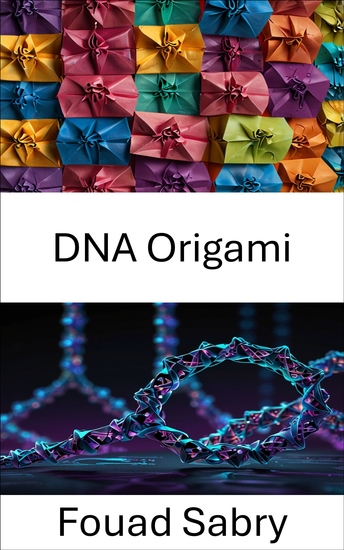
DNA Origami - Innovative Techniques for Nanostructure Design and Molecular Engineering - cover

DNA Origami - Innovative Techniques for Nanostructure Design and Molecular Engineering

Fouad Sabry

Editorial: One Billion Knowledgeable

  • 0
  • 0
  • 0

Sinopsis

Unlock the world of DNA origami, a groundbreaking advancement at the intersection of molecular biology and nanotechnology. This book delves into the fascinating science of using DNA as a building material for creating nanoscale structures, enabling innovations in fields like nanomedicine, bioengineering, and molecular selfassembly. Whether you are a student, researcher, or enthusiast, this book offers valuable insights that will elevate your understanding of this emerging field.
 
Chapters Brief Overview:
 
1: DNA origami: Learn the fundamentals of DNA origami, its methods, and its diverse applications in nanotechnology.
 
2: Nanorobotics: Discover how DNA origami facilitates the development of nanorobots, reshaping technology and medicine.
 
3: Holliday junction: Understand the crucial role of Holliday junctions in DNA recombination and origami applications.
 
4: DNA nanotechnology: Explore the power of DNA as a functional material, and how it enables selfassembling structures.
 
5: Nanotechnology: Dive into the broader world of nanotechnology, and the transformative potential of DNAbased systems.
 
6: Nadrian Seeman: Get introduced to the pioneering work of Nadrian Seeman, the father of DNA origami.
 
7: TectoRNA: Understand the concept of TectoRNA and how it expands the potential of DNA in nanotechnology.
 
8: Nanochemistry: Delve into the chemistry behind DNA origami and how it enables precise molecular assembly.
 
9: Nucleic acid design: Examine the role of nucleic acids in DNA origami, and their influence on molecular engineering.
 
10: Peptide nucleic acid: Learn about the use of peptide nucleic acids in enhancing DNA origami stability and functionality.
 
11: Molecular selfassembly: Discover how molecular selfassembly techniques are crucial to building complex DNA structures.
 
12: Nanomedicine: Explore how DNA origami is revolutionizing medicine, offering targeted drug delivery and diagnostic solutions.
 
13: RNA origami: Discover RNA origami and how it opens new avenues for RNAbased nanostructures and applications.
 
14: Selfassembling peptide: Learn about peptidebased systems and their synergy with DNA origami for advanced nanostructures.
 
15: Niveen Khashab: Explore the work of Niveen Khashab and her contributions to the field of DNAbased nanomaterials.
 
16: Nanoscale plasmonic motor: Understand the development of nanoscale plasmonic motors using DNA origami for precision movement.
 
17: Biointerface: Dive into biointerfaces created with DNA origami, essential for nextgen biosensors and medical devices.
 
18: Nanobiotechnology: Explore the integration of DNA origami in nanobiotechnology, unlocking new biological and medical possibilities.
 
19: Intracellular delivery: Learn how DNA origami is poised to transform drug delivery by precisely targeting cellular environments.
 
20: Spherical nucleic acid: Understand spherical nucleic acids and their applications in drug delivery, diagnostics, and molecular imaging.
 
21: Nanoruler: Learn about the design and use of nanorulers made with DNA origami, enabling precise measurements at the molecular level.
 
This book is essential reading for professionals in nanotechnology and biotechnology, as well as for students seeking to explore cuttingedge scientific advancements. Whether you are curious about DNA origami’s practical applications or eager to dive deeper into its technicalities, this book offers valuable knowledge that will propel you forward in the fascinating world of molecular innovation.
Disponible desde: 07/03/2025.
Longitud de impresión: 240 páginas.

Otros libros que te pueden interesar

  • Genetic Wisdom: Stories That Shape Our Lives - "Transform your mindset with 'Genetic Wisdom' Explore powerful tales that illuminate the essence of our shared experiences" - cover

    Genetic Wisdom: Stories That...

    Gideon Marwick

    • 0
    • 0
    • 0
    Genetic Wisdom: Stories That Shape Our Lives 
    ⭐⭐ Simplified Audio Guide with Explanations Included ⭐⭐ 
    Are you eager to deepen your understanding of genetics and uncover the stories that shape our lives? 
    Searching for a comprehensive resource that provides all the essential elements to explore your heritage, understand genetics, and transform your perspective? 
    Your search ends here! 
    This guide serves as your ultimate companion for enriching your knowledge, applying your insights, and engaging in meaningful reflections. With this, you're poised for success. 
    Updated for the 2024-2025 Exploration of Genetic Wisdom. 
    Key features of this extensive guide: 
    - Profound insights into the significance of genetic heritage and its impact on our lives 
    - Detailed explanations that demystify genetic concepts 
    - Effective strategies for understanding and applying genetic insights 
    Our guide stands out through its comprehensive coverage, which is vital for your journey into genetic wisdom. Concepts are thoroughly explored, ensuring clarity and depth. 
    Designed with a clear structure and accessible language, 'Genetic Wisdom: Stories That Shape Our Lives' ensures smooth transitions between topics. Bid farewell to complex jargon and embrace clear, accurate content that resonates. 
    So, why wait? Click the BUY NOW button, secure your guide, and embark on your journey toward a deeper understanding of genetics and the stories that shape our lives! 
    Uncover the wisdom within your genes and the stories that define you!
    Ver libro
  • Humans 20 - Scientific Philosophical and Theological Perspectives on Transhumanism - cover

    Humans 20 - Scientific...

    Fazale Rana, Kenneth R. Samples

    • 0
    • 0
    • 0
    Will technology usher in a new future or have we gone too far?Unprecedented developments in bioengineering, biotechnology, and biomedicine breakthroughs that could improve the lives of people with debilitating diseases and injuries can also serve as stepping-stones to technologies that can enhance human beings and alter human nature, raising fears about how biotechnologies could be misused.Should we discourage advances in biotechnology and bioengineering that can be used for human enhancement? Or should we take control of our own "evolution" and usher in a posthuman age? Is there another option?In Humans 2.0, authors Fazale "Fuz" Rana and Kenneth Richard Samples open a window to the new world of human enhancement technologies and transhumanism their promises, potential, and pitfalls.
    Ver libro
  • Impact of New Technologies on Society The: A Blueprint for the Future - cover

    Impact of New Technologies on...

    Siddhartha Paul Tiwari

    • 0
    • 0
    • 1
    Biography of the Author - Siddhartha Paul Tiwari 
    Siddhartha Paul Tiwari is an educator and a technologist. Currently, he is employed by Google Asia Pacific, Singapore. Prior to that, he was responsible for global learning and development at Google, based in Tokyo. His achievements include innovative educational techniques, the development of new graduate and postgraduate course curricula, digital intervention strategies, and the use of information and communication technologies in education. As the teaching environment has rapidly changed, Tiwari has been working tirelessly to integrate new technologies into university curricula and to help academia adjust to these changes. 
    An Overview of the Book 
    We already see the impact of emerging technologies on our lives and the economy in many different ways, particularly when it comes to the way we live our lives and the way we work. Due to this, there is fierce competition among companies across the globe in order to ensure that they are able to benefit from the new technological developments. Globally, the United States and Asia are emerging as the two global leaders in this area. Over the years, there has been a significant change in the landscape of emerging technologies since Alan Turing first asked in the 1950s if machines could think like humans. Emerging technologies will enhance economic growth and efficiency in the future. It is possible to greatly improve decision-making when large amounts of data are analysed by improving efficiency. It is likely that new products and services, new markets, and new industries will be created as a result, which will in turn boost consumer demand and generate new revenue streams. On the other hand, emerging technologies may also have a profound effect on society and the economy.
    Ver libro
  • Genetics - The Blueprint of Life Genes and Inheritance - cover

    Genetics - The Blueprint of Life...

    Jeron Iris

    • 0
    • 0
    • 0
    Genetics is the branch of biology that focuses on the study of heredity and the variation of inherited characteristics. It seeks to understand how traits are passed down from parents to offspring and how these traits are expressed in living organisms. At the core of genetics lies the concept of genes, which are segments of DNA (deoxyribonucleic acid) that contain the instructions for the development and functioning of organisms. These instructions guide the creation of proteins, which carry out the majority of biological functions necessary for life. 
      
    Each organism's genetic material is contained within its cells, and it is organized into structures called chromosomes. In humans, for example, there are 23 pairs of chromosomes, with one set inherited from each parent. Within these chromosomes are thousands of genes, each responsible for specific traits. These traits can range from eye color and blood type to more complex characteristics like susceptibility to certain diseases. While many traits are inherited in a predictable manner, some can be influenced by environmental factors or interactions between multiple genes. 
      
    The study of genetics dates back to the mid-1800s with the work of Gregor Mendel, who is often considered the father of modern genetics. Through his experiments with pea plants, Mendel established the basic principles of inheritance, including the ideas of dominant and recessive traits. His work laid the foundation for understanding how traits are inherited in predictable patterns, although the molecular mechanisms were not fully understood at the time.
    Ver libro
  • Lyme Disease - Diagnosis Symptoms Treatments and Solutions - cover

    Lyme Disease - Diagnosis...

    Lilly Richardsen

    • 0
    • 0
    • 0
    Lyme disease is an infectious illness primarily caused by the bacterium Borrelia burgdorferi, which is transmitted to humans through the bite of an infected black-legged tick, commonly known as the deer tick. The disease is named after Lyme, Connecticut, where the first recognized outbreak occurred in the 1970s. Since then, Lyme disease has become the most common vector-borne disease in the United States and many parts of the world, with cases steadily increasing due to expanding tick populations and climate changes. 
    The bacteria responsible for Lyme disease are typically introduced into the human bloodstream when an infected tick attaches itself to the skin and begins feeding. The early signs of Lyme disease can range from mild to severe and are often mistaken for other common illnesses. The most notable symptom is a circular, red rash, often described as a "bull's-eye," which can appear at the site of the tick bite. This rash, called erythema migrans, occurs in approximately 70-80% of patients and is considered a hallmark of early Lyme disease. However, not everyone with Lyme disease develops this rash, and other flu-like symptoms such as fever, fatigue, muscle and joint aches, and headache may also appear. 
    If left untreated, Lyme disease can progress to more severe stages, where it may affect the joints, nervous system, and heart. In some cases, patients may experience chronic symptoms such as joint pain, neurological problems, and persistent fatigue, even after the initial infection has been treated. This stage is known as "post-treatment Lyme disease syndrome" (PTLDS), where symptoms can linger for months or even years.
    Ver libro
  • Computers - and Stuff! - cover

    Computers - and Stuff!

    Owen Jones

    • 0
    • 0
    • 0
    The information in this ebook on various aspects of computers, peripherals and related subjects is organized into 21 chapters of about 500-600 words each. 
    I hope that it will interest those who are interested in computers, the Internet, peripherals, electronics and using them in a practical fashion. 
    As an added bonus, I am granting you permission to use the content on your own website or in your own blogs and newsletter, although it is better if you rewrite them in your own words first.
    Ver libro