¡Acompáñanos a viajar por el mundo de los libros!
Añadir este libro a la estantería
Grey
Escribe un nuevo comentario Default profile 50px
Grey
Suscríbete para leer el libro completo o lee las primeras páginas gratis.
All characters reduced
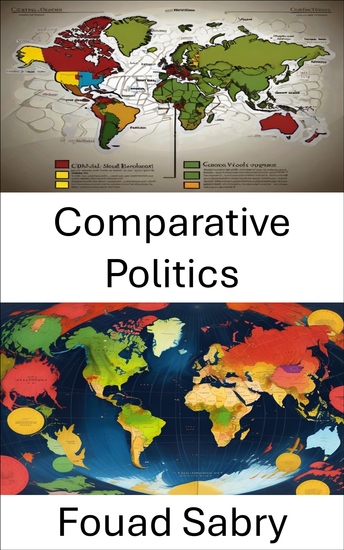
Comparative Politics - Understanding the Dynamics of Political Systems Worldwide - cover

Comparative Politics - Understanding the Dynamics of Political Systems Worldwide

Fouad Sabry

Editorial: One Billion Knowledgeable

  • 0
  • 0
  • 0

Sinopsis

In an evolving global landscape, grasping political systems' nuances is essential. *Comparative Politics*, part of the *Political Science* series, delivers a thorough analysis of governance, power dynamics, and policy outcomes across varied contexts, making it a key resource for understanding global political structures.
 
Highlights:
 
- 1: Comparative Politics - Explore foundational concepts, methodologies, and the significance of comparative politics.- 2: Political Science - Deepen your understanding of political science and its link to comparative politics.- 3: Case Study - Learn how case studies illuminate broader political phenomena.- 4: Democratization - Examine the processes and challenges in transitioning to democratic systems.- 5: Arend Lijphart - Discover Lijphart's contributions to democracy and institutional design.- 6: Modernization Theory - Analyze how economic and social development affect political change.- 7: Barrington Moore Jr. - Study Moore's work on the social origins of dictatorship and democracy.- 8: Theda Skocpol - Understand Skocpol's theories on state structures and social revolutions.- 9: Neil Smelser - Delve into Smelser's research on social change and its relevance.- 10: Juan José Linz - Explore Linz's research on authoritarianism and democratic breakdowns.- 11: Adam Przeworski - Learn about Przeworski's insights on democracy and economic development.- 12: Historical Institutionalism - Investigate the role of historical institutionalism in shaping political outcomes.- 13: Guillermo O'Donnell - Examine O'Donnell's work on bureaucratic authoritarianism and democratic transitions.- 14: Gabriel Almond - Discover Almond's contributions to political culture.- 15: Gerardo L. Munck - Understand Munck's methodological rigor in comparative research.- 16: Alfred Stepan - Study Stepan's insights into the state, democracy, and religion.- 17: David Collier - Explore Collier's work on methodology and concept formation.- 18: Philippe C. Schmitter - Learn about Schmitter's theories on corporatism and democracy transitions.- 19: Critical Juncture Theory - Understand the significance of critical juncture theory in political transformations.- 20: Social Origins of Dictatorship and Democracy - Investigate the social roots of political regimes.- 21: Comparative Federalism - Explore variations and implications of federal systems.
 
This book offers structured insights into comparative politics, making it invaluable for professionals, students, and enthusiasts seeking to enhance their understanding of global political systems.
Disponible desde: 01/08/2024.
Longitud de impresión: 165 páginas.

Otros libros que te pueden interesar

  • The Coffin Roads - Journeys to the West - cover

    The Coffin Roads - Journeys to...

    Ian Bradley

    • 0
    • 0
    • 0
    'Coffin roads' along which bodies were carried for burial are a marked feature of the landscape of the Scottish Highlands and islands – many are now popular walking and cycling routes. This book journeys along eight coffin roads to discover and explore the distinctive traditions, beliefs and practices around dying, death and mourning in the communities which created and used them.
    The result is a fascinating snapshot into place and culture. After more than a century when death was very much a taboo subject, this book argues that aspects of the distinctive West Highland and Hebridean way of death and approach to dying and mourning may have something helpful and important to offer to us today.
    
    
    Routes covered in this book are:
    The Kilmartin Valley – the archetypal coffin road in this ritual landscape of the dead.
    The Street of the Dead on Iona – perhaps the best known coffin road in Scotland.
    Kilearnadil Graveyard, Jura – a perfect example of a Hebridean graveyard.
    The coffin road through Morvern to Keil Church, Lochaline - among the best defined and most evocative coffin roads today.
    The Green Isle, Loch Shiel, Ardnamurchan - the oldest continuously used burial place anywhere in Europe.
    The coffin road on Eigg – with its distinctive 'piper's cairn' where the coffin of Donald MacQuarrie, the 'Great Piper of Eigg', was rested.
    The coffin road from Traigh Losgaintir to Loch Stocinis on Harris - popular with walkers and taken as the title for a best-selling thriller by Peter May.
    The coffin road on Barra – A detailed study of burial practices on Barra in the early 1950s provides a fascinating record of Hebridean attitudes to dying, death and mourning.
    Ver libro
  • Letter to James C Conkling - cover

    Letter to James C Conkling

    Abraham Lincoln

    • 0
    • 0
    • 0
    During the Civil War, Union supporters in President Abraham Lincoln's hometown of Springfield, Illinois, asked him to speak at a rally on September 3, 1863. Lincoln could not attend but wrote this letter to be read at the gathering by his long-time friend, James C. Conkling. The letter was accompanied by a brief note which read, "I cannot leave here now. Herewith is a letter instead. You are one of the best public readers. I have but one suggestion. Read it very slowly. And now God bless you, and all good Union-men." Shortly after the rally, John Murray Forbes wrote to Lincoln, referring to the letter and the Emancipation Proclamation issued on January 1, 1863. Forbes declared that the letter "will live in history side by side with your proclamation." He noted, "It meets the fears of the timid and the doubts of the reformer. It proves that the Proclamation and the policy resulting from it are the most conservative, both of liberty and of our form of government."
    Ver libro
  • Composing Capital - Classical Music in the Neoliberal Era - cover

    Composing Capital - Classical...

    Marianna Ritchey

    • 0
    • 0
    • 0
    The familiar old world of classical music, with its wealthy donors and ornate concert halls, is changing. The patronage of a wealthy few is being replaced by that of corporations, leading to new unions of classical music and contemporary capitalism. In Composing Capital, Marianna Ritchey lays bare the appropriation of classical music by the current neoliberal regime, arguing that artists, critics, and institutions have aligned themselves—and, by extension, classical music itself—with free-market ideology. More specifically, she demonstrates how classical music has lent its cachet to marketing schemes, tech firm-sponsored performances, and global corporate partnerships. As Ritchey shows, the neoliberalization of classical music has put music at the service of contemporary capitalism, blurring the line between creativity and entrepreneurship, and challenging us to imagine how a noncommodified musical practice might be possible in today’s world.
    Ver libro
  • The Magic in the Tragic - Rewriting the Script on Grief and Discovering Happiness in Our Darkest Days - A New Approach to Resilience Grieving and Healing in the Midst of Tragedy or Trauma - cover

    The Magic in the Tragic -...

    John Tsilimparis

    • 0
    • 0
    • 0
    Read by the author.  
    Discover a new way to think about your grief and loss. Esteemed psychotherapist and bereavement counselor John Tsilimparis, MFT, shows you the ways grief and loss intertwine with beauty, tenderness, and human connection to empower you to build emotional resilience in a difficult world. 
    What if you could flip the script on the pain in your life and learn how to cultivate purpose and joy—not after grief but during it, not despite hardship but because of it? What if you could find a type of magic in your tragedy? A way to understand your emotions and reframe your grief that opens you up rather than shuts you down? 
    Drawing on his own story, scientific and philosophical evidence, the soothing effects of the arts and nature, and three decades of experience as a psychotherapist and grief counselor, John Tsilimparis offers a new take on adversity in The Magic in the Tragic. In these uncertain times, you'll be equipped to:Approach grief in an empowering wayAcquire the tools needed to develop emotional resiliencyAddress fear and uncertainty head-on rather than avoid itEmbrace difficult times without sugarcoating themAccess the unseen beauty of your deepest emotionsDiscover the healing power and belonging of music, art, and nature 
      
    The Magic in the Tragic powerfully explores how the hardest things in life intersect purpose and meaning, splendor and connectedness. When you embrace the magic in your tragic seasons, you can step into the future with hope, knowing that even when grief comes, it comes with an invitation to new life.
    Ver libro
  • Conspiracy - History’s Greatest Plots Collusions and Cover-Ups - cover

    Conspiracy - History’s Greatest...

    Charlotte Greig

    • 0
    • 0
    • 0
    22 November 1963: Dallas, Texas. US President John F Kennedy is assassinated as his motorcade passes through the city's streets. The assassin is soon captured, and revealed to be disaffected Communist sympathizer Lee Harvey Oswald. Did Oswald act alone, or did he have help? Is the Bilderberg Group simply a group of international financiers concerned with promoting democracy throughout the world, or is there a more sinister power at work? And what really happened to Princess Diana's Mercedes one warm August night in a Paris underpass? 
     
    Conspiracy looks at a range of the most interesting theories of this nature, from the risibly far-fetched, such as the belief that the world is run by the lizard people, to the only-too-true and tragic such as the overthrow and murder of Chilean President Salvador Allende.
    Ver libro
  • Africa Is Not a Country - Notes on a Bright Continent - cover

    Africa Is Not a Country - Notes...

    Dipo Faloyin

    • 0
    • 0
    • 0
    So often, Africa has been depicted simplistically as a uniform land of famines and safaris, poverty and strife, stripped of all nuance. In this bold and insightful book, Dipo Faloyin offers a much-needed corrective, weaving a vibrant tapestry of stories that bring to life Africa's rich diversity, communities, and histories. 


    Starting with an immersive description of the lively and complex urban life of Lagos, Faloyin unearths surprising truths about many African countries' colonial heritage and tells the story of the continent's struggles with democracy through seven dictatorships. With biting wit, he takes on the phenomenon of the white savior complex and brings to light the damage caused by charity campaigns of the past decades. Entering into the rivalries that energize the continent, Faloyin engages in the heated debate over which West African country makes the best jollof rice and describes the strange, incongruent beauty of the African Cup of Nations. With an eye toward the future promise of the continent, he explores the youth-led cultural and political movements that are defining and reimagining Africa on their own terms. 


    Africa Is Not a Country celebrates the energy and particularity of the continent's different cultures and communities, treating Africa with the respect it deserves.
    Ver libro