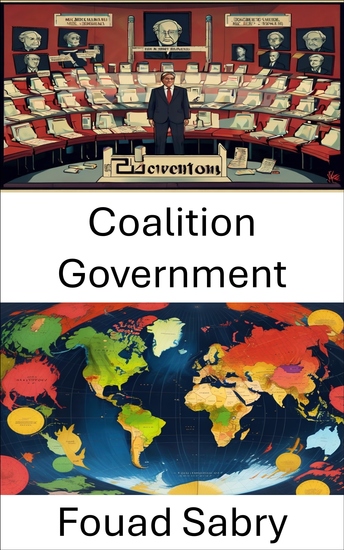
Coalition Government - Dynamics of Power Sharing and Political Alliances
Fouad Sabry
Casa editrice: One Billion Knowledgeable
Sinossi
Coalition governments exemplify the art of compromise, negotiation, and effective policymaking in democratic governance. *Coalition Government* provides crucial insights into these political arrangements, benefiting students, professionals, and political enthusiasts alike.

Chapters Overviews

1: Coalition Government - Defines coalition governments, exploring alliances and power-sharing.

2: Politics of Japan - Examines Japan’s coalition politics, led by the Liberal Democratic Party.

3: Politics of Norway - Highlights coalition strategies in Norway, focusing on consensus-building.

4: Liberal Democratic Party (Japan) - Focuses on the LDP's key role in forming Japanese coalitions.

5: List of Political Parties in Norway - Overview of Norway’s political spectrum and coalition management.

6: Minority Government - Explores minority governments’ challenges in operating with limited support.

7: National Unity Government - Examines the role of national unity governments during crises.

8: List of Canadian Federal Parliaments - Showcases Canada’s coalition and minority governments.

9: Folketing - Denmark’s consensus-driven political model of proportional representation.

10: Snap Election - Discusses the effects of snap elections on coalition stability.

11: Politics of Bulgaria and 12: Politics of Romania - Compares coalition politics in Eastern Europe.

13: Hung Parliament - Explores the complexities of forming governments in hung parliaments.

14: Grand Coalition - Examines grand coalitions and their impact in Germany and Austria.

15: 1996 Japanese General Election - Analyzes electoral outcomes and coalition negotiations in Japan.

16: Confidence and Supply - Breaks down confidence and supply agreements sustaining minority governments.

17: Balance of Power (Parliament) - Discusses smaller parties’ influence on coalition negotiations.

18: 2008 Serbian Parliamentary Election - Explores coalition politics in post-conflict Serbia.

19: Politics of Denmark and 20: 2015 Danish General Election - Details Denmark’s coalition experiences.

21: 2017 Norwegian Parliamentary Election - Analyzes Norway’s post-election coalition strategies.

Conclusion

This book offers a comprehensive study of how political alliances shape governance worldwide. By investigating coalition negotiations, minority governments, and electoral impacts, readers are equipped with valuable knowledge on modern coalition politics.
Disponibile da: 01/10/2024.
Lunghezza di stampa: 348 pagine.