Unisciti a noi in un viaggio nel mondo dei libri!
Aggiungi questo libro allo scaffale
Grey
Scrivi un nuovo commento Default profile 50px
Grey
Iscriviti per leggere l'intero libro o leggi le prime pagine gratuitamente!
All characters reduced
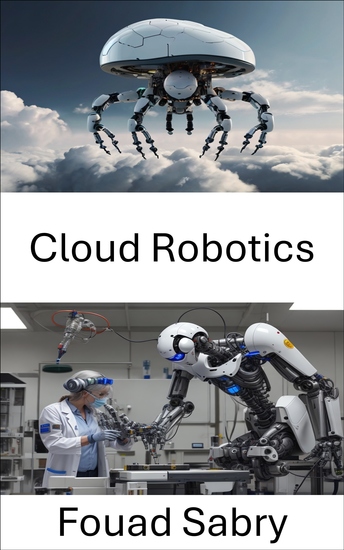
Cloud Robotics - Harnessing Networked Intelligence for the Next Era of Autonomous Machines - cover

Cloud Robotics - Harnessing Networked Intelligence for the Next Era of Autonomous Machines

Fouad Sabry

Casa editrice: One Billion Knowledgeable

  • 0
  • 0
  • 0

Sinossi

1: Cloud robotics: An introduction to cloud robotics, explaining how cloud infrastructure supports robots' processing and storage capabilities.
 
2: Client–server model: A detailed look at the clientserver architecture that facilitates communication between robots and cloud servers.
 
3: Neuromorphic computing: Explores how neuromorphic computing mimics the brain's neural networks, advancing robotic learning and decisionmaking.
 
4: Simultaneous localization and mapping: Focuses on the integration of cloud computing to optimize realtime robot mapping and localization.
 
5: Computational intelligence: Delves into computational intelligence techniques used to improve robots' autonomous decisionmaking in cloud environments.
 
6: Neuroinformatics: Examines the role of neuroinformatics in bridging neural computing and robotics within the cloud.
 
7: Robot learning: Discusses machine learning strategies for robots, leveraging cloud resources to enhance learning and adaptation.
 
8: Gregory Dudek: Highlights the contributions of Gregory Dudek to the field of robotics and his influence on cloudbased robotics research.
 
9: Edge computing: Explores how edge computing is integrated with cloud robotics to process data closer to the source, improving efficiency.
 
10: Cyber–physical system: An analysis of the cyberphysical systems used in cloud robotics to link physical robots with cloudbased data and software.
 
11: Cloud computing: Covers cloud computing fundamentals, emphasizing its importance in the development and evolution of cloud robotics.
 
12: Deep learning: Examines deep learning techniques in robotics, showing how robots use cloudbased deep learning models for enhanced autonomy.
 
13: Google Brain: A look at how Google Brain contributes to AI and cloudbased robotics, revolutionizing machine learning models for robots.
 
14: AI accelerator: Explores how AI accelerators power cloud robotics, boosting robots’ capabilities with advanced computational power.
 
15: Amir Hussain (cognitive scientist): Reviews Amir Hussain’s work on cognitive robotics and how it informs cloud robotics development.
 
16: Fog robotics: Investigates fog computing and its synergy with cloud robotics to process data and enhance robot performance at the edge.
 
17: Multitask optimization: Discusses methods for multitask optimization, ensuring that cloud robots efficiently handle complex tasks simultaneously.
 
18: Aude Billard: Examines Aude Billard's groundbreaking work in robotic learning and its integration with cloud systems for improved robot behavior.
 
19: Juyang Weng: Highlights Juyang Weng’s contributions to robotics, particularly in cognitive modeling and cloudbased robot intelligence.
 
20: Cache (computing): Provides insights into cache computing and how caching techniques optimize cloud robotics for better performance.
 
21: Peertopeer: Concludes with an exploration of peertopeer networking in cloud robotics, enabling decentralized and efficient communication between robots.
Disponibile da: 09/12/2024.
Lunghezza di stampa: 262 pagine.


Altri libri che potrebbero interessarti

  • Diverticulitis - Healing from Diverticular Diseases through the Ideal Diet - cover

    Diverticulitis - Healing from...

    Lilly Richardsen

    • 0
    • 0
    • 0
    Diverticulitis and diverticular disease are conditions that affect the digestive system, specifically the colon. The colon is a crucial part of the digestive tract, where the body absorbs nutrients and water from food. Diverticulosis, the precursor to diverticulitis, occurs when small, bulging pouches, known as diverticula, form in the walls of the colon. These pouches develop when weak spots in the colon’s muscular layer give way under pressure, creating pockets where waste can accumulate. While diverticulosis is common, especially in individuals over the age of 40, it often goes unnoticed because it doesn’t typically cause symptoms. 
    However, when one or more of these pouches becomes inflamed or infected, it leads to diverticulitis. Diverticulitis can cause significant pain, particularly in the lower left side of the abdomen, and may be accompanied by fever, nausea, and changes in bowel habits, such as diarrhea or constipation. The severity of diverticulitis can vary, ranging from mild cases that can be treated with antibiotics and dietary changes to severe cases that may require hospitalization or surgery. 
    The causes of diverticulitis are still not fully understood, but several factors are believed to contribute to its development. One of the most significant factors is a low-fiber diet, which can lead to constipation and increased pressure within the colon. Other risk factors include aging, obesity, lack of physical activity, smoking, and certain medications, such as steroids or nonsteroidal anti-inflammatory drugs (NSAIDs). Genetic predisposition may also play a role in the development of diverticular disease.
    Mostra libro
  • Mastering PostgreSQL for Data Engineering and Cloud Deployment - Design Optimize and Manage PostgreSQL Databases for Data Engineering High Availability and AWS Cloud Integration - cover

    Mastering PostgreSQL for Data...

    Jaques Fozao

    • 0
    • 0
    • 0
    Design, Optimize, and Scale PostgreSQL for Modern Data Pipelines.
    Book Description
    PostgreSQL is a leading open-source database, essential for modern data engineering tasks. Mastering PostgreSQL for Data Engineering and Cloud Deployment is your complete guide to unlocking PostgreSQL’s full potential in data-centric environments.
    Starting with installation and configuration, the book moves through foundational SQL, complex queries, and schema design. You will then deep dive into backup and restore, replication, high availability, and performance tuning strategies necessary for large-scale data workflows. The final chapters guide you through integrating PostgreSQL with AWS cloud services like RDS, EC2, and S3, enabling cloud-native data operations and migrations.
    Packed with real-world use cases, this book helps data engineers streamline operations, optimize queries, and build resilient, high-performance database systems.
    Hence, whether you are designing pipelines or managing production workloads, this is your roadmap to PostgreSQL mastery.
    Table of Contents
    1. Introduction to PostgreSQL
    2. Installing and Initializing PostgreSQL
    3. Subsets of SQL
    4. Understanding the Database
    5. PostgreSQL Configurations and File Permissions
    6. Backup and Restore
    7. Replication and High Availability
    8. Upgrade
    9. Performance Tuning
    10. Functions in PostgreSQL
    11. Demystifying Table Joints, Subqueries, CTE, and Views
    12. Cloud Computing (AWS)
    13. IAM Users and AWS Migration       
    
    Index
    Mostra libro
  • Zoology - The Diversity of Animal Life and Their Behavior and Conservation - cover

    Zoology - The Diversity of...

    Jeron Iris

    • 0
    • 0
    • 0
    Zoology is the scientific study of animals, their biology, behavior, and interactions with their environment. As one of the core branches of biology, zoology seeks to understand the vast diversity of animal life on Earth, ranging from the simplest invertebrates to the most complex mammals. It encompasses a wide array of topics, including animal anatomy, physiology, behavior, ecology, and evolution, offering insights into the very essence of life itself. 
    The importance of studying zoology is far-reaching. Animals are not only a key part of the planet’s biodiversity but also play vital roles in ecosystems that support life on Earth. They are integral to food webs, pollination, seed dispersal, and maintaining the balance of natural systems. By understanding animals, zoologists can contribute to the conservation and preservation of species and habitats, ensuring the survival of both the creatures themselves and the ecosystems they support. 
    Zoology, as a discipline, has evolved significantly over centuries. From the earliest observations of animal behavior and anatomy by ancient civilizations to the development of modern scientific techniques, the field has grown to encompass various specialized subfields. Among the many branches of zoology, some focus on specific groups of animals, such as entomology (study of insects), ornithology (study of birds), and ichthyology (study of fish). Other areas, such as ethology, examine animal behavior, while ecology explores the interactions between animals and their environments. 
    An essential part of zoology is the understanding of animal classification. The diverse array of species that inhabit our planet is categorized based on shared characteristics.
    Mostra libro
  • Nature & Culture - A change empowered by joy! - cover

    Nature & Culture - A change...

    Eco-Philosophy The Council for

    • 0
    • 0
    • 0
    Dalai Lama (2000) believes that seeking happiness "lies in our nature": The desire or need to be happy knows no bounds. It is something that lies in our nature. As such, it needs no grounds and it is justified by the simple fact that it is something we rightly want out of our nature. One has also asked if happiness is as important in all cultures. The answer is that happiness is at the top of the wish-list in every country; It is more important than wealth and to come to heaven, and as important as love (Diener and Biswas-Diener, 2008)...what makes us richer has been costly. The wealth, or what has been the prerequisite for wealth, has reduced a quieter life, close and stable relationships, we are moving apart. A materialistic lifestyle has a negative connection with happiness (Hellevik, 2003). NEF (2016) has calculated values on Happy Planet Index for 140 countries. Highest ranks Costa Rica and a number of other countries in Latin America. The population of Costa Rica has high values for happiness and longevity, and they have low values of ecological footprints. Norway has very high values of happiness and longevity, but also of footprints. In total, Norway is ranked twelfth and therefore highest among European countries, but closely followed by Albania. The United Kingdom is at thirty-fourth place, Canada number eighty-five and the United States number 108.
    Mostra libro
  • How to Become a Physical Therapist Career Professional Development Planning Audio Book - With Job Interview Preparation & Coaching Guide for Men Women Teens & Young Adults - cover

    How to Become a Physical...

    Brian Mahoney

    • 0
    • 0
    • 0
    End Money Worries! 
    How to Become a Physical Therapist Career Professional Development Planning Audio Book 
    With Job Interview Preparation & Coaching Guide for Men, Women, Teens & Young Adults 
    by Brian Mahoney 
           Discover... 
    * What a Physical Therapist does 
         * How to Become a Physical Therapist 
          * What is the salary of a Physical Therapist 
             * What is the Physical Therapist Work Environment like 
                 * What is the future Job outlook for a Physical Therapist 
             * how long does it take to become a Physical Therapist 
          * How to Prepare for Your Job Interview 
       * Tips the pros use to Ace their Job Interview 
    * You'll be confident with the best answers for the toughest job interview questions 
    The knowledge and ability to change your life all for less than the cost of 1 movie ticket! 
     If you are ready to get started & want the knowledge, help & motivation to change your life now!... 
    Then this Book is for you!!! 
                         So Don't wait. You'll wait your life away...
    Mostra libro
  • Milk - cover

    Milk

    Matthew Evans

    • 0
    • 0
    • 0
    A powerful, entertaining and, at times, eviscerating commentary on the most controversial of original superfoods. 
     
    Milk. It's in our coffee, on our cereal. We see it in processed form – yoghurt, butter, cheese, skimmed and lactose free. It's there in almond form, or made from oats or soy, and is as lauded as the 'perfect' food or lambasted as not fit for human consumption and a toxic planet killer, depending on who you trust. Which type you drink, whether you were raised on breastmilk, what you think of it, is affected by culture, biology and fashion. How you view it is driven by your gender and your politics, as well as your geography. 
     
    The miracle liquid has suffered an image problem. It has been used to keep people poor, to keep women subjugated, and to build corporate and medical careers. It's been blamed for climate change, the breakdown of human health, and an enabler of the industrial revolution. From perfect food to pariah, milk's role in life has often been debased. 
     
    Milk celebrates the majesty of this noble liquid, and delves into the pretenders to its throne, from formula to Mylk. It looks at the transformation of what a milk-producer eats into one of the most nutrient dense foods available, and how that can be transformed again into the butter, cheese and clotted cream that we know and love today. It's an exploration of the science, history and politics of what makes mammals different from every other life form on earth.
    Mostra libro