Unisciti a noi in un viaggio nel mondo dei libri!
Aggiungi questo libro allo scaffale
Grey
Scrivi un nuovo commento Default profile 50px
Grey
Iscriviti per leggere l'intero libro o leggi le prime pagine gratuitamente!
All characters reduced
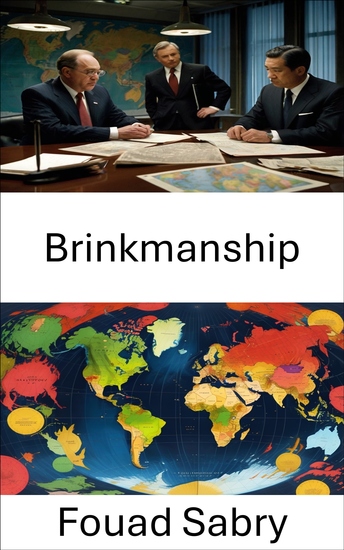
Brinkmanship - Mastering the Art of High-Stakes Negotiation and Strategy - cover

Brinkmanship - Mastering the Art of High-Stakes Negotiation and Strategy

Fouad Sabry

Casa editrice: One Billion Knowledgeable

  • 0
  • 0
  • 0

Sinossi

Are you interested in the high-stakes realm of international diplomacy? Brinkmanship is your essential guide to understanding the art of pushing confrontations to the brink of disaster to achieve political goals. This book offers an in-depth exploration of brinkmanship, detailing its historical significance, theoretical foundations, and the complex risks and rewards of this daring strategy.
 
1: Brinkmanship: Explore the core principles of brinkmanship, including its definition and strategic intent.
 
2: Cuban Missile Crisis: Analyze a pivotal moment in history where brinkmanship highlighted extreme risks and potential rewards.
 
3: Partial Nuclear Test Ban Treaty: Investigate the treaty's negotiations and implications, showcasing brinkmanship’s influence on arms control.
 
4: Mutual Assured Destruction: Delve into the concept of MAD and its role in shaping international relations through brinkmanship.
 
5: Nuclear Blackmail: Examine nuclear blackmail as a strategic tool used to leverage political advantages.
 
6: Nuclear Arms Race: Trace the nuclear arms race's development and its impact on global politics fueled by brinkmanship.
 
7: Cold War (1953–1962): Explore key events and policies demonstrating brinkmanship during this critical historical period.
 
8: First Taiwan Strait Crisis: Review this crisis to understand how brinkmanship plays a role in regional conflicts.
 
9: Massive Retaliation: Learn about the doctrine of Massive Retaliation and its implications for brinkmanship strategy.
 
10: Llewellyn Thompson: Highlight Thompson’s contributions to brinkmanship and his role in strategic development.
 
11: World War III: Explore hypothetical scenarios regarding the potential for World War III and brinkmanship's role.
 
12: New Look (Policy): Understand Eisenhower's New Look policy and its approach to brinkmanship.
 
13: Vienna Summit: Examine the Vienna Summit’s influence on Cold War diplomacy and brinkmanship.
 
14: Strategic Nuclear Weapon: Discover the significance of strategic nuclear weapons within the context of brinkmanship.
 
15: Presidency of John F. Kennedy: Analyze Kennedy’s approach to brinkmanship and its impact on foreign policy.
 
16: Berlin Crisis of 1961: Review how brinkmanship was pivotal in the Berlin Crisis during the Cold War.
 
17: Outline of the Cold War: Gain an overview of the Cold War, focusing on how brinkmanship shaped its course.
 
18: Foreign Policy of the John F. Kennedy Administration: Examine Kennedy’s foreign policy strategies and their connection to brinkmanship.
 
19: Foreign Policy of the Dwight D. Eisenhower Administration: Explore Eisenhower’s approach and its employment of brinkmanship.
 
20: Berlin Crisis of 1958–1959: Analyze the implications of the 1958–1959 Berlin Crisis for brinkmanship.
 
21: List of Twilight Struggle References: Access a curated list of references related to Twilight Struggle for additional context.
Disponibile da: 08/10/2024.
Lunghezza di stampa: 459 pagine.
Altri libri che potrebbero interessarti

  • Living in the Moment - A Guide to Overcoming Challenges and Finding Moments of Joy in Alzheimer’s Disease and Other Dementias - cover

    Living in the Moment - A Guide...

    MD Elizabeth Landsverk, Heather...

    • 0
    • 0
    • 0
    A loved one's dementia diagnosis can leave you feeling scared and overwhelmed. Now a renowned geriatrician who has helped thousands of families live happy, engaged lives—after a dementia diagnosis—shares her expertise in this easy-to-follow guide. 


    Filled with must-have information, practical advice, and unique and comforting insights, here is everything you need to know about caring for your loved one and making his or her life the best possible—starting now, even as the disease progresses. In this book, you'll find: how to create a plan of action for today—and tomorrow—that will help all involved cope with this new normal; how to keep your vulnerable loved one safe and secure—both physically and financially; lifestyle changes, innovative new activities, and holistic interventions that can slow the progression of dementia; comprehensive information on both prescription and OTC medications that can help or hurt dementia patients; and much more. 


    In addition to all the essential advice, Dr. Landsverk demystifies the ins and outs of dementia, explaining what it is and what it's not, making sure you and your loved one will be ready to address whatever develops and maintain quality of life. Uniquely, Living in the Moment will transform how you think about dementia, providing comfort and support for the best life possible—at any stage.
    Mostra libro
  • Stumbling Blocks - A Second Generation Holocaust Memoir - cover

    Stumbling Blocks - A Second...

    Jennifer Krebs

    • 0
    • 0
    • 0
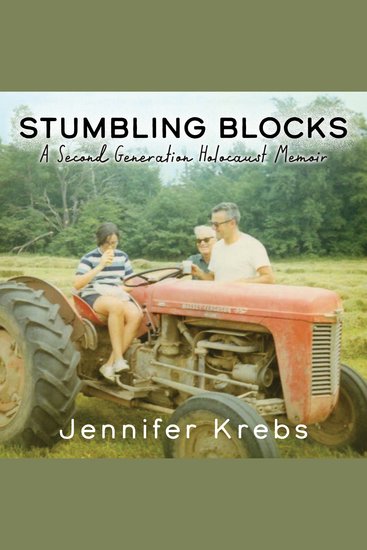
    Stumbling Blocks is a powerful intergenerational memoir by Jennifer Krebs that explores her family’s journey from Nazi Germany to rural America. Blending personal history, Jewish identity, and emotional reflection, the book traces her father’s memories of growing up under the Third Reich and her own coming-of-age in small-town New York as the daughter of a survivor. The title refers to the Stolpersteine—brass plaques in Europe commemorating victims of National Socialism—that spark a meditation on trauma, memory, and belonging. With warmth, honesty, and a touch of wit, Krebs reflects on family legacy, the echoes of history, and the quiet resilience of survival.
    Mostra libro
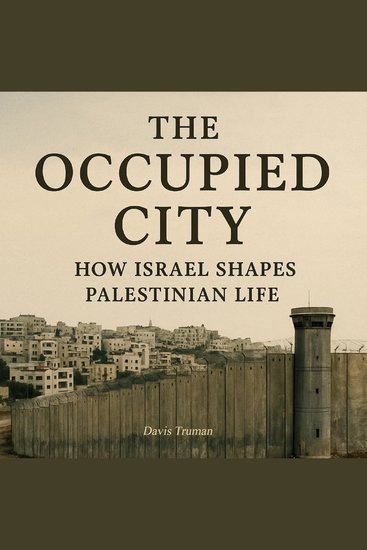
  • The Occupied City - How Israel Shapes Palestinian Life - cover

    The Occupied City - How Israel...

    Davis Truman

    • 0
    • 0
    • 0
    East Jerusalem is more than a city; it is a battleground of maps, walls, and blueprints. In The Occupied City: How Israel Shapes Palestinian Life, readers are taken inside one of the world’s most contested urban landscapes, where every building permit, zoning law, and planning decision becomes a tool of power. 
    Drawing on years of research and first-hand interviews with Palestinian residents, urban planners, and human rights experts, this book exposes how Israeli urban planning policies restrict Palestinian access to housing, fracture communities, and rewrite the very geography of Jerusalem. It reveals how control is exercised not only through military presence but through bureaucratic procedures, economic pressures, and cultural erasure—quiet mechanisms that determine who gets to build, who is forced to leave, and whose story is allowed to endure. 
    At once rigorous and deeply human, The Occupied City gives voice to those living under the daily weight of planning systems designed to dispossess them. It uncovers the hidden architecture of occupation while also spotlighting acts of resilience, resistance, and visions for a more just future. 
    Essential reading for anyone seeking to understand the Israeli–Palestinian conflict beyond headlines, this book demonstrates how urban planning—often regarded as technical or neutral—is, in fact, one of the most powerful weapons in the struggle over land, rights, and survival.
    Mostra libro
  • Acropolis and the Agora The: The History of Ancient Athens’ Most Important Sites - cover

    Acropolis and the Agora The: The...

    Editors Charles River

    • 0
    • 0
    • 0
    The Acropolis, which literally means “a city on the heights,” is a citadel whose currently surviving structures were mostly built during the 5th century B.C. in honor of Athena, the patron goddess of Athens. It functioned as a sacred precinct that contained the city’s most important religious and municipal structures, many of which have remained relatively intact for over 2,000 years. The Propylaea (the gateway to the Acropolis), the Parthenon (the principal shrine to the goddess), the Erechtheion (a shrine that supposedly houses the burial grounds of mythical Athenian kings), and the Temple of Athena Nike all survive to this day, and for these reasons, the Acropolis is perhaps the definitive and most eloquent expression of classical architecture, if not of the classical form itself. The Acropolis, which literally means “a city on the heights,” is a citadel whose currently surviving structures were mostly built during the 5th century B.C. in honor of Athena, the patron goddess of Athens.  
    	The center of political and commercial interaction in the Ancient Greek polis was the agora. The word essentially means a gathering place or an open space, and in all Greek city states, the agora was central to all aspects of daily life and commerce. As the agora developed as a civic space, particularly from the 6th century B.C. onward in Athens, the architectural splendor of the buildings associated with it became an ever more obvious demonstration of the power and glory of Athenian democracy. 	In its earliest forms, an agora in maritime cities was invariably situated near the sea, while in inland urban centers, it was usually located at the foot of the hill that normally provided the city’s ultimate defense. The agora was always the oldest part of any city and, as such, and as well as being the commercial hub of the area, also became the center of the religious and political life of the polis.
    Mostra libro
  • On the Parts of Animals - cover

    On the Parts of Animals

    Aristotle

    • 0
    • 0
    • 0
    "On the Parts of Animals" is a biological treatise written by Aristotle, in which he extensively examines the anatomy and physiology of different animals, including humans. The book is divided into four sections, each focusing on a different aspect of animal life. In the first section, Aristotle explores the concept of soul and distinguishes between different types of souls that exist in animals. In the second section, he discusses the structure and function of sensory organs, such as eyes and ears, and how animals use them to interact with their environment. In the third section, he analyzes the digestive system and other internal organs, as well as the reproductive system, to understand how animals sustain themselves and reproduce. Finally, in the fourth section, he looks at the differences between different animal species and the variations in their anatomy and physiology. Read in English, unabridged.
    Mostra libro
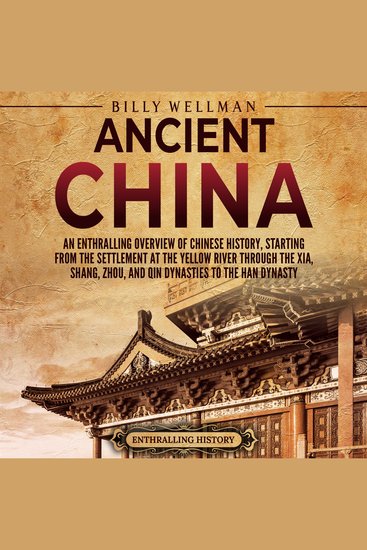
  • Ancient China: An Enthralling Overview of Chinese History Starting from the Settlement at the Yellow River through the Xia Shang Zhou and Qin Dynasties to the Han Dynasty - cover

    Ancient China: An Enthralling...

    Billy Wellman

    • 0
    • 0
    • 0
    It has become a common theme in today’s world to talk about the incredible technological and economic development of modern China. However, there are very strong historical roots to the exponential growth of modern China going back thousands and thousands of years. 
    Today, people stand in awe of China’s achievements, such as lifting hundreds of millions of people from poverty or becoming a global power. But have you ever wondered how the ancient people from the Far East developed so much while being virtually independent of other civilizations? 
    Not everything in China’s history is tied to growth, improvement, and development. There were many periods riddled with internal strife, which plagued China and its numerous dynasties. However, the Chinese empires were somewhat shielded from external dangers, partially thanks to the ingeniousness of the Chinese and the famous Great Wall of China and partially thanks to the country’s geographic position. 
    In this audiobook, we look into how and why the historical pendulum of China sometimes turned one way and then the other. Discover the following about ancient China:The deep, virtually unfathomable paleolithic roots of Chinese civilization;Neolithic China and the formation of the Yellow River and Yangtze settlements;The Age of Metal in China, a glorious but increasingly violent period that resulted in the emergence of the first hegemons in China;The mythical Xia dynasty and its fantastic Yu the Great, credited with taming the Yellow River;The birth of China’s fascinating writing system during the Shang dynasty;The rise of the Zhou, who finally overthrew the Shang, thanks to their military prowess and ability to keep numerous Chinese states tied in a loose feudal system;And so much more! 
    Scroll up and click the “add to cart” button to begin learning about Ancient China today!
    Mostra libro