



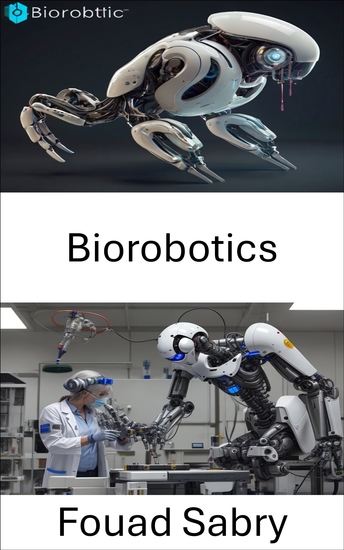
Biorobotics - Advancing human potential through robotic integration
Fouad Sabry
Casa editrice: One Billion Knowledgeable
Sinossi
1: Biorobotics: Introduces the fundamental concept of biorobotics, blending biological processes with robotic systems for enhanced humanmachine interaction.

2: Biomedical engineering: Explores the role of engineering in developing medical devices and technologies that bridge the gap between biology and technology.

3: Prosthesis: Covers the development of artificial limbs and devices that restore lost functionality and improve quality of life for amputees.

4: Cyberware: Discusses the integration of cybernetic technologies to augment or replace human biological systems for enhanced abilities.

5: Synthetic biology: Focuses on the design and construction of new biological parts, systems, and organisms to create innovative solutions for health and environment.

6: Bionics: Explores the application of biological principles in designing mechanical systems that mimic biological processes for human benefit.

7: Gene gun: Details the technology used to introduce foreign DNA into cells, enabling genetic modifications and advances in medical treatments.

8: Neuroprosthetics: Examines the development of devices that interface directly with the nervous system to restore lost sensory or motor functions.

9: Passive dynamics: Looks at how passive components in robotics mimic biological systems, allowing for more efficient and natural movements.

10: Wetware computer: Investigates the concept of using biological materials as computational elements to create advanced, biobased computing systems.

11: Neural engineering: Focuses on the design of technologies that interact with the nervous system to restore or enhance sensory and motor functions.

12: Biomechatronics: Combines mechanical engineering, biology, and electronics to develop devices that integrate seamlessly with the human body.

13: Biomechanical: Examines the mechanical properties of biological systems and how these principles are applied in designing more effective medical devices.

14: Biological engineering: Discusses the engineering techniques used to manipulate biological systems for a range of applications in medicine, agriculture, and environmental sustainability.

15: Hybrot: Introduces hybrid robots, which combine biological and mechanical components, offering new possibilities in robotics and bioengineering.

16: Insert (molecular biology): Explores the role of molecular biology in genetic modification and how these techniques contribute to advancements in robotics.

17: Robotic prosthesis control: Focuses on how robotic prosthetics are controlled, examining the technologies that enable seamless interaction with the user’s nervous system.

18: Hazards of synthetic biology: Investigates the ethical and safety concerns surrounding synthetic biology, including risks of unintended consequences.

19: Biochemical engineering: Explores the principles of biochemical engineering and how they are applied to enhance the functionality and sustainability of biorobotic systems.

20: Biocompatibility: Discusses the critical importance of ensuring that robotic devices are compatible with human biology to minimize rejection or adverse reactions.

21: Organ printing: Examines the emerging field of organ printing, where bioprinting technology is used to create functional organs for medical applications.
Disponibile da: 09/12/2024.
Lunghezza di stampa: 233 pagine.




