Unisciti a noi in un viaggio nel mondo dei libri!
Aggiungi questo libro allo scaffale
Grey
Scrivi un nuovo commento Default profile 50px
Grey
Iscriviti per leggere l'intero libro o leggi le prime pagine gratuitamente!
All characters reduced
Behavior Based Robotics - Designing Intelligent Systems for Adaptive Learning and Interaction - cover

Behavior Based Robotics - Designing Intelligent Systems for Adaptive Learning and Interaction

Fouad Sabry

Casa editrice: One Billion Knowledgeable

  • 0
  • 0
  • 0

Sinossi

1: Behaviorbased robotics: Introduces the principles that guide behavior based systems in robotics.
 
2: Subsumption architecture: Explores a layered architecture for building complex robotic behaviors.
 
3: BEAM robotics: Discusses simple, efficient robots designed to mimic biological behaviors.
 
4: Bioinspired computing: Examines how biological systems inspire computational approaches in robotics.
 
5: Luc Steels: Highlights contributions to robotics and language evolution from this key researcher.
 
6: Social simulation: Investigates how social interactions among agents inform behaviorbased designs.
 
7: Rodney Brooks: Covers the revolutionary ideas brought forth by this pioneer in robotics.
 
8: Simultaneous localization and mapping: Explains methods for a robot to navigate and map environments.
 
9: Multiagent system: Discusses systems where multiple robots interact and collaborate.
 
10: Physical symbol system: Explores how physical entities can manipulate symbols for problemsolving.
 
11: Modelbased reasoning: Analyzes reasoning processes in robots using internal models of the environment.
 
12: Intelligent agent: Defines agents capable of autonomous action in dynamic environments.
 
13: Embodied cognitive science: Connects physical embodiment and cognitive processes in robotics.
 
14: Nouvelle AI: Introduces new artificial intelligence approaches influencing behaviorbased robotics.
 
15: Activity recognition: Discusses techniques for robots to recognize and respond to human activities.
 
16: Apprenticeship learning: Explores how robots can learn from observing others.
 
17: Situated approach (artificial intelligence): Emphasizes the importance of context in AI decisionmaking.
 
18: Winnertakeall in action selection: Explains decisionmaking processes in competitive environments.
 
19: Elmer and Elsie (robots): Case study of specific robots showcasing behaviorbased principles.
 
20: Symbolic artificial intelligence: Examines the role of symbols in the cognitive abilities of robots.
 
21: Decentralised system: Discusses the advantages of decentralized architectures in robotic systems.
Disponibile da: 09/12/2024.
Lunghezza di stampa: 207 pagine.
Altri libri che potrebbero interessarti

  • The Nature Book - cover

    The Nature Book

    Tom Comitta

    • 0
    • 0
    • 0
    Part sweeping evocation of Earth's rhythms, part literary archive, part post-human novel, The Nature Book collages descriptions of the natural world into a singular symphonic paean to the planet. 


    What does our nature writing say about us, and more urgently, what would it say without us? Tom Comitta investigates these questions and more in The Nature Book, a "literary supercut" that arranges writing about the natural world from three hundred works of fiction into a provocative re-envisioning of the novel. With fiction's traditional background of flora and fauna brought to the fore, people and their structures disappear, giving center stage to animals, landforms, and weather patterns—honored in their own right rather than for their ambient role in human drama. The Nature Book challenges the confines of anthropocentrism with sublime artistic vision, traversing mountains, forests, oceans, and space to shift our attention toward the magnificently complex and interconnected world around us.
    Mostra libro
  • Data Equals - Democratic Equality and Technological Hierarchy - cover

    Data Equals - Democratic...

    Colin Koopman

    • 0
    • 0
    • 0
    An expansive vision for data equality that goes beyond algorithmic fairness. 
     
    When we gave algorithms power over our world, we hoped that the apparent neutrality of machine thinking would create a more egalitarian age. Yet we are more divided than ever, staring down threats to democracy itself. In Data Equals, Colin Koopman argues that data technologies fail us so often because we built them around a deficient notion of equality. 
     
    It is not enough, Koopman explains, that algorithms engage everyone’s data with the same measuring stick. The data themselves are all too often structured in ways that obscure and exacerbate stratifying distinctions. Koopman contends that we must also work to ensure that those people subject to computational assessment enter data systems on equal terms. Part philosophical argument, part practical guide (replete with case studies from education technology), Data Equals offers novel methods for realizing democratic equality in a digital age.
    Mostra libro
  • Up the Orinoco and Down the Magdalena - A Journey Across Northern South America - cover

    Up the Orinoco and Down the...

    J. A. Zahm

    • 0
    • 0
    • 0
    Across South America by river - up the Orinoco, over the divide and down the Magdalena - by a Catholic priest and scientist who made the journey in his late fifties. Zahm traveled with Theodore Roosevelt on a later expedition and wrote his own account of this one with a naturalist's attention. This edition binds 60 plates after Church, Bierstadt, Turner and others, and restores all 17 in-text illustrations in colour.
    Mostra libro
  • Artificial Intelligence and Generative Ai for Beginners - A Comprehensive Introduction to the Fundamentals Practical Applications and Future Trends of AI Technologies - cover

    Artificial Intelligence and...

    Ben Rizer

    • 0
    • 0
    • 0
    "Artificial Intelligence and Generative AI for Beginners: A Comprehensive Introduction to the Fundamentals, Practical Applications, and Future Trends of AI Technologies" is your essential guide to understanding the world of artificial intelligence. This book is designed specifically for newcomers to AI, offering a clear and engaging introduction to both foundational concepts and advanced topics in the field. 
    Starting with the basics, the book provides a thorough overview of artificial intelligence, including key principles, core algorithms, and essential technologies. You will learn about machine learning, neural networks, and the crucial differences between AI, machine learning, and deep learning. 
    The second part of the book delves into generative AI, exploring how these cutting-edge technologies can create new content, from images to text, and their applications in real-world scenarios. Through practical examples and case studies, you will gain insights into how generative models work and their potential to transform industries. 
    Finally, the book looks ahead to future trends in AI, including emerging technologies, ethical considerations, and the impact of AI on various sectors. Whether you're a student, a professional looking to pivot into AI, or simply curious about the potential of these technologies, this comprehensive guide will equip you with the knowledge and skills to navigate the evolving landscape of artificial intelligence. 
    With clear explanations, practical advice, and up-to-date information, this book is the perfect starting point for anyone looking to understand and harness the power of AI. 
     
    Mostra libro
  • Call of the Kingfisher - Bright sights and birdsong in a year by the river - cover

    Call of the Kingfisher - Bright...

    Nick Penny

    • 0
    • 0
    • 0
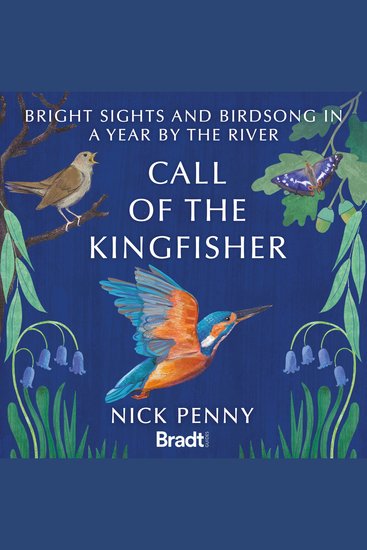
    Call of the Kingfisher is the enchanting debut from composer and wildlife recordist Nick Penny. This love letter to a short stretch of Northamptonshire's River Nene celebrates all the wild things that live there, especially the kingfishers. Nick has walked beside the river at Oundle for four decades. But for a whole year he gave the waterway all the time it asked for. The more attention he gave it, the more he saw the kingfishers and heard their high whistling calls. Set in a lovely but little-known part of England, Call of the Kingfisher relates a year by the river, the author's experiences there and the different people he meets. Other strands are woven around the elusive feathered protagonist: explorations of local history and landscape, from Roman and Bronze Age sites to watermills and centuries-old stone churches; visits at different times and to different places in the valley; homages to naturalists who lived nearby; forest dawns and dusks listening to the precious song of nightingales. But the background tapestry is the sights and sounds, and greens and browns, of the riverbank, shot through with the blue and orange threads of a kingfisher's glowing feathers.As a composer and wildlife recordist, Nick has a deep interest in sounds in the natural environment. He uses the local landscape and wildlife sounds as inspiration, and brings fresh insights into the sounds of the countryside. The book includes access to a number of high-quality birdsong recordings made alongside the River Nene - audio soundbites of nature's riches, from kingfishers and nightingales to owls and cuckoos. This is a book about the things that can be seen and heard when we approach nature with patience and curiosity. It celebrates people who have used that focus to help preserve wildlife and pass on their knowledge to future generations. Above all, Call of the Kingfisher serves as a call to appreciate what we've got, wherever we are, and to use our ears as much as our eyes when we experience the natural world.
    Mostra libro
  • The Storytelling Manual for Architects - A heartfelt manifesto for a better way to write and talk about what you do - cover

    The Storytelling Manual for...

    Juliette Mitchell

    • 0
    • 0
    • 0
    Storytelling is one of the most powerful tools we have. But we're not talking about a story as a nice-to-have or an occasional distraction from the real work you do. We’re talking about story as the backbone and the underlying structure, and story as a way of ordering your thoughts and connecting with those around you.
    If you want to make the most of every page on your website, every email to your clients and every conversation on site, this is the guidebook you need. It gives you a simple, flexible structure to tell the stories of your practice, your projects, your process, and your team. And, more than that, it reframes writing not as a chore but as an act of clarity and connection.
    The Storytelling Manual for Architects is a short, practical book with a very human mission – to help you find common ground, convey your worth, and show your clients the difference you can make. It’s a heartfelt manifesto for a better way to write and talk about what you do.
    Juliette Mitchell set up Architypal, a writing consultancy for architects, after many years as an editor at Penguin Books. The Storytelling Manual for Architects is both her step-by-step messaging strategy and her personal act of resistance in the face of AI and things to come.
    
    ‘It’s a great little book – both succinct and spirited!’ Ceri Davies, director at Allford Hall Monaghan Morris
    ‘This book is so good, I don’t want to recommend it to other architects. I want to keep it all to myself.’ Lee Holmes, associate director at Wainwrights
    ‘Joyous, loving, accessible, practical, and just what the doctor ordered.’ Barbara Iddon, co-author of Blueprints for the Soul: Why we need emotion in architecture
    ‘I devoured about 80% of it in the first sitting. Full of good and clear ideas.’ Paul Sheeran, principal at Architexture
    ‘Part guidebook, part pep talk, part love letter to clearer, kinder architectural communication. Practical, readable, and quietly radical.’ Simon Drayson, director at George & James Architects
    Mostra libro