Unisciti a noi in un viaggio nel mondo dei libri!
Aggiungi questo libro allo scaffale
Grey
Scrivi un nuovo commento Default profile 50px
Grey
Iscriviti per leggere l'intero libro o leggi le prime pagine gratuitamente!
All characters reduced
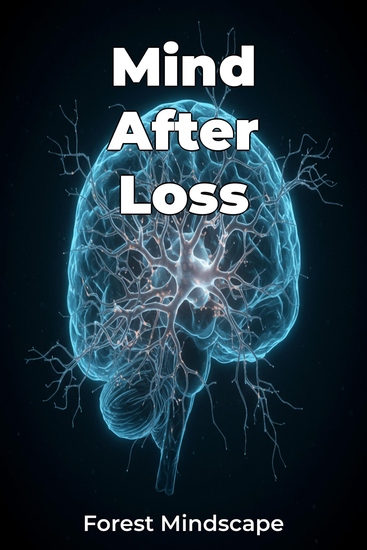
Mind After Loss - cover

Mind After Loss

Forest Mindscape

Traduttore A AI

Casa editrice: Publifye

  • 0
  • 0
  • 0

Sinossi

"Mind After Loss" explores the neurobiological aspects of grief recovery, proposing that healing from bereavement is not solely an emotional journey but also a process of neurobiological adaptation. The book reveals how grief profoundly impacts brain function, influencing cognitive processes and potentially leading to cognitive disorganization. Intriguingly, research shows that the brain exhibits neuroplasticity, rewiring itself after loss to accommodate new realities. 

 
The book progresses systematically, first establishing the neurobiological basis of emotion, then detailing the brain’s acute response to loss. It examines adaptive processes like cognitive restructuring, and finally, discusses therapeutic interventions and lifestyle adjustments to aid recovery. By integrating neuroscience with psychological theories, the book offers a unique, science-informed perspective on grief, moving beyond purely emotional care.

 
This book's value lies in its interdisciplinary approach, connecting psychology, neuroscience, and cognitive science to offer a holistic understanding of grief. It's particularly useful for therapists and individuals seeking evidence-based strategies to support psychological healing and understand the neurobiological impact of grief and bereavement. It emphasizes that through understanding these processes, we can foster resilience and promote effective coping strategies, ultimately facilitating healthier grief recovery.
Disponibile da: 18/02/2025.
Lunghezza di stampa: 76 pagine.

Altri libri che potrebbero interessarti

  • herbal and behavioral healing - cover

    herbal and behavioral healing

    Nate Saunders

    • 0
    • 0
    • 0
    If you want to reconnect with nature and discover the healing power of herbs then keep reading… 
    The truth is... our bodies give us signs to heal imbalances. But if we ignore these signs and ONLY rely on conventional drugs to cover up the symptoms instead of searching for and managing the root cause, it can be a recipe for disaster. 
    You will learn: 
    The ONE Herb You Need to Calm Your Nerves and Anxiety and How to Make It Into a Tincture or Essential Oil and More… 
    How to Make Your Natural First-Aid Kit 
    The Necessity of Understanding the Anatomy of Herbs 
    14 Effective Ways to Harness the Essence of Herbs 
    71 Ailments and Their Herbal Remedies at Your Fingertips 
    The Benefits of Herbalism and What’s Important for Your Body 
    40 Herbs Found In America and Europe, How to Grow, Harvest and Use Them 
    A Simple Strategy to Make Your Dream Home Apothecary Into a Reality 
    If you want to get rid of the ailment, you need to find and treat the root cause. That is possible with medicinal herbs, and this book will show you the way!
    Mostra libro
  • Lupus - A Comprehensive Guide to Understanding Lupus - cover

    Lupus - A Comprehensive Guide to...

    Lilly Richardsen

    • 0
    • 0
    • 0
    Lupus is a chronic autoimmune disease that can affect nearly every organ and tissue in the body. It occurs when the immune system, which is meant to protect the body from foreign invaders like bacteria and viruses, mistakenly attacks healthy tissues. This malfunction leads to inflammation and damage in various parts of the body, including the skin, joints, kidneys, heart, and lungs. The unpredictable nature of lupus, with periods of flare-ups followed by remissions, makes it particularly difficult to diagnose and manage. 
    Understanding lupus is critical because, despite its widespread prevalence, many people are still unaware of its complexities. The disease often manifests in diverse ways, ranging from mild symptoms to life-threatening conditions. Because lupus shares symptoms with other diseases, it can be challenging to diagnose in its early stages. This makes awareness and early recognition essential for effective management and treatment.
    Mostra libro
  • Understanding Virtual Reality - Applications and Experiences - cover

    Understanding Virtual Reality -...

    Craig Dames

    • 0
    • 0
    • 0
    Virtual Reality, often abbreviated as VR, is a groundbreaking technology that enables users to immerse themselves in computer-generated environments that feel remarkably real. Unlike traditional media, which presents information on a flat screen, VR creates a three-dimensional space where users can look around, move, and sometimes even interact with digital elements as if they were physically present. This sense of immersion is what sets VR apart and makes it such a powerful and transformative tool. 
    The concept of virtual reality has existed for decades, with its roots stretching back to the 1960s. Early prototypes like the Sensorama and the first head-mounted displays laid the groundwork for what would eventually become modern VR systems. Over the years, technological advancements in computing power, display quality, motion tracking, and software development have allowed VR to evolve from a niche curiosity into a versatile tool with applications across numerous industries. The introduction of consumer-grade headsets in the 2010s, such as the Oculus Rift and HTC Vive, marked a turning point in accessibility and interest in VR experiences. 
    A complete VR system typically consists of several key components. At the core is the headset, which provides stereoscopic visuals and often includes built-in motion sensors to track head movements. Many headsets are paired with hand controllers, allowing users to interact with objects or navigate virtual environments more naturally. Some systems incorporate additional accessories like haptic gloves, treadmills, or external sensors to enhance realism and expand the user’s range of motion. Software is equally important, as it governs the design of virtual spaces, the behavior of virtual elements, and the overall user experience.
    Mostra libro
  • Rewriting the History of the Black Death - Unveiling the Truth Behind Medieval Misconceptions - cover

    Rewriting the History of the...

    John Harpoon

    • 0
    • 0
    • 0
    The Black Death, one of the most devastating pandemics in human history, left an indelible mark on the medieval world. From the mid-14th century, this catastrophic event wiped out an estimated one-third of Europe's population, with ramifications extending far beyond the immediate loss of life. Its legacy endures, not only in historical accounts but also in the cultural, social, and economic transformations it triggered. 
      
    The pandemic’s unparalleled scale of mortality created a sense of collective trauma that shaped the mindset of medieval society. Fear, uncertainty, and grief were pervasive, leading to widespread shifts in religious devotion and philosophical thought. For some, the plague strengthened their faith, prompting public acts of penance and increased church attendance. For others, it inspired skepticism about religious authority, paving the way for future reforms and dissent. This dual response reflects the Black Death's role as both a destroyer of tradition and a catalyst for change. 
      
    Economically, the pandemic dramatically altered the medieval labor market. The decimation of the population led to acute labor shortages, forcing landowners to offer better wages and conditions to retain workers. This shift empowered peasants and contributed to the gradual erosion of the feudal system, giving rise to a nascent middle class. The newfound leverage of laborers sowed the seeds of social mobility, challenging the rigid hierarchies that had long defined medieval life.
    Mostra libro
  • The Future of Database Management Technologies - Harnessing the Power of Data: Insights and Strategies in Database Management - cover

    The Future of Database...

    Robert Lewis

    • 0
    • 0
    • 0
    Modern database systems are changing quickly, and the book "The Future of Database Management Technologies: Harnessing the Power of Data: Insights and Strategies in Database Management" looks into this and gives a complete guide to the next era of data management. Beginning with traditional relational systems and moving on to the newest ideas like NoSQL, NewSQL, and AI-driven optimization, this book shows how database technologies have changed over time. 
    Although this article talks about big changes like cloud-based database management systems (DBMS), real-time analytics, and decentralized data, it mostly talks about how businesses can use these new technologies to make strategic decisions. The book also looks at how to use big data frameworks, what data lakes and warehouses are for, and some examples of how advanced database solutions work in different types of businesses. 
    Security and privacy are at the top of the conversation because our world is based on data. They deal with both moral issues and new threats. The people who read this will learn about strategies that are ready for the future, like how to make databases that last, solutions based on blockchain technology, and database management systems that run themselves. 
    This book gives readers the information and skills they need to adapt to a database ecosystem that is always changing. It's great for tech fans, business leaders, and people who work with data because it has both in-depth technical information and useful advice. Get ready to use data to its fullest potential and stay ahead of the competition in a digital world that is always changing.
    Mostra libro
  • Data Mesh - Principles and Logical Architecture - cover

    Data Mesh - Principles and...

    Alexa Campbell

    • 0
    • 0
    • 0
    Gain a broader understanding of Data Mesh and logical architecture. 
    Have you ever asked yourself why you need to learn about Data Mesh? 
    What is their use in our daily life? 
    Have you ever wondered what the logical architecture is for a data mesh? 
    Your data is like a mesh. It's everywhere, and it's connected. 
    This book will help you understand the root causes of this problem and how to solve them using today's most advanced techniques in data management. 
    It is a book about the structure of a data mesh. It defines data mesh, how it works, and why you might want to use it. 
    This book was written for anyone who wants to learn more about this technology. Whether you're an engineer or developer working with a data mesh, someone who's just curious about how they work, or an entrepreneur looking at ways to improve your company's efficiency or productivity—this book will help you understand what these technologies are all about! 
    In this book, you will:Learn the Data Mesh, its state, and its futureLearn about the practical uses of Data MeshGet background knowledge about Data Mesh with concrete examplesMaster Domain Ownership PrincipleDiscover the principle behind the self-serve data platformLearn about the federated computational government principleDiscover the point of inflectionMaster the logical architecture 
    Data Mesh is not just a framework; it's an approach to data modeling that emphasizes simplicity, clarity, and scalability. This book will teach you how to use Data Mesh to build a logical architecture that scales. 
    Don't wait another second; click the “Add to Cart” button now, and the possibilities are endless!
    Mostra libro