Unisciti a noi in un viaggio nel mondo dei libri!
Aggiungi questo libro allo scaffale
Grey
Scrivi un nuovo commento Default profile 50px
Grey
Iscriviti per leggere l'intero libro o leggi le prime pagine gratuitamente!
All characters reduced
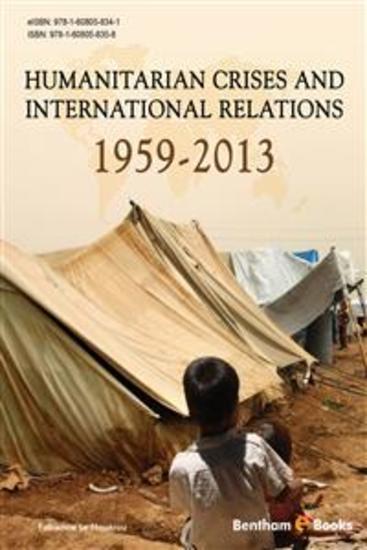
Humanitarian Crises and International Relations (1959-2013) - cover

Humanitarian Crises and International Relations (1959-2013)

Fabienne Le Houérou

Casa editrice: Bentham Science Publishers

  • 0
  • 0
  • 0

Sinossi

Humanitarian Crises and International Relations (1959-2013) presents a brief study of the relations between sovereign nations from 1959 to the current Afghanistan crisis (post NATO intervention). Each chapter is going to analyze a specific crisis in a chronological order. The chapters demonstrate how humanitarian crises linked to civil and military conflicts have reshaped international relations in our world today.
 
This book is a key tool for students undertaking courses related to the history of international relations as well as human rights and on international migrations. The topics in this book are connected to different disciplines (Anthropology, History and Political Science) and attempt to trace the most important change in the history of international relations related to the world crisis viz civil or external conflicts.
Disponibile da: 20/03/2024.

Altri libri che potrebbero interessarti

  • How to Analyze People With Dark Psychology - The Secret Guide to Unmask Others: Learn Dark Psychology Secrets Persuasion Techniques Emotional Manipulation Techniques Mind Control Brainwashing NLP Hypnosis to Influence Anyone - cover

    How to Analyze People With Dark...

    Dan Cooper

    • 0
    • 0
    • 0
    What if I told you that you can get whatever you want in life? 
    Unbelievable, right? But it’s true. 
    One of the biggest obstacles that stand in your way is other people, right? So, in this audiobook, we will show you how to undermine and get around other people with dark psychology.  
    The secrets contained in this audiobook are not light; you can use them to gain control over anyone that you want. They are foolproof and very powerful. When you decide to use these methods, you will experience very quick and successful results.   
    Think about it: 
    What would this kind of skill do to your business, your life, your relationship? 
    …No more guessing, no more people-pleasing, no more following commands that don't make any sense to you. And you'll learn all of that and more inside this massive book series. 
    The time to act is now— you can reclaim the power that you deserve. Don’t hesitate and scroll up to click on BUY NOW today!
    Mostra libro
  • Romaine Wasn't Built in a Day - The Delightful History of Food Language - cover

    Romaine Wasn't Built in a Day -...

    Judith Tschann

    • 0
    • 0
    • 0
    Discover how the food we love shapes the language we use in this sharp, laugh-out-loud story of the etymology of food words. All food has a story, reaching as far back into history as language itself. Throughout time, as languages followed and reflected the tides of civilizations, food language came to represent some of the highs and lows of how humans communicate: from the highbrow "Chateauneuf du Pape," which must be pronounced with a healthy dose of snootiness; to the giggle-inducing yet delicious "nun's farts" of Jamaica (also known as "beignets"); to the fascinating travels of the word "coffee" across centuries and continents, attesting to the undying and unifying allure this drink holds for us. From Spam to amuse-bouches, ciabatta to kombucha, Romaine Wasn’t Built in a Day reveals the delightful history and stories behind the words we use for the foods we love.   In Romaine Wasn’t Built in a Day, linguist Tschann takes us on a journey from the vineyards of Avignon to the shores of Tahiti to the port of Mocha on the Red Sea coast to explore the history of the history of the words we use for the food we eat. Chock full of linguistic did-you-knows and delectable trivia, this is your go-to gift for history buffs, crossword fiends, and Scrabble diehards. This is the surprising and sometimes hilarious history of food, told through the lens of the fascinating evolution of language. All food has a story, reaching as far back into history as language itself. Throughout time, as languages followed and reflected the tides of civilizations, food language came to represent some of the highs and lows of how humans communicate: from the highbrow "Chateauneuf du Pape," which must be pronounced with a healthy dose of snootiness; to the giggle-inducing yet delicious "nun's farts" of Jamaica (also known as "beignets"); to the fascinating travels of the word "coffee" across centuries and continents, attesting to the undying and unifying allure this drink holds for us. From Spam to amuse-bouches, ciabatta to kombucha, Romaine Wasn’t Built in a Day reveals the delightful history and stories behind the words we use for the foods we love.   In Romaine Wasn’t Built in a Day, linguist Tschann takes us on a journey from the vineyards of Avignon to the shores of Tahiti to the port of Mocha on the Red Sea coast to explore the history of the history of the words we use for the food we eat. Chock full of linguistic did-you-knows and delectable trivia, this is your go-to gift for history buffs, crossword fiends, and Scrabble diehards. This is the surprising and sometimes hilarious history of food, told through the lens of the fascinating evolution of language.
    Mostra libro
  • Ownership - The Evangelical Legacy of Slavery in Edwards Wesley and Whitefield - cover

    Ownership - The Evangelical...

    Sean McGever, Vincent E. Bacote

    • 0
    • 0
    • 0
    The latest book from the author of Evangelism: For the Care of Souls.
    Mostra libro
  • Positivity Unleashed: Harnessing the Power of Positive Thinking - Unlocking Your Potential for Happiness and Success - cover

    Positivity Unleashed: Harnessing...

    Prabhakar Veeraraghavan

    • 0
    • 0
    • 0
    "Unlock the boundless potential within you with 'Positivity Unleashed: Harnessing the Power of Positive Thinking'. Dive into this transformative journey where each page is a beacon of hope, guiding you towards a life filled with optimism, resilience, and joy. 
    In this groundbreaking Audio Book, renowned author Prabhakar Veeraraghavan delves deep into the science and psychology behind positive thinking, offering practical strategies and profound insights to help you rewire your mindset for success. From conquering self-doubt to overcoming obstacles with unwavering positivity, this book serves as your roadmap to personal empowerment. 
    Discover how to cultivate a mindset of abundance, gratitude, and possibility, and watch as doors of opportunity swing wide open. Whether you're seeking to achieve your goals, improve relationships, or simply find inner peace, 'Positivity Unleashed' equips you with the tools and techniques to navigate life's challenges with grace and confidence. 
    Packed with actionable advice, inspiring anecdotes, and uplifting affirmations, this book is a must-read for anyone ready to unleash their full potential and create a life that radiates positivity in every aspect. Embrace the power of positive thinking today and embark on a journey towards a brighter, more fulfilling future. Believe in yourself and in everything you do. Develop the power to reach your goals. Your focus should be on these words: positivity, positive thinking, mindset, personal development, self-help, optimism, resilience, empowerment, success, happiness, abundance, gratitude, mindset shift, transformative, self-improvement, achieving goals, overcoming obstacles, and inner peace.
    Mostra libro
  • Russo-Turkish Wars The: The History and Legacy of the Conflicts Between the Russian Empire and Ottoman Empire - cover

    Russo-Turkish Wars The: The...

    Editors Charles River

    • 0
    • 0
    • 0
    In the wake of taking Constantinople, the Ottoman Empire would spend the next few centuries expanding its size, power, and influence, bumping up against Eastern Europe and becoming one of the world’s most important geopolitical players. It was a rise that would not truly start to wane until the 19th century, and in the centuries before the decline of the “sick man of Europe,” the Ottomans frequently tried to push further into Europe. 
    Some of those forays were memorably countered by Western Europeans and the Holy League, but the Ottomans’ most frequent foe was the Russian Empire, which opposed them for both geopolitical and religious reasons. From negotiations to battles, the two sides jockeyed for position over the course of hundreds of years, and the start of the fighting may have represented the Ottomans’ best chance to conquer Moscow and change the course of history. 
    By the 19th century, the tsar was notoriously referring to the Ottoman Empire as the “sick man of Europe,” and by the start of World War I, the Ottoman Empire was often described as a dwindling power, mired by administrative corruption, using inferior technology, and plagued by poor leadership. The general idea is that the Ottoman Empire was “lagging behind,” likely coming from the clear stagnation of the empire between 1683 and 1826. Yet it can be argued that this portrayal is often misleading and fails to give a fuller picture of the state of the Ottoman Empire. Looking at the reforms, technological advances and modernization efforts made by the Ottoman elite between 1826 and the beginning of World War I, one could really wonder why such a thirst for change failed to save the Ottomans when similar measures taken by other nations, such as Japan during the Meiji era, did in fact result in the rise of a global power in the 20th century.
    Mostra libro
  • Portuguese Empire - Historical Overview of One of the Most Powerful Trading Routes in Europe - cover

    Portuguese Empire - Historical...

    Kelly Mass

    • 0
    • 0
    • 0
    The Portuguese Empire comprised a vast network of colonies, factories, and overseas territories established by Portugal. Beginning with the capture of Ceuta in North Africa in 1415 and continuing until the handover of sovereignty over Macau to China in 1999, it stands as one of the longest-lasting empires in European history. The empire's roots can be traced back to the 15th century, and by the early 16th century, it had established a global presence with strategic bases in North and South America, Africa, Asia, and Oceania. 
    The rise of the Portuguese Empire coincided with the dawn of the Age of Discovery, a period characterized by exploration and expansion. Following the Reconquista, which concluded in 1492, Portuguese sailors embarked on expeditions along the African coast and the Atlantic archipelagos starting in 1418. Leveraging advancements in navigation, mapping, and maritime technology, particularly the caravel—a vessel adept at oceanic travel—they aimed to uncover a sea route to the lucrative spice trade of the East. Key milestones during this era included Bartolomeu Dias’s successful rounding of the Cape of Good Hope in 1488 and Vasco da Gama’s historic arrival in India in 1498. Around 1500, Pedro Álvares Cabral arrived at the shores of Brazil, either by chance or as part of a broader imperial strategy.
    Mostra libro