Join us on a literary world trip!
Add this book to bookshelf
Grey
Write a new comment Default profile 50px
Grey
Subscribe to read the full book or read the first pages for free!
All characters reduced
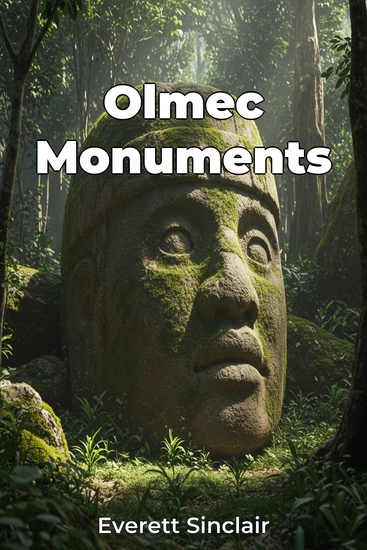
Olmec Monuments - cover

Olmec Monuments

Everett Sinclair

Translator A AI

Publisher: Publifye

  • 0
  • 0
  • 0

Summary

Olmec Monuments explores the impressive monumental art and architecture of the Olmec civilization, a foundational culture in Mesoamerica. It delves into how this ancient society, despite lacking metal tools and the wheel, managed to create colossal stone heads, some weighing over 20 tons. These massive sculptures weren't just feats of engineering, but served as powerful statements of political power and religious beliefs, solidifying the Olmec rulers' authority. Intriguingly, the stones were often sourced from quarries located miles away, presenting significant logistical challenges for transportation and placement. 

 
The book examines various categories of Olmec monuments, including the iconic colossal heads, altars, stelae, and other sculptures, analyzing their artistic style, construction, and potential meaning within Olmec centers. It progresses through thematic sections, first detailing the colossal heads, then exploring smaller monuments and architectural complexes, before synthesizing archaeological evidence with art history and anthropology. 

 
This approach provides a comprehensive understanding of the intricate connections between Olmec monumental art, political power, and cosmology, offering valuable insights into the origins of social stratification and the development of early state societies.
Available since: 03/29/2025.
Print length: 59 pages.


Other books that might interest you

  • The False Promise of Superiority - The United States and Nuclear Deterrence after the Cold War - cover

    The False Promise of Superiority...

    James H. Lebovic

    • 0
    • 0
    • 0
    This political analysis exposes the fanciful logic that the United States can use nuclear weapons to vanquish nuclear adversaries or influence them when employing various coercive tactics. 


    During the Cold War, American policymakers sought nuclear advantages to offset an alleged Soviet edge. Policymakers hoped that US nuclear capabilities would safeguard deterrence, when backed perhaps by a set of coercive tactics. But policymakers also hedged their bets with plans to fight a nuclear war to their advantage should deterrence fail. In The False Promise of Superiority, James H. Lebovic argues that the US approach was fraught with peril and remains so today. He contends that the United States can neither simply impose its will on nuclear adversaries nor safeguard deterrence using these same coercive tactics without risking severe, counterproductive effects. As Lebovic shows, the current faith in US nuclear superiority could produce the disastrous consequences that US weapons and tactics are meant to avoid. This book concludes that US interests are best served when policymakers resist the temptation to use, or prepare to use, nuclear weapons first or to brandish nuclear weapons for coercive effect.
    Show book
  • White Lies Matter - The Gospel of MAWA - cover

    White Lies Matter - The Gospel...

    Rev. Micaiah Wright

    • 0
    • 0
    • 0
    This audiobook is narrated by an AI Voice.  
    White Lies Matter: The Gospel of MAWA isn’t just a book—it’s a sermon, a roast, and a history lesson rolled into one blistering satire of American politics. Beneath the bright red MAGA cap, the author exposes what the slogan really meant: Make America White Again. 
    With wit as sharp as Twain, the bite of Carlin, and the unflinching honesty of Chappelle, this audiobook takes listeners on a journey through America’s not-so-secret gospel of racial nostalgia. From the election of Barack Obama that shook the foundations of white exceptionalism, to Steve Bannon and Donald Trump baptizing a movement in fear, grievance, and privilege, WLM uncovers how the “American Dream” was fenced off and sold as exclusive property. 
    Each chapter functions like a scripture reading from the Church of MAWA, complete with commandments, proverbs, and revelations that peel back patriotic veneers to reveal the machinery of exclusion underneath. It’s biting, it’s funny, and it’s devastatingly honest—because America’s greatest myths are also its greatest lies. 
    This is not a quiet audiobook. It’s meant to provoke laughter, outrage, and reflection in equal measure. Whether you’re a believer in the gospel of MAWA or a skeptic watching from the pews, White Lies Matter insists you confront the uncomfortable truth: racism was never a glitch in the system—it was the system. 
    At once irreverent and illuminating, this is satire that cuts to the bone and asks the question no campaign slogan dares to touch: Whose America are we really trying to make “great” again?
    Show book
  • Odin's Omens - Reading Nature Through Viking Eyes - cover

    Odin's Omens - Reading Nature...

    Dr John Sorensen

    • 0
    • 0
    • 0
    "Odin's Omens: Reading Nature Through Viking Eyes" invites you on a captivating journey through the mystical world of the Vikings. Discover how they interpreted nature's signs and harnessed its wisdom for guidance and insight. This rich exploration intertwines history, religion, and mythology to unveil the deep connection between the Norse people and their environment. Learn practical tips for integrating Viking traditions into modern life, from interpreting animal behavior to creating sacred spaces. As ancient practices meet modern spirituality, embark on a journey to rediscover nature's lost wisdom. Join us in listening to the whispers of the gods in the rustling leaves and flowing rivers. Are you ready to see the world anew through Viking eyes?
    Show book
  • Ancient Egyptian Astronomy and Astrology: The History of Celestial Observations in Egypt - cover

    Ancient Egyptian Astronomy and...

    Charles River Editors

    • 0
    • 0
    • 0
    Among the most intriguing aspects of ancient Egyptian culture is the relationship between their observations of the heavens and their beliefs about life, death, and cosmic order. While modern Egyptologists debate whether the Egyptians practiced astrology in the sense familiar to people today, it is universally acknowledged that they maintained a profound “Star Religion” from very early times. The term “Star Religion” encompasses a reverence for celestial phenomena, especially the stars, and their integration into religious ritual, calendar systems, and mythology. However, whether this system extended to linking human birth and life with celestial positions remains contentious. 
    	Some independent researchers, such as John Anthony West, an American Egyptologist and writer, argue that the Egyptians did indeed incorporate astrology as part of their sacred science. West contends that astronomical observations were closely connected to the timing of human life and the divine order, implying that celestial patterns influenced both earthly events and the lives of individuals. Traditional Egyptologists, however, caution against projecting later astrological practices backward into the prehistoric or early dynastic periods of Egypt, emphasizing that surviving textual evidence primarily reflects religious and ritualistic use of celestial phenomena rather than predictive or personal astrology. 
    Regardless of how they’re analyzed, from the earliest periods of their civilization, the Egyptians observed the night sky with remarkable attention to detail. Astronomical phenomena were integrated into their ritual calendar, architecture, and mythological narratives, and the brightest star visible from Earth, Sirius (known in ancient Egypt as Spdt), is mentioned as early as 2300 BCE in the Pyramid Texts, although it was undoubtedly observed much earlier.
    Show book
  • Battle of Kadesh The: The History of the Most Important Battle Between the Egyptians and Hittites - cover

    Battle of Kadesh The: The...

    Editors Charles River

    • 0
    • 0
    • 0
    Many battles fought in antiquity remain famous thousands of years later, such as Marathon, Thermopylae, and Cannae, mainly due to the belligerents involved and the ways in which the battles changed the course of history. However, even as people are fascinated by the Egyptians, one of the most important battles in antiquity has also been one of the most overlooked: the Battle of Kadesh, fought by Ramesses II against the Hittites.  
    	For one thing, it is the earliest known pitched battle to be documented, and the number of troops deployed by both the Egyptians and Hittites may have made it the largest battle ever fought up until that point in time. The organization of the forces, especially the Egyptians, is another intriguing aspect of this battle, because the Egyptians organized their units into divisions, which may be the first such case in history or simply the first time the organization was recorded. 
    	Arguably the most famous aspect of the battle is that it was passed down in ways that barely aligned with reality. Surrounded and swiftly outnumbered, most of the Egyptian soldiers were killed in the battle, and Ramesses II was forced to retreat in order to survive. What is known of the rest of the battle is that the pharaoh rallied his forces, fought on through the battlefield in order to evade capture and death, and managed to get away with only with a fraction of his troops, while the majority of his army lay slain on the field of battle that he left behind him. 
    	Nonetheless, the battle essentially ended in a stalemate, after which there was a period of extended peace and eventually an alliance between the Egyptians and Hittites. The ensuing peace also helped to solidify the Late Bronze Age Near Eastern geopolitical system modern scholars often refer to as the “Great Powers Club,” during which the most powerful empires of the Near East tended to use diplomacy instead of warfare to settle their differences.
    Show book
  • History of Marathas EP10 - Death of Sambhaji - cover

    History of Marathas EP10 - Death...

    Vikrant Pande

    • 0
    • 0
    • 0
    The Badshah growled once more. He dismissed the men holding the weapons and indicated to a group of men who wore iron claws. At his glance, two of them came near Sambhaji. One of them behind him and one facing him. From his neck to the spine and from his throat to his stomach, the men pulled his skin down as the trumpets and horns started blowing. The men shouted Deen Deen! Skin peeled off Sambhaji's back, neck, chest and stomach. His whole body was a bloodied mess.
    But Sambhaji did not allow his voice to be heard by anyone present. He did not scream or shout. Clenching his teeth he bore the intense and almost unbearable pain. His body, now red with blood, shivered from head to toe. Like the milk which gathers at the base of the Shivalinga, his blood gathered at his feet. Aurangzeb laughed hysterically, seeing Sambhaji's body now peeled like the way a butcher skins a goat.
    Show book