Unisciti a noi in un viaggio nel mondo dei libri!
Aggiungi questo libro allo scaffale
Grey
Scrivi un nuovo commento Default profile 50px
Grey
Iscriviti per leggere l'intero libro o leggi le prime pagine gratuitamente!
All characters reduced
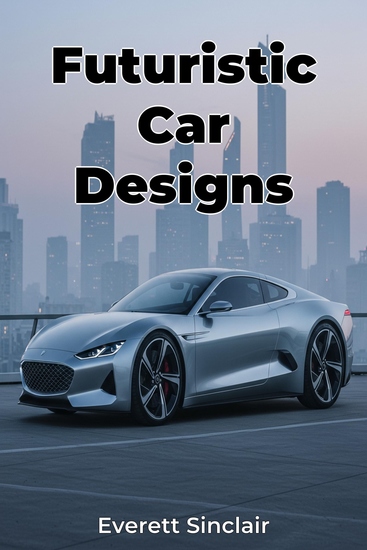
Futuristic Car Designs - cover

Futuristic Car Designs

Everett Sinclair

Traduttore A AI

Casa editrice: Publifye

  • 0
  • 0
  • 0

Sinossi

Futuristic Car Designs explores the dynamic world of concept cars and their impact on automotive technology, design, and our future relationship with vehicles. These innovative designs aren't just about aesthetics; they embody principles of sustainability and enhanced user experience, influencing industry trends and public perception.

 
Delving into cutting-edge advancements, the book highlights technologies like autonomous driving systems and alternative energy sources that are reshaping personal transportation. The book traces the evolution of concept cars, examining their design philosophies and technological integration. It presents detailed case studies of influential designs and expert interviews, offering a balanced perspective on form and function.

 
Beginning with fundamental design concepts, the book progresses through the evolution of aesthetics, the integration of emerging technologies, and the impact on sustainability and urban mobility. Ultimately, Futuristic Car Designs argues that concept cars are vital catalysts for innovation, accelerating the adoption of new technologies and shaping consumer expectations.

 
This comprehensive exploration provides valuable insights for automotive enthusiasts, design students, and anyone interested in how design thinking shapes the future of transportation.
Disponibile da: 12/03/2025.
Lunghezza di stampa: 76 pagine.


Altri libri che potrebbero interessarti

  • Destruction of 17th Century London The: The History of the City’s Fire and Plague in 1666 - cover

    Destruction of 17th Century...

    Charles River Editors

    • 0
    • 0
    • 0
    In the mid-17th century, the heart of England fell victim to the mother of all epidemic catastrophes. The city of London was a ghost town, deserted by those who knew better than to hang around in a breeding ground that offered near-certain doom. Those who were confined within the city's borders had to make do with what they had, and the pitifully low morale seemed appropriate; the reek of rot and decomposition pervaded the air day in and day out, while corpses, young and old, riddled with strange swellings and blackened boils, littered the streets. For Londoners, to say it was hell would be an understatement.  
    With some bad luck and bad timing, a potential disaster awaited the city, and that finally came in September 1666. As it turned out, the Great Fire of London was so bad that one author who studied the blaze described it as “the perfect fire,” referring to the convergence in the largest city in England of spark, wood and wind in such a way that no one could stop the fire or even fight it effectively. John Evelyn, who had warned of the potential for a devastating fire given the layout of the city, noted that people seemed so stunned by the scope of the fire that they didn’t know what to do: “The conflagration was so universal, and the people so astonished, that from the beginning, I know not by what despondency or fate, they hardly stirred to quench it, so that there was nothing heard or seen but crying out and lamentation, running about like distracted creatures without at all attempting to save even their goods, such a strange consternation there was upon them.” 
    While the fire quickly spread throughout the heart of the city, the only thing that saved London’s suburbs was an ancient wall built around the city to keep the enemies of Rome out, not the fire in.  . By the time it was finished, most of the city’s homes and churches lay in ashes, and nearly 90% of the city’s citizens were left homeless.
    Mostra libro
  • Why Do We All Behave In The Way We Do? - The Secrets of Life - From Big Bang to Trump - cover

    Why Do We All Behave In The Way...

    Ss O'Connor

    • 0
    • 0
    • 0
    Why is life like a poker game? How did a failed robbery help to explain human nature? Why are we so certain bad men will win - and yet we're so wrong? In this, the third volume of The Secrets of Life quartet, SS O'Connor once more uses his easy-going, conversational style to explain how the science of decision analysis developed, and why it has come to show us not only the reasoning behind how humans arrive at their choices in life, but why so much of the apparently bizarre behaviour of the natural world has the same hard logic to it.Instead of the confusion and chaos one might expect, O'Connor lays out how the options organisms face when they interact can actually be analysed, and how we humans then refined this process through the addition of our intelligence and language skills. Starting with the extraordinary new ways of thinking that Adam Smith opened the world's eyes to, the book progresses to the 20th century - and shows how the mathematical reasoning behind our thought processes was revealed at a time when the very future of the world was at stake. From these earliest investigations, through to the fevered disagreements of later experts, this third volume of the Secrets of Life series explains how the science of game theory illuminates the reasons for our behaviour. In particular, the book provides insights into how the interests of the individual should be balanced against those of the group, and why the mechanism of trading would extend far further into our lives than we could ever have imagined. As the story unfolds it becomes ever clearer how cooperation has evolved to be the catalyst at every level of life. It explains how it was the force that built our world, and why it would settle so deeply in our hardwiring that it's become instinctive and innate in us. Perhaps most pleasingly, the same logic also shows that the benefits of collaboration are always bound to ratchet upwards - and how this will inevitably lead humans to ever-increasing levels of moral behaviour.
    Mostra libro
  • Cyber Wargaming - Research and Education for Security in a Dangerous Digital World - cover

    Cyber Wargaming - Research and...

    Nina A. Kollars, Benjamin H....

    • 0
    • 0
    • 0
    Government, industry, and academia need better tools to explore threats, opportunities, and human interactions in cyberspace. The interactive exercises called cyber wargames are a powerful way to solve complex problems in a digital environment that involves both cooperation and conflict. Cyber Wargaming is the first book to provide both the theories and practical examples needed to successfully build, play, and learn from these interactive exercises. 


    The contributors to this book explain what cyber wargames are, how they work, and why they offer insights that other methods cannot match. The lessons learned are not merely artifacts of these games—they also shed light on how people interpret and interact with cyberspace in real life. This book covers topics such as cyber action during conventional war, information effects in conflict scenarios, individual versus group decision-making, the intersection of cyber conflicts and nuclear crises, business resilience, emerging technologies, and more. 


    Cyber Wargaming will be a vital resource for listeners interested in security studies and wargame design in higher education, the military, and the private sector.
    Mostra libro
  • Everest - The West Ridge - cover

    Everest - The West Ridge

    Thomas Hornbein, Jon Krakauer

    • 0
    • 0
    • 0
    In 1963, Jim Whittaker became the first American to summit Everest via the South Col route. Roughly two weeks after Whittaker's achievement, Tom Hornbein and Willi Unsoeld, fellow American mountaineers on the same expedition, became the first climbers ever to summit the world's highest peak via the dangerous and forbidding West Ridge—a route on which only a handful of climbers have since succeeded. 


    This special fiftieth anniversary edition reintroduces the adventure in a larger format by members of the expedition, including leader Norman G. Dyhrenfurth and team doctor Jim Lester. In addition to a new foreword by Jon Krakauer, this volume also features a new preface by Hornbein along with a series of prefaces he wrote for earlier editions, including the original from 1965.
    Mostra libro
  • Machine Readable Me - The Hidden Ways Tech Shapes our Identities - cover

    Machine Readable Me - The Hidden...

    Zara Rahman

    • 0
    • 0
    • 0
    As we go about our day-to-day lives, digital information about who we are is gathered from all angles via biometric scans, passport applications, and, of course, social media. This data can never fully capture our complex, fluid identities over decades of our lives. Yet, this data populates numerous databases we may not even be aware of that can make life-or-death decisions such as who is allowed access to welfare benefits or who is granted food parcels as they pass war-torn borders.
    Machine Readable Me considers how and why data that is gathered about us is increasingly limiting what we can and can't do in our lives and, crucially, what the alternatives are.
    Mostra libro
  • Flowers and Ferns in their Haunts - cover

    Flowers and Ferns in their Haunts

    Mabel Osgood Wright

    • 0
    • 0
    • 0
    Pleasant non-fiction journey into the backwoods of the New England coastal countryside by the first president of the Connecticut Audubon Society, circa 1900. (Summary by BellonaTimes)
    Mostra libro