Rejoignez-nous pour un voyage dans le monde des livres!
Ajouter ce livre à l'électronique
Grey
Ecrivez un nouveau commentaire Default profile 50px
Grey
Abonnez-vous pour lire le livre complet ou lisez les premières pages gratuitement!
All characters reduced
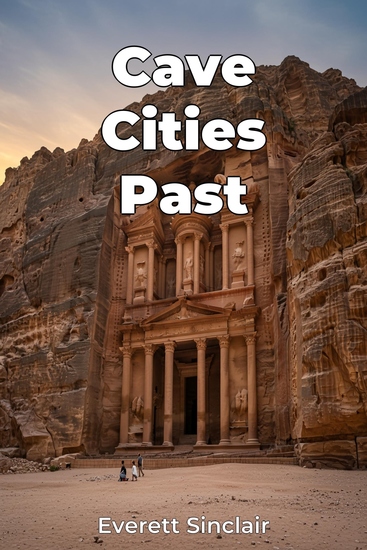
Cave Cities Past - cover

Cave Cities Past

Everett Sinclair

Traducteur A AI

Maison d'édition: Publifye

  • 0
  • 0
  • 0

Synopsis

"Cave Cities Past" explores the hidden world of subsurface architecture, challenging conventional understandings of ancient urban planning by focusing on Petra and its surrounding underground settlements. The book argues that these structures were not mere refuges but served as dynamic spaces for complex social, economic, and ritual activities.

 
The Nabataeans, Petra's creators, ingeniously integrated the natural sandstone formations with their architectural designs, revealing a multi-layered urban environment that included sophisticated hydrological systems carved directly into the rock.

 
The book begins by establishing the historical and geological context of Petra, then progresses by examining specific examples of subsurface architecture, such as water management systems and storage chambers. It also investigates the potential use of subterranean spaces for religious purposes.

 
This approach, supported by archaeological surveys and detailed architectural analysis, offers a comprehensive account of Petra's subterranean world and highlights the ingenuity and adaptability of past societies.
Disponible depuis: 26/02/2025.
Longueur d'impression: 62 pages.

D'autres livres qui pourraient vous intéresser

  • Geniality - The Equilibrist Series: Vol II - cover

    Geniality - The Equilibrist...

    Erasmus Cromwell-Smith

    • 0
    • 0
    • 0
    In Geniality, the second volume of The Equilibrist Series, author Erasmus Cromwell-Smith II takes us deeper into the life and mind of Professor Cromwell-Smith and his beloved Victoria. Spanning dormitory gatherings at Harvard, clandestine mentor sessions, and unexpected crossroads of separation and reunion, this narrative unveils how true genius lies not in rarified intellect but in the authenticity and warmth of our everyday gifts. 
    Weaving together their personal struggles—Victoria’s lifelong doubts and her quest for family and belonging, and Erasmus’s years of solitary living and fear—Geniality shows us how our own “genie in a bottle” awaits discovery. Through affectionate reenactments of heartfelt meetings with an eclectic circle of wise antiquarians, librarians, and unexpected teachers, the story reveals how genius emerges in lives both ordinary and extraordinary: a resourceful cab driver, a thoughtful attorney, or even a mishap-prone illusionist. 
    In a style that is both intimate and philosophical, Cromwell-Smith invites us to question our typical notions of success, perfection, and comparison. He reminds us that we all possess areas of brilliance—born from passion, discipline, and the capacity to uplift others. With vivid anecdotes and quietly profound lessons, Geniality offers a transformative view of human potential, illuminating how we can open ourselves to everyday wonders, unearth our unique genius, and use it for the betterment of ourselves and those we love. 
    Unlock your genius. Embrace your imperfections. Discover the quiet power of geniality.
    Voir livre
  • Hope Beyond Our Sorrows - Learning to Live with Life-Changing Loss - cover

    Hope Beyond Our Sorrows -...

    April Yamasaki

    • 0
    • 0
    • 0
    When a shattered dream breaks your heart, how do you learn to hope again?When April Yamasaki and her husband married, they were young and full of dreams. After almost forty-five years of marriage, those dreams fell apart as Yamasaki found herself grieving the death of her husband. How could life go on without him? Yet even in the depths of her sorrows, she experienced God’s goodness and mercy—big enough for her soul’s lament, longer and deeper and wider than our laments can ever be.Whether you’re grieving the loss of a loved one, a job, a marriage, a church community, or a dream, you too may find yourself wondering, How can I go on? What hope is there for the road ahead? Whatever loss you’re living with, you can find comfort in these short, easily digestible readings accompanied by prayers and spiritual practices from a seasoned devotional writer. Grounded in Scripture, personal experience, and a pastoral heart, Hope Beyond Our Sorrows invites readers to journey with grief, find a new way forward, and live with faith and hope beyond their broken dreams.
    Voir livre
  • Sports Betting Online Casinos and the Next Win That Never Saves You - Why You Keep Gambling What Makes You Want to Stop and How to Get Out - cover

    Sports Betting Online Casinos...

    Miles Harcourt

    • 0
    • 0
    • 0
    This audiobook is narrated by an AI Voice. 
    If money were the point, a win would end the session. 
     
    It never does. A win extends it. The balance stays in the account and goes back through, and somebody who has just hit something does not withdraw and walk away. If you have done this you already know that, and you have probably never once asked why. 
     
    Here is why. Put someone in a scanner and show them a near miss — two symbols lined up and the third stopping just short. Financially that is a total loss. The brain recruits much of the same reward circuitry a win recruits, and the urge to keep going rises rather than falls. 
     
    You are being rewarded for losing. Which is why the plan almost everyone makes cannot work. Eventually it will get bad enough and I will stop assumes losses accumulate into a decision. They do not, because losing was built into the pattern that trained the behaviour in the first place. 
     
    What people actually become dependent on is a state. Some are buying the feeling of being sharp, of having a judgment tested and returned with a verdict inside a fixed window, which nothing else in an adult life supplies. Some are buying the opposite, the narrowing of attention so complete that they stop existing for an hour. Which one you have been buying decides what will work and what is wasted effort. 
     
    This covers what that means in practice. Why knowledge is the mechanism in sports betting rather than the protection. Why chasing is identity repair and not an attempt to recover money. Why your own memory of what you have lost is a forgery, and what the hours figure does that the money figure cannot. Why quitting collapses on days when nothing went wrong, because stopping is a grief problem rather than a discipline problem. Why debt is held in place by the same mechanism as the gambling, and how compulsive play is undone by barriers and delay rather than by resolve at eleven at night.
    Voir livre
  • The Conquest of the Aztecs - cover

    The Conquest of the Aztecs

    Editors Charles River

    • 0
    • 0
    • 0
    From the moment Spanish conquistador Hernan Cortés first found and confronted them, the Aztecs have fascinated the world, and they continue to hold a unique place both culturally and in pop culture. Nearly 500 years after the Spanish conquered their mighty empire, the Aztecs are often remembered today for their major capital, Tenochtitlan, as well as being fierce conquerors of the Valley of Mexico who often engaged in human sacrifice rituals.  
    	Ironically, and unlike the Mayans, the Aztecs are not widely viewed or remembered with nuance, in part because their own leader burned extant Aztec writings and rewrote a mythologized history explaining his empire’s dominance less than a century before the Spanish arrived. Naturally, Cortes and other Spaniards depicted the Aztecs as savages greatly in need of conversion to Catholicism. While the Mayans are remembered for their astronomy, numeral system, and calendar, the Aztecs have primarily been remembered in a far narrower way, despite continuing to be a source of pride to Mexicans through the centuries. 
    As a result, even though the Aztecs continue to interest people across the world centuries after their demise, it has fallen on archaeologists and historians to try to determine the actual history, culture, and lives of the Aztecs from the beginning to the end, relying on excavations, primary accounts, and more.  
    	Naturally, as the best known conquistador, Hernán Cortés (1485-1547) is also the most controversial. Like Christopher Columbus before him, Cortés was lionized for his successes for centuries without questioning his tactics or motives, while indigenous views of the man have been overwhelmingly negative for the consequences his conquests had on the Aztecs and other natives in the region. Just about the only thing everyone agrees upon is that Cortés had a profound impact on the history of North America. 
    Voir livre
  • Rise and Fall of Macedon The: The History of the Ancient Macedonian Empire’s Expansion and Collapse - cover

    Rise and Fall of Macedon The:...

    Charles River Editors

    • 0
    • 0
    • 0
    Over the last 2,000 years, ambitious men have dreamed of forging vast empires and attaining eternal glory in battle, but of all the conquerors who took steps toward such dreams, none were ever as successful as antiquity’s first great conqueror. Leaders of the 20th century hoped to rival Napoleon’s accomplishments, while Napoleon aimed to emulate the accomplishments of Julius Caesar. But Caesar himself found inspiration in Alexander the Great (356-323 B.C.), the Macedonian king who managed to stretch an empire from Greece to the Himalayas in Asia by the age of 30. It took less than 15 years for Alexander to conquer much of the known world. 
    	Alexander is one of the most famous figures of antiquity, but everything he accomplished was made possible by his father, Philip II of Macedon. When Philip II came to power in 360 B.C., he was only 23 and had spent most of his adult life as the hostage of an Illyrian tribe. Philip II’s ascension to the Macedonian throne took place in the midst of great chaos in Macedonia, with the Illyrians continually raiding the kingdom from the north while other Greeks took advantage of this by taking even more Macedonian land. The problem was further exacerbated by Athenian attempts to influence the throne. Nonetheless, in about five years, Philip II not only brought order back to Macedon but also the respect it had once earned from Greek and non-Greek neighbors alike.  
    	When Alexander died in 323 B.C., his generals, all of them with the loyalty of their own corps at their backs, would tear each other apart in a vicious internal struggle that lasted almost half a century before four factions emerged victorious: Macedonia, the Seleucid Empire in the east, the Kingdom of Pergamon in Asia Minor, and the Ptolemaic dynasty in Egypt. During the course of these wars, Alexander’s only heir, the posthumously born Alexander IV, was murdered, extinguishing his bloodline forever. 
    Voir livre
  • Awakening is built into your incarnation - This is your operating manual - cover

    Awakening is built into your...

    MONIKA LENIGER

    • 0
    • 0
    • 0
    Awakening is built into your incarnation — this is the operating manual. This audiobook gently guides you through the deeper mechanics of your consciousness, offering a clear and empowering understanding of how your awakening unfolds from within. 
    Across this journey, we explore the architecture of incarnation, the multidimensional layers of the self, and the in‑between‑lives state — the realm your soul moves through before entering physical form. You’ll discover how awareness expands, how remembrance activates, and how the greater reality of who you are has been encoded into your being from the very beginning. 
    This material is created and narrated by Monika Leniger, a qualified metaphysician with over twenty‑five years of studying metaphysics, science cosmology, and ancient wisdom traditions. Her work blends these fields into a coherent, accessible framework designed to help you understand the design of your incarnation and the mechanics of the awakening already within you.
    Voir livre