¡Acompáñanos a viajar por el mundo de los libros!
Añadir este libro a la estantería
Grey
Escribe un nuevo comentario Default profile 50px
Grey
Suscríbete para leer el libro completo o lee las primeras páginas gratis.
All characters reduced
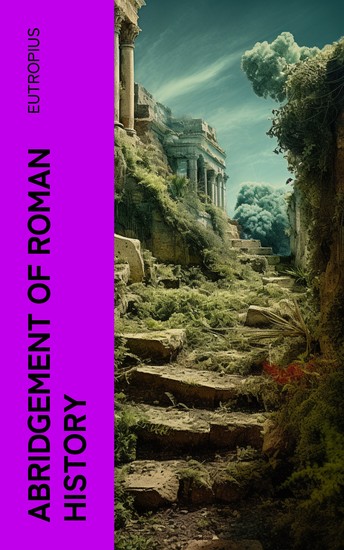
Abridgement of Roman History - cover

Abridgement of Roman History

Eutropius

Traductor John Selby Watson

Editorial: e-artnow

  • 0
  • 0
  • 0

Sinopsis

A concise history of the Roman Empire published in the fourth century, from the creation of Rome through Valens' accession. The book, translated by John Selby Watson, tells the story of Rome's early monarchy and republic till the time of Constantine and his successors to the death of Jovian (364 AD). Flavius Eutropius was a Roman historian who lived during the second part of the fourth century. He served as the city's secretary (magister memoriae), traveled with Emperor Julian (361-363) on his operations against Persia, and continued to live until the reign of Valens (364–378), to whom he dedicated the Breviarium historiae Romanae (the Breviarium of Roman History), which is also the point at which the history of that work comes to an end.
Disponible desde: 08/12/2023.
Longitud de impresión: 89 páginas.

Otros libros que te pueden interesar

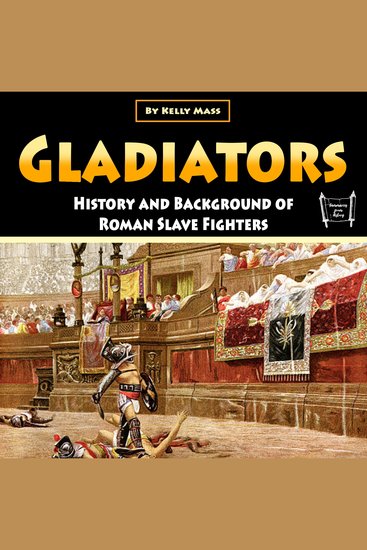
  • Gladiators - History and Background of Roman Slave Fighters - cover

    Gladiators - History and...

    Kelly Mass

    • 0
    • 0
    • 0
    Gladiators were highly trained warriors who fought to the death for the entertainment of the Roman public. These brutal battles took place in large arenas throughout the Roman Republic and Empire, where gladiators would engage in combat with other fighters, wild animals, or even condemned criminals. The fights were often bloody and merciless, designed to showcase the might and martial prowess of the Roman world. While some gladiators volunteered, seeking fame and fortune in the arena, many were slaves or prisoners of war who were forced to fight. 
    The life of a gladiator was harsh and dangerous. Those who entered the arena did so at great personal risk, as their fights often meant risking their lives for the entertainment of the masses. Even voluntary gladiators, known as "auctorati," gambled with their personal safety and social standing. They had little to no rights and were subject to the whims of their owners or sponsors. Gladiators who survived and fought well could gain fame and admiration, but their lives were fraught with physical injury and emotional isolation. The training they underwent was grueling, often conducted in harsh conditions at special training schools known as "ludi," where they were forced to endure relentless drills and punishments. 
    Gladiators were not only fighters but also symbols of Roman martial virtues. Through their valor and resilience in the arena, they represented Rome's ideals of strength, honor, and discipline. Their performances were often immortalized in Roman art and artifacts, with their images appearing on coins, pottery, and sculptures. Despite the grim nature of their lives, gladiators could gain popular admiration for their ability to fight bravely or die with honor. Some even became beloved figures in Roman culture, celebrated in both elite and everyday art.
    Ver libro
  • Dads Matter More - The Top 10 Lies Society Is Telling You About Fatherhood - cover

    Dads Matter More - The Top 10...

    George Varner Jr.

    • 0
    • 0
    • 0
    What if I told you... Everything you believed about Fatherhood was based on lies? In Dads Matter More we embark on a Bold, provocative journey to dismantle the top 10 lies that society has Told Us about fatherhood. Prepare to be challenged, enlightened, and perhaps even angered, as This Unique book confronts the lies head-on, advocating for a world where fathers are recognized as irreplaceable forces in their children's lives. Why do dads matter more than society Wants To admit? Through compelling narratives and personal experiences, This Book reveals the untold truths about fathers and their indispensable roles. From debunking the myth that fathers are merely secondary parents to confronting the false narrative of emotional detachment, this book exposes the societal misconceptions that have long overshadowed the profound influence of dads. Who should read this book? Dad's Matter More is for fathers who feel misunderstood, for partners who seek to support them, and for anyone ready to challenge the status quo of parenting. It's for the community that values truth, seeks deeper connections, and believes in the transformative power of understanding. Join the movement. help us Redefine fatherhood. Prepare your paradigm to be challenged, inspired, and moved. Let us embark on this journey Together that not only enlightens, but also empowers. This is more than a book it's a call to action for everyone to recognize and celebrate the true value of fathers in our lives and In society. It's time to uncover the truth behind the lies and affirm why dads matter more now than ever before.
    Ver libro
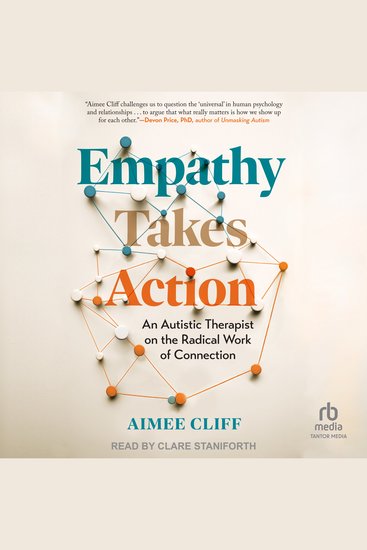
  • Empathy Takes Action - An Autistic Therapist on the Radical Work of Connection - cover

    Empathy Takes Action - An...

    Aimee Cliff

    • 0
    • 0
    • 0
    Mainstream psychology has long accepted that some people (like those with autism) are naturally more logical and unemotional, while others (like so-called empaths) intuitively experience the feelings of those around them as deeply as their own. 
     
    But this is wrong. Aimee Cliff, an autistic psychotherapist who empathizes for a living, knows this firsthand. We are all are capable of empathy, because empathy is something you do, not something you are―meaning you can get better at it if you choose to practice. 
     
    Drawing on scientific research, clinical experience, and interviews with neurodivergent people, Cliff examines how empathy works in the brain and body and lays out the five pillars of true empathy: Empathy is humble, empathy is embodied, empathy is amoral, empathy is radical, and empathy is work. 
     
    At the heart of this expansive new definition is the promise that every one of us can learn to improve our relationships with our fellow humans. We just have to be willing to do the work to close the space between us. 
     
    Empathy Takes Action shows us the way to build more loving, kind, and supportive communities and to make room for every kind of mind.
    Ver libro
  • Formation of the United Nations The: The History of the Negotiations that Brought About the World’s Biggest International Organization - cover

    Formation of the United Nations...

    Charles River Editors

    • 0
    • 0
    • 0
    On November 29, 1943, as the Allies’ primary leaders met in Tehran, Roosevelt described to Stalin his idea for the organization that would become the United Nations. The American president suggested that the active arm of the organization be “the Four Policemen”: the U.S., USSR, UK, and China. Stalin agreed with much of the framework in principle, but asserted that China likely would not possess the strength after the war to assist. He also noted that the “Policemen” must hold a series of strong points, putting Germany and Japan at too much of a disadvantage to attempt military adventurism again. Roosevelt, eager to please his “friend,” agreed with everything Stalin said.  
    	That exchange might be considered the origin of the United Nations, one of the most famous bodies in the world, but the concept was already in existence in the form of its predecessor, the League of Nations. At the end of World War I, President Woodrow Wilson's pleas at the Paris Peace Conference relied on his Fourteen Points, which included the establishment of a League of Nations, but while his points were mostly popular amongst Americans and Europeans alike, leaders at the conference largely discarded them and favored different approaches. British leaders saw their singular aim as the maintenance of British colonial possessions. France, meanwhile, only wanted to ensure that Germany was weakened and unable to wage war again, and it too had colonial interests abroad that it hoped to maintain. Britain and France thus saw eye-to-eye, with both wanting a weaker Germany and both wanting to maintain their colonies. Wilson, however, wanted both countries to rid themselves of their colonies, and he wanted Germany to maintain its self-determination and right to self-defense. Wilson totally opposed the “war guilt” clause, which blamed the war on Germany.
    Ver libro

  • American Illuminati - cover

    American Illuminati

    Raphael Terra

    • 0
    • 0
    • 0
    This audiobook has been recorded using Text to speech (TTS). 
     
    This is the tale of how the illuminati invaded and took control of the United States of America. This is the real history of America as you've never seen before. 
     
    Using new evidence we will reveal how this massive secret origanization infiltrated the religious groups, political parties, Universities and corporations. How they placed their own people in positions of power and authority. How they manipulated the minds of the masses and hid it all from view. 
     
    This group embraces what is known as the esoteric, the so-called spiritual truth hidden from the rest of us. Over a vast period of time, this secretive organization turned slowly to the dark side of these esoteric truths and utilized them for power and control. 
     
    They take their orders from the International Secret Council of Nine. They are collectively called the Confederation of Initiates. They are under the strict control of their masters and to oppose them means punishment worse than death. It has been this way for thousands of years and they are working slowly but surely towards their ultimate goal of a one world government with the Nine in control. 
     
    We reveal their plans and schemes. We show how the so-called land of the free is not free at all. How it is under the yoke of a very large, very powerful and very secret organization. This is the illuminati of America.
    Ver libro
  • His Finest Speeches - cover

    His Finest Speeches

    Winston Churchill

    • 0
    • 0
    • 0
    A collection of Winston Churchill's finest speeches between 1934-1946.
    Ver libro