Unisciti a noi in un viaggio nel mondo dei libri!
Aggiungi questo libro allo scaffale
Grey
Scrivi un nuovo commento Default profile 50px
Grey
Iscriviti per leggere l'intero libro o leggi le prime pagine gratuitamente!
All characters reduced
Alcestis - cover

Alcestis

Euripides

Traduttore Gilbert Murray

Casa editrice: DigiCat

  • 0
  • 0
  • 0

Sinossi

Euripides' "Alcestis" stands out as a poignant exploration of love, sacrifice, and the human condition, deftly intertwining themes of mortality and familial duty. Characterized by its rich emotional depth and innovative structure, the play challenges the boundaries of traditional Greek tragedy through its unique treatment of its titular character, Alcestis, who willingly sacrifices herself for her husband, Admetus. The dialogue blends lyrical beauty with poignant realism, drawing audiences into a world where personal emotional struggles stand at odds with the inevitability of fate and societal expectations, thereby presenting a groundbreaking shift in the portrayal of female characters in classical literature. Euripides, one of the most celebrated playwrights of classical Athens, drew from his keen insights into human nature, societal norms, and personal experience to craft this compelling narrative. His experiences with the complexities of love and loss, alongside his radical views on the roles of women and the gods, profoundly influenced his writings. "Alcestis," written in 438 BCE, reflects Euripides' artistic evolution and his departure from the conventions established by earlier tragedians, ultimately serving as a precursor to the more modern tragic themes that he would continue to develop. For readers and theatre enthusiasts alike, "Alcestis" is a must-read that transcends its historical context, illuminating timeless themes of love and sacrifice that resonate profoundly in contemporary times. This play not only challenges the reader's understanding of heroism but also serves as a vehicle for empathizing with the intricacies of human relationships, making it a significant contribution to the canon of Western literature.
Disponibile da: 04/09/2022.
Lunghezza di stampa: 46 pagine.

Altri libri che potrebbero interessarti

  • The Phantom-Wooer - cover

    The Phantom-Wooer

    Thomas Lovell Beddoes

    • 0
    • 0
    • 0
    LibriVox volunteers bring you 13 different recordings of The Phantom-Wooer by Thomas Lovell Beddoes. This was the weekly poetry project for the week of January 28th, 2007.
    Mostra libro
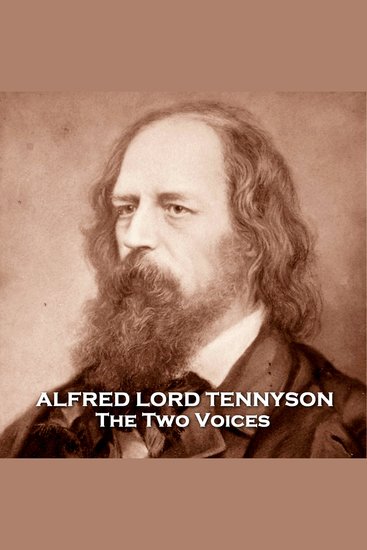
  • The Two Voices - An autobiographical poem written by Tennyson after his friend committed suicide - cover

    The Two Voices - An...

    Alfred Lord Tennyson

    • 0
    • 0
    • 0
    Alfred Tennyson was born on August 6th, 1809, in Somersby, Lincolnshire, the fourth of twelve children. 
    Most of Tennyson's early education was under the direction of his father, although he did spend four unhappy years at a nearby grammar school.  He also showed an early and burgeoning talent for writing; by the age of twelve he had written a 6,000-line epic poem.  
    In the 1820s, however, Tennyson’s father began to suffer frequent mental breakdowns exacerbated by his alcoholism. One brother had frequent violent quarrels with his father, a second would be confined to an insane asylum, and another was later an opium addict. 
    Tennyson left home in 1827 to join his brothers at Trinity College, Cambridge and with it escape from Somersby. At Trinity he was those who knew little of the problems that clouded his life. Although shy he was keen to make new friends; he was handsome, intelligent, humorous, and a gifted impersonator. 
    That same year, he and his brother Charles published Poems by Two Brothers. It attracted the attention of the “Apostles," a select undergraduate literary club led by Arthur Hallam. They provided friendship and confidence. Hallam and Tennyson became the best of friends. 
    The pair, in the summer of 1830, were involved in a ridiculous jaunt to take money and secret messages to revolutionaries plotting to overthrow the Spanish king. Tennyson's political enthusiasm was marginal compared to Hallam's, but he was glad to make his first trip abroad.  
    The landscape and atmosphere of the Pyrenees generated such wonderful poems as "Oenone," "The Lotus-Eaters;" inspired by a waterfall in the mountains; and "The Eagle;" invoked from the sight of the great hunters circling above them. The small village of Cauteretz and the surrounding valley became a location Tennyson would return to many times over the next sixty years. 
    In 1830, he published Poems, ‘Chiefly Lyrical’ and in 1832 a volume entitled ‘Poems’.  Tennyson, stung by the harshness of several reviews, would not publish again for nine years.  
    In the autumn of 1833, in what was meant as a gesture of gratitude and reconciliation to his father, Hallam accompanied him to the Continent. In Vienna Hallam died suddenly of apoplexy as a result of a congenital malformation of the brain.  
    Hallam’s death, together with that of his father and a myriad of anxieties, stem-ming mainly from the belief that his family were grimly attached to poverty, and fears that he might become a victim of epilepsy, madness, alcohol, and drugs, as others in his family had, or that he might die like Hallam, conspired to upset the delicate balance of Tennyson's emotions.  
    In 1836, he became engaged to Emily Sellwood. From their correspondence it is clear that she was very much in love with him. He seems to excessively worry about not having the financial means to marry.  He was also falling into trances, which he thought were connected with the epilepsy from which other family members suffered. To marry, he thought, would mean passing on the disease to any children he might father. He broke off the engagement. 
    During these years he used the dark feelings and events to write many of his finest works; "Ulysses," "Morte d'Arthur," "Tithonus," "Tiresias," and "Break, break, break."  
    In 1842 Tennyson’s Poems (in two volumes) was a tremendous critical and popular success.  
    In 1845 he was granted a government pension of £200 a year in recognition of his poetic achievements and his financial need.  Despite this financial support his doubts persisted.  
    Life for Tennyson was becoming increasingly productive and more lucrative.  By 1849 ‘The Princess’ had been published. He was now offered a large advance if he would assemble his elegies on Hallam into one complete poem.  
    Tennyson had now also resumed his relationship with Emily Sellwood and by the following year was talking again of marrying her. 
    In the Spring of 1850 the Poet Laureate William Wordsworth died and a new Laureate was
    Mostra libro

  • Top 10 Poets The - Restoration - Five poems each from some of the best Restoration era poets - cover

    Top 10 Poets The - Restoration -...

    John Milton, John Dryden, Andrew...

    • 0
    • 0
    • 0
    The language of Poetry is an art that most of us attempt at some point in our lives.  Although its commonplace exposure has been somewhat marginalised in today’s often fast-paced lives we all recognise good verse that can empathise with our thoughts or open us up to experience new things in new ways, to better understand and to enjoy the many strands of our lives. 
    But finding a starting point can be overwhelming, even off-putting, so in this series we offer up our Top 10 classic poets, who brim with talent and verse, on a range of subjects and themes that we can all enjoy. 
    In this volume we gather together those poets and their verse who celebrated the return of the Monarchy to the country after the volatile upheavals of the Puritan years.
    Mostra libro
  • Spoiled Rotten - A social dramatic novel - cover

    Spoiled Rotten - A social...

    Mohamed Elagoza

    • 0
    • 0
    • 0
    Mustafa is a young man who loves a woman named Talia and sees her as his ideal life partner. Life shines in their eyes, and marriage seems like a beautiful dream. But they soon collide with the reality of married life; disagreements begin, and Mustafa finds himself drifting towards strange adventures outside of his marriage. For her part, Talia changes and emotionally distances herself from him. In the midst of these exciting events, Mustafa discovers something strange: the closer he gets to achieving what he wants, the more he finds that it does not fully understand or satisfy him. Can Mustafa and Talia face the facts and rediscover themselves?
    Mostra libro
  • Your Heart My Soul - Piece by Piece - cover

    Your Heart My Soul - Piece by Piece

    Claudine (Dean) Donaldson

    • 0
    • 0
    • 0
    This book will be different, but unique. 
    For my poetry is real and somewhat sheik. 
    They’re all short stories about my past. 
    Family, loved ones, and dreams that couldn’t last. 
      
    Freedom of speech {so called} I am blunt. 
    I can write about anything and everything I want. 
    Fighting for life, children, and my rights has been a hassle. 
    Throughout my life it’s been a long battle. 
      
    Reading these poems are pieces of me. 
    Funny, sad, about love, and eternity. 
    Opening to others is new for me as well. 
    Hopefully, guide, or give you relief, time will tell. 
      
    Thank you to those who gave me the chance. 
    Thanks to my Family and Kids for the influence. 
    Thanks to my Husband for dealing with my crap. 
    Thanks to God for getting me out of those traps. 
    - Claudine Donaldson
    Mostra libro
  • Challenge - cover

    Challenge

    John William Streets

    • 0
    • 0
    • 0
    The editor of the volume Made in the Trenches includes these poignant notes:Corporal Streets, in submitting these sonnets some months ago, wrote: "They express not only my feelings but the feelings of thousands of others who, like myself, are on the verge of departure from England."Cpl. Streets, in a letter accompanying later poems, also wrote: "They were inspired while I was in the trenches, where I have been so busy that I have had little time to polish them. I have tried to picture some thoughts that pass through a man's brain when he dies. I may not see the end of the poems, but hope to live to do so. We soldiers have our views of life to express, though the boom of death is in our ears. We try to convey something of what we feel in this great conflict to those who think of us, and sometimes, alas! mourn our loss. We desire to let them know that in the midst of our keenest sadness for the joy of life we leave behind we go to meet death grim-lipped, clear-eyed, and resolute-hearted."He didn't survive, killed in action on 1st July 1916. - Summary by Ruth Golding
    Mostra libro