Unisciti a noi in un viaggio nel mondo dei libri!
Aggiungi questo libro allo scaffale
Grey
Scrivi un nuovo commento Default profile 50px
Grey
Iscriviti per leggere l'intero libro o leggi le prime pagine gratuitamente!
All characters reduced
Unbelievable Film Budgets - cover

Unbelievable Film Budgets

Ethan Parker

Traduttore A Ai

Casa editrice: Publifye

  • 0
  • 0
  • 0

Sinossi

Unbelievable Film Budgets explores the crucial role of finance in filmmaking, examining how budget decisions impact everything from casting to distribution. The book argues that a film's financial blueprint is a creative constraint, illustrating how resourcefulness can outweigh sheer monetary investment. Did you know that some films with massive budgets flop, while others on a shoestring achieve great success? Or that understanding film finance is vital, with the industry continually evolving from nickelodeons to billion-dollar blockbusters?

 
The book dissects the anatomy of film budgets, explores the correlation between budget size and success, and examines innovative financing models for independent filmmakers. Understanding key terms like pre-sales, tax incentives, and deficit financing is key. Through case studies, it contrasts big-budget productions with low-cost films, highlighting budgetary strategies and outcomes.

 
A section focuses on the independent film sector, showcasing alternative financing models.

 
Ultimately, Unbelievable Film Budgets challenges the notion that big budgets guarantee blockbusters. It provides a comprehensive overview of film finance, making it valuable for film students, industry professionals, and anyone interested in the business side of Hollywood. The book progresses from basic concepts to detailed case studies and future trends, including crowdfunding and streaming services, offering practical insights into film investment and production.
Disponibile da: 29/03/2025.
Lunghezza di stampa: 96 pagine.
Altri libri che potrebbero interessarti

  • About Man and God and Law - The Spiritual Wisdom of Bob Dylan - cover

    About Man and God and Law - The...

    Stephen Daniel Arnoff

    • 0
    • 0
    • 0
    About Man and God and Law is the story of how Bob Dylan sparked a revolution of the spirit and why it matters today.Many of our assumptions about empathy, sensual pleasure, and the essence of work, community, country, race, and the divine have germinated in Bob Dylan’s need to know what’s blowing in the wind and how it feels. Tracing his work and vision through themes that have shaped religious and cultural history for millennia, Stephen Daniel Arnoff uncovers how Bob Dylan has re-enchanted ancient questions of meaning and purpose throughout popular culture, inspiring a pantheon of prophetic musicians along the way. This field guide to Dylan's spiritual wisdom aims to make good on the promise that if we look closely enough at his body of work—precisely at a moment when the world we thought we knew seems like uncharted territory—we can open up our eyes to see not only where we really are, but where we need to go.
    Mostra libro
  • Imperial Chinese Foundations - Uniting the Land (3 in 1) - cover

    Imperial Chinese Foundations -...

    Rolf Hedger

    • 0
    • 0
    • 0
    The story of China's imperial unification represents one of history's most consequential political transformations. "Imperial Chinese Foundations: Uniting the Land" explores the three dynasties that forged China's imperial system—a political structure that would endure for over two millennia. 
    The brief but revolutionary Qin Dynasty (221-206 BCE) ended centuries of warring states by conquering all rivals under the leadership of the First Emperor, Qin Shi Huang. Through military might, standardized writing, currency, measurements, and a unified legal code, the Qin created China's first centralized bureaucratic empire—though their harsh Legalist policies triggered rebellion after the emperor's death. 
    The Western Han Dynasty (206 BCE-9 CE) consolidated imperial rule through a more pragmatic blend of Confucian ideology and centralized governance. Under Emperor Wu's dynamic leadership, the Han expanded Chinese territory, opened the Silk Road, established the civil service examination system, and created cultural and political institutions that would define Chinese civilization for millennia. 
    As power shifted to the Eastern Han (25-220 CE), the dynasty initially flourished before facing mounting challenges from natural disasters, court intrigues, and the Yellow Turban Rebellion. Yet even as political cohesion weakened, this period saw remarkable innovations—including paper, the seismograph, and advances in mathematics and medicine—while Buddhism began its profound influence on Chinese civilization. 
    Through examining these three foundational dynasties, we witness the birth and evolution of the imperial Chinese state that would serve as a template for governance across East Asia and continue to influence Chinese identity into the modern era.
    Mostra libro
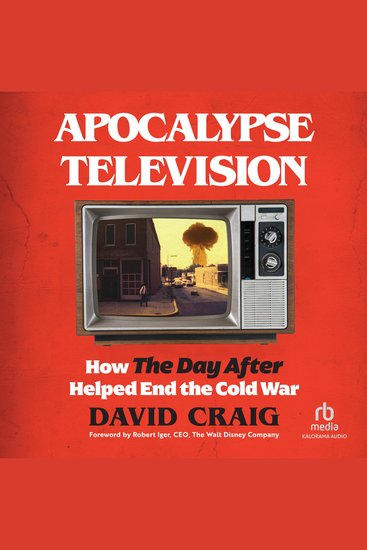
  • Apocalypse Television - How The Day After Helped End the Cold War - cover

    Apocalypse Television - How The...

    David Craig, Robert Iger

    • 0
    • 0
    • 0
    On November 20, 1983, a three-hour made-for-TV movie, The Day After, premiered on ABC. Set in the heartland of Lawrence, Kansas, the film depicted the events before, during, and after a Soviet nuclear attack with vivid scenes of the post-apocalyptic hellscape that would follow. The film was viewed by over 100 million Americans and remains the highest rated TV movie in history. 


    The path to primetime for The Day After proved nearly as treacherous as the film's narrative. Battles ensued behind the scenes at the network, between the network and the filmmakers. But these skirmishes pale in comparison to the culture wars triggered by the film in the press, alongside a growing Nuclear Freeze movement, and from a united, pro-nuclear Right. Once efforts to alter the script failed, the White House conducted a full-throttled propaganda campaign to hijack the film's message. 


    Apocalypse Television features a dramatic insider's account of the making of and backlash against The Day After. No other book has told this story in similar fashion, venturing behind-the-scenes of the programming and news divisions at ABC, the backlash from the conservative movement and Religious Right, the challenges encountered by the film's production team, and the experiences of the citizens of Lawrence, Kansas, where the film was set and shot.
    Mostra libro
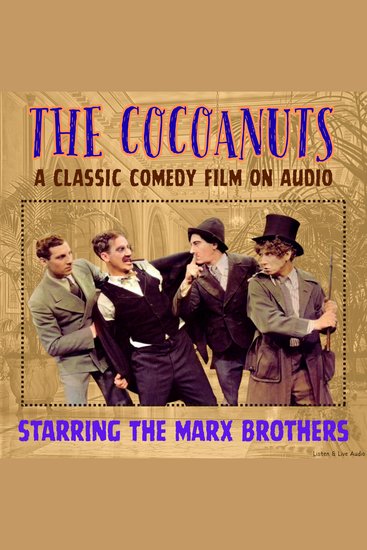
  • The Cocoanuts A Classic Comedy Film On Audio Starring The Marx Brothers - cover

    The Cocoanuts A Classic Comedy...

    Morrie Ryskind

    • 0
    • 0
    • 0
    The Cocoanuts is a 1929 pre-Code musical comedy film starring the Marx Brothers (Groucho, Harpo, Chico, and Zeppo). Produced for Paramount Pictures by Walter Wanger, the film also stars Mary Eaton, Oscar Shaw, Margaret Dumont and Kay Francis. The first sound film to credit more than one director (Robert Florey and Joseph Santley), it was adapted to the screen by Morrie Ryskind from the musical play by George S. Kaufman. Five of the film's tunes were composed by Irving Berlin, including "When My Dreams Come True", sung by Oscar Shaw and Mary Eaton. The following is the audio track of the full feature film.
    Mostra libro
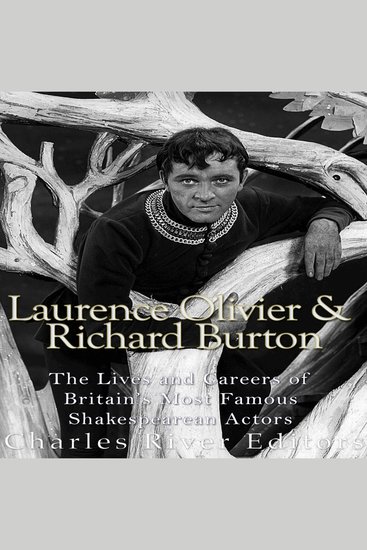
  • Laurence Olivier and Richard Burton: The Lives and Careers of Britain’s Most Famous Shakespearean Actors - cover

    Laurence Olivier and Richard...

    Editors Charles River

    • 0
    • 0
    • 0
    Of all the great actors of the 20th century, none personifies acting royalty more than Laurence Olivier, and some of this is simply due to the fact that he was actually knighted in 1947, along with a lengthy list of other honors that include being named a life peer in 1970 and admission to the Order of Merit in 1984. To speak of The Right Honourable Lord Laurence Olivier is not a figure of speech but rather a fact. Of course, in addition to the literal sense of the term, there is undeniably a manner in which Laurence Olivier qualifies as acting royalty, as it is not for nothing that Spencer Tracy once referred to Olivier as “the greatest actor in the English-speaking world” (Bacall). It is also important to note that Tracy refers to Olivier not as a film or theater actor specifically, because much of Olivier’s lofty standing derives from his ability to successfully navigate different mediums like stage, film, and television. The breadth of mediums in which he worked, the various roles he inhabited within them (actor, producer, director), and the formidable time span of his career lend Olivier’s career a scope of perhaps unmatched magnitude.   
    	In the 1960s, the most popular actor in the world was Richard Burton, a hard-drinking Welshman who was nevertheless so professional that he was one of the preeminent stage performers of his day. In fact, he performed Shakespeare so magnificently that he was compared to British legend Laurence Olivier, and that success ultimately led to a film career that earned him 7 Academy Award nominations, as well as BAFTA and Golden Globe awards for Best Actor. Given his accomplishments on the stage and in Hollywood, Burton became one of the world’s most recognizable leading men, so it seemed fitting that he engaged in one of Hollywood’s most legendary romances with Elizabeth Taylor.
    Mostra libro
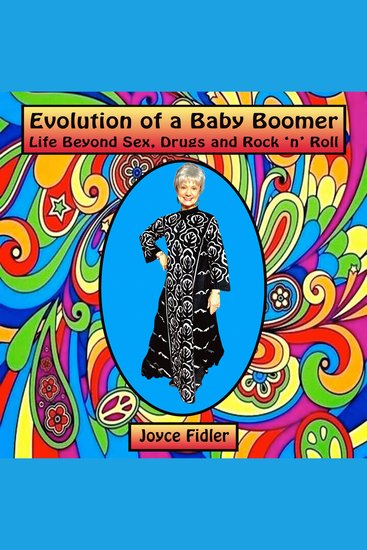
  • Evolution of a Baby Boomer - Life Beyond Sex Drugs & Rock 'n' Roll - cover

    Evolution of a Baby Boomer -...

    Joyce Fidler

    • 0
    • 0
    • 0
    "Joyce Fidler's life is one of many twists and turns and highs and lows. Sometimes she'll shock you; other times she'll bring you to tears. If you have an alcohol or drug addiction problem, her book will uplift you and encourage you to make important changes in your life. It's not a preachy book; instead, it's very honest and forthright." Terry Hassman-Paulin, Editor at Silver Burdett Ginn (ret.) 
    "A memoir of a frenzied woman" Frank Dungan, TV Producer/Emmy Winning Writer 
    "Joyce Fidler tells a mind-blowing story. Being a musician myself who tripped through that era I knew from the first that this was real, but Fidler's unique POV made it a brand-new experience. I didn't think that I could be shocked, but particular parts of her story left me wide-eyed. The spiritual message left me teary-eyed." Gene Herd, Executive Director of the Hollywood Radio and Television Society (ret.)
    Mostra libro