¡Acompáñanos a viajar por el mundo de los libros!
Añadir este libro a la estantería
Grey
Escribe un nuevo comentario Default profile 50px
Grey
Suscríbete para leer el libro completo o lee las primeras páginas gratis.
All characters reduced
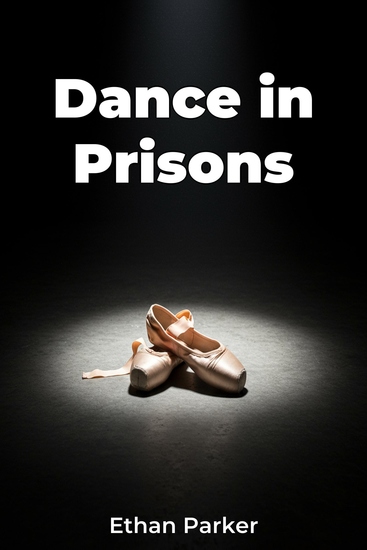
Dance in Prisons - cover

Dance in Prisons

Ethan Parker

Traductor A AI

Editorial: Publifye

  • 0
  • 0
  • 0

Sinopsis

Dance in Prisons explores the transformative potential of dance as both a therapeutic tool and a means of rehabilitation within correctional facilities globally. It examines how structured movement can provide incarcerated individuals with an avenue for emotional expression, social skill development, and personal growth. Intriguingly, dance can assist in trauma recovery and potentially reduce recidivism by fostering empathy and emotional regulation. The book argues that dance offers a unique way for incarcerated individuals to reconnect with their bodies and process difficult experiences.

 
The book begins by introducing dance/movement therapy and its applications within prisons. It then progresses by examining the psychological benefits of dance, offering case studies of successful programs in different countries, and addressing the ethical considerations of implementing arts-based programs in carceral environments. This approach allows the book to present a comprehensive view of dance's role in prison rehabilitation, highlighting its potential for fostering positive change and advocating for a more holistic approach to corrections.
Disponible desde: 24/02/2025.
Longitud de impresión: 72 páginas.

Otros libros que te pueden interesar

  • The Metoo Movement - Fighting Sexual Harassment and Empowering Women Worldwide - cover

    The Metoo Movement - Fighting...

    Fredrich Hazelton

    • 0
    • 0
    • 0
    The MeToo movement has become one of the most significant social movements of the 21st century, capturing the global attention of millions and reshaping conversations around sexual harassment, assault, and gender inequality. What began as a simple hashtag in 2006, introduced by activist Tarana Burke, has evolved into a global call to action, leading to widespread awareness, conversations, and systemic changes regarding how society addresses sexual violence. The movement’s resonance stems from its powerful message: sexual harassment and assault are widespread issues that affect women and marginalized groups across all sectors of society, from entertainment to politics, from workplaces to homes. 
    The origins of MeToo lie in a need for a platform where survivors of sexual violence could share their experiences and find solidarity. Tarana Burke’s original vision was to create a supportive community for women of color who had experienced abuse and harassment. However, it was not until 2017, when the hashtag #MeToo went viral following allegations against Hollywood mogul Harvey Weinstein, that the movement gained immense global traction. What followed was a wave of survivors coming forward, recounting their own stories of harassment, abuse, and trauma. The hashtag quickly became a symbol of empowerment, solidarity, and strength, with millions of people around the world joining in to share their experiences, stand in support of others, and demand change. 
      
    The digital age played a crucial role in amplifying the voices of survivors. Social media platforms, particularly Twitter, Facebook, and Instagram, provided a space for individuals to share their stories without the barriers of traditional media. The power of the hashtag allowed voices from all walks of life, from ordinary individuals to high-profile celebrities, to unite in a way that was impossible before.
    Ver libro
  • Anchored - How to Befriend Your Nervous System Using Polyvagal Theory - cover

    Anchored - How to Befriend Your...

    LCSW Deb Dana, PhD. Stephen Porges

    • 0
    • 0
    • 0
    An intense conversation, a spat with a partner, or even an obnoxious tweet—these situations aren't life-or-death, yet we often react as if they are. That's because our bodies treat most perceived threats the same way. Yet one approach has proven to be incredibly effective in training our nervous system to stop overreacting: Polyvagal Theory. 


    In Anchored, expert teacher Deb Dana shares a down-to-earth presentation of Polyvagal Theory, then brings the science to life with practical, everyday ways to transform your relationship with your body. Using field-tested techniques, Dana helps you master the skills to become more aware of your nervous system moment to moment—and change the way you respond to the great and small challenges of life. 


    Here, you'll explore: 


    ● Polyvagal Theory—get to know the biology and function of your vagus nerve, the highway of the nervous system 


    ● Befriending Your Nervous System—attune to what's going on in your body by developing your "neuroception" 


    ● Practices and guidance to gently shape your nervous system for greater resilience, intuition, safety, and wonder
    Ver libro
  • The Republic - cover

    The Republic

    Plato

    • 0
    • 0
    • 0
    The Republic (Greek: Politeia) is a Socratic dialogue, written by Plato around 380 BC, concerning the definition of (justice), the order and character of the just city-state and the just man, reason by which ancient readers used the name On Justice as an alternative title (not to be confused with the spurious dialogue also titled On Justice). The dramatic date of the dialogue has been much debated and though it must take place some time during the Peloponnesian War, "there would be jarring anachronisms if any of the candidate specific dates between 432 and 404 were assigned".    It is Plato's best-known work and has proven to be one of the most intellectually and historically influential works of philosophy and political theory. In it, Socrates along with various Athenians and foreigners discuss the meaning of justice and examine whether or not the just man is happier than the unjust man by considering a series of different cities coming into existence "in speech", culminating in a city (Kallipolis) ruled by philosopher-kings; and by examining the nature of existing regimes.    The participants also discuss the theory of forms, the immortality of the soul, and the roles of the philosopher and of poetry in society. Short Summary (Epilogue): X.1—X.8. 595a—608b. Rejection of Mimetic Art X.9—X.11. 608c—612a. Immortality of the Soul X.12. 612a—613e. Rewards of Justice in Life X.13—X.16. 613e—621d. Judgment of the Dead The paradigm of the city — the idea of the Good, the Agathon — has manifold historical embodiments, undertaken by those who have seen the Agathon, and are ordered via the vision. The centre piece of the Republic, Part II, nos. 2–3, discusses the rule of the philosopher, and the vision of the Agathon with the allegory of the cave, which is clarified in the theory of forms.    The centre piece is preceded and followed by the discussion of the means that will secure a well-ordered polis (City). Part II, no. 1, concerns marriage, the community of people and goods for the Guardians, and the restraints on warfare among the Hellenes. It describes a partially communistic polis. Part II, no. 4, deals with the philosophical education of the rulers who will preserve the order and character of the city-state. In Part II, the Embodiment of the Idea, is preceded by the establishment of the economic and social orders of a polis (Part I), followed by an analysis (Part III) of the decline the order must traverse. The three parts compose the main body of the dialogues, with their discussions of the "paradigm", its embodiment, its genesis, and its decline. The Introduction and the Conclusion are the frame for the body of the Republic.    The discussion of right order is occasioned by the questions: "Is Justice better than Injustice?" and "Will an Unjust man fare better than a Just man?" The introductory question is balanced by the concluding answer: "Justice is preferable to Injustice". In turn, the foregoing are framed with the Prologue (Book I) and the Epilogue (Book X). The prologue is a short dialogue about the common public doxai (opinions) about "Justice". Based upon faith, and not reason, the Epilogue describes the new arts and the immortality of the soul.
    Ver libro
  • Davy Jones' Metropolis - Exploring the Submerged Haven of Lost Corsairs - cover

    Davy Jones' Metropolis -...

    John Harpoon

    • 0
    • 0
    • 0
    The tale of Davy Jones' Metropolis is one that stretches the boundaries between myth and reality, a city submerged beneath the depths of the ocean, where the lost and forgotten roam amidst the remnants of once-proud pirates and forgotten empires. Far beyond the reach of sailors and explorers, this enigmatic metropolis remains hidden, its existence debated by those who dare to venture into the unknown realms of the sea. 
    The legend of Davy Jones, the fearsome pirate captain cursed to rule over the souls of the damned, has long been etched into maritime folklore. Yet, his connection to the Metropolis is often misunderstood. The city itself is not simply a domain of darkness or death, but rather a lost sanctuary that once served as a haven for corsairs, privateers, and seafaring marauders. It is said to be a place where time stands still, where the remnants of a golden age of piracy are preserved beneath the waves, untouched by the ravages of time. This metropolis, often referred to as the “Haven of Lost Corsairs,” was not only a refuge for pirates, but also a thriving hub of commerce, culture, and mysticism, protected by the vast and treacherous ocean that envelops it. 
    The origins of Davy Jones' Metropolis are shrouded in mystery. Some believe it was constructed by an ancient order of pirates who sought to escape the control of empires, building a city that existed outside of the world's laws. Others claim that the Metropolis was created by Davy Jones himself as a sanctuary for those cursed by the sea, a place where the spirits of lost sailors could dwell in eternal unrest. Regardless of its true origin, the city’s allure lies in its captivating history, its forgotten treasures, and the dangers that still lie hidden in its depths.
    Ver libro
  • The Power of Laws - cover

    The Power of Laws

    Terence Karabo Moloisane

    • 0
    • 0
    • 0
    FROM A SLAVE TO A KING 
    We are born into this world we adopt low-quality laws and expect a high-quality return. 
    Laws have no respect for no one, you have to respect them.Laws don't care about the colour of your skin, if you take them serious they will sustain you. 
    The only true power in humanity is the laws we chose to abide by or break, laws are so powerful they can transform a peasant into a king, a coward into a fiercesome beast. 
    Both a King and a peasant are human the only difference is their laws of citizenship.
    Ver libro
  • End-times Handbook The: Vol 2: The Beast - cover

    End-times Handbook The: Vol 2:...

    Buck Hurlbut

    • 0
    • 0
    • 0
    Jesus told us one definitive sign that must happen before His return: the appearing of the abomination of desolation. We are told in two gospels to know what it is and to understand its impact on us and the world. Did you know that we are only two prophetic signs away from the appearing of the beast of the Revelation? Did you know that 99.3% of the world is already in a biometric identity system that will give the beast control over every financial transaction in the world? We are also only two signs away from his control and murderous attack against Christians and Jews. In this volume of the End Times Handbook, we discover the abomination of desolation in Daniel, we prove the one to whom it points, we learn the personality of the final world ruler, we discover what to expect during his rule, we discuss the infamous mark of the beast, we learn how Christians and Jews will be affected during his rule, we discuss the timing of his appearance, the timing of Jesus return in light of his appearing and how much of the end times the elect of God will experience before being caught away to meet Jesus in the clouds. Jesus is clear in Matthew 24:29-31 that His elect will not be gone before the beast appears: Are you ready for what is ahead? In this volume of the End Times Handbook, we grapple with the discomfort of Scripture as we learn how much of the beast kingdom the elect will experience and the signs for which to watch. Now is the time to get ourselves and others ready for what is ahead. If we wait until these events happen, it will be too late. How ready are you? This book narrated by the author will help you find out.
    Ver libro