Unisciti a noi in un viaggio nel mondo dei libri!
Aggiungi questo libro allo scaffale
Grey
Scrivi un nuovo commento Default profile 50px
Grey
Iscriviti per leggere l'intero libro o leggi le prime pagine gratuitamente!
All characters reduced
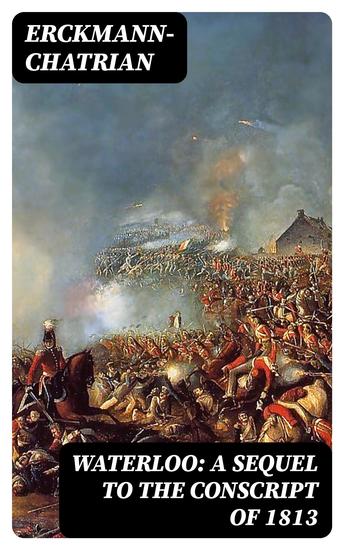
Waterloo: A sequel to The Conscript of 1813 - cover

Waterloo: A sequel to The Conscript of 1813

Erckmann- Erckmann-Chatrian

Casa editrice: DigiCat

  • 0
  • 0
  • 0

Sinossi

In "Waterloo: A Sequel to The Conscript of 1813," Erckmann-Chatrian deliver a poignant exploration of the human condition against the backdrop of the Napoleonic Wars. This historical novel masterfully intertwines personal narratives with significant historical events, providing a vivid portrayal of the 1815 Battle of Waterloo. The authors utilize a rich, descriptive literary style that immerses readers in the chaos of battle while simultaneously delving into the psychological states of their characters, showcasing the interplay between heroism and futility. Their nuanced approach presents a multilayered examination of loyalty and sacrifice, shedding light on the deeply personal costs of war. The collaboration between Émile Erckmann and Alexandre Chatrian was driven by their shared passion for history and literature, both men being products of the turbulent period of the 19th century in France. Their works often reflect their interest in the social implications of war, informed by their own experiences and the tumultuous backdrop of post-Napoleonic Europe. This sequel not only builds upon the narrative of its predecessor but also serves to amplify their collective voice, exploring themes of morality and destiny shaped by the chaos of conflict. Readers seeking an evocative blend of historical insight and character-driven storytelling will find "Waterloo" both compelling and enlightening. It stands as a significant contribution to the literature of war, offering timeless reflections on bravery, loss, and the haunting remnants of individual choices. This book is an essential read for anyone interested in the interplay of history and personal narrative, making it a valuable addition to both literary and historical collections.
Disponibile da: 20/07/2022.
Lunghezza di stampa: 186 pagine.

Altri libri che potrebbero interessarti

  • urban Geography and Land Use - The Spatial Organization of Cities (3 in 1) - cover

    urban Geography and Land Use -...

    Lyric Vale

    • 0
    • 0
    • 0
    Cities are fundamentally exercises in spatial organization—complex arrangements of human activity, physical infrastructure, and natural systems that collectively define how metropolitan regions function, evolve, and adapt. The geographic logic of urban environments—how different uses are distributed, how resources are allocated, and how communities develop within specific physical contexts—represents one of the most profound expressions of human social organization and values. This comprehensive exploration delves into the intricate domains of Urban Geography, Urban Land Use, and Community Development—examining how spatial patterns emerge, how they reflect deeper social and economic forces, and how they ultimately shape the lived experiences of urban inhabitants. 
    The narrative of urban spatial organization is far more than a technical study of land allocation; it encompasses the dynamic interactions between physical geography, economic systems, social forces, and political decisions that collectively determine the form and function of our cities. By examining the complex mechanisms that drive urban spatial development—from market dynamics and zoning regulations to community activism and cultural preferences—this book illuminates how cities represent physical manifestations of our collective choices, priorities, and power structures. Readers will journey through diverse urban landscapes—from the historic patterns of concentric development to the fragmented geographies of postindustrial cities and the emerging forms of sustainable urbanism—while exploring how community development initiatives seek to reshape urban spaces to better serve human needs.
    Mostra libro
  • Break Free from Your Mind’s Prison: Conquer Negativity Now! - "Break free from negativity! Dive into our powerful audio lessons for unstoppable positivity and success!" - cover

    Break Free from Your Mind’s...

    Orson Deepwood

    • 0
    • 0
    • 0
    Break Free from Your Mind’s Prison: Conquer Negativity Now! 
    ⭐⭐ Simplified Guide & Explanations Included ⭐⭐ 
    Are you striving to elevate your career and enhance your understanding in order to break free from the limitations of negative thinking? 
    In search of a thorough guide that encompasses everything you need to transform your thoughts and unleash your true potential? 
    Look no further! 
    This audiobook is your ultimate companion for deepening your insights, applying essential techniques, and engaging in practical exercises. With this resource, you’re poised for success. 
    Updated for the latest insights and strategies. 
    Key features of this enriched guide include: 
    - In-depth insights on conquering negativity 
    - Comprehensive understanding of how to effectively transform your thinking 
    - Effective strategies for personal growth and overcoming mental barriers 
    Our guide stands out with its thorough coverage, vital for your personal development journey. Concepts aren’t simply touched upon; they are explored with clarity and depth. 
    Crafted with a clear framework and accessible language, our guide ensures smooth transitions as you navigate through various topics. Say farewell to complex jargon and embrace clear, precise, and accurately presented content. 
    So, why hesitate? Click the BUY NOW button, secure your guide, and embark on your journey to unleash your true potential today! 
    Break Free from Your Mind’s Prison: Conquer Negativity Now!
    Mostra libro
  • Muromachi Period - Ashikaga Shoguns and the Rise of Feudal Japan - cover

    Muromachi Period - Ashikaga...

    Rolf Hedger

    • 0
    • 0
    • 0
    The Muromachi Period, spanning from 1336 to 1573, marked a significant turning point in Japanese history, characterized by the rise of the Ashikaga Shogunate and the gradual shift toward decentralized feudal rule. This period emerged following the fall of the Kamakura Shogunate, as Ashikaga Takauji established his military government in Kyoto. The political, social, and cultural transformations that unfolded during this time laid the foundation for the later Sengoku era, a period of constant warfare among regional warlords. 
    The decline of the Kamakura Shogunate stemmed from mounting dissatisfaction among the samurai class, who had grown discontent with the Hojo regents’ rule. The Mongol invasions of Japan in 1274 and 1281 had placed immense strain on the government, as victory brought no financial rewards for the warriors who had fought to defend the nation. With no lands to distribute as compensation, loyalty to the shogunate weakened, creating an opportunity for ambitious leaders to challenge its authority. Amid this unrest, Emperor Go-Daigo launched the Kenmu Restoration (1333–1336), an effort to reestablish imperial rule. However, his failure to recognize the interests of the samurai led to his downfall. 
    Ashikaga Takauji, originally a supporter of the emperor, turned against him and seized power, defeating both imperial and Kamakura loyalists. In 1336, Takauji established his own military government, known as the Muromachi Bakufu, in Kyoto. Unlike the Kamakura Shogunate, which ruled from a distant military capital, the Muromachi Shogunate was strategically located in the heart of Japan’s cultural and political sphere. Takauji’s rule was solidified in 1338 when he was officially
    Mostra libro
  • You Can't Kill a Man Because of the Books He Reads - Angelo Herndon's Fight for Free Speech - cover

    You Can't Kill a Man Because of...

    Brad Snyder

    • 0
    • 0
    • 0
    The story of a young, Black Communist Party organizer wrongly convicted of attempting to incite insurrection and the landmark case that made him a civil rights hero. 


    Decades before the impeachment of an American president for a similar offense, Angelo Herndon was charged under Georgia law with "attempting to incite insurrection"—a crime punishable by death. In 1932, the eighteen-year-old Black Communist Party organizer was arrested and had his room illegally searched and his radical literature seized. Charged under an old slave insurrection statute, Herndon was convicted by an all-white jury and sentenced to eighteen to twenty years on a chain gang. 


    A legal odyssey of Herndon's narrow escape from certain death because of his unpopular political beliefs, You Can't Kill a Man Because of the Books He Reads explores Herndon's journey from Alabama coal miner to Communist Party organizer to Harlem hero and beyond. Brad Snyder tells the stories of the diverse coalition of people who rallied to his cause and who twice appealed his case to the US Supreme Court. They forced the Court to recognize free speech and peaceable assembly as essential rights in a democracy—a landmark decision in 1930s America as well as today.
    Mostra libro
  • The Divine Comedy Inferno - cover

    The Divine Comedy Inferno

    Dante Alighieri

    • 0
    • 0
    • 0
    Inferno (Italian: [iɱˈfɛrno]; Italian for "Hell") is the first part of Italian writer Dante Alighieri's 14th-century epic poem Divine Comedy. It is followed by Purgatorio and Paradiso. The Inferno tells the journey of Dante through Hell, guided by the ancient Roman poet Virgil. In the poem, Hell is depicted as nine concentric circles of torment located within the Earth; it is the "realm ... of those who have rejected spiritual values by yielding to bestial appetites or violence, or by perverting their human intellect to fraud or malice against their fellowmen". As an allegory, the Divine Comedy represents the journey of the soul toward God, with the Inferno describing the recognition and rejection of sin.An initial canto, serving as an introduction to the poem and generally considered to be part of the first cantica, brings the total number of cantos to 100.
    Mostra libro
  • The Second British Empire - In the Crucible of the Twentieth Century - cover

    The Second British Empire - In...

    Timothy H Parsons

    • 0
    • 0
    • 0
    At its peak, the British Empire spanned the world and linked diverse populations in a vast network of exchange that spread people, wealth, commodities, cultures, and ideas around the globe. By the turn of the twentieth century, this empire, which made Britain one of the premier global superpowers, appeared invincible and eternal. This compelling book reveals, however, that it was actually remarkably fragile. Reconciling the humanitarian ideals of liberal British democracy with the inherent authoritarianism of imperial rule required the men and women who ran the empire to portray their non-Western subjects as backward and in need of the civilizing benefits of British rule. However, their lack of administrative manpower and financial resources meant that they had to recruit cooperative local allies to actually govern their colonies.   Timothy H. Parsons provides vivid detail of the experiences of subject peoples to explain how this became increasingly difficult and finally impossible after World War II as Afr
    Mostra libro