Unisciti a noi in un viaggio nel mondo dei libri!
Aggiungi questo libro allo scaffale
Grey
Scrivi un nuovo commento Default profile 50px
Grey
Iscriviti per leggere l'intero libro o leggi le prime pagine gratuitamente!
All characters reduced
A Selection from the Discourses of Epictetus with the Encheiridion - cover

A Selection from the Discourses of Epictetus with the Encheiridion

Epictetus

Traduttore George Long

Casa editrice: DigiCat

  • 0
  • 0
  • 0

Sinossi

In "A Selection from the Discourses of Epictetus with the Encheiridion," the Stoic philosopher Epictetus presents a rich tapestry of his teachings, emphasizing the importance of ethics, self-control, and personal responsibility. Written in a conversational tone, these selections bridge the complexities of Stoic philosophy with practical guidance for everyday life. The text draws upon both personal anecdotes and philosophical discourse, positioning itself within the broader context of Hellenistic thought, where the quest for moral virtue finds paramount significance amidst the tumultuous backdrop of the Roman Empire. Epictetus, born a slave and later gaining his freedom, cultivated a profound understanding of human suffering and resilience, directly influencing his philosophical outlook. His life experiences, marked by adversity and transformation, inform his teachings on the dichotomy of control, positioning liberty not in circumstances but in one's attitudes and perceptions. By focusing on the power of individual choice and virtue, he crafts a philosophy aimed at empowering individuals to lead lives of authenticity and purpose. This text serves as an essential guide for anyone seeking to navigate the complexities of modern existence. Epictetus's insights into managing desire, facing adversity, and fostering inner peace resonate powerfully today, making this book a compelling read for both scholars and general readers alike.
Disponibile da: 15/09/2022.
Lunghezza di stampa: 143 pagine.
Altri libri che potrebbero interessarti

  • I Am Human: Pain & Pleasure - cover

    I Am Human: Pain & Pleasure

    Martin Johnson

    • 0
    • 0
    • 0
    For thousands of years our species has survived, evolved and thrived through our ability to endure pain and suffering, whilst also seeking pleasure and reward. But the scales have tipped and we're losing our balance. Seemingly more susceptible to anxiety than ever before, are the lifestyles we crave creating a "comfort crisis" and do we have the ability to wrestle back control? Exploring the psychology of pain and pleasure, how they dominate and dictate everything we humans do - this book will make you stop and think about your life. Most importantly, it will offer practical solutions to balance your pain-pleasure scales and achieve greater levels of fulfilment.
    Mostra libro
  • A Rare Recording of President Dwight D Eisenhower's 1961 Military-Industrial Complex Speech - cover

    A Rare Recording of President...

    President Dwight D. Eisenhower

    • 0
    • 0
    • 0
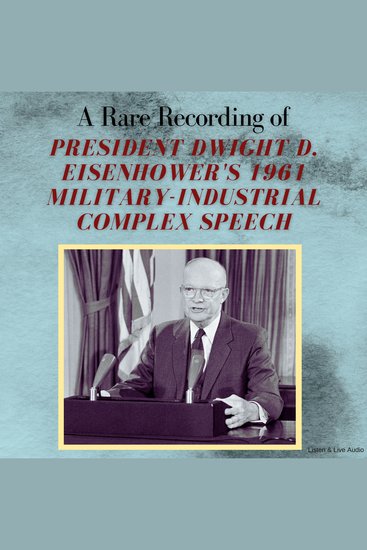
    On January 17, 1961, President Dwight Eisenhower delivered his political farewell to the American people on national television from the Oval Office of the White House. Those who expected the military leader and hero of World War II to depart his Presidency with a nostalgic, "old soldier" speech like Gen. Douglas MacArthur's, were surprised at his strong warnings about the dangers of the "military-industrial complex." As President of the United States for two terms, Eisenhower had slowed the push for increased defense spending despite pressure to build more military equipment during the Cold War’s arms race. Nonetheless, the American military services and the defense industry had expanded a great deal in the 1950s. Eisenhower thought this growth was needed to counter the Soviet Union, but it confounded him. Though he did not say so explicitly, his standing as a military leader helped give him the credibility to stand up to the pressures of this new, powerful interest group. He eventually described it as a necessary evil. The following is a transcript of the speech: 
     
    "Good Evening My Fellow Americans: 
     
    First, I should like to express my gratitude to the radio and television networks for the opportunities they have given me over the years to bring reports and messages to our nation. My special thanks go to them for the opportunity of addressing you this evening. 
     
    Three days from now, after half a century in the service of our country, I shall lay down the responsibilities of office as, in traditional and solemn ceremony, the authority of the Presidency is vested in my successor. 
     
    This evening I come to you with a message of leave-taking and farewell, and to share a few final thoughts with you, my countrymen. 
     
    Like every other citizen, I wish the new President, and all who will labor with him, Godspeed. I pray that the coming years will be blessed with peace and prosperity for all...
    Mostra libro
  • Freeing Congregational Mission - A Practical Vision for Companionship Cultural Humility and Co-Development - cover

    Freeing Congregational Mission -...

    B. Hunter Farrell

    • 0
    • 0
    • 0
    There is a deepening crisis in mission as practiced by North American congregations.  Many mission activities are more effective at satisfying church members than making a lasting difference, producing what's too often consumer-oriented "selfie mission." Too much effort is based on colonial-era assumptions of mission launched from a position of power. These practices are not just ineffective—they deviate from mission in the way of Jesus.
    Hunter Farrell and Bala Khyllep want to help free congregational mission from harmful cultural forces so churches can better partner with God's work in the world. They invite leaders to lay the foundation for more faithful and effective missions with three core elements:
    
    - a Christ-centered theology of mission rooted in companionship
    - an appetite and competence to engage across differences with cultural humility
    - insights and strategies to accompany local and global neighbors in co-development
    Farrell and Khyllep deliver key takeaways from the latest mission research, inspiring examples from innovative congregations, and a set of step-by-step tools for churches to discern and implement sound practices that will work for them. The local church community is well-positioned to build a spreading circle of relationships centered in Jesus Christ. With this book, congregations of every Christian tradition will find practical help to direct their resources in truly life-giving ways as they seek the mission of God.
    Mostra libro
  • The Han Dynasty - Golden Age of Chinese Civilization - cover

    The Han Dynasty - Golden Age of...

    Jun Liu

    • 0
    • 0
    • 0
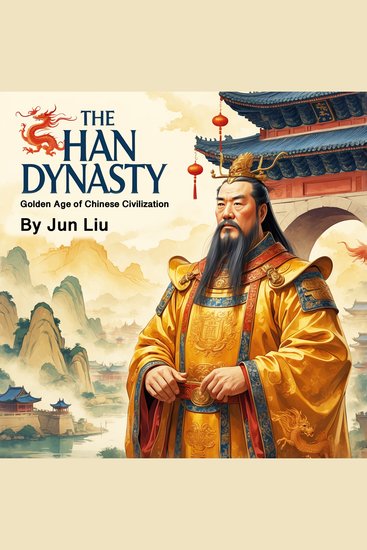
    The Han Dynasty, one of the most influential periods in Chinese history, emerged from the collapse of the Qin Dynasty in 206 BCE. After years of harsh rule under Qin Shi Huang, widespread unrest and rebellion led to the fall of the Qin. In the power vacuum that followed, Liu Bang, a commoner-turned-military leader, rose to prominence and ultimately established the Han Dynasty. His leadership and political acumen laid the foundation for a dynasty that would last over four centuries, shaping China’s governance, culture, and identity. 
    Liu Bang, later known as Emperor Gaozu, was originally a minor official under the Qin. Unlike his aristocratic rivals, he came from humble origins, making him a unique figure in Chinese history. As the Qin administration crumbled due to heavy taxation and forced labor policies, numerous factions vied for control. The most significant of these was the Chu-Han Contention, a prolonged struggle between Liu Bang and Xiang Yu, a powerful general of noble descent. Liu Bang, known for his ability to rally support from various social classes, ultimately defeated Xiang Yu at the Battle of Gaixia in 202 BCE. This victory marked the official beginning of the Han Dynasty, with Liu Bang declaring himself emperor. 
    Once in power, Liu Bang sought to distance his rule from the harsh legalist policies of the Qin. He adopted a more lenient and pragmatic approach, blending Confucian ideals with centralized governance. Although he retained elements of Qin’s bureaucratic structure, he reduced the severity of laws and punishments, earning the trust of the people. To ensure stability, he granted land and titles to his loyal followers, creating a semi-feudal system that allowed regional kings to govern under the central authority of the emperor. This balance between centralization and decentralization was a defining characteristic of early Han rule.
    Mostra libro
  • Claudius - The Successful Roman Emperor Who Had Cerebral Palsy - cover

    Claudius - The Successful Roman...

    Kelly Mass

    • 0
    • 0
    • 0
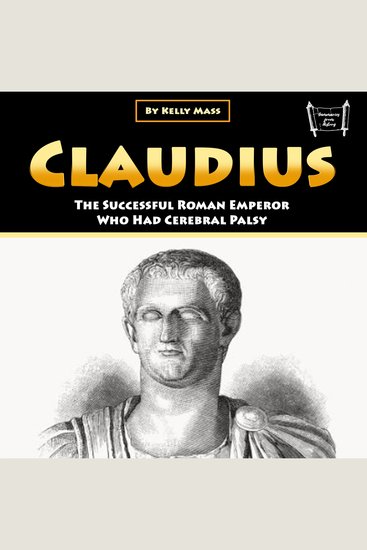
    Tiberius Claudius Caesar Augustus Germanicus, better known as Emperor Claudius, ruled the Roman Empire from 41 to 54 AD. Born in Lugdunum (modern-day Lyon, France), in 10 BC, Claudius was the son of Drusus and Antonia Minor, both prominent figures in the Roman elite. His birthplace marked a significant departure from previous emperors, as he was the first Roman Emperor born outside Italy. Though Claudius’ family was rooted in the ancient Sabine people, his upbringing would not follow the traditional path of an elite Roman, largely due to his physical infirmities. He suffered from a limp and mild deafness, conditions that led his family to deem him unfit for public life and dismiss him from military and political endeavors. 
    Growing up in the shadows of more capable and ambitious relatives, Claudius was largely ignored by the Roman aristocracy. His health issues, though perhaps a result of childhood illness, kept him out of sight and out of mind during the brutal purges of Tiberius and Caligula. This absence from political life proved advantageous, as it spared him the many assassination attempts that claimed the lives of his more prominent family members. In a twist of fate, following the assassination of Caligula in 41 AD, the Praetorian Guard, upon finding him hiding in fear, declared Claudius the new emperor. As the only remaining adult male in his family, Claudius ascended to the throne, despite his perceived weakness. 
    Despite initial doubts about his ability to rule, Claudius quickly proved to be a capable and intelligent administrator. He worked tirelessly to stabilize the Roman Empire, which had suffered under the excesses of Caligula’s reign. One of his first actions was to restore the empire’s finances, expanding the imperial bureaucracy to include freedmen, and re-establishing order in the imperial administration.
    Mostra libro
  • Thinking Fast and Slow: How Your Brain Makes Decisions - The Groundbreaking Science of How We Think and Make Choices - cover

    Thinking Fast and Slow: How Your...

    Hoang Nguyen

    • 0
    • 0
    • 0
    🧠 **Nobel Prize winner Daniel Kahneman revolutionized our understanding of human psychology** with his research on how we think and make decisions. 🎯 **Discover the two systems that drive your thoughts:** the fast, intuitive System 1, and the slow, deliberate System 2. Learn how cognitive biases affect your judgment, why overconfidence leads to mistakes, and how to make better decisions in your personal and professional life. 
    💡 **You'll explore fascinating concepts like:** 
    • The lazy controller and why your brain takes shortcuts 
    • The anchoring effect and how first impressions distort judgment 
    • Loss aversion and why losses hurt more than gains feel good 
    • **The confidence myth and why experts are often wrong** 
    🌟 **Perfect for:** Business leaders, investors, marketers, psychologists, and anyone who wants to understand why they make the choices they do—and how to make better ones. 
    🚀 **Based on decades of research** that earned the author a Nobel Prize in Economics. Transform how you think about thinking forever.
    Mostra libro