Unisciti a noi in un viaggio nel mondo dei libri!
Aggiungi questo libro allo scaffale
Grey
Scrivi un nuovo commento Default profile 50px
Grey
Iscriviti per leggere l'intero libro o leggi le prime pagine gratuitamente!
All characters reduced
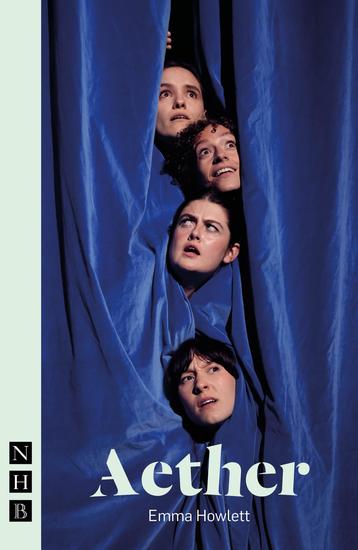
Aether - cover

Aether

Emma Howlett

Casa editrice: Nick Hern Books

  • 0
  • 0
  • 0

Sinossi

'Beauty, to us physicists, means something we've never seen before.'
An existential PhD student hunting dark matter collides with:

- A disillusioned illusionist
- A teenage medium with a secret
- A murdered mathematician
- A trailblazing astronomer 
Together, they shed new light on the greatest unsolved mystery of the universe. 
Witty, ingenious and daringly theatrical, Emma Howlett's Aether explores physics, faith and magic in a play that tracks humanity's insatiable fascination with the unknown.
Aether was first performed at Summerhall during the 2025 Edinburgh Festival Fringe. It received widespread critical acclaim and was named Best Theatre Show of the Fringe by the Telegraph. It transferred to Jermyn Street Theatre, London, in 2026.
'Emma Howlett is a superstar... the most exciting new auteur in theatre'London Standard
Disponibile da: 19/03/2026.
Lunghezza di stampa: 104 pagine.

Altri libri che potrebbero interessarti

  • Poetics - The Foundations of Storytelling and Dramatic Theory - cover

    Poetics - The Foundations of...

    Aristotle, Tim Zengerink

    • 0
    • 0
    • 0
    What if you could master the art of storytelling, understand the essence of great drama, and unlock the timeless secrets behind compelling narratives? 
    Poetics brings you Aristotle’s groundbreaking exploration of storytelling, carefully translated and adapted for the modern reader. 
    Written over two thousand years ago, Poetics is the cornerstone of literary theory and dramatic structure. Aristotle examines the elements that make stories resonate—plot, character, conflict, and catharsis—revealing what separates a great story from a forgettable one. His insights continue to influence writers, filmmakers, playwrights, and creators across the world. 
    This is not just an ancient text—it’s a practical guide to understanding the foundations of storytelling and how to create narratives that captivate audiences. Whether you’re a writer, filmmaker, student, or lover of literature, Aristotle’s teachings offer essential tools for mastering your craft and appreciating great works of art. 
    What You’ll Discover in This Modern Translation: 
    - Aristotle’s principles for crafting compelling stories with powerful structure, plot, and themes. 
    - How characters and their struggles create emotional impact and drive engaging narratives. 
    - The emotional power of drama and how stories can move and transform their audience. 
    - Aristotle’s insights in clear, modern language that makes his teachings practical and relevant for today. 
    Imagine having the knowledge to craft engaging stories, understand the mechanics of dramatic tension, and appreciate the art behind great literature and film. This modern translation of Poetics delivers Aristotle’s insights in a practical format, empowering you to master the art of storytelling. 
    Get your copy today and begin your journey toward mastering the foundations of storytelling with Aristotle’s timeless wisdom.
    Mostra libro
  • Short Poetry Collection 151 - cover

    Short Poetry Collection 151

    Various Various

    • 0
    • 0
    • 0
    This is a collection of 27 poems read by LibriVox volunteers for December 2015.
    Mostra libro
  • Marquis de Sade's Midsummer Night's Dream Conceivable - cover

    Marquis de Sade's Midsummer...

    Ophelia T'Wat, Robert Dwight...

    • 0
    • 0
    • 0
    Full-Cast Audiobook! 
    Go Beyond Your Wettest Dreams... as If You Are Penniless and Yet Listening From Outside the Globe Theater! 
    In the last decade of the 16th century, William Shakespeare could not dare write A Midsummer Night's (Wet) Dream unabridged. By the happenchance of his birth-century, The Bard wrote in a poetic 'Shakespearean Code', hinting at sexualities and paraphilias he fully intended to compose and expose his Elizabethan audience to. His intended 'erotica for every fetish' morphed instead into a 'humane and wise drama' by happenchance.  
    But What If? there was a multiversal reality where the Marquis de Sade deciphered the Shakespearean Code during his long stay at the lunatic asylum at Charenton. But now Ophelia T'Wat, living in a much more sexually accepting century, can reach across realities to snatch these pages from the bloody quill of the Marquis and finally, fatefully publish the Wettest Midsummer Night'sDream conceivable! 
    Mostra libro
  • Dulce et Decorum Est - cover

    Dulce et Decorum Est

    Wilfred Owen

    • 0
    • 0
    • 0
    LibriVox volunteers bring you 22 different recordings of Dulce et Decorum Est by Wilfred Owen. This was the weekly poetry project for the week of May 18th, 2008.
    Mostra libro
  • Lycidas - Much shorter poem from the famed author of Paradise Lost - cover

    Lycidas - Much shorter poem from...

    John Milton

    • 0
    • 0
    • 0
    John Milton was born in Bread Street, London, on December 9th, 1608.  His early years were privately tutored before gaining a place at St Paul’s School and in 1625 he matriculated at Christ's College, Cambridge, earning a BA in 1629 and an MA in 1632. At Cambridge he had developed a reputation for poetic skill but also experienced alienation from his peers and university life as a whole.  
    The next 6 years were spent in private study. He read both ancient and modern works of theology, philosophy, history, politics, literature and science, in preparation for a poetical career.  Milton mastered Latin, Greek, Hebrew, French, Spanish, and Italian. To these he would add Old English (whilst researching his History of Britain) and also acquired more than a passing acquaintance in Dutch.  
    Although he was studying, some of his poetry from this time is remarkable; L’Allegro and Il Penseroso in 1631 and Lycidias in 1638. 
    In May 1638, Milton embarked upon a 15 month tour of France and Italy. These travels added a new and direct experience of artistic and religious traditions, especially Roman Catholicism.  He cut the journey short to return home during the summer of 1639 because of what he claimed were "sad tidings of civil war in England."  
    Once home, Milton wrote prose tracts against episcopacy, in the service of the Puritan and Parliamentary cause.  
    He married 16-year-old Mary Powell in June 1643 but she left him after only a few months during which he wrote and published several writings on divorce. Mary did return after 3 years and their life thereafter seemed harmonious.  Milton received a hostile response to the divorce tracts and drove him to write Areopagitica, his celebrated attack on pre-printing censorship.  
    With the parliamentary victory in the Civil War, Milton wrote The Tenure of Kings and Magistrates (1649) which defended popular government and implicitly sanctioned the regicide which led to his appointment as Secretary for Foreign Tongues by the Council of State.  
    On 24 February 1652 Milton published his Latin defense of the English People, Defensio Pro Populo Anglicano, also known as the First Defense. Milton's Latin prose and intellectual sweep, quickly gained him a European reputation.  
    Tragically his first wife, Mary, died on May 5th, 1652 following the birth of their fourth child.   The following year Milton had become totally blind, probably due to glaucoma.  He then had to dictate his verse and prose to helpers, one of whom was the poet Andrew Marvell.  
    He married again to Katherine Woodcock but she died in February 1658, less than four months after giving birth to a daughter, who also tragically died.  
    Though Cromwell’s death in 1658 caused the English Republic to collapse Milton stubbornly clung to his beliefs and in 1659 he published A Treatise of Civil Power, attacking the concept of a state-dominated church. Upon the Restoration in May 1660, Milton went into hiding for his life. An arrest warrant was issued and his writings burnt. He re-emerged after a general pardon was issued, but was nevertheless arrested and briefly imprisoned before influential friends, such as Marvell, now an MP, intervened 
    His third marriage was to Elizabeth Mynshull. Despite a 31-year age gap, the marriage seemed happy and Milton spent the remaining decade of his life living quietly in London, apart from a short spell in Chalfont St. Giles, during the Great Plague of London.  
    Milton was to now publish his greatest works, which had been gestating for many years.  Paradise Lost, perhaps the classic English Epic poem was originally published in 10 books in 1667.  This was followed by Paradise Regained and Samson Agonistes in 1671.  Because of his anti-monarchy views their reception was muted but over the centuries since Milton has established himself as second only to Shakespeare.  He died of kidney failure on November 8th, 1674 and was buried in the church of St Giles Cripplegate.
    Mostra libro
  • The Kraken - cover

    The Kraken

    Alfred Lord Tennyson

    • 0
    • 0
    • 0
    LibriVox volunteers bring you 11 different recordings of The Kraken by Alfred, Lord Tennyson. This was the weekly poetry project for the week of October 28th, 2007.
    Mostra libro