Unisciti a noi in un viaggio nel mondo dei libri!
Aggiungi questo libro allo scaffale
Grey
Scrivi un nuovo commento Default profile 50px
Grey
Iscriviti per leggere l'intero libro o leggi le prime pagine gratuitamente!
All characters reduced
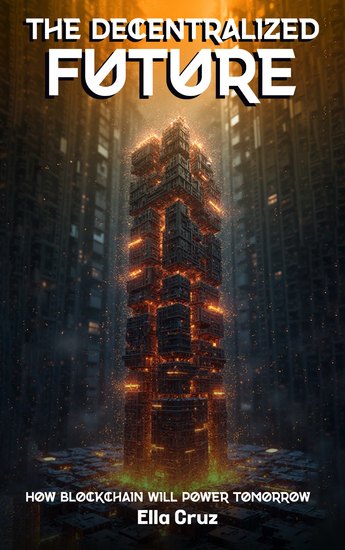
The Decentralized Future - How Blockchain Will Power Tomorrow - cover

The Decentralized Future - How Blockchain Will Power Tomorrow

Ella Cruz

Casa editrice: Publishdrive

  • 0
  • 0
  • 0

Sinossi

A technological revolution is reshaping the world—and it’s not happening in boardrooms or banks, but on the blockchain.
 
In a world defined by centralized control, data monopolies, and fragile systems, a silent revolution is gaining momentum. The Decentralized Future: How Blockchain Will Power Tomorrow explores how blockchain technology is not just disrupting finance—it’s laying the foundation for a new, open, and equitable digital society.
 
This book is your roadmap to understanding the seismic shift from centralized infrastructure to decentralized networks. It takes you beyond Bitcoin and crypto speculation to show how blockchain is transforming industries, redefining power structures, and enabling trust in a trustless world.
 
Inside, you'll discover:
 
How decentralized systems work—and why they matter more than ever
 
The rise of Web3 and how it’s empowering users to own their data, identity, and digital lives
 
Real-world use cases of blockchain in finance, healthcare, education, supply chains, governance, and media
 
The growing influence of DAOs (Decentralized Autonomous Organizations) and community-led innovation
 
How NFTs and tokenization are unlocking new economic models for creators, brands, and businesses
 
The promise of decentralized identity and privacy in an era of mass surveillance
 
The limitations of today’s internet—and how blockchain is building a more secure, resilient alternative
 
Challenges ahead: regulation, scalability, adoption, and what must be solved for decentralization to scale globally
 
Visionary predictions on how blockchain will impact politics, economics, and human collaboration over the next decade
 
The Decentralized Future isn’t just about technology—it’s about a movement toward freedom, transparency, and shared ownership. It’s for entrepreneurs, investors, developers, policy makers, and everyday citizens who want to understand and participate in building the digital world of tomorrow.
Disponibile da: 05/09/2025.
Lunghezza di stampa: 68 pagine.


Altri libri che potrebbero interessarti

  • On Decline - Stagnation Nostalgia and Why Every Year is the Worst One Ever - cover

    On Decline - Stagnation...

    Andrew Potter

    • 0
    • 0
    • 0
    A Winnipeg Free Press Top Read of 2021
    		 
    What if David Bowie really was holding the fabric of the universe together?
    		 
    The death of David Bowie in January 2016 was a bad start to a year that got a lot worse: war in Syria, the Zika virus, terrorist attacks in Brussels and Nice, the Brexit vote—and the election of Donald Trump. The end-of-year wraps declared 2016 “the worst … ever.” Four even more troubling years later, the question of our apocalypse had devolved into a tired social media cliché. But when COVID-19 hit, journalist and professor of public policy Andrew Potter started to wonder: what if The End isn’t one big event, but a long series of smaller ones?
    		 
    In On Decline, Potter surveys the current problems and likely future of Western civilization (spoiler: it’s not great). Economic stagnation and the slowing of scientific innovation. Falling birth rates and environmental degradation. The devastating effects of cultural nostalgia and the havoc wreaked by social media on public discourse. Most acutely, the various failures of Western governments in their responses to the COVID-19 pandemic. If the legacy of the Enlightenment and its virtues—reason, logic, science, evidence—has run its course, how and why has it happened? And where do we go from here?
    Mostra libro
  • Backroom Deals in Our Backyards - How Government Secrecy Harms Our Communities and the Local Heroes Fighting Back - cover

    Backroom Deals in Our Backyards...

    Miranda S. Spivack

    • 0
    • 0
    • 0
    Most Americans are likely to encounter the effects of government malfeasance or neglect close to home—from their governors, mayors, town councils, school boards, police, and prosecutors. In fact, deals shrouded in darkness are regularly made at the state and local levels, often the result of closed-door discussions between governments and industry without any scrutiny whatsoever from the public. Too often, residents are intentionally kept on the outside, struggling to get information about significant issues affecting their communities—from car crashes and dirty drinking water, to failing safety gear—until the backroom deals are done and it's too late to challenge them. 


    Backroom Deals in Our Backyards tells the story of five "accidental activists"—people from across the United States who started questioning why their local and state governments didn't protect them from issues facing their communities and why there was a frightening lack of transparency surrounding the way these issues were resolved. The secret deals, lies, and corruption they uncover shake their faith in government but move them to action. 


    For readers of Chain of Title and Superman's Not Coming, Spivack's revealing take on a hidden dimension of American politics will outrage and educate anyone who cares about the forces shaping their own communities.
    Mostra libro
  • Locked Down Locked Out - Why Prison Doesn't Work and How We Can Do Better - cover

    Locked Down Locked Out - Why...

    Maya Schenwar

    • 0
    • 0
    • 0
    An analysis of the US prison system through real-life stories, and a look at the complex work of community-based social justice projects. 


    Through the stories of prisoners and their families, including her own family's experiences, Maya Schenwar shows how the institution that locks up 2.3 million Americans and decimates poor communities of color is shredding the ties that, if nurtured, could foster real collective safety. As she vividly depicts here, incarceration takes away the very things that might enable people to build better lives. But looking toward a future beyond imprisonment, Schenwar profiles community-based initiatives that successfully deal with problems—both individual harm and larger social wrongs—through connection rather than isolation, moving toward a safer, freer future for all of us. 


    "Maya Schenwar's stories about prisoners, their families (including her own), and the thoroughly broken punishment system are rescued from any pessimism such narratives might inspire by the author's brilliant juxtaposition of abolitionist imaginaries and radical political practices." —Angela Y. Davis, author of Are Prisons Obsolete?
    Mostra libro
  • Guardians of Churchill's Secret Army - Men of the Intelligence Corps in the Special Operations Executive - cover

    Guardians of Churchill's Secret...

    Peter Dixon

    • 0
    • 0
    • 0
    It was life or death. A single slip could lead to arrest, torture, execution. The wrong ration book. A hasty answer to a suspicious question. Trusting the wrong person. 
    The men and women who served as agents of the World War 2 Special Operations Executive were courageous. But courage was not enough. They also needed to learn the caution and suspicion that might just keep them alive, undercover in enemy territory. 
    Guardians of Churchill's Secret Army tells the stories of the extraordinary men who taught them those skills and thought processes. Their job was to stand alongside trainee agents and teach them how to seem innocuous while preparing resistance, subversion and sabotage. 
    These men were junior in rank, but far from ordinary people. They were Australian, Anglo-French, Canadian, Scandinavian, East European and British. They had been schoolteachers, journalists, artists, ship brokers, racehorse trainers and international businessmen. Each spoke several languages. Many became agents themselves and displayed great bravery. All played a crucial role in the global effort to undermine the enemy. 
    We find them not only in the Baker Street Headquarters of SOE, but also in night parachute drops, in paramilitary training in the remotest depths of Scotland and in undercover agent training in isolated English country houses. We follow them to occupied France, to Malaya and Thailand under threat of Japanese invasion, to Italy and Germany as they play their part in the collapse of the Axis regimes. Their stories are inspiring.
    Mostra libro
  • Capturing News Capturing Democracy - Trump and the Voice of America - cover

    Capturing News Capturing...

    Mel Bunce, Kate Wright, Martin...

    • 0
    • 0
    • 0
    The Voice of America (VOA) is the oldest and largest US government-funded international media organization. In 2020, Donald Trump nominated Michael Pack, a right-wing documentarian and close friend of Steve Bannon, to lead the US Agency for Global Media—the independent federal agency overseeing US-funded international media. During Pack's seven month tenure, more than thirty whistleblowers filed complaints against him, and a judge ruled that he had infringed journalists' constitutional right to freedom of speech. 


    How did such a major international public service media network become intensely politicized by government allies in such a short time, despite having its editorial independence protected by law? 


    Capturing News, Capturing Democracy puts these events in historical and international context—and develops a new analytical framework for understanding government capture and its connection to broader processes of democratic backsliding. Drawing from in-depth interviews with network managers and journalists, and analysis of private correspondence and internal documents, Kate Wright, Martin Scott, and Mel Bunce analyze how political appointees, White House officials, and right-wing media influenced VOA—changing its reporting of the Black Lives Matter movement, and the 2020 presidential election.
    Mostra libro
  • The Communist Manifesto - cover

    The Communist Manifesto

    Karl Marx, Friedrich Engels

    • 0
    • 0
    • 0
    "Workers of the world, unite! You have nothing to lose but your chains!"
    
    A Call to Revolution
    
    First published in 1848, Karl Marx and Friedrich Engels' Communist Manifesto is considered a foundational work of political theory.
    
    This political work remains pertinent today since it questions capitalism and urges the working class to overthrow the capitalist system and impose communism, a society without classes.
    
    This manifesto—with echoes of Russian history—remains essential to comprehending the forces influencing the world we live in today.
    
    "The history of all hitherto existing society is the history of class struggles"
    This manifesto, deeply rooted in Marxism and relevant to the Russian Revolution and the Cold War, is an essential read for those interested in politics and history books alike.
    
    This communist manifesto book is a faithful reprint, preserving its original power and relevance. It's an essential piece of history that resonates in today's world, making it a perfect addition to any collection of political books or a thoughtful gift for anyone passionate about communism and Russian history.
    
    Order now to own a classic that still moves a global ideology today.
    
    Title Details
    
    - Original 1848 Text
    - Historical Context
    - Political Philosophy
    Mostra libro