Unisciti a noi in un viaggio nel mondo dei libri!
Aggiungi questo libro allo scaffale
Grey
Scrivi un nuovo commento Default profile 50px
Grey
Iscriviti per leggere l'intero libro o leggi le prime pagine gratuitamente!
All characters reduced
History of Woman Suffrage Volume III - cover

History of Woman Suffrage Volume III

Elizabeth Cady Stanton, Matilda Joslyn Gage, Susan B Anthony

Casa editrice: Phoemixx Classics Ebooks

  • 0
  • 0
  • 0

Sinossi

History of Woman Suffrage, Volume III - Matilda Joslyn Gage, Elizabeth Cady Stanton, Susan B. Anthony - The labors of those who have edited these volumes are not only finished as far as this work extends, but if three-score years and ten be the usual limit of human life, all our earthly endeavors must end in the near future. After faithfully collecting material for several years, and making the best selections our judgment has dictated, we are painfully conscious of many imperfections the critical reader will perceive. But since stereotype plates will not reflect our growing sense of perfection, the lavish praise of friends as to the merits of these pages will have its antidote in the defects we ourselves discover. We may however without egotism express the belief that this volume will prove specially interesting in having a large number of contributors from England, France, Canada and the United States, giving personal experiences and the progress of legislation in their respective localities.

One of the greatest minds of the century has thrown a ray of light on this gloomy picture by tracing the origin of woman's slavery to the same principle of selfishness and love of power in man that has thus far dominated all weaker nations and classes. This brings hope of final emancipation, for as all nations and classes are gradually, one after another, asserting and maintaining their independence, the path is clear for woman to follow. The slavish instinct of an oppressed class has led her to toil patiently through the ages, giving all and asking little, cheerfully sharing with man all perils and privations by land and sea, that husband and sons might attain honor and success. Justice and freedom for herself is her latest and highest demand.

Another writer asserts that the tyranny of man over woman has its roots, after all, in his nobler feelings; his love, his chivalry, and his desire to protect woman in the barbarous periods of pillage, lust, and war. But wherever the roots may be traced, the results at this hour are equally disastrous to woman. Her best interests and happiness do not seem to have been consulted in the arrangements made for her protection. She has been bought and sold, caressed and crucified at the will and pleasure of her master. But if a chivalrous desire to protect woman has always been the mainspring of man's dominion over her, it should have prompted him to place in her hands the same weapons of defense he has found to be most effective against wrong and oppression.

It is often asserted that as woman has always been man's slave — subject — inferior — dependent, under all forms of government and religion, slavery must be her normal condition. This might have some weight had not the vast majority of men also been enslaved for centuries to kings and popes, and orders of nobility, who, in the progress of civilization, have reached complete equality. And did we not also see the great changes in woman's condition, the marvelous transformation in her character, from a toy in the Turkish harem, or a drudge in the German fields, to a leader of thought in the literary circles of France, England, and America!
Disponibile da: 10/12/2021.
Lunghezza di stampa: 1777 pagine.

Altri libri che potrebbero interessarti

  • The 48 Laws of Peace - Timeless Secrets to Finding Peace in a Chaotic World - cover

    The 48 Laws of Peace - Timeless...

    Victor O. Carl

    • 0
    • 0
    • 0
    In a world where chaos often reigns, inner peace seems more elusive than ever. The 48 Laws of Peace offers a roadmap to tranquility, using time-tested wisdom from Stoic philosophy and practical, modern-day strategies to help you find balance, clarity, and lasting calm. Inspired by the teachings of Marcus Aurelius, Seneca, and Epictetus, each law provides a clear, actionable step to mastering your inner world and, ultimately, living a life of unshakable peace. 
    This book reveals how to: 
    Master your inner realm by governing your thoughts and desires. 
    Embrace what you cannot change, aligning your will with the natural flow of life. 
    Find strength in simplicity, freeing yourself from the complexity that fuels anxiety. 
    Let go of ego, which so often stands between you and true peace. 
    Cultivate patience and humility as powerful tools for personal growth and resilience. 
    Whether you are seeking practical advice to navigate a chaotic world or are drawn to Stoicism's profound wisdom, this book will guide you toward finding peace within yourself, no matter the external storms. With captivating stories, inspirational quotes, and powerful lessons, The 48 Laws of Peace helps you break free from the endless pursuit of perfection, showing you how to build a foundation of inner calm in an often unpredictable life. 
    If you're inspired by Meditations by Marcus Aurelius, fascinated by The Power of Stoicism, or searching for rules to cultivate peace and clarity, this book is your guide to a life of serenity and balance.
    Mostra libro
  • Geist und Materie Gott und die Welt – ein verborgener Gesamtzusammenhang Spirit and Matter God and the World – a Hidden Overall Context - Ein kleiner Essay A short Essay - cover

    Geist und Materie Gott und die...

    Luc Ciompi

    • 0
    • 0
    • 0
    … "Wenn ich also das Ergebnis meiner Untersuchung in knappster Form zusammenfassen müsste, so ergäbe sich etwa Folgendes: Energie ist eine Urkraft unbekannter Herkunft mit einem ungeheuren Differenzierungspotenzial. 'Tote' wie lebende Materie ist zunehmend raffiniert organisierte Energie. Das organisierende Prinzip ist der Weltgeist, ein grenzenloses abstraktes Potenzial von Kombinationsmöglichkeiten, welche im Lauf der Evolution vom Big Bang bis heute immer differenzierter realisiert und materialisiert worden sind. Aspekte des Weltgeists werden von lebendigen Organismen sukzessive entdeckt und genutzt. Sowohl der Weltgeist wie auch die Energie können wahlweise als göttlichen oder natürlichen Ursprungs aufgefasst werden."
    
    … "So if I had to summarize the result of my investigation in the briefest form, it would be something like the following: energy is a primal force of unknown origin with a tremendous potential for differentiation. 'Dead' and living matter is increasingly sophisticatedly organized energy. The organizing principle is the world spirit, a limitless abstract potential of possible combinations, which has been realized and materialized in an increasingly differentiated way in the course of evolution from the Big Bang to the present day. Aspects of the world spirit are successively discovered and utilized by living organisms. Both the world spirit and the energy can be understood to be either of divine or natural origin."
    Der Autor:
    Luc Ciompi, Prof. em.; Studium der Medizin, Facharzt für Psychiatrie und Psychotherapie; psychoanalytische und systemisch-familientherapeutische Ausbildung; 1977–1994 Ordentlicher Professor an der medizinischen Fakultät der Universität Bern, Mit-Vorsteher des Departements der Universität Bern und ärztlicher Direktor der Sozialpsychiatrischen Universitätsklinik Bern; 1984–1998 Begründer und erster ärztlicher Leiter der therapeutischen Wohngemeinschaft "Soteria Bern"; seit 1995 freier wissenschaftlicher Buchautor und Publizist; psychotherapeutische Beratungs- und Supervisionstätigkeit, Computerforschung zum Konzept der Affektlogik.
    Mostra libro
  • Future Visions: Your Interactive Guide to Tomorrow - Transform your future! Access dynamic audio sessions with *Future Visions: Your Interactive Guide to Tomorrow - cover

    Future Visions: Your Interactive...

    Graham Wetherby

    • 0
    • 0
    • 0
    Future Visions: Your Interactive Guide to Tomorrow 
    ⭐⭐ Simplified Guide & Explanations Included ⭐⭐ 
    Are you aiming to excel in your career and deepen your knowledge by unlocking your potential with insights into tomorrow today? 
    Searching for an all-inclusive guide to give you everything you need to navigate the future? 
    Your search ends here! 
    This guide serves as your ultimate companion for enhancing your understanding, applying your skills, and engaging in hands-on exercises. With this, you're set for success. 
    Updated for the latest trends and future predictions. 
    Key features of this enriched guide: 
    - Profound insights about future visions and concepts 
    - Detailed explanations on how to unlock your potential with insights into tomorrow today 
    - Effective strategies for preparing and navigating future challenges 
    Our guide sets itself apart with comprehensive coverage, essential for your journey to success. Concepts aren't just touched upon; they are explored in depth and with clarity. 
    Please note that this guide is an independent resource and is not affiliated with any official entity. 
    Designed with clear structure and easy-to-understand language, our guide ensures smooth transitions between topics. Say goodbye to dense jargon and welcome clear, precise, and technically accurate content. 
    So, why wait? Click the BUY NOW button, secure your guide, and begin your journey to understanding the future today!
    Mostra libro
  • Courage Doesn't Always Roar and Sometimes It Does - Re-Defining Courage with Daily Inspirations - cover

    Courage Doesn't Always Roar and...

    Mary Anne Radmacher

    • 0
    • 0
    • 0
    Discover Your Inner Courage“Courage doesn't always roar. Sometimes courage is the quiet voice at the end of the day saying, 'I will try again tomorrow.'"  —Mary Anne Rademacher#1 New Release in Humanist PhilosophyWritten initially as part of a longer poem and featured in a gallery show in 1985, these words by Mary Anne Rademacher defining courage have traveled the globe.Defining courage in a beloved quote.  The quote has been featured in ceremonies of all sorts and included in sports and network news broadcasts. Oprah has included it in her magazine and journalists include it in “top ten” lists across many disciplines and categories. And, it is among the most beloved quotes on cards, posters, journals, and gift books.Bravery comes in many forms.  Rademacher insists in her book that we overlook opportunities for growth and personal celebration by shrugging off courageous acts of perseverance with, “I just did what I felt I had to do.” Courage shows itself in many ways from having the courage to heal, to change habits, to learn and begin anew, or even to speak up for yourself.Defining courage with daily inspirations.  This daily companion for women, men, or anyone who wants to change for good, and live a bolder, more courageous life may be the perfect addition to the start of your day or the key to letting go and ending your day right. Featuring an introduction from courage specialist, Candace Doby,  Courage Doesn't Always Roar  begins as an invitation to recognize all of the ways courage, and the associated risk, show up on ordinary days.  Inside you’ll find:Keys to finding and defining courage in your everyday life180 entries covering all aspects of courage, like: resilience, thresholds, choices, grace, and moreMental health-friendly inspirations meant to shape the way you think about courageIf you liked  Courage is Calling, Inward, or  Designing the Mind, you’ll love Courage Doesn’t Always Roar.
    Mostra libro
  • The Kushan Empire - Rulers and the Spread of Buddhism - cover

    The Kushan Empire - Rulers and...

    Rolf Hedger

    • 0
    • 0
    • 0
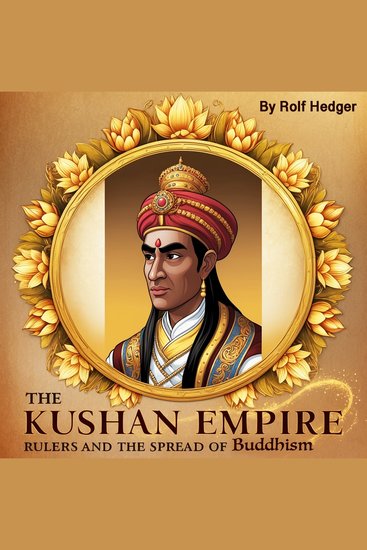
    The Kushan Empire, one of the most influential powers in Central and South Asia, originated from the nomadic Yuezhi people. The Yuezhi were an Indo-European group that initially resided in the western regions of China, near the Tarim Basin. However, in the 2nd century BCE, they were forced to migrate westward due to conflicts with the Xiongnu, a dominant steppe confederation. This migration led them into Central Asia, where they eventually settled in the Bactrian region, which had previously been under Greek influence following the campaigns of Alexander the Great. 
    Over time, the Yuezhi tribes consolidated their power, and by the 1st century CE, one of their clans, the Kushans, emerged as the dominant force. Kujula Kadphises, the first major ruler of the Kushan Dynasty, is credited with unifying the fragmented Yuezhi groups and establishing the foundation of the empire. Under his leadership, the Kushans expanded their influence, incorporating regions of modern-day Afghanistan, Pakistan, and northern India. His military campaigns against the remnants of the Indo-Greek and Indo-Scythian kingdoms allowed the Kushans to gain control over crucial trade routes, solidifying their position as a major power in the region. 
    The early political structure of the Kushan Empire reflected its nomadic roots while incorporating elements from the civilizations it encountered. The rulers maintained a centralized authority but allowed local governance to continue in many areas, a practice that helped integrate diverse cultural and ethnic groups into the empire. This pragmatic approach to governance enabled the Kushans to sustain their rule over a vast and multicultural domain.
    Mostra libro
  • On the Parts of Animals - cover

    On the Parts of Animals

    Aristotle

    • 0
    • 0
    • 0
    "On the Parts of Animals" is a biological treatise written by Aristotle, in which he extensively examines the anatomy and physiology of different animals, including humans. The book is divided into four sections, each focusing on a different aspect of animal life. In the first section, Aristotle explores the concept of soul and distinguishes between different types of souls that exist in animals. In the second section, he discusses the structure and function of sensory organs, such as eyes and ears, and how animals use them to interact with their environment. In the third section, he analyzes the digestive system and other internal organs, as well as the reproductive system, to understand how animals sustain themselves and reproduce. Finally, in the fourth section, he looks at the differences between different animal species and the variations in their anatomy and physiology. Read in English, unabridged.
    Mostra libro