Join us on a literary world trip!
Add this book to bookshelf
Grey
Write a new comment Default profile 50px
Grey
Subscribe to read the full book or read the first pages for free!
All characters reduced
The Rubicon - cover

The Rubicon

E. F. BENSON

Publisher: Publisher s11838

  • 0
  • 1
  • 0

Summary

The Rubicon written by E. F. Benson who  was an English novelist, biographer, memoirist, archaeologist and short story writer. This book was published in 1894. And now republish in ebook format. We believe this work is culturally important in its original archival form. While we strive to adequately clean and digitally enhance the original work, there are occasionally instances where imperfections such as missing pages, poor pictures or errant marks may have been introduced due to either the quality of the original work. Despite these occasional imperfections, we have brought it back into print as part of our ongoing global book preservation commitment, providing customers with access to the best possible historical reprints. We appreciate your understanding of these occasional imperfections, and sincerely hope you enjoy reading this book.
Available since: 07/26/2018.

Other books that might interest you

  • Birds from north borneo - cover

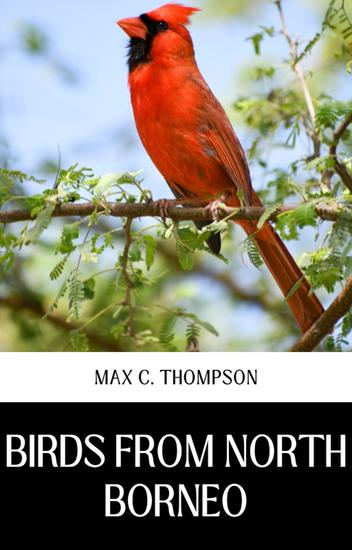
    Birds from north borneo

    MAX C. THOMPSON

    • 0
    • 0
    • 0
    The major part of this report is an account of birds collected by the expedition of the Bernice P. Bishop Museum of Honolulu, Hawaii, to North Borneo, from June 24, 1962, through January 14, 1963. Most of the time spent in the then British Colony was devoted to collecting in lowland habitats. The chief collecting localities were in the vicinity of Quoin Hill on the Semporna Peninsula, and near Kalabakan. Approximately two weeks were spent in surveying the Tenom area. Additional work was done by the North Borneo Department of Agriculture after my departure, mainly by Antonio D. Garcia
    Show book
  • Much Ado About Nothing - cover

    Much Ado About Nothing

    William Shakespeare

    • 0
    • 0
    • 0
    Are you a fan of Shakespeare's plays but don't have the time or energy to sit down and read one of his classics? Have you ever wanted to enjoy a Shakespearean play on-the-go, whether it's during your daily commute or while exercising? Look no further than the audiobook version of "Much Ado About Nothing"! 
     
    Narrated by skilled voice actors who brings the characters and plot to life, this audiobook will transport you to the vibrant world of Messina, where two couples navigate the complexities of love, jealousy, and deception. You'll be able to hear the witty banter and playful teasing between Beatrice and Benedick, the passionate declarations of love between Claudio and Hero, and the machinations of Don John as he tries to sabotage the couples' happiness. 
     
    Listening to an audiobook version of "Much Ado About Nothing" has many benefits. Not only does it allow you to experience one of Shakespeare's most beloved plays in a new and engaging way, but it also helps you to fully appreciate the language and wordplay that makes Shakespeare's works so timeless. With an audiobook, you can pause and rewind as needed, so you won't miss any of the intricacies of the plot or dialogue. 
     
    So why not give the audiobook version of "Much Ado About Nothing" a try? It's the perfect way to enjoy one of Shakespeare's most popular plays, no matter where you are or what you're doing.
    Show book
  • David Swan - From their pens to your ears genius in every story - cover

    David Swan - From their pens to...

    NATHANIEL HAWTHORNE

    • 0
    • 0
    • 0
    Nathaniel Hawthorne was born on 4th July 1804 in Salem, Massachusetts, a town synonymous with the earlier Salem Witch Trials. It was instrumental in Hawthorne’s later use of American Gothic and dark romanticism in his writing. 
    He was a mere four years old when his father died and his mother took him and his two sisters to live with her family and then on to their own home in Raymond, Maine. The young Hawthorne had a passion for fiction and poetry and voraciously read the works of Ann Radcliffe, Henry Fielding and Lord Byron.  
    He was sent to college at his maternal uncle’s insistence. During these years he met and befriended Henry Wadsworth Longfellow and future U S president Franklin Pierce. These friendships were lifelong and to have a crucial impact on his writings and career.  
    At college Hawthorne had made attempts at writing short stories and essays but without opportunities to publish. It was only in 1828 that he finally published his novel ‘Franshawe’ to little success and so he began work as editor for the American Magazine of Useful and Entertaining Knowledge.  
    Hawthorne’s short stories were first published in magazines but in 1837 were collected and published as ‘Twice-Told Tales’. A steady literary career still did not come his way and so he worked in a good position at Salem’s port and married the love of his life Sophia Peabody. They moved to live in ‘The Old Manse’ at Concord, Massachusetts.   
    Finally. in 1850 came spectacular literary and commercial success with ‘The Scarlet Letter’ followed by ‘The House of the Seven Gables’ the following year.  
    In 1852, Hawthorne published a biography of presidential candidate Franklin Pierce. After Pierce’s victory he was appointed consul in Liverpool, a position that offered prestige, money and fame. At the end of this appointment he returned several times to Europe before settling in Massachusetts and resuming writing and publication. 
    During the early 1860’s his health declined and on 19th May 1864 during a trip to Plymouth, New Hampshire. He was 59 and was buried in Sleepy Hollow Cemetery in Concord, Massachusetts.
    Show book
  • The Great Gatsby - cover

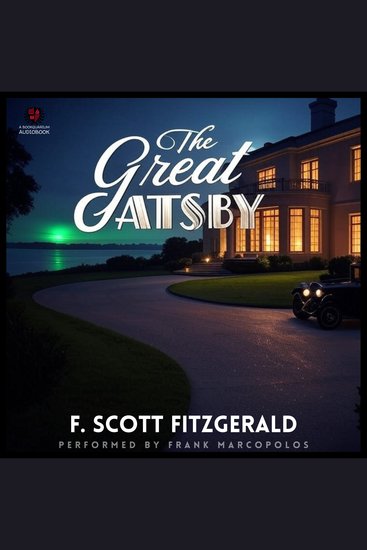
    The Great Gatsby

    F. Scott Fitzgerald

    • 0
    • 0
    • 0
    The Great Gatsby, set in the backdrop of the Roaring Twenties on Long Island, New York, is a poignant critique of the American Dream. The novel is not just a love story but a tragic tale of ambition, class, and the illusion of social mobility, encapsulated in the era's excess and disillusionment. When the novel was first published in 1925, it did not enjoy immediate commercial success. Only around 20,000 copies were sold in its first year, and Fitzgerald himself considered it a commercial disappointment. By the time of his death in 1940, Fitzgerald felt his work, including Gatsby, had been forgotten, with sales being so low that he was reportedly buying copies himself to keep it in print. The novel's fortunes changed dramatically during World War II when the Council on Books in Wartime chose it for distribution to American soldiers, printing over 155,000 copies. This initiative significantly boosted its popularity and recognition, transforming it from a largely forgotten work into an American classic. Today, The Great Gatsby sells approximately 500,000 copies annually, with total sales reaching over 25 million copies worldwide since its original publication. It has become Scribner's best-selling title, illustrating its enduring appeal and commercial success. Overall, The Great Gatsby has not only achieved commercial success but has also left a profound and lasting impact on American literature and culture, embodying the complexities and contradictions of the American experience. 
    F. Scott Fitzgerald (September 24, 1896 – December 21, 1940) was an American novelist and short story writer, widely regarded as one of the greatest writers of the 20th century. His works are emblematic of the Jazz Age, particularly capturing the spirit and excesses of the Roaring Twenties in America. 
    Frank Marcopolos lives in Florida with his dog, Sparky.
    Show book
  • The Dynamiter - cover

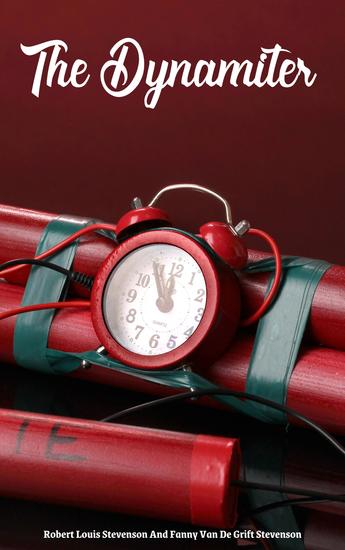
    The Dynamiter

    Robert Louis Stevenson and Fanny...

    • 0
    • 0
    • 0
    and at a brisk pace to the door of a quiet establishment in Rupert Street, Soho. The entrance was adorned with one of those gigantic Highlanders of wood which have almost risen to the standing of antiquities; and across the window-glass, which sheltered the usual display of pipes, tobacco, and cigars, there ran the gilded legend: 'Bohemian Cigar Divan, by T. Godall.' The interior of the shop was small, but commodious and ornate; the salesman grave, smiling, and urbane; and the two young men, each puffing a select regalia, had soon taken their places on a sofa of mouse-coloured plush and proceeded to exchange their stories....FROM THE BOOKS.
    Show book
  • The Stationmaster - From their pens to your ears genius in every story - cover

    The Stationmaster - From their...

    Alexander Pushkin

    • 0
    • 0
    • 0
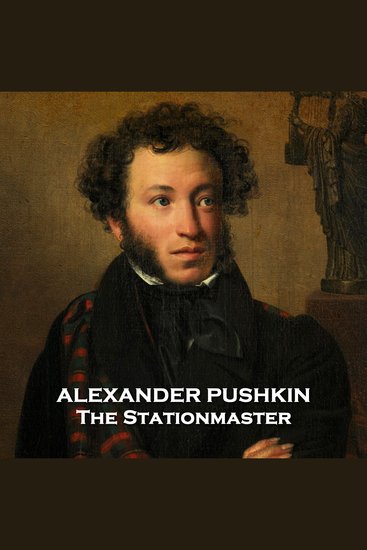
    Alexander Sergeyevich Pushkin was born on 26th May 1799 in Moscow into a family of Russian nobility. 
    Raised by nursemaids and French tutors in French he learnt Russian only via the household staff. 
    He graduated from the prestigious Imperial Lyceum, near St Petersburg and plunged into the vibrant and raucous intellectual youth culture of what was then the capital of the Russian Empire.  
    In 1820, he published his first long poem, ‘Ruslan and Ludmila’, with much controversy about both subject and style.  Pushkin was heavily influenced by the French Enlightenment and gravitated, with other literary radicals, towards social reform angering the Government. 
    His early literary work and reputation was poetic and written as he travelled around the Empire or engaged himself in various rebellions against the Ottoman Empire.  A clash with his own government after his poem, ‘Ode to Liberty’, was found among the belongings of the Decembrist Uprising rebels meant two years of internal exile at his mother's rural estate.  His friends and family continually petitioned for his release, sending letters and meeting with Tsar Alexander I and then Tsar Nicholas I.   
    In 1825, whilst at his Mother’s estate, Pushkin wrote his most famous play, the drama ‘Boris Godunov’.  
    Upon meeting with Tsar Nicholas I, Pushkin obtained his release and began work as the Tsar's Titular Counsel of the National Archives.  However, because of the earlier problems the tsar retained control of everything Pushkin published, and he was banned from travelling at will. 
    Around 1828, Pushkin met the 16-year-old Natalia Goncharova, one of the most talked-about beauties of Moscow.  After much hesitation, Natalia accepted his marriage proposal after she received assurances that the government had no intentions to persecute the libertarian poet.  When the Tsar gave Pushkin the lowest court title, Gentleman of the Chamber, he became enraged, feeling that the Tsar intended to humiliate him. 
    In the year 1831, during Pushkin's growing literary influence, he met Nikolai Gogol.  Recognising his gifts Pushkin supported him and published his short stories in his own magazine ‘The Contemporary’. 
    By the autumn of 1836, Pushkin was falling into greater and greater debt and facing scandalous rumours that his wife was having an affair.  
    In January 1837, Pushkin sent a ‘highly insulting letter’ to his wife’s pursuer, Georges-Charles de Heeckeren d'Anthès.  The only answer could be a challenge to a duel. 
    It took place on 27th January.  D'Anthès fired first, critically wounding Pushkin; the bullet entered at his hip and penetrated his abdomen.  Two days later Alexander Pushkin died of peritonitis.  He was 37.
    Show book