Unisciti a noi in un viaggio nel mondo dei libri!
Aggiungi questo libro allo scaffale
Grey
Scrivi un nuovo commento Default profile 50px
Grey
Iscriviti per leggere l'intero libro o leggi le prime pagine gratuitamente!
All characters reduced
Peter - cover

Peter

E.F. Benson

Casa editrice: DigiCat

  • 0
  • 0
  • 0

Sinossi

E. F. Benson's "Peter" is a keenly observant exploration of the intricacies of human relationships and the transformative power of friendship. Set against the backdrop of early 20th-century England, the novel employs a lyrical, yet straightforward narrative style that reflects Benson's adeptness at character development and social commentary. The story follows the titular character, Peter, as he navigates the complexities of love, ambition, and identity, ultimately presenting a rich tapestry of interconnected lives that resonates with readers familiar with the socio-cultural nuances of the Edwardian era. Benson's use of irony and humor adds a layered depth, elevating the narrative beyond a mere tale of personal struggle to a broader reflection on societal norms and expectations. E. F. Benson (1867-1940) was a notable figure in the literary world, renowned for his insightful observations on social customs and his ability to weave intricate plots. Growing up in an influential family, Benson's personal experiences, including his time spent in academia and his exposure to diverse social circles, greatly informed his writing. "Peter" is a testament to his literary prowess, showcasing his signature blend of wit and poignancy, which not only captures the zeitgeist of his time but also resonates with universal themes of humanity. This thoughtful and richly layered novel is highly recommended for readers seeking a profound exploration of character and society. Benson's exploration of personal and interpersonal dynamics offers timeless insights, making "Peter" a valuable addition to any literary collection. Those who appreciate nuanced storytelling will find in this work an enduring relevance that echoes through the halls of literary history.
Disponibile da: 16/09/2022.
Lunghezza di stampa: 222 pagine.

Altri libri che potrebbero interessarti

  • Heart of Darkness - cover

    Heart of Darkness

    Joseph Conrad

    • 0
    • 0
    • 0
    "Heart of Darkness" is a novella written by Polish-English author Joseph Conrad, first published in 1902. The narrative follows Charles Marlow, a sailor and ivory transporter, as he travels up the Congo River into the African interior to meet the enigmatic and infamous ivory trader, Kurtz. The novella explores themes of imperialism, colonization, racism, and the darkness within human nature. It presents a stark and critical view of European colonialism and the exploitation of Africa and its people. "Heart of Darkness" is considered a significant work of English literature and has inspired numerous adaptations and critical discussions on its themes
    Mostra libro
  • Iliad - cover

    Iliad

    Homer, Eden Garret

    • 0
    • 0
    • 0
    War at its most intense—rage, honor, and the cost of pride driving everything forward. The Iliad by Homer centers on a single, explosive conflict within the Trojan War: Achilles' fury. What begins as a personal grievance between warriors grows into something far greater, shaping the fate of armies and echoing across the battlefield. 
     
    Combat is relentless, but the story is not just about war. It moves through grief, loyalty, vengeance, and the fragile humanity beneath the armor. Gods intervene, destinies collide, and every victory carries a price. 
     
    Heard as an audiobook, it takes on a driving, almost hypnotic rhythm—voices clashing, emotions rising, and moments of stillness cutting through the chaos. The result is immediate and forceful, pulling the listener into a world where glory and loss exist side by side, and where even the greatest heroes cannot escape what is coming.
    Mostra libro
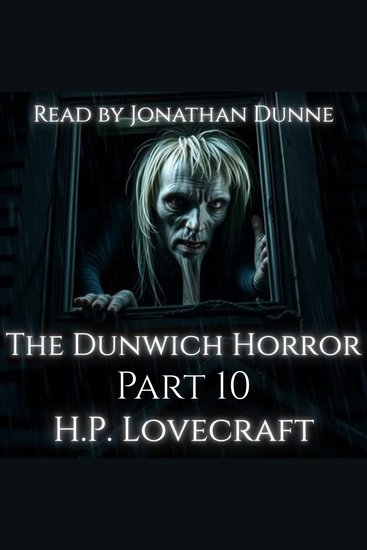
  • The Dunwich Horror — Part 10 of 10 - cover

    The Dunwich Horror — Part 10 of 10

    H.P. Lovecraft

    • 0
    • 0
    • 0
    Welcome to Timeless Terrors No. 62, concluding H. P. Lovecraft’s descent into cosmic nightmare: The Dunwich Horror. 
    The end has come to Dunwich. 
    Across the shattered hills, the aftermath of the unseen terror lies everywhere—homes flattened, fields torn raw, and the very air trembling with the residue of something vast, alien, and grieving in its destruction. The invisible behemoth, once confined to the Whateley farmhouse, now towers over the valley as its final rampage reaches a haunting crescendo. 
    Yet for the first time, a fragile beacon of resistance stands against it. 
    On the heights of Sentinel Hill, a small band of scholars prepares for a confrontation humanity was never meant to face. Armed with forbidden knowledge, perilous incantations, and a desperate understanding of the creature’s tragic origin, they move to end the catastrophe—knowing full well that their minds, their bodies, and their very souls may not survive what comes next. 
    In these final moments, cosmic horror collides with heartbreaking revelation, as the boundary between the human world and the outer void trembles on the brink of collapse. 
    Narrated by Amazon-bestselling horror author Jonathan Dunne, this concluding chapter delivers the powerful finale to Lovecraft’s masterpiece—a final stand where courage, madness, and the unknowable intertwine beneath a dark and indifferent universe. 
    This is Part 10 of a 10-part complete audiobook. 
    The nightmare ends here… but the echoes will remain.
    Mostra libro
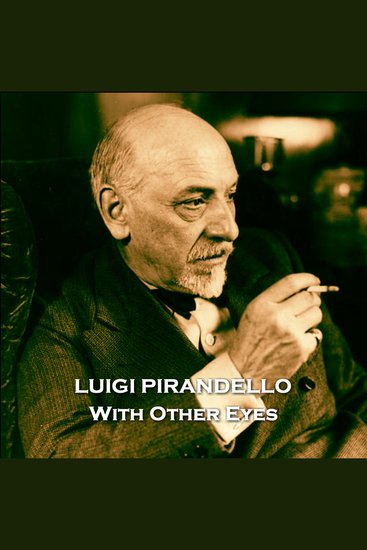
  • With Other Eyes - From their pens to your ears genius in every story - cover

    With Other Eyes - From their...

    Luigi Pirandello

    • 0
    • 0
    • 0
    Luigi Pirandello was born on 28th June 1867 into an upper-class family in Agrigento, in Sicily. 
    In 1880, the family moved to Palermo and there he completed high school and thence to the University of Palermo, at that time the centre of what became the Fasci Siciliani movement.  Although not an active member he had close friendships with many of its leading ideologists.  Pirandello then completed his university studies in Rome and Bonn, receiving his Doctorate in March, 1891. 
    His time in Rome had provided him with the opportunity to visit its many theatres. "Oh the dramatic theatre! I will conquer it. I cannot enter into one without experiencing a strange sensation, an excitement of the blood through all my veins..." 
    1894 brought marriage, at his father's suggestion, to a shy, withdrawn girl: Mara Antonietta Portulano.  The marriage encouraged his studies and writings and, the following year, the first part of the ‘Dialoghi tra Il Gran Me e Il Piccolo Me’ was published. 
    In 1903 the flooding of the sulphur mines in which his father had invested the family capital and Antonietta's dowry, brought financial catastrophe.  She, on hearing the news, was mentally broken.  Pirandello would now work a full day and then watch over his troubled wife at night. Somehow he found time to write ‘The Late Mattia Pascal’.  It was an immediate and resounding success.  
    In 1909, Pirandello began his collaboration with the prestigious Corriere della Sera.  Whilst his fame as a writer was increasing his private life was poisoned by the suspicion and jealousy of Antonietta who now turned physically violent.  His plays were now being regularly performed but, within a decade, Antonietta had to be placed into an asylum from which she never left. 
    In 1921, in Rome his play, ‘Six Characters in Search of an Author’ debuted.  It was a failure.  However, when presented in Milan it was a great success, as it also was in London and New York. 
    In 1925, Pirandello, with Mussolini’s help, assumed the artistic direction and ownership of the Teatro d'Arte di Roma.  He now described himself both as ‘a Fascist because I am Italian’ and ‘I'm apolitical, I'm only a man in the world...’  However his later conflicts with fascist leaders meant he fell under close surveillance by the OVRA, the secret police. 
    In 1934 he won the Nobel Prize but asked that the medal be melted down for Italy’s occupation of Abyssinia Campaign to which he had given his support.  
    Pirandello's canon stretches across novels, short stories, poetry, essays and some 40 plays.  His tragic farces are often cited as forerunners of the Theatre of the Absurd. 
    Luigi Pirandello died on the 10th December 1936 at his home at Via Bosio, Rome, Italy.  He was 69.
    Mostra libro
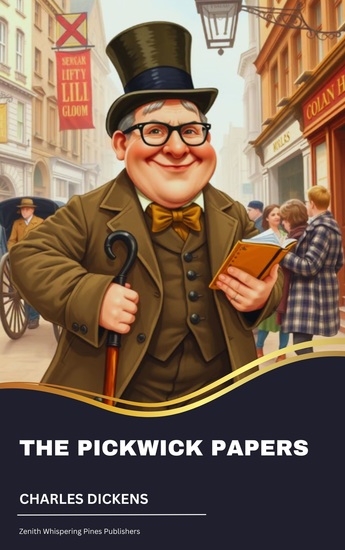
  • The Pickwick Papers - cover

    The Pickwick Papers

    Charles Dickens

    • 0
    • 0
    • 0
    A curious gentleman. A band of unforgettable companions. Adventures that turn everyday life into comedy.
    When the kind-hearted Samuel Pickwick sets out to observe the world, he stumbles into a whirlwind of misadventures—absurd trials, mistaken romances, lively inns, and unforgettable characters. Alongside the clever and loyal Sam Weller, Pickwick's good intentions lead to situations as ridiculous as they are heartwarming.
    
    Celebrated as "the novel that made Dickens famous," this beloved classic overflows with wit, warmth, and sharp observation of human nature. Its humor is timeless, its characters irresistibly alive, and its joy infectious.
    
    If you love laugh-out-loud storytelling, rich characters, and classics that feel like a celebration of life itself, this novel is pure Dickensian delight.
    
    Open the book—and join a journey where kindness, curiosity, and comedy rule every page.
    Mostra libro
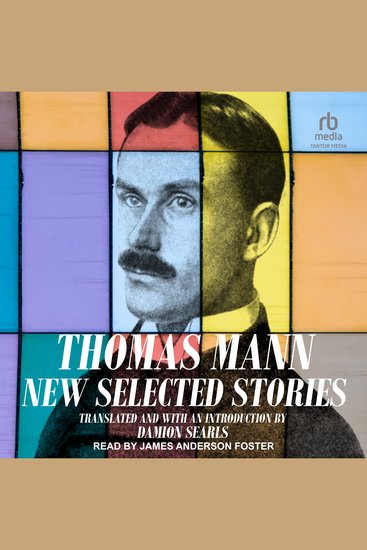
  • Thomas Mann - New Selected Stories - cover

    Thomas Mann - New Selected Stories

    Thomas Mann

    • 0
    • 0
    • 0
    Lit Hub: Most Anticipated Books of 2023 


    A towering figure in the pantheon of twentieth-century literature, Thomas Mann has often been perceived as a dry and forbidding writer—"the starched collar," as Bertolt Brecht once called him. But in fact, his fiction is lively, humane, sometimes hilarious. In these fresh renderings of his best short work, award-winning translator Damion Searls casts new light on this underappreciated aspect of Mann's genius. 


    The headliner of this volume, "Chaotic World and Childhood Sorrow" (in its first new translation since 1936)—a subtle masterpiece that reveals the profound emotional significance of everyday life—is Mann's tender but sharp-eyed portrait of the "Bigs" and "Littles" of the bourgeois Cornelius family as they adjust to straitened circumstances in hyperinflationary Weimar Germany. Here, too, is a free-standing excerpt from Mann's first novel, Buddenbrooks—a sensation when it was first published. "Death in Venice" (also included in this volume) is Mann's most famous story, but less well known is that he intended it to be a diptych with another, comic story—included here as "Confessions of a Con Artist, by Felix Krull." "Louisey"—a tale of sexual humiliation that gives a first glimpse of Mann's lifelong ambivalence about the power of art—rounds out this revelatory, transformative collection.
    Mostra libro