Unisciti a noi in un viaggio nel mondo dei libri!
Aggiungi questo libro allo scaffale
Grey
Scrivi un nuovo commento Default profile 50px
Grey
Iscriviti per leggere l'intero libro o leggi le prime pagine gratuitamente!
All characters reduced
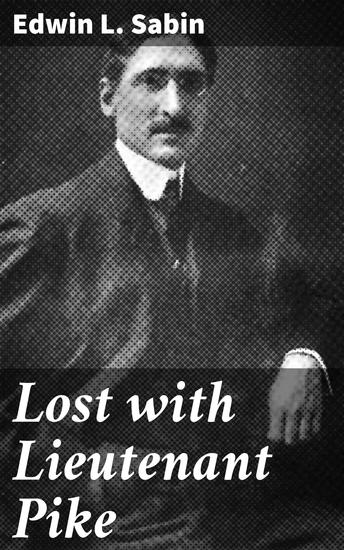
Lost with Lieutenant Pike - Journey into the American West: A Tale of Exploration and Adventure - cover

Lost with Lieutenant Pike - Journey into the American West: A Tale of Exploration and Adventure

Edwin L. Sabin

Casa editrice: Good Press

  • 0
  • 0
  • 0

Sinossi

In "Lost with Lieutenant Pike," Edwin L. Sabin masterfully intertwines historical narrative with vivid storytelling, culminating in a thrilling account of the ill-fated expedition led by Lieutenant Zebulon Pike in the early 19th century. Sabin's literary style is characterized by an engaging blend of descriptive prose and meticulous historical detail, immersing readers in the perilous adventures and harsh realities faced by Pike and his party in uncharted American territories. Set against the backdrop of America's westward expansion, the book addresses themes of exploration, survival, and the human spirit, all while drawing from extensive research and primary sources that enhance its authenticity and depth. Edwin L. Sabin, a prominent author and historian, crafted this work amidst a deep fascination with American exploration narratives and the enduring legacy of figures like Pike. His own experiences and extensive research into early American history shaped his understanding of the broader socio-political context of the time. This background not only informs the authenticity of his writing but also highlights the complexities faced by explorers as they traversed vast and often hostile landscapes. "Lost with Lieutenant Pike" is a compelling read for anyone interested in the intricacies of early American exploration, history enthusiasts, and those captivated by tales of adventure and resilience. Sabin's skillful storytelling and rich historical insight will resonate with readers, inviting them to explore the remarkable journey that ultimately shaped the course of the American frontier.
Disponibile da: 21/08/2022.
Lunghezza di stampa: 155 pagine.

Altri libri che potrebbero interessarti

  • The Death of Omnipotence and Birth of Amipotence - cover

    The Death of Omnipotence and...

    Thomas Jay Oord

    • 0
    • 0
    • 0
    Omnipotence is dead. 
    At least it should be. It has no biblical support. And it dies a death of a thousand qualifications in philosophy. 
    Those harmed and hurting wonder why an omnipotent and loving God doesn't prevent pointless pain. The problem of evil buries omnipotence six feet under. 
    But the death of omnipotence is not the death of God. 
    In this ground-breaking book, best-selling and award-winning author Thomas Jay Oord explains why omnipotence should be rejected. But Oord offers a replacement: amipotence, the power of love. 
    If we think love shapes and guides God's power, we make better sense of life. We make better sense of the Bible. Amipotence explains why God doesn't prevent genuine evil and it overcomes other obstacles to belief. An amipotent Spirit empowers all that is loving, true, beautiful, and good. 
    No book makes a bolder but more needed argument for why God is not all-powerful. Those who care about God, love, scripture, and logic will find what they've long been looking for. 
    Get a copy of The Death of Omnipotence and Birth of Amipotence! 
    Endorsements: 
    "Omnipotence has long been considered a basic, non-negotiable, characteristic of God. But is it biblical? And does it push us toward theological landmines that blow up faith? In this book, Oord, with his typical gentle candor, lays out the complex issues in clear and readable chunks. In the end, Oord points to the beauty and comfort of a God who is uncontrolling love." 
    - Peter Enns, professor of biblical studies at Eastern University, author of Curveball
    Mostra libro
  • Learn Czech With Music - cover

    Learn Czech With Music

    Innovative Language Learning, ...

    • 0
    • 0
    • 0
    Can learning Czech be as simple as listening to music?


    And as easy as remembering song lyrics?


    Just think. You remember song lyrics because lyrics are catchy, repeated throughout the song, and go with the music, right? Now, if you stuck in Czech, you'd easily learn Czech words and phrases the same way!


    So, yes, learning Czech is as easy as listening to music' with the Learn Czech With Music Audiobook.


    Just press play, and you'll hear Czech words and phrases repeated to the beat of upbeat and cheerful music. And' follow along!


    You'll learn 180+ most common Czech words and phrases' while relaxing at home, or while driving to work.


    Learn Czech With Music is the easiest way to start learning Czech.. without getting overwhelmed by complicated explanations. Perfect for new learners with little to no language learning experience.


    What will you learn?
     
    180+ Words & Phrases Including...
     
    - Basic Greetings
     
    - Numbers
     
    - Common Questions and Answers
     
    - Parts of the Body & Talking About Your Wellbeing
     
    - Common Hobbies
     
    - And much more


    Learn Czech With Music includes...
     
    - 15 Songs/Lessons Inside (Each is about 7 minutes long)
     
    - Fast-Paced Review Section at the End of Each Lesson
     
    - 1 Hour 50 Minutes in Total
     
    - Accompanying PDF eBook with the Words, Phrases and Translations


    Download the PDF and read along
    Mostra libro
  • They Came for the Schools - One Town's Fight Over Race and Identity and the New War for America's Classrooms - cover

    They Came for the Schools - One...

    Mike Hixenbaugh

    • 0
    • 0
    • 0
    NATIONAL BESTSELLER 
    The urgent, revelatory story of how a school board win for the conservative right in one Texas suburb inspired a Christian nationalist campaign now threatening to undermine public education in America—from an NBC investigative reporter and co-creator of the Peabody Award–winning and Pulitzer Prize finalist Southlake podcast.  
    Award-winning journalist Mike Hixenbaugh delivers the immersive and eye-opening story of Southlake, Texas, a district that seemed to offer everything parents would want for their children—small classes, dedicated teachers, financial resources, a track record of academic success, and school spirit in abundance. All this, until a series of racist incidents became public, a plan to promote inclusiveness was proposed in response—and a coordinated, well-funded conservative backlash erupted, lighting the fire of a national movement on the verge of changing the face of public schools across the country. 
    They Came for the Schools pulls back the curtain on the powerful forces driving this crusade to ban books, rewrite curricula, limit rights for minority and LGBTQ students—and, most importantly, to win what Hixenbaugh’s deeply informed reporting convinces is the holy grail among those seeking to impose biblical values on American society: school privatization, one school board and one legal battle at a time. 
    They Came for the Schools delivers an essential take on Donald Trump and Ron DeSantis, as they demean public schools and teachers and boost the Christian right’s vision. Hixenbaugh brings to light fascinating connections between this political and cultural moment and past fundamentalist campaigns to censor classroom lessons. Finally, They Came for the Schools traces the rise of a new resistance movement led by a diverse coalition of student activists, fed-up educators, and parents who are beginning to win select battles of their own: a blueprint, they hope, for gaining inclusive and civil schools for all.
    Mostra libro
  • Stuart Restoration The: The History and Legacy of the English Monarchy’s Return to Power in the Late 17th Century - cover

    Stuart Restoration The: The...

    Editors Charles River

    • 0
    • 0
    • 0
    Oliver Cromwell is one of the most important men in England’s history, but everything he struggled for collapsed within two decades of his death. The army, Parliament and the citizens of London grappled with each other for control of the country, and even the army no longer remained a united political force. Civil war almost broke out again as a force under Lambert failed to prevent General Monck, the military governor of Scotland, from marching south and dissolving the Rump Parliament. Excluded MPs were restored on condition that they themselves dissolve Parliament, and following fresh elections without military intervention, a new Parliament met on April 25, 1660. Dominated by Presbyterians and Royalists, it accepted a settlement offered by the man titling himself Charles II, the son and heir of Charles I. On May 25, 1660, Charles II returned to England, and less than two years after Cromwell’s death, his work was undone by the Restoration. King Charles II heaped ignominy upon defeat by having Cromwell’s body dug up and posthumously executed. Cromwell’s body was then decapitated, as was Ireton’s, and their heads were placed on a pike above Westminster Hall, where Charles I had been tried, for several years.  
    	Despite the Restoration, however, and despite the fact England’s republican experiment barely outlasted Cromwell, the Commonwealth and Restoration were hugely important in asserting the power of Parliament, and it permanently shifted England’s political balance firmly towards a constitutional monarchy limited by Parliament. The Stuart monarchy was restored on condition of compromise with Parliament and the army, and a precedent had been set for Parliament to replace the monarch, a precedent it would follow in the 1680s when James II was replaced by William and Mary in a settlement that set even more limits around the monarch.
    Mostra libro
  • The Religion of Whiteness - How Racism Distorts Christian Faith - cover

    The Religion of Whiteness - How...

    Glenn E. Bracey II, Michael O....

    • 0
    • 0
    • 0
    Recent years have seen a growing recognition of the role that White Christian Nationalism plays in American society. As White Christian Nationalism has become a major force, and as racial and religious attitudes become increasingly aligned among whites—for example, the more likely you are to say that the decline of white people as a share of the population is "bad for society," the more likely you are to believe the government should support religious values—it has become reasonable to wonder which of the adjectives in the phrase "White Christian Nationalism" takes precedence. 


    In this book, Michael O. Emerson and Glenn E. Bracey II respond definitively: the answer is "white." The majority of white Christians in America, they argue, are believers in a "Religion of Whiteness" that shapes their faith, their politics, and more. The Religion of Whiteness, they argue, raises the perpetuation of racial inequality to a level of spiritual commitment that rivals followers' commitment to Christianity itself. 


    Using national survey data, in-depth interviews, and focus group results gathered over several years, Emerson and Bracey show how the Religion of Whiteness shapes the practice of Christianity for millions of Americans—and what can be done to confront it.
    Mostra libro
  • The Yalta Conference - The Political Decisions That Shaped the Post-War World - cover

    The Yalta Conference - The...

    Sage Winters

    • 0
    • 0
    • 0
    The Yalta Conference, held in February 1945, was a pivotal moment in the history of the 20th century, marking the intersection of military triumph and political strategy. As World War II neared its end, the leaders of the three major Allied powers—President Franklin D. Roosevelt of the United States, Prime Minister Winston Churchill of the United Kingdom, and Premier Joseph Stalin of the Soviet Union—gathered in the Crimean resort town of Yalta to discuss the future of Europe and the post-war world. This summit was not only a negotiation of territory but a critical turning point that set the stage for the global dynamics that would shape the Cold War and the decades that followed. 
    The atmosphere at Yalta was charged with the urgency of closing the chapter on a devastating war while simultaneously navigating the fractured relations between the Allies. The conversations were less about compromise and more about power, as each leader sought to secure the best possible outcome for their respective nations. Roosevelt, with his idealistic vision of a world order based on cooperation and peace, worked to establish the groundwork for the United Nations, believing that international cooperation would prevent future wars. Churchill, wary of Soviet expansion, focused on ensuring the preservation of British influence in Europe and curbing the rise of Soviet power. Stalin, on the other hand, aimed to secure the Soviet Union's strategic interests, particularly in Eastern Europe, and to strengthen the USSR's position as a superpower. 
    The decisions made at Yalta were far-reaching, with agreements on the division of Germany, the establishment of post-war borders, and the promise of Soviet participation in the Pacific War against Japan. These discussions laid the foundation for the division of Europe into spheres of influence, with the Soviet Union asserting control over Eastern Europe, while the Western Allies sought to maintain democratic governance in the West.
    Mostra libro