Unisciti a noi in un viaggio nel mondo dei libri!
Aggiungi questo libro allo scaffale
Grey
Scrivi un nuovo commento Default profile 50px
Grey
Iscriviti per leggere l'intero libro o leggi le prime pagine gratuitamente!
All characters reduced
Lost with Lieutenant Pike - Journey into the American West: A Tale of Exploration and Adventure - cover

Lost with Lieutenant Pike - Journey into the American West: A Tale of Exploration and Adventure

Edwin L. Sabin

Casa editrice: Good Press

  • 0
  • 0
  • 0

Sinossi

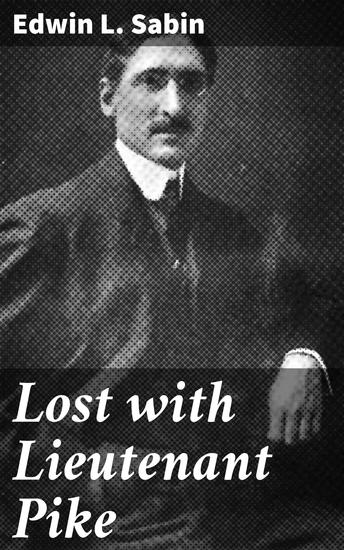
In "Lost with Lieutenant Pike," Edwin L. Sabin masterfully intertwines historical narrative with vivid storytelling, culminating in a thrilling account of the ill-fated expedition led by Lieutenant Zebulon Pike in the early 19th century. Sabin's literary style is characterized by an engaging blend of descriptive prose and meticulous historical detail, immersing readers in the perilous adventures and harsh realities faced by Pike and his party in uncharted American territories. Set against the backdrop of America's westward expansion, the book addresses themes of exploration, survival, and the human spirit, all while drawing from extensive research and primary sources that enhance its authenticity and depth. Edwin L. Sabin, a prominent author and historian, crafted this work amidst a deep fascination with American exploration narratives and the enduring legacy of figures like Pike. His own experiences and extensive research into early American history shaped his understanding of the broader socio-political context of the time. This background not only informs the authenticity of his writing but also highlights the complexities faced by explorers as they traversed vast and often hostile landscapes. "Lost with Lieutenant Pike" is a compelling read for anyone interested in the intricacies of early American exploration, history enthusiasts, and those captivated by tales of adventure and resilience. Sabin's skillful storytelling and rich historical insight will resonate with readers, inviting them to explore the remarkable journey that ultimately shaped the course of the American frontier.
Disponibile da: 21/08/2022.
Lunghezza di stampa: 155 pagine.
Altri libri che potrebbero interessarti

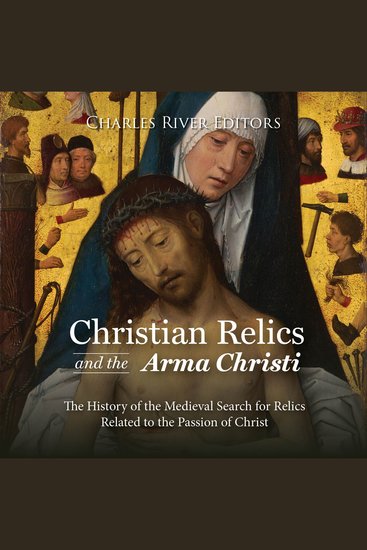
  • Christian Relics and the Arma Christi: The History of the Medieval Search for Relics Related to the Passion of Christ - cover

    Christian Relics and the Arma...

    Editors Charles River

    • 0
    • 0
    • 0
    Holy relics can be found in many different religions, whether Christian, pagan, Hindu, or Buddhist. A relic is defined as something directly associated with a revered saint, teacher, ancestor, or some miraculous manifestation of deity in the material world. A relic and a reliquary are two types of sacramental tools. A reliquary is a container or box for a relic, allowing it to be displayed to the public and thus transfer its powers to magical and liturgical works. There is another definition of a relic: anything that would be a miraculous manifestation of a deity in the material world. In Christianity, there are countless numbers of relics, most of them being associated with Jesus Christ. 
    In the early years of Christianity, it was forbidden to move and share the remains of saints and martyrs, and they were protected so that their final resting places, such as catacombs and cemeteries, remained intact. The earliest recorded Christian relics, specifically the bones and ashes of martyrs, date from the 2nd century. 200 years later, St. Ambrose and others set out to dig up the corpses and honor them. At that time, it was considered that every holy body could be dismembered and divided among the faithful to worship it. The remains of corpses sometimes came into someone else's hands as a gift, and sometimes they were stolen. At one point, the demand for holy bodies was such that bodyguards were assigned to dying saints to prevent their bodies from being dismembered after death. 
    The veneration of the relics of saints was so common among the faithful because they believed saints in Heaven interceded for believers on Earth. As a result, numerous healings and miracles were attributed to the relics, and many stories and myths about miracles arose from these beliefs. By word of mouth, the stories spread among the faithful, and finally, they were recorded in books.
    Mostra libro
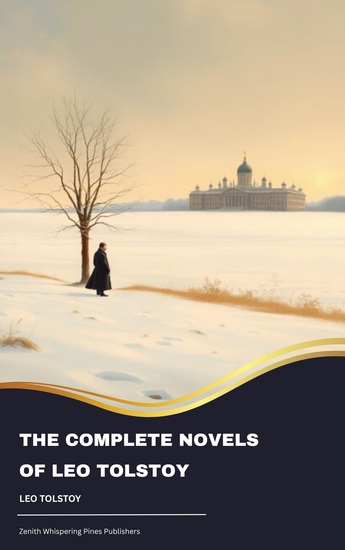
  • The Complete Novels of Leo Tolstoy - cover

    The Complete Novels of Leo Tolstoy

    Leo Tolstoy

    • 0
    • 0
    • 0
    "All, Everything That I Understand, I Understand Only Because I Love."
    
    Leo Tolstoy stands as a giant of the literary world, a writer whose work is so vast and deeply human that it feels like life itself. Known for his ability to capture the grand movements of history alongside the most intimate flickers of the human heart, Tolstoy's novels are essential reading for anyone seeking to understand the complexities of society, faith, and the soul. This comprehensive collection spans his entire novelistic career, from his early semi-autobiographical reflections to his massive historical epics and later spiritual awakenings.
    
    The Architect of the Human Soul: Tolstoy's genius lay in his "psychological realism"—the ability to portray characters with such depth and nuance that they transcend the page. His work explores the tension between the individual and the state, the search for meaning in a world of suffering, and the transformative power of love and simplicity. Whether he is documenting the Napoleonic Wars or the tragic constraints of aristocratic marriage, Tolstoy's prose remains a masterclass in observation and empathy.
    
    Tolstoy's influence on the world extends far beyond literature, impacting the thoughts of figures like Mahatma Gandhi and Martin Luther King Jr. This volume is the definitive cornerstone for any library of world classics, historical fiction, and philosophical literature.
    
    Experience the full breadth of a master. Buy "The Complete Novels of Leo Tolstoy" today and journey through the heart of the human experience.
    Mostra libro
  • Instant Insights: Tapping Into Your Intuitive Power - Unleash Your Intuition! Powerful Audio Lessons for Mastering Instant Insights - cover

    Instant Insights: Tapping Into...

    Eldon Merrick

    • 0
    • 0
    • 0
    Instant Insights: Tapping Into Your Intuitive Power 
    ⭐⭐ Simplified Guide & Explanations Included ⭐⭐ 
    Are you eager to harness your innate intuitive abilities and gain profound insights into your personal and professional life? 
    Seeking a comprehensive guide that encompasses all essential elements to unlock your profound intuitive potential with ease? 
    Your search ends here! 
    This guide serves as your definitive companion for deepening your understanding, applying your intuitive skills, and engaging in hands-on exercises. With this, you're geared for success. 
    Updated for the latest insights and techniques. 
    Key features of this enriched guide: 
    - Profound insights about tapping into your intuitive power 
    - Detailed explanation of intuitive development 
    - Fruitful strategies for enhancing and applying your intuition 
    Our guide distinguishes itself through comprehensive coverage, essential for your intuitive mastery. Concepts aren't merely skimmed; they are delved into with precision. 
    Please note that this guide is not affiliated with any official entity and is purely an independent resource for your benefit. 
    Designed with a clear structure and easy-to-understand language, our guide for unlocking your profound intuitive potential ensures smooth transitions between topics. Say goodbye to dense jargon and welcome clear, precise, and technically accurate content. 
    So, why wait? Click the BUY NOW button, secure your guide, and begin your journey to unlocking your profound intuitive potential!
    Mostra libro
  • A Rare Recording of Corrie ten Boom Vol 2 - cover

    A Rare Recording of Corrie ten...

    Corrie ten Boom

    • 0
    • 0
    • 0
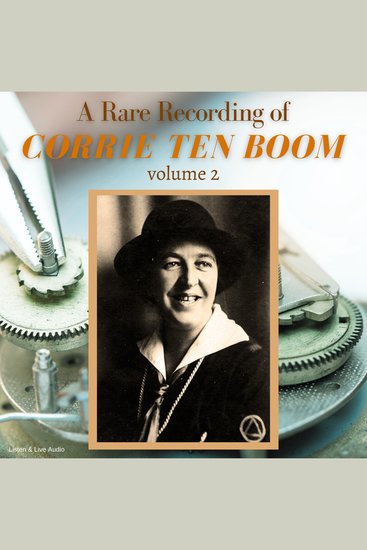
    Cornelia Arnolda Johanna "Corrie" ten Boom (April 15, 1892 - April 15, 1983) was a Dutch watchmaker who worked with her father Casper and other family members to help, reportedly, 800 Jews escape the Nazi Holocaust during World War II by hiding them in their home. Eventually, the family was caught, and ten Boom was arrested and sent to Ravens-brück concentration camp, but released after ten months due to a clerical error. Later in life, ten Boom wrote, "The Hiding Place," a biography that recounts the story of her family's efforts and how she was able to find hope while imprisoned at the concentration camp. It was later made in to a movie.
    Mostra libro
  • Montenegro in the Late Middle Ages: The History of the Different States and Dynasties that Controlled the Area - cover

    Montenegro in the Late Middle...

    Editors Charles River

    • 0
    • 0
    • 0
    Much has been written about Western intervention during the breakup of Yugoslavia, and whether it made matters worse, prevented worse atrocities, or was simply ineffective. In early 1992, however, what was clear was that Europe was hopelessly divided over the best course of action to take towards Yugoslavia, and after several years of fighting, the Bosnian War was one of the most violent conflagrations in Europe since the end of World War II. 
    That war had been the byproduct of centuries of tensions in the Balkans, and an attempt in the wake of World War I to redraw the political boundaries of Europe and the Middle East. That included forming the Kingdom of Yugoslavia, initially known as the Kingdom of Serbs, Croats and Slovenes, a particularly fragile enterprise, and there was almost constant tension between the majority Serbs and the other Yugoslav nationalities, especially the Croats. As a result, the Kingdom was a land of political assassinations, underground terrorist organizations, and ethnic animosities. In 1929, King Alexander I suspended democracy and ruled as a dictator until he himself was assassinated in 1934. 
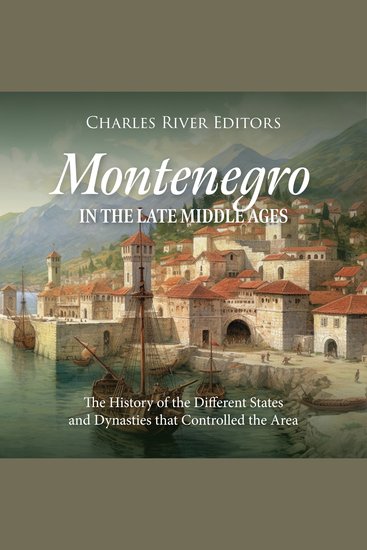
    Depending on the source, many authors have focused on different catalysts for Yugoslavia’s demise, but Vesna Drapac may have succinctly summed the situation up when he wrote that by the end, the state “lacked a reason to exist.” There is certainly something in this sentiment, but the disintegration came at an enormous cost. Given what happened in Yugoslavia, it should be little surprise the area that eventually became the modern nation of Montenegro has had a turbulent history for millennia, with shifting borders, different degrees of autonomy, and various conflicts occurring within it.
    Mostra libro
  • The Great Russian Famine of 1601-1603 - Causes and Consequences - cover

    The Great Russian Famine of...

    Sarah Willards

    • 0
    • 0
    • 0
    The Great Russian Famine of 1601-1603 was one of the most catastrophic events in Russian history, causing widespread death, social instability, and economic distress. This famine occurred during a period of political turmoil, just after the death of Tsar Ivan the Terrible and amid the struggle for the Russian throne. The famine’s impact was felt across Russia, particularly in the central and southern regions, and it highlighted both the fragility of the agrarian economy and the vulnerability of the Russian people to climatic and political disruptions. 
    The context of the famine is crucial to understanding its devastating effects. In the late 16th century, Russia was already experiencing significant strain, including the collapse of the feudal system, a declining central government, and the outbreak of the Time of Troubles, a series of civil wars and foreign invasions. The Russian agricultural system, heavily dependent on the success of yearly harvests, was not equipped to deal with the combination of extreme weather, crop failure, and a lack of effective governance. 
    The famine itself was primarily caused by a series of poor harvests, which were exacerbated by severe weather conditions, including droughts and unseasonably cold winters. The summer of 1601 saw a significant drought, which devastated crops, and the following winter brought freezing temperatures that further hindered the ability to cultivate food. As a result, grain production plummeted, and prices soared, making food increasingly inaccessible to the general population.
    Mostra libro