Monterey International Pop...
Charles River Editors
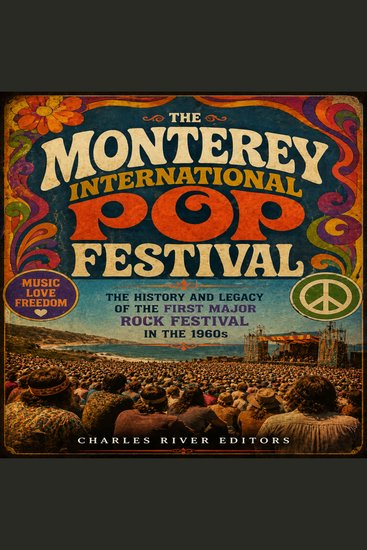
In June 1967, as the counterculture movement gained steam over the Vietnam War, the Monterey International Pop Festival emerged as a watershed moment for the decade. Held across three days at the Monterey County Fairgrounds in Monterey, California, it established the template for the modern rock festival and put the world on notice that rock music had become a global force, all while showcasing different artists that continued to reshape the genre. Subsequent festivals like Woodstock would go on to eclipse Monterey, but it was in 1967 that America was truly introduced to groundbreaking artists like Jimi Hendrix, Janis Joplin, Jefferson Airplane, Otis Redding, and other musicians who would become among the most celebrated rock legends of all time. As such, Monterey Pop represented the exact instant when the underground became mainstream and when popular music transformed from entertainment into cultural identity.
	Shortly before the festival, San Francisco had become the center of the growing counterculture, with the Haight-Ashbury district emerging as a gathering place for hippies, artists, and musicians who promoted ideals of peace, love, experimentation, and communal living. Psychedelic rock bands such as Jefferson Airplane, the Grateful Dead, and Big Brother and the Holding Company were pioneering entirely new sounds influenced by folk, blues, and jazz, while soul, folk, and blues musicians continued pushing American music from within. Monterey Pop emerged directly from this cultural explosion.
	Along with record producer Lou Adler and a few others, John Phillips of The Mamas & the Papas came up with the idea of holding a festival that would include a diverse array of musicians and thereby showcase their music. The resulting lineup represented an extraordinary convergence of musical talent that is now considered legendary, including Otis Redding, Jimi Hendrix, Janis Joplin, Jefferson Airplane, the Byrds, Buffalo Springfield, and the Grateful Dead.
Mostra libro