Unisciti a noi in un viaggio nel mondo dei libri!
Aggiungi questo libro allo scaffale
Grey
Scrivi un nuovo commento Default profile 50px
Grey
Iscriviti per leggere l'intero libro o leggi le prime pagine gratuitamente!
All characters reduced
The Eve of the French Revolution - cover

The Eve of the French Revolution

Edward J. Lowell

Casa editrice: e-artnow

  • 0
  • 0
  • 0

Sinossi

This work presents a concise summary of 18th-century French society, the fresh ideas of the Enlightenment, and how they contributed to the French Revolution. Edward Lowell provides a balanced portrait of the Ancien Regime, depicting the social classes, customs, politics, economics, and culture while detailing their strengths and flaws.
Disponibile da: 22/11/2023.
Lunghezza di stampa: 334 pagine.

Altri libri che potrebbero interessarti

  • Ernst Cassirer - The Last Philosopher of Culture - cover

    Ernst Cassirer - The Last...

    Edward Skidelsky

    • 0
    • 0
    • 0
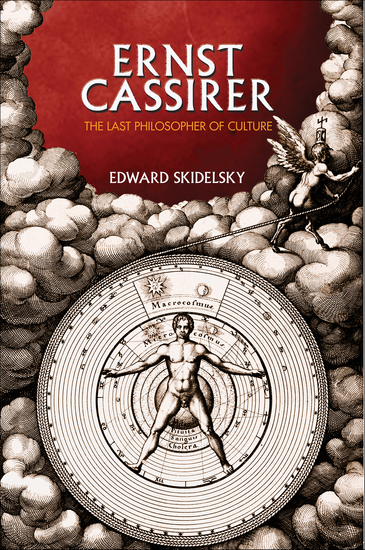
    This is the first English-language intellectual biography of the German-Jewish philosopher Ernst Cassirer (1874-1945), a leading figure on the Weimar intellectual scene and one of the last and finest representatives of the liberal-idealist tradition. Edward Skidelsky traces the development of Cassirer's thought in its historical and intellectual setting. He presents Cassirer, the author of The Philosophy of Symbolic Forms, as a defender of the liberal ideal of culture in an increasingly fragmented world, and as someone who grappled with the opposing forces of scientific positivism and romantic vitalism. Cassirer's work can be seen, Skidelsky argues, as offering a potential resolution to the ongoing conflict between the "two cultures" of science and the humanities--and between the analytic and continental traditions in philosophy. The first comprehensive study of Cassirer in English in two decades, this book will be of great interest to analytic and continental philosophers, intellectual historians, political and cultural theorists, and historians of twentieth-century Germany.
    Mostra libro
  • The Sayings of Marcus - cover

    The Sayings of Marcus

    Marcus Aurelius

    • 0
    • 0
    • 0
    To read The Sayings of Marcus is to walk beside an emperor who governed not through cruelty or conquest, but by reason, restraint, and virtue. This collection presents rare, firsthand glimpses of Marcus Aurelius not as a distant symbol of power, but as a human being navigating the immense burden of imperial responsibility with unwavering Stoic discipline.
    Here is Marcus confronting betrayal with mercy, rejecting revenge in the arena, and speaking candidly of philosophy, war, death, and duty. His words, at once spare and profound, offer a timeless testament to character under pressure.
    For admirers of Meditations, this companion text reveals the man in public life—deciding, judging, and leading. For newcomers to Stoicism or Roman history, it is an unforgettable introduction to one of history's most introspective rulers
    Mostra libro
  • The History of Knights and Castles - World Knowledge for Children - cover

    The History of Knights and...

    KidsChoice

    • 0
    • 0
    • 0
    KidsChoice: World knowledge for Children is an engaging audiobook series that takes young listeners on a fascinating journey to explore and understand the world around them. Aimed at curious children aged 7 to 99, this series dives into a variety of topics in science, society, and culture, making complex ideas accessible and exciting.  Each episode brings a unique theme to life—whether exploring the mysteries of space, uncovering the secrets of the human body, or discovering the diversity of cultures and traditions worldwide. With lively narration, interesting facts, and interactive elements, the series guides young listeners on an adventure full of discovery, encouraging them to ask questions and expand their understanding in a fun way.  In the scientific world of KidsChoice, children learn about the wonders of nature and the universe. Concepts like the solar system, animal behavior, the human body, and Earth's various ecosystems are explained in a way that is easy for kids to grasp and find fascinating. Exciting analogies and vivid examples help spark curiosity, turning learning into an adventure.  Societal topics also have a special place in the series. KidsChoice introduces young listeners to the basics of community, compassion, and making a positive impact. Children learn what it means to be a good citizen and how they can make small, meaningful contributions to their communities.  Additionally, KidsChoice opens a window to the vibrant world of global cultures. Through a virtual journey around the globe, children discover how people in other countries live, the customs and traditions they follow, the languages they speak, and the foods they enjoy. This fosters understanding and respect for diverse ways of life, celebrating the richness of human experience as a beautiful, valuable part of the world.  With its vivid language and captivating soundscapes, "KidsChoice: World knowledge for Children" turns learning into an exciting experience, sparking a lifelong curiosity and a deeper understanding of the world around them.
    Mostra libro

  • Recycling the Future - Circular Economy's Role in Reducing Pollution And Climate Change - cover

    Recycling the Future - Circular...

    Davis Truman

    • 0
    • 0
    • 0
    This audiobook is narrated by an AI Voice.   
    Is our current take-make-waste system dooming the planet? 
    As pollution worsens and climate change accelerates, the need for a sustainable, innovative solution has never been more urgent. Recycling the Future presents a hopeful yet pragmatic vision: the circular economy—a model that reimagines how we produce, consume, and manage resources to reduce waste and carbon emissions drastically. 
    This book explains how embracing circular principles today can transform industries, communities, and the future of our planet. 
    Through engaging case studies, expert analysis, and actionable insights, this book reveals how companies and governments worldwide are transitioning toward systems that reuse, recycle, and regenerate materials—closing the loop on pollution and minimizing environmental harm. 
    Inside, you’ll learn: 
    The fundamentals of the circular economy and how it differs from traditional linear models 
    How circular design, extended product life, and innovative recycling technologies reduce waste 
    Real-world examples of businesses and cities successfully implementing circular strategies 
    The measurable impact of circularity on lowering greenhouse gas emissions and conserving resources 
    How individuals can contribute to a circular future through everyday choices and advocacy 
    The future doesn’t have to be disposable—choose to recycle it. 
    👉 Buy Recycling the Future now and join the movement to reinvent our planet’s economy for the better.
    Mostra libro
  • Longbow The: The History of the Weapon that Revolutionized Warfare in the Middle Ages - cover

    Longbow The: The History of the...

    Editors Charles River

    • 0
    • 0
    • 0
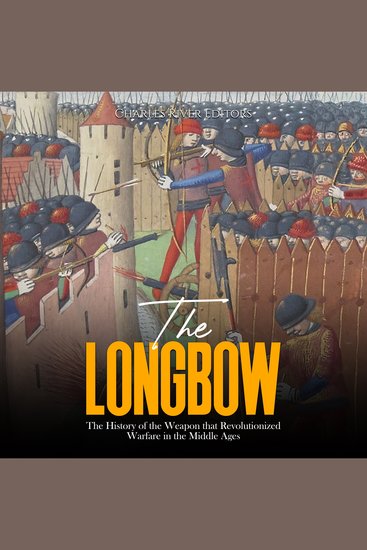
    While the bow was used throughout ancient times and the Middle Ages, on mainland Europe it was mostly replaced by the crossbow in the early 13th century, but that would change with the introduction of the longbow, a more powerful weapon than the traditional hunting bows. The original longbowmen were Welshmen recruited by King Edward I of England after he conquered Wales, and the weapon got its name from the fact that it was almost as tall as the man using it. This gave it a longer draw and therefore more force, as longbows were generally made of yew, a strong and pliable wood. The longbow was cheap and easy to make, but they required extensive training to be used well, so in England, commoners were encouraged and at times required to practice archery. A statute of Richard II dating from 1388 reads, “Servants and Laborers shall have Bows and Arrows, and use the same the Sundays and Holydays, and leave all playing at tennis or foot-ball, and other games called coits, dice, casting of the stone, kaikles [skittles], and other such importune games.” 
    	The longbow’s greatest day was at Agincourt in 1415, but the fact that this did not end the age of heavy plate cavalry indicated the longbow did have some limitations. For example, modern tests show that longbow arrows had trouble piercing plate armor, likely the main reason they were used as a massed weapon. With arrows raining down, it increased the chances of hitting a joint in the armor or an imperfection. Also, horse armor couldn’t protect the entire animal and the knights would soon find themselves dismounted. At some battles like Agincourt, the knights foundered in soft earth, and as their horses fell and the men became confused and hampered by the arrows clanking off their armor, they got mired in the mud and the English infantry could move in and finish them off. 
    Mostra libro
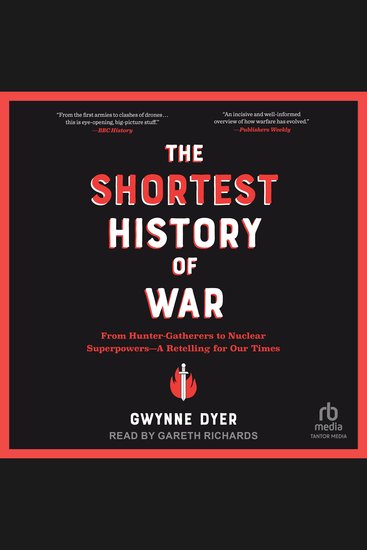
  • The Shortest History of War - From Hunter-Gatherers to Nuclear Superpowers—A Retelling for Our Times - cover

    The Shortest History of War -...

    Gwynne Dyer

    • 0
    • 0
    • 0
    War has always been a defining feature of human society. This new addition to the Shortest History series explains why we do it—and how we can stop. 


    Russia's invasion of Ukraine has punctured the longest stretch of peace between major powers since WWII, bringing the horrors of warfare—past, present, and future—to the forefront of listeners' minds. In The Shortest History of War, internationally acclaimed historian Gwynne Dyer adds urgently needed context. 


    Dyer ably charts the evolution of violent conflict: tribal aggression, classical combat, limited war, total war, and cold war—followed by present-day terrorism, nuclear threats, and the development of lethal autonomous weapons systems (LAWS). His brilliant, brisk history is a harrowing must-listen for all who wonder: How will rival superpowers with unprecedented weapons shape the future of our interconnected world?
    Mostra libro