Join us on a literary world trip!
Add this book to bookshelf
Grey
Write a new comment Default profile 50px
Grey
Subscribe to read the full book or read the first pages for free!
All characters reduced
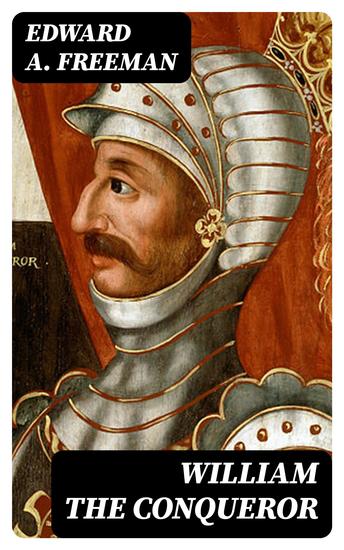
William the Conqueror - Enriched edition - cover

William the Conqueror - Enriched edition

Edward A. Freeman

Publisher: DigiCat

  • 0
  • 0
  • 0

Summary

In "William the Conqueror," Edward A. Freeman delivers a comprehensive examination of one of history's most pivotal figures, exploring the life and reign of William I of England. Freeman's meticulous narrative combines biographical detail with socio-political analysis, set against the backdrop of 11th-century Europe. The book interlaces historical fact with vibrant prose, eschewing dry academic language for a style that reflects Freeman's deep passion for history, making it accessible yet intellectually rigorous. His exploration delves into William's strategies, battles, and the socio-cultural transformations sparked by the Norman Conquest, contributing to a richer understanding of medieval England's fabric. Edward A. Freeman was a prominent historian and advocate of rational historical analysis. His extensive educational background and engagement with contemporary historians influenced his approach to writing this biography. Freeman's dedication to uncovering the nuances of the past stemmed from a desire to inform readers about the significance of historical events and figures, particularly those whose legacies have dramatically shaped the course of nations. His scholarly work reflects a commitment to vibrant storytelling grounded in thorough research. This book is an essential read for those interested in understanding the formidable impact of William the Conqueror on Britain's history. Freeman's expert insights and compelling narrative invite readers to appreciate the complexities of conquest and governance, making it a vital resource for both scholars and history enthusiasts alike.

In this enriched edition, we have carefully created added value for your reading experience:
- A succinct Introduction situates the work's timeless appeal and themes.
- The Synopsis outlines the central plot, highlighting key developments without spoiling critical twists.
- A detailed Historical Context immerses you in the era's events and influences that shaped the writing.
- A thorough Analysis dissects symbols, motifs, and character arcs to unearth underlying meanings.
- Reflection questions prompt you to engage personally with the work's messages, connecting them to modern life.
- Hand‐picked Memorable Quotes shine a spotlight on moments of literary brilliance.
- Interactive footnotes clarify unusual references, historical allusions, and archaic phrases for an effortless, more informed read.
Available since: 09/16/2022.
Print length: 141 pages.

Other books that might interest you

  • Calling Sergeant Crockford - cover

    Calling Sergeant Crockford

    Ruth D'Alessandro

    • 0
    • 0
    • 0
    It's the dawn of the Swinging Sixties. The Cold War is at its height and support for the Campaign for Nuclear Disarmament is building. The Berkshire Constabulary's Detective Gwen Crockford is promoted to Woman Police Sergeant in Newbury – the town at the heart of Britain's atomic weapons programme. 
     
    Gwen's initial reservations that her posting in rural Berkshire will be boring soon prove to be unfounded. A serial sex attacker on the loose, an attempted murder at Greenham Common US Airforce Base, and a charismatic heiress with a family secret keep things interesting for the capable sergeant. 
     
    Laser-focused on her police career – and resigned to the single life – Gwen is forced to re-evaluate her plans when a nature-loving war veteran PC walks into the station with an orphaned fox cub, and there's a shocking discovery in a railway station lavatory. 
     
    Written by her daughter Ruth and rich in social history, this is the story of a real-life woman police sergeant at the top of her game, guiding her WPCs through the immense societal changes of the early 1960s.
    Show book
  • Trump's Indictment - The Unprecedented Indictment of Donald J Trump - cover

    Trump's Indictment - The...

    Mark Jackson

    • 0
    • 0
    • 0
    In our shared pursuit for a better America, recent events have sparked diverse perspectives. While some celebrated Trump's indictment, others questioned its alignment with democratic principles. 
    The timing of the indictment raised eyebrows, prompting reflections on fairness and equality before the law. "The Unprecedented Indictment of Donald J. Trump" offers a thought-provoking exploration of this pivotal moment in American politics. This book focuses on the first indictment of Donald Trump by Manhattan District Attorney, Alvin Bragg Jr. 
    From an impartial standpoint, the book scrutinizes Trump's presidency, encompassing achievements, controversies, and the implications of his indictment. It offers insights into the legal and political ramifications, inviting readers to engage in informed discourse. 
    Regardless of one's stance on Trump, this book promises a balanced appraisal of the indictment and its implications for the future. Delve into nuanced analyses and gain a deeper understanding of America's legal and political landscape. 
    Join the quest for truth and comprehension as we dissect the facts surrounding Trump's indictment and its broader significance. History was indeed made, yet amidst the fervor, questions of fairness linger—reminding us of the importance of justice for all. Whether seeking clarity or insight, this book offers a valuable resource for those navigating the complexities of American governance. 
    Table of Contents  
    Introduction 
    Chapter 1: What Trump Did and Didn't on January 6 
    Chapter 2: Trump's Major Accomplishments as President 
    Chapter 3: Trump's Indictment 
    Chapter 4: Can Trump Still Win the Presidency in 2024? 
    Chapter 5: Good Will
    Show book
  • Everyday Jews - Why The Jewish People Are Not Who You Think They Are - cover

    Everyday Jews - Why The Jewish...

    Keith Kahn-Harris

    • 0
    • 0
    • 0
    Can Jews be allowed to become boring?
    
    
    With Israel and antisemitism constantly in the news, it seems as though the Jewish people - a fraction of a percentage of the world's population - have become synonymous with controversy, drama and anxiety. But what if there was another side to this persistently interesting people; one that non-Jews often don't know about and Jews rarely talk about? This is the stuff of 'everyday' Jewishness; the capacity to be ordinary, mundane and sometimes just plain dull.
    
    
    Keith Kahn-Harris lifts the lid on this surprising world in a book for Jews and non-Jews alike. Arguing that his people's extraordinary public visibility today is harming their ability to live everyday Jewish lives, he celebrates the mundanity and mediocrity of a people before it vanishes completely.
    Show book
  • Soviet Union The: The History and Legacy of the USSR from World War I to the End of the Cold War - cover

    Soviet Union The: The History...

    Editors Charles River

    • 0
    • 0
    • 0
    For 30 years, much of the West looked on with disdain as the Bolsheviks took power in Russia and created and consolidated the Soviet Union. As bad as Vladimir Lenin seemed in the early 20th century, Joseph Stalin was so much worse that Churchill later remarked of Lenin, “Their worst misfortune was his birth... their next worst his death.” Before World War II, Stalin consolidated his position by frequently purging party leaders (most famously Leon Trotsky) and Red Army leaders, executing hundreds of thousands of people at the least. And in one of history’s greatest textbook examples of the idea that the enemy of my enemy is my friend, Stalin’s Soviet Union allied with Britain and the United States to defeat Hitler in Europe during World War II.  
    	Stalin ruled with an iron fist for nearly 30 years before his death in 1953, which may or may not have been murder, just as Stalin was preparing to conduct another purge. With his death, Soviet strongman and long-time Stalinist Nikita Khrushchev (1894-1971), who had managed to stay a step ahead of Stalin’s purges if only because he participated in them, became the Soviet premier. Meanwhile, little is remembered in the public imagination about Brezhnev in comparison to Mikhail Gorbachev, Vladimir Lenin, or Joseph Stalin, despite the fact Brezhnev ruled the USSR from 1964-1982, longer than any Soviet leader other than Stalin.  
    	After going through three elderly leaders in three years, Mikhail Gorbachev was chosen as the new General Secretary at the relatively youg age of 54 in March 1985. Gorbachev hoped to build the Soviet economy to relieve the persistent shortages of consumer goods it faced, which were caused by enormous military spending of the Soviet Union. Gorbachev tried to introduce some economic reforms, but they were blocked by communist hardliners. Gorbachev then came to the belief that the Soviet economy could not improved without political reform as well.
    Show book
  • History of Australia: A Captivating Guide to Australian History Starting from the Aborigines Through the Dutch East India Company James Cook and World War II to the Present - cover

    History of Australia: A...

    Captivating History

    • 0
    • 0
    • 0
    Did you know that Australia was once thought of as an undesirable place to live? 
    Long before Australia started to be considered one of the best places in the world to live, it was thought to be completely unlivable. In the 15th century, the European race to claim land began. Despite the fact that Australia was a large landmass, no nation believed it was worth colonizing. The land was claimed by the Netherlands. However, little exploration happened there. 
    Many countries actually believed it to be uninhabitable. However, the Aboriginal populations had already been thriving on the land for millennia. This allowed the Australian Aborigines the opportunity to truly develop their unique and complex cultures and systems. Nearly one hundred years after the Dutch-named the landmass New Holland, James Cook, a British captain, charted the eastern coast. He suggested it should be revisited. 
    In this book, you will learn about:Where Australia’s first people came fromThe diet, lifestyles, and beliefs of Australia’s AboriginesHow the first European contact with the Aboriginals actually wentThe exciting discoveries of the British voyages to AustraliaHow well did the Aborigines and the European settlers get along?All the political, social, and judiciary developments in the settlementsThe Australian gold rushes and how they impacted the region and beyondAustralia’s development into a unique nation, one separate from EnglandHow big of a role did Australia play during World War I and World War II?What is Australia up to today? 
    Scroll up and click the “add to cart” button to learn more about this interesting and diverse continent!
    Show book
  • Hidden Brilliance - Redefining Genius: The Overlooked Intellectual Giant - cover

    Hidden Brilliance - Redefining...

    John Harpoon

    • 0
    • 0
    • 0
    Genius is often perceived through a narrow lens, typically defined by extraordinary achievements, groundbreaking discoveries, or exceptional skills. However, this traditional view of genius overlooks many individuals whose brilliance remains hidden from the mainstream. The nature of genius is far more complex and multifaceted than society tends to acknowledge. It exists not only in those who are celebrated publicly but also in those whose contributions go unnoticed or unrecognized due to societal limitations or biases. 
    At its core, genius is about exceptional intellectual capacity, but this capacity can manifest in many different ways. It is not always about creating world-changing inventions or becoming a famous name. For many, genius lies in quiet innovation, subtle insights, and the ability to solve problems in unique and unconventional ways. It can be seen in the person who finds creative solutions to everyday challenges or in the thinker who makes a significant impact in a specific, narrow field of knowledge, even if that knowledge doesn’t capture the world’s attention.
    Show book