Unisciti a noi in un viaggio nel mondo dei libri!
Aggiungi questo libro allo scaffale
Grey
Scrivi un nuovo commento Default profile 50px
Grey
Iscriviti per leggere l'intero libro o leggi le prime pagine gratuitamente!
All characters reduced
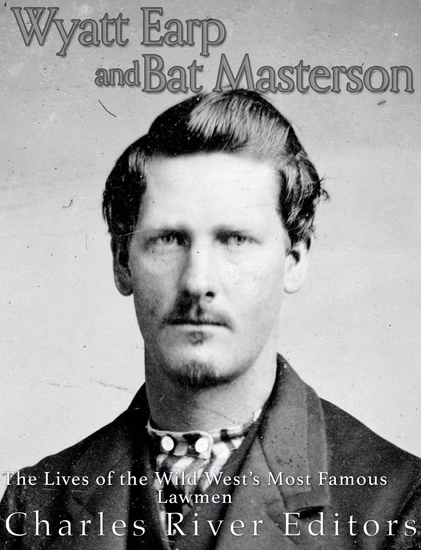
Wyatt Earp and Bat Masterson - The Lives of the Wild West’s Most Famous Lawmen - cover

Wyatt Earp and Bat Masterson - The Lives of the Wild West’s Most Famous Lawmen

Editors Charles River

Casa editrice: Charles River Editors

  • 0
  • 0
  • 0

Sinossi

Space may be the final frontier, but no frontier has ever captured the American imagination like the “Wild West”, which still evokes images of dusty cowboys, outlaws, gunfights, gamblers, and barroom brawls over 100 years after the West was settled. A constant fixture in American pop culture, the 19th century American West continues to be vividly and colorful portrayed not just as a place but as a state of mind.
 
Of all the colorful characters that inhabited the West during the 19th century, the most famous of them all is Wyatt Earp (1848-1929), who has long been regarded as the embodiment of the Wild West. Considered the "toughest and deadliest gunman of his day", Earp symbolized the swagger, the heroism, and even the lawlessness of the West, notorious for being a law enforcer, gambler, saloon keeper, and vigilante. The Western icon is best known for being a sheriff in Tombstone, but before that he had been arrested and jailed several times himself, in one case escaping from prison, and he was not above gambling and spending time in “houses of ill-fame”.  
 
The seminal moment in Earp’s life also happened to be the West’s most famous gunfight, the Gunfight at the O.K. Corral, which famously pitted Earp, his brothers Morgan and Virgil, and Doc Holliday against Billy Clanton, Tom McLaury and Frank McLaury. Though the gunfight lasted less than a minute, it is still widely remembered as the climactic event of the period, representing lawlessness and justice, vendettas, and a uniquely Western moral code. For Earp, the aftermath led to assassination attempts on his brothers, one of which was successful, touching off the “Earp Vendetta Ride”.
 
By the end of the 19th century, Earp was already a poignant symbol of that time and day, having permanently etched his name in the folklore of the West, but he stayed out west, engaging in everything from gold mining to vigilante justice on the Mexican border. A living legend, he even served as an advisor to early Hollywood, which was already pumping out Western movies. When he died in 1929 at the age of 80, one of the West’s toughest fighters and one of its longest survivors had finally passed.
 
Though he is no longer as well remembered as he once was, one of the most famous and notorious lawmen of the Wild West was Bat Masterson, who drifted around Dodge City and other parts of the West and was associated with legends like Wyatt Earp. Carrying a six-shooter that he called “the gun that tamed the West”, Masterson was involved in several duels and shootouts, much of which was embellished during the early 20th century when he became a newspaper columnist and was given a chance to frame anecdotes about the frontier days and talk about colorful characters like Doc Holliday. 
 
Like Wyatt Earp, who once served as a lawman under him, Masterson was primarily known as being on the right side of the law, but he wasn’t afraid to firmly straddle both sides of it. While tall tales about shootouts were commonplace and believed wholesale throughout the West in the 19th century, few men had as strong a reputation as Bat Masterson, who was known for public shootouts, one of which took place in Dodge City in 1878 that ended with the death of his brother and town marshal, Ed Masterson. Bat also took part in the famous Earp Vendetta Ride near Tombstone, which occurred in the wake of the Shootout at the O.K. Corral.
 
Given the number of times he fought, and the fact that he was shot and injured himself, perhaps Bat Masterson’s most remarkable feat was that he managed to survive into the 20th century, something few Western legends of his era (with the exception of Wyatt Earp) accomplished. Thanks to his survival, Masterson was able to parlay his notoriety into opportunities back East, including even being appointed marshal in New York by President Theodore Roosevelt. 
Disponibile da: 01/05/2025.
Lunghezza di stampa: 79 pagine.

Altri libri che potrebbero interessarti

  • Sound N’ Fury - Rock N’ Roll Stories - cover

    Sound N’ Fury - Rock N’ Roll...

    Alan Niven

    • 0
    • 1
    • 0
    Most rock ’n’ roll books are a bore. They all have the same narrative arc and are aimed at the dwindling following that now follows an artist that has long passed their AARP date. 
    		 
    Sound N’ Fury does not have a story arc. It is a collection of anecdotes, like a record comprised of various tracks — each one has its point and purpose. Alan Niven, who guided Guns N’ Roses from the gutter of Los Angeles to Wembley Stadium, shares stories from his remarkable life as a manager with an immediacy delivered by an extraordinary recall of dialogue. Readers will encounter not just Guns N’ Roses (who have sold almost 10 million tickets to their shows) but The Rolling Stones, Aerosmith, Clarence Clemons, Whitesnake, Elton John, and others who came from humble origins and experienced fame known only to few. Small-town minds collided with worldwide adulation, expectations, and demands. The results are amusing, affirming, and, predictably, disastrous. Keep in mind that rock ’n’ roll is God’s occupation for the unemployable.
    		 
    Written with a crisp and fluid style, the magnificence and idiocy of the music world will dance off the pages and engross even those who are not rock fans.
    Mostra libro
  • Twelve Years a Slave - cover

    Twelve Years a Slave

    Solomon Northup

    • 0
    • 1
    • 0
    "They can take your freedom, but they cannot take your identity."
    
    In 1841, Solomon Northup was a professional violinist and family man living in Saratoga Springs, New York. After being lured to Washington D.C. with the promise of work, he was drugged, shackled, and stripped of his name. For the next twelve years, he was passed from master to master in the bayous of Louisiana, enduring the sadistic cruelty of men like Edwin Epps while witnessing the quiet heroism of his fellow enslaved people. Twelve Years a Slave is a visceral, unflinching look at the "peculiar institution" through the eyes of a man who knew both the dignity of liberty and the agony of the lash. It remains a foundational text of American history and a testament to the endurance of the human spirit.
    
    The Mechanics of Oppression: Northup provides a meticulous, almost journalistic description of the economics and daily operations of the slave trade. He details the cultivation of cotton and sugar, the social hierarchies of the plantation, and the psychological warfare used to keep human beings in subjection.
    
    A Quest for Justice: The narrative is propelled by Northup's secret attempts to communicate with his family in the North. His eventual rescue is a heart-stopping moment of tension and triumph, highlighting the legal and social complexities of a divided nation where a man's status as "property" or "person" could depend entirely on the color of his skin and the geography of his location.
    
    Why It Is a Vital Classic: While many narratives were edited to suit political agendas, Northup's account is praised for its stark realism and descriptive power. It provides names, dates, and locations that were later verified by historians, making it one of the most credible and devastating indictments of slavery ever written.
    
    Bear witness to the truth. Purchase "Twelve Years a Slave" today.
    Mostra libro
  • The Boy Who Survived Auschwitz - cover

    The Boy Who Survived Auschwitz

    Adriana Lerman

    • 1
    • 1
    • 0
    Levi Lerman was a cheerful and lively boy from the town of Ostrowiec. He was only fourteen years old when his life took an unimaginable turn with the outbreak of World War II in 1939, when the Nazi forces invaded Poland and occupied his hometown.
    Over a painful six-year period, Levi endured a harsh life in the Ostrowiec ghetto, suffered devastating losses, performed exhausting forced labor, and survived countless transfers to concentration camps, including the extermination camp of Auschwitz-Birkenau.
    In the middle of this torment, a single light guided him through the darkness: his unbreakable determination to live and to protect his father—a strength that helped him survive against all odds.
    Mostra libro