Unisciti a noi in un viaggio nel mondo dei libri!
Aggiungi questo libro allo scaffale
Grey
Scrivi un nuovo commento Default profile 50px
Grey
Iscriviti per leggere l'intero libro o leggi le prime pagine gratuitamente!
All characters reduced
The West Point Class of 1846 - The Cadets and History of the Academy’s Most Famous Class - cover

The West Point Class of 1846 - The Cadets and History of the Academy’s Most Famous Class

Editors Charles River

Casa editrice: Charles River Editors

  • 0
  • 0
  • 0

Sinossi

West Point has long been America’s most famous military academy, but in the early 19th century, it was a highly unimpressive school consisting of a few ugly buildings facing a desolate, barren parade ground. Established with just five officers and ten cadets of the Corps of Engineers on March 16, 1802, the Academy was built on a spot just 50 miles north of New York City which had been a key Hudson River military fortress during the Revolutionary War. Cadets attending during the “Point's” first several decades were obliged to maintain their daily regimen knowing the school might shut down at any moment, as the U. S. government frequently questioned why it should provide free education.


As it turned out, West Point would become the foremost military academy in the nation, and it would churn out the cadets who became the most important generals in the Civil War. With that, the future generals’ years at West Point became a source of both camaraderie and colorful stories A clerical error by West Point administrators ensured that Hiram Ulysses Grant forever became known as Ulysses S. Grant, and years after Robert E. Lee met Albert Sidney Johnston and Jefferson Davis at West Point, George H. Thomas and William Tecumseh Sherman met each other and Richard S. Ewell. During the 1850s, classes included men like John Bell Hood, Union general Phil Sheridan and James Birdseye McPherson, who would become the only commanding general of a Union army to die in a Civil War battle when he fell in 1864 during Sherman’s Atlanta Campaign.


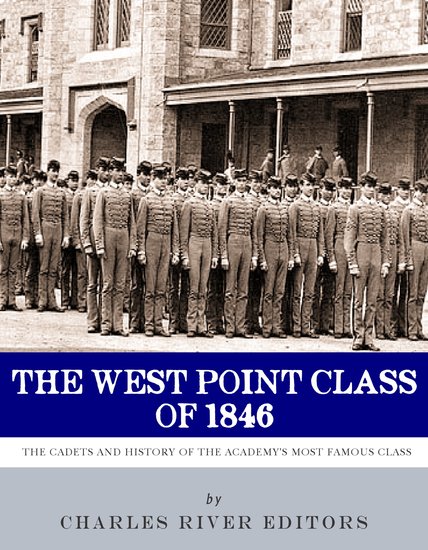
But none of the West Point classes became as famous as the Class of 1846, which boasted more than a dozen future Civil War generals. The Class of 1846 included a shy kid named Thomas Jonathan Jackson who made few friends and struggled with his studies, finishing 17th in his class 15 years before becoming Stonewall. Also in that class was A.P. Hill, who was already in love with the future wife of George McClellan, a young prodigy who finished second in the class of 1846. A popular and mischievous George Pickett would play hooky at the local bar and struggle just to finish last in the class, and the Class of 1846 also churned out critical Union generals like Jesse Reno, Darius Couch, and George Stoneman.


Before these men opposed each other on Civil War battlefields, they forged their own friendships and charted their future paths together at West Point. The West Point Class of 1846 profiles the most famous cadets of the class, chronicles their time on campus together, and discusses their careers after the Academy. Along with pictures of important people and places, you will learn about the Class of 1846 like you never have before, in no time at all.
 
 
Disponibile da: 21/06/2025.
Lunghezza di stampa: 50 pagine.

Altri libri che potrebbero interessarti

  • Sound N’ Fury - Rock N’ Roll Stories - cover

    Sound N’ Fury - Rock N’ Roll...

    Alan Niven

    • 0
    • 1
    • 0
    Most rock ’n’ roll books are a bore. They all have the same narrative arc and are aimed at the dwindling following that now follows an artist that has long passed their AARP date. 
    		 
    Sound N’ Fury does not have a story arc. It is a collection of anecdotes, like a record comprised of various tracks — each one has its point and purpose. Alan Niven, who guided Guns N’ Roses from the gutter of Los Angeles to Wembley Stadium, shares stories from his remarkable life as a manager with an immediacy delivered by an extraordinary recall of dialogue. Readers will encounter not just Guns N’ Roses (who have sold almost 10 million tickets to their shows) but The Rolling Stones, Aerosmith, Clarence Clemons, Whitesnake, Elton John, and others who came from humble origins and experienced fame known only to few. Small-town minds collided with worldwide adulation, expectations, and demands. The results are amusing, affirming, and, predictably, disastrous. Keep in mind that rock ’n’ roll is God’s occupation for the unemployable.
    		 
    Written with a crisp and fluid style, the magnificence and idiocy of the music world will dance off the pages and engross even those who are not rock fans.
    Mostra libro
  • Twelve Years a Slave - cover

    Twelve Years a Slave

    Solomon Northup

    • 0
    • 1
    • 0
    "They can take your freedom, but they cannot take your identity."
    
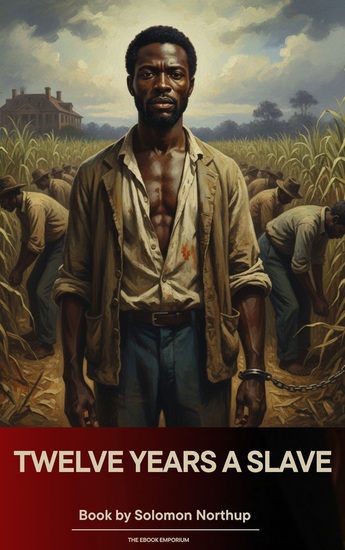
    In 1841, Solomon Northup was a professional violinist and family man living in Saratoga Springs, New York. After being lured to Washington D.C. with the promise of work, he was drugged, shackled, and stripped of his name. For the next twelve years, he was passed from master to master in the bayous of Louisiana, enduring the sadistic cruelty of men like Edwin Epps while witnessing the quiet heroism of his fellow enslaved people. Twelve Years a Slave is a visceral, unflinching look at the "peculiar institution" through the eyes of a man who knew both the dignity of liberty and the agony of the lash. It remains a foundational text of American history and a testament to the endurance of the human spirit.
    
    The Mechanics of Oppression: Northup provides a meticulous, almost journalistic description of the economics and daily operations of the slave trade. He details the cultivation of cotton and sugar, the social hierarchies of the plantation, and the psychological warfare used to keep human beings in subjection.
    
    A Quest for Justice: The narrative is propelled by Northup's secret attempts to communicate with his family in the North. His eventual rescue is a heart-stopping moment of tension and triumph, highlighting the legal and social complexities of a divided nation where a man's status as "property" or "person" could depend entirely on the color of his skin and the geography of his location.
    
    Why It Is a Vital Classic: While many narratives were edited to suit political agendas, Northup's account is praised for its stark realism and descriptive power. It provides names, dates, and locations that were later verified by historians, making it one of the most credible and devastating indictments of slavery ever written.
    
    Bear witness to the truth. Purchase "Twelve Years a Slave" today.
    Mostra libro
  • The Boy Who Survived Auschwitz - cover

    The Boy Who Survived Auschwitz

    Adriana Lerman

    • 1
    • 1
    • 0
    Levi Lerman was a cheerful and lively boy from the town of Ostrowiec. He was only fourteen years old when his life took an unimaginable turn with the outbreak of World War II in 1939, when the Nazi forces invaded Poland and occupied his hometown.
    Over a painful six-year period, Levi endured a harsh life in the Ostrowiec ghetto, suffered devastating losses, performed exhausting forced labor, and survived countless transfers to concentration camps, including the extermination camp of Auschwitz-Birkenau.
    In the middle of this torment, a single light guided him through the darkness: his unbreakable determination to live and to protect his father—a strength that helped him survive against all odds.
    Mostra libro