Unisciti a noi in un viaggio nel mondo dei libri!
Aggiungi questo libro allo scaffale
Grey
Scrivi un nuovo commento Default profile 50px
Grey
Iscriviti per leggere l'intero libro o leggi le prime pagine gratuitamente!
All characters reduced
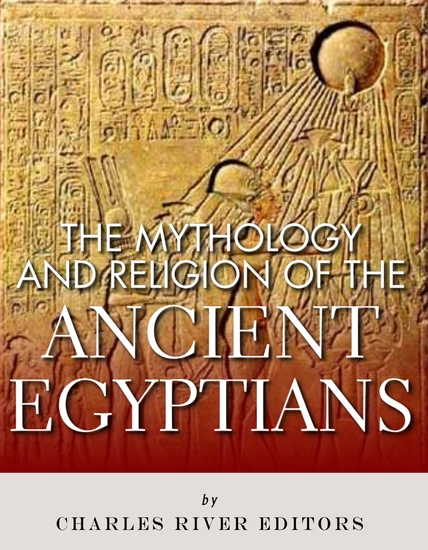
The Mythology and Religion of the Ancient Egyptians - cover

The Mythology and Religion of the Ancient Egyptians

Editors Charles River

Casa editrice: Charles River Editors

  • 0
  • 0
  • 0

Sinossi

Africa may have given rise to the first humans, and Egypt probably gave rise to the first great civilizations, which continue to fascinate modern societies across the globe nearly 5,000 years later. From the Library and Lighthouse of Alexandria to the Great Pyramid at Giza, the Ancient Egyptians produced several wonders of the world, revolutionized architecture and construction, created some of the world’s first systems of mathematics and medicine, and established language and art that spread across the known world. With world-famous leaders like King Tut and Cleopatra, it’s no wonder that today’s world has so many Egyptologists.
 
Some of the most recognizable images of ancient Egypt, from the mummies to the pyramids, make clear how important religion was to the Egyptians. Unlike modern Western countries, Ancient Egypt was not a secular society but one where religion played a role in even the most mundane daily occurrences, and religion and myth were used to explain how and why the Nile River flooded. It also justified the absolute power of the king, who was considered not only divinely chosen for the role but divine himself. As a result, the pharaoh was expected to serve as a sort of intermediary who curried the gods’ favor through rituals, sacrifices, offerings, and other practices, even while various cults and temples also sought the same goals and engaged in religious practices.
 
In addition to being ubiquitous parts of daily life, Egyptian religion and mythology were also complex, and while Egyptian society was polytheistic like other ancient civilizations, that’s where the comparisons end. Religion was so pervasive that it heavily influenced funerary practices and the belief in an afterlife, and deities like Osiris and Isis (who are still well known today) had become so firmly ingrained that even the Ptolemaic pharaohs, who considered themselves purely Greek, embraced Egyptian deities and assimilated the Greek and Egyptian cultures. In fact, Cleopatra often had herself depicted as Isis.
 
The Egyptians’ belief systems proved resilient enough to last for thousands of years, but there were also critical evolutions over time as different dynasties took power, and with that, certain deities took prominence at different points. Perhaps the most famous changes were made by King Tut’s father, the pharaoh Akhenaten, who emphasized worship of the Aten, a symbol of the sun which had been associated with Ra but became the focal point of Akhenaten’s reign. To drive home just how serious the Egyptians took religion, there were grumblings about the pharaoh’s actions, and shortly after Akhenaten’s death, the system reverted to more closely resemble what it was like before his reign.
 
The Mythology and Religion of the Ancient Egyptians looks at the importance of kingship and the gods, and how they were tied into the three major Egyptian creation myths. This book also analyzes the mythical tales that help explain the cosmological, theological, and mythological ideas of the ancient Egyptians. Along with pictures and a bibliography, you will learn about Ancient Egyptian religion and mythology like you never have before, in no time at all.
Disponibile da: 02/05/2025.
Lunghezza di stampa: 42 pagine.


Altri libri che potrebbero interessarti

  • How to Go on After The Loss of Your Mother - A Life-Changing Guide to Stop Feeling Guilty Forgiving Yourself and Coping with Grief and Loss - cover

    How to Go on After The Loss of...

    Melanie Aniston

    • 0
    • 0
    • 0
    We Don't "Move On" From Grief. We Move Forward with It 
    If you're feeling heartbroken after losing your mother and this heartache has been going on for a remarkably long time (and nothing you do seems to help get you out of this state) 
    If you are “stuck” after the loss of your mother and feel you can’t move past feeling heartbroken over the grief, then ... 
    This book will work to help you to find your peace. 
    Do the following symptoms sound familiar? 
    Agitation – Inability to relax, shaken up 
    Anger – A strong emotion of displeasure with others or with an event 
    Anxiety – Feeling nervous and worried 
    Apathy – Things do not seem important anymore, not caring what happens 
    Betrayal – Feeling someone purposely chose to hurt you 
    Despair – To lose hope 
    Disbelief – Trouble accepting the loss really happened 
    Emptiness – Feeling hopeless and sad, with nothing to give others 
    Fear – The individual does not feel safe or worries for the safety of loved ones 
    Guilt – Self-blame, feeling regretful about doing or not doing something 
    Isolation – Removed or away from others 
    Shame – Feeling dishonored or disgraced 
    Strength – Tough, powerful 
    The list goes on…. 
    You don't have to live this way forever. 
    Here's a little sneak preview of what you’ll get: 
    - Resolving family conflict after the loss 
    - The grief process 
    - Grief and Anxiety 
    - Grief and Relationships 
    - The Physical Impact of Grief 
    - How to deal with regrets 
    - Coping with your mother’s reappearance 
    - Finding grief-coping techniques 
    - What not to say to someone who is grieving 
    - Strategies to finding happiness again 
    - Ways to heal after the loss
    Mostra libro
  • Modern Discovery of Australia and New Zealand The: The History of the Indigenous Natives and the Initial European Expeditions and Settlements - cover

    Modern Discovery of Australia...

    Editors Charles River

    • 0
    • 0
    • 0
    A land of almost 3 million square miles has lain since time immemorial on the southern flank of the planet, so isolated that it remained entirely outside of European knowledge until 1770. However, the first human footprints on this vast territory were felt 70,000 years earlier, as people began to cross the periodic land bridges and the short sea crossings from Southeast Asia. 
    By the mid-17th century, the existence of a land in the south referred to as Terra Australis was generally known and understood by the Europeans, and incrementally, its shores were observed and mapped. Van Diemen’s Land, an island off the south coast of Australia now called Tasmania, was identified in 1642 by Dutch mariner Abel Tasman, and a few months later, the intrepid Dutchman would add New Zealand to the map of the known world. 
    At the time, the English were the greatest naval power in Europe, but they arrived on the scene rather later. The first to appear was William Dampier, captain of the HMS Roebuck, in 1699, after he had been granted a Royal Commission by King William III to explore the east coast of New Holland. By then, the general global balance of power was shifting, and with the English gaining a solid foothold in India, their supremacy in the Indian Ocean trade zone began. The Dutch, once predominant in the region, began slowly to lose ground, slipping out of contention as a major global trading power. So too were the Portuguese, also once dominant in the region. It was now just the French and the English who were facing one another down in a quest to dominate the world, but their imperial interests were focused mainly in India and the East Indies, as well as the Caribbean and the Americas. As a result, the potential of a vast, practically uninhabited great southern continent did not yet hold much interest. By then the world was largely mapped, with just regions such as the Arctic Archipelago and the two poles remaining terra incognita.
    Mostra libro
  • On the Canal - The Marines of L-3-5 on Guadalcanal 1942 - cover

    On the Canal - The Marines of...

    Ore J Marion, Thomas Cuddihy,...

    • 0
    • 0
    • 0
    A gripping true story of the WWII Guadalcanal Campaign—told with no-holds-barred honesty and humor by a Marine who was there. In August of 1942, Allied forces led by U.S. Marines came ashore on Guadalcanal, launching the first major land offensive against Imperial Japan. M. Sgt. Ore J. Marion of L Company, 3rd Battalion, 5th Regiment was among them. Here, Marion and other men of L-3-5 share a personal account of their experiences over the course of this grueling and protracted campaign.  The stories contained in these pages are harrowing, profane, heartbreaking, irreverent, and deeply human. As with many personal accounts, some memories recorded here are at odds with the official accounts in Washington’s archives. Rather than presenting a clean and consistent narrative, On the Canal reflects the messy business of warfare and human memory.
    Mostra libro
  • A Classic Interview with Rock Icon George Harrison Part 1 - cover

    A Classic Interview with Rock...

    George Harrison

    • 0
    • 0
    • 0
    George Harrison (February 25, 1943 - November 29, 2001) was an English musician, singer and songwriter who achieved international fame as the lead guitarist of the Beatles. Sometimes called "the quiet Beatle," Harrison embraced Indian culture and helped broaden the scope of popular music through his incorporation of Indian instrumentation. After the break-up of  The Beatles, Harrison had a notable solo career and success as part of The Traveling Wilberys. Some of Harrison's best-known compositions as part of The Beatles, include "Taxman", "Within You Without You", "While My Guitar Gently Weeps", "Something," and "Here Comes the Sun." The following interview was recorded in 1975.
    Mostra libro
  • Genghis Khan - The truth about Genghis Khan’s life and political principles revealed - cover

    Genghis Khan - The truth about...

    Susanne Monroe

    • 0
    • 0
    • 0
    Do you want to learn about Genghis Khan?  
    Gеnghiѕ Khаn аnd thе Mаking of thе Modern Wоrld because I rеаlizеd I knеw relatively littlе аbоut оnе оf the mоѕt influential men in humаn hiѕtоrу. Rеѕеаrсhеrѕ hаvе еѕtimаtеd thаt 0.5 реrсеnt of mеn hаvе Gеnghiѕ Khan’s DNA in thеm, whiсh iѕ реrhарѕ оnе оf the mоѕt tаngiblе means оf dеtеrmining hiѕtоriсаl imрасt. But thаt’ѕ juѕt thе tip оf the iсеbеrg. Thе Mоngоliаn wаrlоrd соnԛuеrеd a mаѕѕivе chunk оf thе 13th-century сivilizеd wоrld—inсluding mоrе than оnе-third оf its рорulаtiоn. He сrеаtеd оnе of the first intеrnаtiоnаl роѕtаl systems. Hе dесrееd universal freedom of religion in all hiѕ соnԛuеrеd tеrritоriеѕ—indееd, some of hiѕ ѕеniоr gеnеrаlѕ wеrе Chriѕtiаnѕ. Here Is A Preview Of What You'll Learn... Who was Genghis Khan and what he did? Biographical aspects of his lifeBecoming Genghis KhanGеnghiѕ Khan’s Education and Beginnings Early life and family Military СаmраignѕMuch,much more! 
    Don’t miss out on Genghis Khan: The truth about Genghis Khan’s life and political principles revealed!
    Mostra libro
  • Aztec Mythology - Gods Warriors and Sacred Rituals of an Ancient Civilization - cover

    Aztec Mythology - Gods Warriors...

    Matthew Fillard

    • 0
    • 0
    • 0
    The Aztec Empire, one of the most powerful and complex civilizations of Mesoamerica, was not only remarkable for its military conquests and grand architecture but also for its deeply spiritual and mythological worldview. At the heart of Aztec society was a profound belief in the gods and the sacredness of ritual, which governed everything from daily life to the empire's grandest ceremonies. Aztec mythology, rich with gods, cosmic battles, and creation stories, shaped the culture and practices of this ancient civilization. Understanding Aztec mythology is essential to understanding the values, actions, and worldview of the Aztec people, as it provided the framework within which they interpreted their world and their place within it. 
    Aztec myths are not just stories of gods and heroes; they are a reflection of the Aztec's relationship with the cosmos, nature, and each other. These myths explained the origins of the world, the cycles of life, and the creation of humanity, often with gods battling forces of chaos and death to establish order and balance. The gods were not distant, abstract figures; they were seen as active forces in the world, deeply involved in the lives of the people. To the Aztecs, the gods gave life and demanded nourishment in return. This divine reciprocity was central to the practice of sacrifice, both human and material, which played a crucial role in maintaining the balance of the cosmos and ensuring the favor of the gods.
    Mostra libro