Unisciti a noi in un viaggio nel mondo dei libri!
Aggiungi questo libro allo scaffale
Grey
Scrivi un nuovo commento Default profile 50px
Grey
Iscriviti per leggere l'intero libro o leggi le prime pagine gratuitamente!
All characters reduced
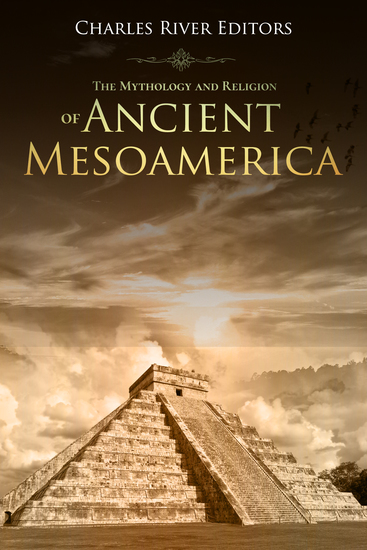
The Mythology and Religion of Ancient Mesoamerica - cover

The Mythology and Religion of Ancient Mesoamerica

Editors Charles River

Casa editrice: Charles River Editors

  • 0
  • 0
  • 0

Sinossi

"They strike open the wretched Indian's chest with flint knives and hastily tear out the palpitating heart which, with the blood, they present to the idols…They cut off the arms, thighs and head, eating the arms and thighs at ceremonial banquets. The head they hang up on a beam, and the body is…given to the beasts of prey." – Bernal Diaz, a Spaniard who described the Aztec’s human sacrifice
 
The Olmec people are widely recognized as the first major civilization of Mexico and are thus generally regarded as the mother civilization of Mesoamerica, making them the people from which all subsequent Mesoamerican cultures derived. In fact, the term Olmec is thought to have originated with the Aztec people, as Olmec in their Nahuatl language means “the rubber people”, a reference to the inhabitants of the land from which they accessed rubber.  By and large, the Olmec culture is perhaps best identifiable by their so-called colossal heads, mammoth basalt head-statues wearing helmet-like headdresses found throughout Olmec habitation sites.
 
Around 2500 B.C., the Olmec settled primarily along Mexico's Gulf Coast in the tropical lowlands of south-central Mexico (in the modern-day States of Veracruz and Tabasco), and they flourished during North America's Prehistoric Indian Formative period from about 1700-400 B.C. Their direct cultural contributions were still evident as late as 300 A.D. Among Mesoamerican scholars, the Formative period is subdivided into the Preclassic (Olmec period), Classic (Maya period), and Postclassic (Toltec and Aztec periods). 
 
From a cultural standpoint, their pyramids, open plazas, their ballgame, and possibly even centers of human sacrifice are thought to have established the societal model that subsequent societies like the Maya, Zapotec, Teotihuacano, Toltec, Mixtec, and Aztec would emulate. In the same vein, some scholars believe that they also affected the cultural development of  the Native American groups of the United States and those of Central and South America as well. Proving to be one the most enduring models ever, the religious and cultural structure the Olmec established held reign for over 3,000 years, and it would likely have endured much longer without the arrival of the Spanish conquistadors.
 
In the years leading up to 2012, there has been much interest in the Maya calendar. Largely, this is because the calendar will complete its 5,200-year cycle on December 21, 2012, and this auspicious event has been misinterpreted as signaling the end of the world. For the Maya, the endings of calendar period of all lengths (cycles ranged from 20 days to centuries in length) were very important and required various types of rituals and offerings to be properly recognized. Often, the best acceptable “offering” was human blood, and Maya elites engaged in autosacrificial bloodletting to appease the deity presiding over the transition in question. Combined with the detailed Maya knowledge of astronomy, the calendar system functioned as a way for Maya priests and elites to know which particular god in their crowded pantheon was ruling at a particular moment. The Maya believed that each interval of time, embedded in units like the day, the night, the solar year, the k’atun (20 year cycle), the lunar cycle, and Venus’s cycle, was governed by a certain deity. Such knowledge was considered vital in Maya cosmology and allowed the elites to maintain and consolidate power, effect political change, and lend religious veracity to monumental building projects. The blending of technologies and religion extended to writing for the Maya, who used a writing system to codify and standardize religio-political beliefs.
Disponibile da: 01/05/2025.
Lunghezza di stampa: 90 pagine.

Altri libri che potrebbero interessarti

  • How Porn Addiction Destroyed My Life - cover

    How Porn Addiction Destroyed My...

    Frank V.

    • 0
    • 0
    • 0
    Porn Addiction is dangerous and destructive, but there is a way to reclaim your former self. 
    Every so often, we succumb to temptation. A little puff here. A sip there. A harmless video clip in quiet moments alone. Before we know it, those innocent acts blossom into uncontrollable addictions. Our lives spiral out of control, and we hurt everything we know and love, especially ourselves. Frank V. found himself in such a predicament. This is his story. 
    How Porn Addiction Destroyed My Life depicts the author's struggle with an addiction to pornography. Exposing his inner truths at his darkest moments, readers are taken through his journey from despair to hope. Visceral and hard-hitting, this bold tale is an inspiration for others trapped in the grip of addiction. 
    It is a beacon of hope, evidence we can all escape our private torments with the right support system and actionable plan in place. Doing so isn’t easy, but the reward will change your life forever. 
    Porn Addiction audiobook 
    inside:True StoryPorn AddictionCompulsive sexual behaviorErectile Dysfunction (ED)How your brain works on pornDopamine and the Reward systemHow to Rewire Your Brain Tools to Understand this addiction
    Mostra libro
  • Beyond Measure - The Hidden History of Measurement from Cubits to Quantum Constants - cover

    Beyond Measure - The Hidden...

    James Vincent

    • 0
    • 0
    • 0
    A vibrant account of how measurement has invisibly shaped our world, from ancient civilizations to the modern day. 


    From the cubit to the kilogram, the humble inch to the speed of light, measurement is a powerful tool that humans invented to make sense of the world. In this revelatory work of science and social history, James Vincent dives into its hidden world, taking listeners from ancient Egypt, where measuring the annual depth of the Nile was an essential task, to the intellectual origins of the metric system in the French Revolution, and from the surprisingly animated rivalry between metric and imperial, to our current age of the "quantified self." At every turn, Vincent is keenly attuned to the political consequences of measurement, exploring how it has also been used as a tool for oppression and control. 


    Beyond Measure reveals how measurement is not only deeply entwined with our experience of the world, but also how its history encompasses and shapes the human quest for knowledge.
    Mostra libro
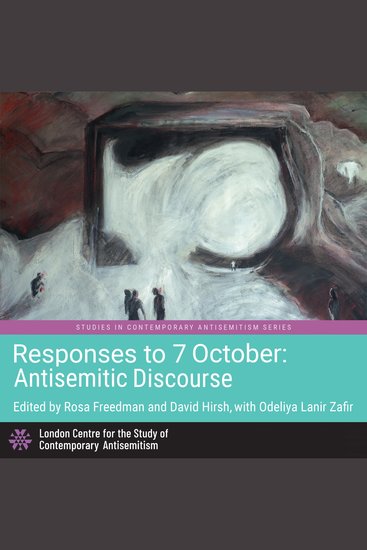
  • Responses to 7 October: Antisemitic Discourse - cover

    Responses to 7 October:...

    Anthony Julius, David Hirsh,...

    • 0
    • 0
    • 0
    One of three volumes responding to the 7 October attack, Antisemitic Discourse focuses on the ideology that motivated it and the antisemitism that shaped many responses to it. 
    It examines the provenance of the Jew-hatred, from English history to Palestinian Islamism; from toxic 19th century ‘Jewish Question’ rhetoric to the perversion of the Trotskyist tradition that allowed parts of the left to embrace antisemitism. It includes Howard Jacobson’s lecture of 22 October on antisemitism and it focuses on what was significant about this attack. There is discussion from Britain, Germany, Poland, and Norway, and a linguistic account of responses. 
    This work will appeal to scholars, students and activists with an interest in antisemitism, Jewish studies and the politics of Israel.
    Mostra libro
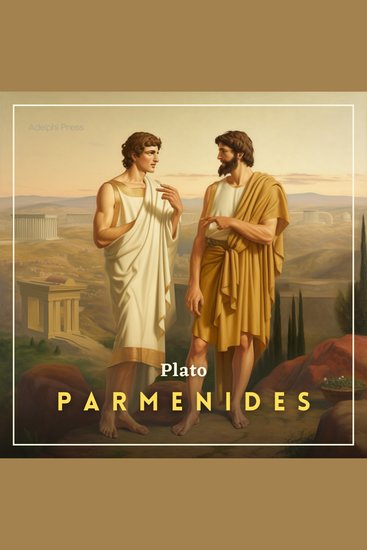
  • Parmenides - cover

    Parmenides

    Plato

    • 0
    • 0
    • 0
    "Parmenides" is one of Plato's dialogues in which the philosopher Parmenides visits Athens and engages in a philosophical conversation with a young Socrates. "Parmenides" is a complex and nuanced exploration of the nature of reality and the limits of human knowledge. Through the dialogue between Parmenides and Socrates, Plato explores the challenges of developing a coherent philosophical theory, as well as the importance of engaging in critical thinking and dialogue in order to refine and improve one's ideas. Read in English, unabridged.
    Mostra libro
  • The Hidden History of American Democracy - Rediscovering Humanity’s Ancient Way of Living - cover

    The Hidden History of American...

    Thom Hartmann

    • 0
    • 0
    • 0
    America's most popular progressive radio host and New York Times bestselling author Thom Hartmann paves the way to saving our democracy. 
     
    In this powerful, sweeping history and analysis of American democracy, Thom Hartmann shows how democracy is the one form of governance most likely to produce peace and happiness among people. 
     
    With the violent exception of the Civil War, American democracy resisted the pressure to disintegrate into factionalism for nearly two centuries, and now our very system of democratic elections is at stake. So how do we save our democracy? 
     
    Hartmann's newest book in the celebrated Hidden History Series offers a clear call to action and a set of solutions with road maps for individuals and communities to follow to create a safer, more just society and a more equitable and prosperous economy.
    Mostra libro
  • Summary: Ego is the Enemy - by Ryan Holiday: Key Takeaways Summary & Analysis - cover

    Summary: Ego is the Enemy - by...

    Brooks Bryant

    • 0
    • 0
    • 0
    Disclaimer: This is not the official book, but a summary & it does not accompany the official book 
    Navigate the complex maze of self-awareness and personal growth with 'Ego is the Enemy: A Summary Guide,' a condensed exploration of Ryan Holiday's transformative bestseller. 
    Delve into the heart of Holiday's wisdom without missing any key insights. This summary guide distills the essence of 'Ego is the Enemy,' meticulously analyzing its core concepts and serving them to you in a digestible format. Discover how to identify, understand, and dismantle the barriers your ego constructs, preventing you from reaching your full potential. 
    Through a series of clear, concise summaries of Holiday's original chapters, you'll journey through the stages of aspiration, success, and failure, understanding how the ego can distort and disrupt our path at each juncture. More importantly, you'll learn how to subdue it, creating a space for humility, learning, and growth.
    Mostra libro