Unisciti a noi in un viaggio nel mondo dei libri!
Aggiungi questo libro allo scaffale
Grey
Scrivi un nuovo commento Default profile 50px
Grey
Iscriviti per leggere l'intero libro o leggi le prime pagine gratuitamente!
All characters reduced
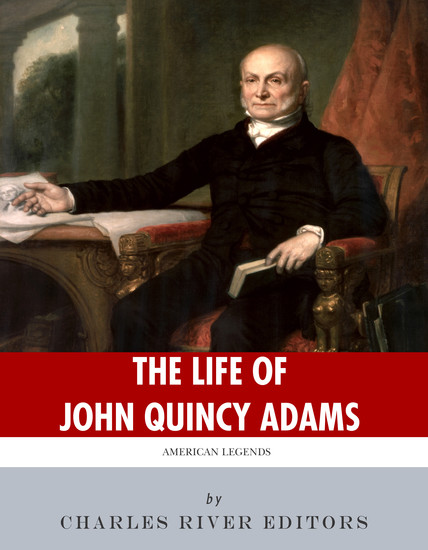
The Life of John Quincy Adams - cover

The Life of John Quincy Adams

Editors Charles River

Casa editrice: Charles River Editors

  • 0
  • 0
  • 0

Sinossi

"My toast would be, may our country always be successful, but whether successful or otherwise, always right." – John Quincy Adams
 
A lot of ink has been spilled covering the lives of history’s most influential figures, but how much of the forest is lost for the trees? In Charles River Editors’ American Legends series, readers can get caught up to speed on the lives of America’s most important men and women in the time it takes to finish a commute, while learning interesting facts long forgotten or never known.
 
John Adams was one of his country’s seminal Founding Fathers and one of its most experienced, distinguished diplomats and politicians. Few men in American history have a record anywhere near comparable, but one of them happened to be Adams’s own son, John Quincy Adams. And yet, few Americans are familiar with him aside from the fact that he was his father’s son and the 6th president of the United States.
 
John Quincy Adams set a lot of firsts for his country. In addition to being the first son of a president to become president himself, John Quincy Adams also managed to be a U.S. Senator, a U.S. House Representative, a Secretary of State, and an ambassador to several countries. Though he is known primarily for his presidential races against Andrew Jackson, there is a general consensus among historians that he is one of America’s greatest and most skilled diplomats, responsible for successes such as the Treaty of Ghent (which ended the War of 1812), the annexation of Florida from Spain, and the Monroe Doctrine.
 
Along with his substantive record, Adams was one of the foremost ideological thinkers of the early to mid-19th century, particularly in his adamant opposition to slavery. Adams brought the issue to the forefront in government whenever he could, and he predicted the Civil War that would come less than 15 years after his death: “The conflict between the principle of liberty and the fact of slavery is coming gradually to an issue. Slavery has now the power, and falls into convulsions at the approach of freedom. That the fall of slavery is predetermined in the counsels of Omnipotence I cannot doubt; it is a part of the great moral improvement in the condition of man, attested by all the records of history. But the conflict will be terrible, and the progress of improvement perhaps retrograde before its final progress to consummation.”
 
Somewhat fittingly, Adams died in the Capitol Building, collapsing during a session of the House of Representatives in February 1848. But why is Adams a relative unknown? Perhaps it was because he was the first president to be elected without having participated in the Revolution.  Through no fault of his own (he was only a child during the conflict), he would forever be kept out of that most exclusive group. It’s also likely that he has always had the problem of being in his father’s shadow, even though every letter and diary entry indicates John Adams was immensely proud of his son and worked very hard to promote his political career.
 
American Legends: The Life of John Quincy Adams chronicles the amazing life and career of the distinguished politician and diplomat, analyzing his record and unshakable beliefs. Along with pictures of important people, places, and events in his life, you will learn about John Quincy Adams like you never have before, in no time at all.
Disponibile da: 06/06/2025.
Lunghezza di stampa: 34 pagine.
Altri libri che potrebbero interessarti

  • Revolutions - Facts and Historical Details of the Russian and American Revolution - cover

    Revolutions - Facts and...

    Kelly Mass

    • 0
    • 0
    • 0
    This book consists of the following two titles: 
    Russian Revolution: The Russian Revolution was a period of political and social revolution that started at the time of the First World War in the previous Russian Empire. The Russian Revolution, which started in the year 1917 with the fall of your home of Romanov and ended in the year 1923 with the facility of the Soviet Union by the Bolsheviks (at the end of the Russian Civil War), was a series of 2 transformations: the first one defeated the royal federal government and the 2nd set up the Bolsheviks in power. The first revolution, which started in the month of February 1917, was focused around the then-capital of Petrograd (now Saint Petersburg). The Russian Army had mutinied after suffering heavy army losses throughout the fight. Subsequently, members of Russia's parliament (called the Duma) took control of the nation and formed the Russian Provisional Federal Government. The interests of significant business owners, and the Russian nobility and upper class, controlled this federal government. 
    American Revolution: Between 1765 to 1791, the American Revolution was an ideological and political revolution in British America. In the American Revolutionary War (between 1775 to 1783), the Americans in the Thirteen Groups established sovereign countries that beat the British, getting independence from the British Crown and establishing the USA of America, the first modern-day constitutional liberal democracy. The tax of American settlers by the British Parliament, a body in which they had no direct representation, provided contention. Before the 1760s, Britain's American groups kept a great degree of internal autonomy, which was managed by colonist legislatures on a regional level. The Stamp Act of 1765 enforced internal taxes on the groups, leading to colonist outrage and the development of the Stamp Act Congress, which united members from different provinces.
    Mostra libro
  • Where Angels Fear to Tread: The Memoir of a Humanitarian Aid Worker - cover

    Where Angels Fear to Tread: The...

    Sally Becker

    • 0
    • 0
    • 0
    'I was filled with apprehension about crossing the front line, but I would have risked my life to save just one child. Ivan was giving me a chance to save them all…' 
    This is the extraordinary work of Sally Becker, a humanitarian aid worker who for over three decades has risked it all in order to help the children of war. 
    Where Angels Fear to Tread is a reminder that – with determination, unrelenting passion and drive – one person can change the lives of so many. 
    In May 1993, Sally Becker went to Bosnia to help the innocent victims of war. She started by delivering humanitarian aid to the region, and was soon hailed as the 'Angel of Mostar' for rescuing wounded children and their families from the besieged city. Sally continued her work throughout the conflict and is credited with saving many lives. 
    When President Milosevic ordered his troops into Kosovo, her missions continued, this time on foot across the mountains. While attempting to bring sick and wounded children and their families to safety, she was captured by Serb paramilitaries, but neither this nor being shot by masked gunmen in Northern Albania could make her abandon her task. 
    Bosnia was Sally's first mission and the beginning of her lifelong commitment to help rescue children caught up in some of the most horrific wars around the world, including missions to help children in Iraq, Ukraine and most recently Gaza. 
    Her account provides a rare and invaluable insight into the complexities of international aid work, the shocking reality of life on the front lines and the desperate race to save innocent children trapped in war zones. 
    This is her extraordinary story. 
    Sally Becker's autobiography, a compelling narrative of her life in the service of others, is set to be the latest bestseller in non-fiction. Her memoirs, steeped in tales of charity and social welfare, underscore the power of individual action amidst the often sluggish responses of government institutions. 
    nan 
    HarperCollins 2025
    Mostra libro
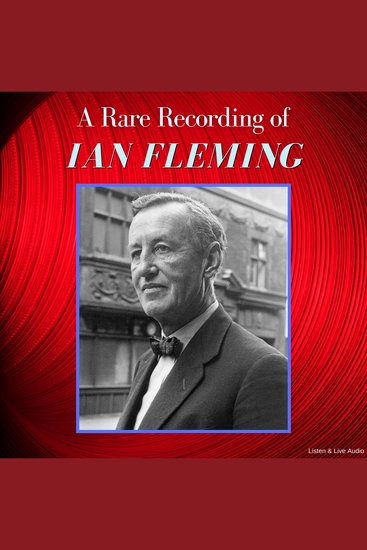
  • A Rare Recording of Novelist Ian Fleming - cover

    A Rare Recording of Novelist Ian...

    Ian Fleming

    • 0
    • 0
    • 0
    Ian Lancaster Fleming (May 28, 1908 to August 12, 1964) was an English writer, best known for his postwar James Bond series of spy novels. The Bond stories rank among the best-selling series of fictional books of all time, having sold over 100 million copies worldwide. Fleming also wrote the children's story Chitty-Chitty-Bang-Bang (1964) and two works of non-fiction.
    Mostra libro
  • A Light in the Northern Sea - Denmark's Incredible Rescue of Their Jewish Citizens During WWII - cover

    A Light in the Northern Sea -...

    Tim Brady

    • 0
    • 0
    • 0
    August 25, 1943. A lone bicyclist transports a cache of explosives, hidden in a beer crate, to a Copenhagen hall being readied to house German troops. In a violent blast, the would-be barracks is reduced to rubble. It's the boldest act yet of Holger Danske and the growing Danish resistance combating the oppressiveness of Hitler's Reich. 


    In 1940, on its way to conquering Western Europe, Germany coerced the Danish government into a "cooperative" agreement that lasted three long years until the increasing brazenness of the Resistance movement prompted a crackdown. Denmark's nearly 8000 Jews, who had so far been spared Hitler's wrath, now became the focus of his rage. A roundup was ordered to begin on October 1st, 1943, the first day of the Jewish New Year. 


    The only passage to safety was across the Oresund to Sweden. But no group existed to organize an escape. Until the last moment, Sweden didn’t agree to allow the refugees into the country; and the strait between the two nations was swarming with Gestapo. What happened next was a miracle. 95% of Denmark's Jews survived the Holocaust, the highest percentage in Europe. Here are the riveting true accounts of ordinary Danes who, using their modest resources, wiles, remarkable courage, and camaraderie, quietly orchestrated their escape.
    Mostra libro
  • The Double - A Haunting Tale of Identity Madness and the Human Psyche - cover

    The Double - A Haunting Tale of...

    Fyodor Dostoevsky, Tim Zengerink

    • 0
    • 0
    • 0
    What if the stranger haunting your life… was you? 
    The Double is Fyodor Dostoevsky’s unnerving exploration of psychological breakdown, obsession, and the split self.  
    When Yakov Golyadkin, an anxious, low-level bureaucrat, encounters a man identical to him in appearance but opposite in personality, his world begins to unravel. This double not only infiltrates his life but begins to replace him in every way. 
    What follows is a disturbing and poignant descent into paranoia, self-loathing, and existential dread. Is the double a supernatural force, a projection of suppressed desires, or a symptom of madness? 
    What you’ll discover inside: 
    - A Chilling Psychological Drama – A tale of identity theft by one's own reflection. 
    - Themes of Madness and Alienation – A haunting look at isolation and the fractured mind. 
    - A Timeless Parable of Inner Conflict – Dostoevsky’s enduring insight into self and sanity. 
    - A Modern Translation – Updated for clarity while staying true to the original vision. 
    Join Golyadkin on his haunting journey and decide for yourself—who is the real man, and who is the shadow?
    Mostra libro
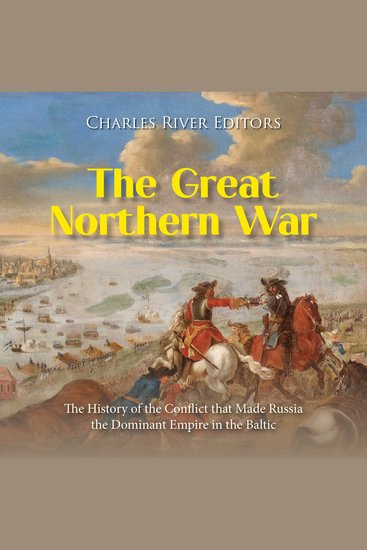
  • Great Northern War The: The History of the Conflict that Made Russia the Dominant Empire in the Baltic - cover

    Great Northern War The: The...

    Editors Charles River

    • 0
    • 0
    • 0
    The Great Northern War, fought from 1700-1721, gets its name from the fact the war focused on the Baltic, but the battlefields extended into Germany and deep into Poland and Ukraine. Sweden was a military power with a small empire in the Baltic, while Russia was still a landlocked place, backward when compared to the rest of Europe, not very powerful, and highly xenophobic. The Poland-Lithuanian Commonwealth was still powerful, and the Cossacks were still free. Moreover, despite the fact the Ottoman Empire was weakened, it held sway in the Balkans and deep into Eastern Europe, and the Krim Tatars were still raiding into Ukraine, Russia, and Poland for slaves. The Great Northern War would involve the Ottomans and the Tatars as well. 
    	Given the length of the conflict, perhaps it’s not surprising that other Western European kingdoms ended up in the mix. Brandenburg-Prussia was involved in the later phases of the war - Frederick William was an elector of Brandenburg and had just been granted the right (by the Holy Roman Emperor) to call himself king in Prussia. He held both titles, but there was still a formal separation between Brandenburg and Prussia. Frederick William was strongly interested in acquiring some or all of Pomerania, a region on the Baltic coast, particularly in acquiring a port, which would eliminate paying Swedish tolls in Swedish-controlled ports. 
    	Ultimately, the most important aspect of the war is that it laid the foundations for the Russian Empire. By 1718, the Russians had conquered most of Finland, the port of Riga, and the Swedish city of Vyborg. These gains in the Baltic Sea strengthened the burgeoning Russian Empire and provided ports and access to the rich resources of Finland, including valuable meat and lumber. Peter also proved to be a rather benevolent conqueror, allowing these regions to maintain both their faith and culture.
    Mostra libro