Unisciti a noi in un viaggio nel mondo dei libri!
Aggiungi questo libro allo scaffale
Grey
Scrivi un nuovo commento Default profile 50px
Grey
Iscriviti per leggere l'intero libro o leggi le prime pagine gratuitamente!
All characters reduced
The History and Culture of the Maya - cover

The History and Culture of the Maya

Editors Charles River

Casa editrice: Charles River Editors

  • 0
  • 0
  • 0

Sinossi

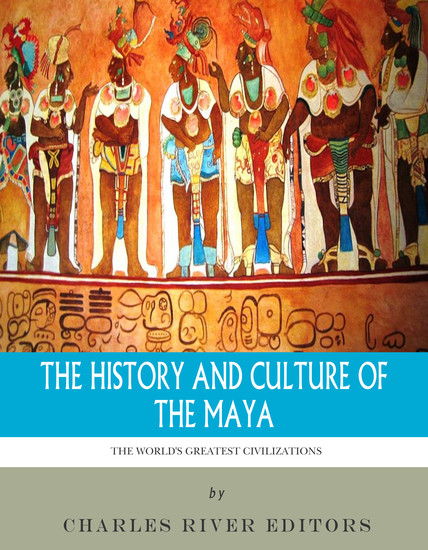
Many ancient civilizations have influenced and inspired people in the 21st century. The Greeks and Romans continue to fascinate the West today. But of all the world’s civilizations, none have intrigued people more than the Mayans, whose culture, astronomy, language, and mysterious disappearance all continue to captivate people.
 
In 2012 especially, there has been a renewed focus on the Mayans, whose advanced calendar has led many to speculate the world will end on the same date the Mayan calendar ends. The focus on the “doomsday” scenario, however, has overshadowed the Mayans’ true contribution to astronomy, language, sports, and art.
 
The World’s Greatest Civilizations: The History and Culture of the Maya discusses the Mayan calendar within the larger context of their astronomical advances, while also providing a comprehensive analysis of their history, empire, and culture. Along with a description of Mayan life and pictures of Mayan ruins and art, the mystique of the Maya is traced from the height of their empire to the present day, in an attempt to understand a civilization often been best described as an enigma.
Disponibile da: 04/05/2025.
Lunghezza di stampa: 27 pagine.

Altri libri che potrebbero interessarti

  • A Judicial Monstering - Child Sex Abuse Coverup and Corruption in Scotland - cover

    A Judicial Monstering - Child...

    John Halley

    • 0
    • 0
    • 0
    The rule of law is fundamental in a democratic society. What happens when the rule of law becomes the rule of lawyers? Listen to my account of the Kafkaesque manipulation of the law and the truth in order to cover up the urgent need to investigate longstanding concerns about organised child sexual abuse in Scotland.
    Mostra libro
  • Taíno Civilization - The Islanders Who First Encountered Columbus and the Caribbean's Lost Kingdoms - cover

    Taíno Civilization - The...

    Rolf Hedger

    • 0
    • 0
    • 0
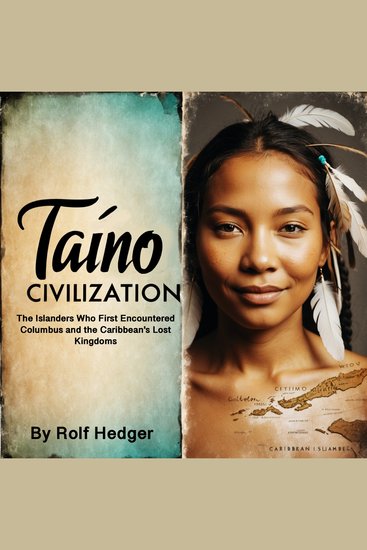
    The origins of the Taíno people trace back thousands of years to the migrations of Arawakan-speaking groups from South America. Anthropologists and archaeologists believe that the ancestors of the Taíno first emerged in the Orinoco River basin, in what is now Venezuela, before gradually expanding into the Caribbean. These early settlers, known as the Saladoid culture, navigated the waterways of the Caribbean in dugout canoes, moving from the mainland to the Lesser Antilles and eventually reaching the Greater Antilles, where they established permanent settlements. 
    As they adapted to their new island environments, these early migrants developed a distinct culture that would later be recognized as the Taíno civilization. Over generations, they refined agricultural techniques suited to the tropical climate, cultivating staple crops like cassava, maize, and sweet potatoes. Their knowledge of fishing, hunting, and foraging allowed them to thrive in the diverse ecosystems of the Caribbean, from coastal regions to inland forests. 
    By the time Europeans arrived in the late 15th century, the Taíno were the dominant indigenous group across the islands of Hispaniola, Puerto Rico, Jamaica, eastern Cuba, and the Bahamas. Their society had evolved into a structured and hierarchical system led by caciques, or chiefs, who governed villages known as yucayeques. These settlements varied in size, with some growing into major centers of trade, religion, and politics. The Taíno also developed a rich spiritual belief system centered around ancestor worship and nature deities, a tradition that can be traced back to their South American roots.
    Mostra libro
  • COVID Lockdown Insanity - The COVID Deaths It Prevented the Depression and Suicides It Caused What We Should Have Done and What It Shows We Could Do Now to Address Real Crises - cover

    COVID Lockdown Insanity - The...

    Hugh McTavish Ph.D.

    • 0
    • 0
    • 0
    A Ph.D. biochemist and immunologist goes through the data on one of the greatest public policy disasters in human history—the lockdown response to COVID.  How deadly was COVID originally and after it had evolved for a year or two?  How many COVID deaths were prevented by the lockdowns?  How many people did the lockdowns throw into depression? How many people did the lockdowns kill by deaths of despair?  	But the good news from the lockdowns is it shows citizens are willing to make enormous sacrifices for their society and that we can transform society on a dime.  What if we used that for good purposes?  What if we governed for the goal of happiness instead of maximizing GDP? What if we governed to protect the planet, instead of with the exclusive goal of extending the lives of the oldest and sickest people in society, even at the cost of killing the young and middle aged by deaths of despair and destroying the education and lives of children?
    Mostra libro
  • Edward Vernon-Harcourt - The Last Aristocratic Archbishop of York - cover

    Edward Vernon-Harcourt - The...

    Tony Vernon-Harcourt

    • 0
    • 0
    • 0
    Edward Vernon-Harcourt (1757–1847) was Archbishop of York from 1807 until his death at the age of 90.
    
     
    As a younger son of a wealthy land-owning family, Archbishop Harcourt depended on good family and political connections to make progress in the Church. He had to combine his responsibility for one of the largest dioceses in the Church of England with his duties in parliament and at court and with providing for his family of 16 children. More supportive of reform of both parliament and the church than most of his fellow bishops, Harcourt took steps to improve the training of ordinands in his diocese, encouraged the building of over 100 new churches to cope with population growth in the industrial towns of the West Riding and made some progress in tackling pluralism and non-residence. He was not afraid to stand up for a cause he believed to be right.
    
     
    In this biography, Tony Vernon-Harcourt examines the professional and family life of one of the last aristocratic bishops in the Church of England.
    Mostra libro
  • Giving Wings to Your Career as a Flight Attendant - Everything You Ever Wanted to Know About Being a Cabin Crew Member - cover

    Giving Wings to Your Career as a...

    Hans-Georg Rabacher

    • 0
    • 0
    • 0
    Living the dream! 
    Flying has fascinated and thrilled people for generations. Maybe you, too, have always dreamt of having a job way up above the clouds, but haven't found the courage to follow this dream? Then this book is for you: 
    Aviation expert and flight instructor Hans-Georg Rabacher gives us some detailed insights into what it is like to work as a flight attendant, sharing insider knowledge with you and revealing all kinds of useful tips and tricks that will be the perfect preparation for your career in the skies. So what are you waiting for? 
    Here are some of the things you will learn from this book: 
    -) What makes this profession so special 
    -) What qualities you should bring to the table 
    -) How to prepare effectively for the interview and the assessment day 
    -) What sort of career ladder you can expect 
    -) What the pros and cons of the job are 
    Active flight attendants working for airlines from all corners of the world share their experiences and give practical tips that will help you launch your career. Inspirational insights and essential background information guaranteed!
    Mostra libro
  • Partition of Ireland - A Historic Summary and Explanation - cover

    Partition of Ireland - A...

    Kelly Mass

    • 0
    • 0
    • 0
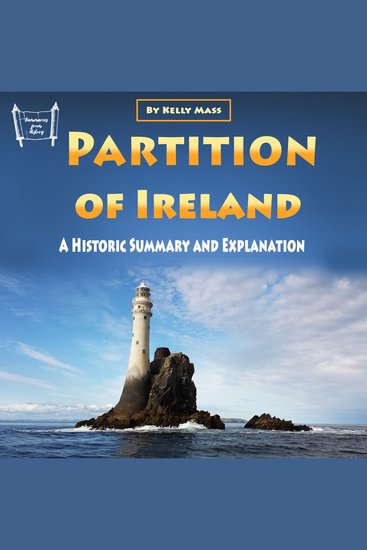
    The Federal government of the U.K. of Great Britain and Ireland segmented Ireland into 2 independent polities: Northern Ireland and Southern Ireland. The Federal Government of Ireland Act 1920 was handed down May third, 1921. Both parts were to stay inside the UK, and the Act included arrangements for supreme reunification. 
    Northern Ireland was established with a devolved federal government and stayed a part of the U.K. Most occupants of Southern Ireland didn't recognize the self-proclaimed Irish Republic, choosing to recognize the larger Northern Ireland. The area of Southern Ireland withdrew from the U.K. and ended up being the Irish Free State, which is today the Republic of Ireland, following the Anglo-Irish Treaty. 
    In this book, we will look at further details of the partition of Ireland.
    Mostra libro