Begleiten Sie uns auf eine literarische Weltreise!
Buch zum Bücherregal hinzufügen
Grey
Einen neuen Kommentar schreiben Default profile 50px
Grey
Jetzt das ganze Buch im Abo oder die ersten Seiten gratis lesen!
All characters reduced
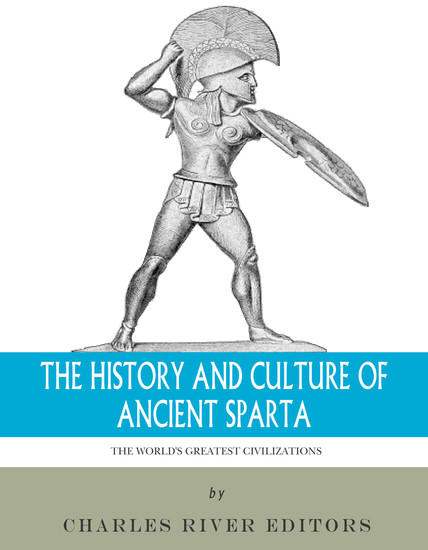
The History and Culture of Ancient Sparta - cover

The History and Culture of Ancient Sparta

Editors Charles River

Verlag: Charles River Editors

  • 0
  • 0
  • 0

Beschreibung

“The walls of Sparta were its young men, and its borders the points of their spears.” – attributed to King Agesilaos
 
There have been no shortage of great warrior societies in history, including the Romans, Mongols, Macedonians, and Vikings, the list goes on. Yet one humble city in particular, nestled in a valley near the Eurotas river in the Greek region of the Peloponnese and once ridiculed as little more than a cluster of villages inhabited by uncouth shepherds, produced the most famous warrior elite the world has ever known.
 
The most unique city-state in Ancient Greece was Sparta, which continues to fascinate contemporaneous society.  It is not entirely clear why Sparta placed such a great emphasis on having a militaristic society, but the result was that military fitness was a preoccupation from birth.  If a Spartan baby did not appear physically fit at birth, it was left to die.  Spartan children underwent military training around the age of 7 years old, and every male had to join the army around the age of 18. 
 
The Spartans, whose carefully constructed approach to warfare and – there is no other word for it – Spartan way of life, earned the grudging admiration of all of Greece and succeeded in establishing themselves in the years following the reforms of the semi-legendary ruler Lycurgus as the greatest military force in all of Hellas. Athens might have the mightiest fleet and the greatest cadre of philosophers and dramatists, Thessaly might have had the most vaunted cavalry, and the great city-states of Argos, Thebes and Corinth all had their own claims to fame, but on the battlefield the Spartan phalanx stood without peer. So feared were they in Greece that their very appearance on the battlefield could cause entire enemy armies to flee in terror, and in one of history’s most famous battles, 300 Spartan warriors headed a combined Greek force which held off the hundreds of thousands of Persian warriors of Xerxes’s invading army for three days at Thermopylae, inflicting an estimated 20,000 casualties upon them before dying to the last man rather than retreating.
 
Sparta will forever be known for its military prowess, but they had lives off the battlefield as well, and their way of life was also unique. For example, Spartan females were formally educated, which was a rarity among the city-states, and the Spartan way of life was entirely dependent on a class of indentured servants known as the helots. Yet the Laws of Lycurgus, which ordered all Spartans to disregard art (with the exception of song, which the Spartans prized, and some forms of music and poetry), to distrust philosophy, and to abhor excess in all things, were designed to create the perfect warrior society, and they did. As a result, the Spartans became notorious for “Laconic phrases”
 
The World’s Greatest Civilizations: The History and Culture of Ancient Sparta comprehensively covers the history and culture of the famous Greek city-state, looking at their religious, political, and military past, and examining all their accomplishments. Along with historic artwork depicting important people, places, and events, The History and Culture of Ancient Sparta will bring readers up to speed on Ancient Sparta today.    
Verfügbar seit: 20.06.2025.
Drucklänge: 36 Seiten.

Weitere Bücher, die Sie mögen werden

  • Extraterrestrial Prophecies & End-Time Warnings - Apocalyptic Texts on Cosmic Invasion or Salvation - cover

    Extraterrestrial Prophecies &...

    Various Ancient Writers, Tim...

    • 0
    • 0
    • 0
    What if a distant roar in the heavens is the sound of destiny approaching? 
    The Extraterrestrial Prophecies & End-Time Warnings audiobook delivers immersive narration layered with subtle atmospheric effects—thunder, distant choirs, and whispering winds—to bring each nightmare-or-hope vision to life: 
    •	2 Baruch & 3 Baruch – Lamentations over ruins, then soaring through stellar vaults. 
    •	4 Ezra (2 Esdras) – A prophet’s dialogue with the Most High and the appearance of a flying mountain-ship. 
    •	Apocalypse of Abraham – Fiery chariots, vigilant seraphim, and a foretaste of judgment. 
    •	The Vision of Ezra – Stations of the afterlife guarded by beings “whose faces flame like copper.” 
    •	Sibylline Oracles – Poetic orations of cosmic upheaval and renewal. 
    Brief scene-setting commentaries link the prophecies and highlight parallels to today’s extraterrestrial speculations—perfect for late-night listening or stargazing.
    Zum Buch
  • Osage Indian Murders The: The History of the Notorious Killing Spree and the Federal Investigations in the Early 20th Century - cover

    Osage Indian Murders The: The...

    Editors Charles River

    • 0
    • 0
    • 0
    In the late 19th century, Indian Territory became part of the new State of Oklahoma and tribal lands were gradually reduced in size, but on some of the lands assigned to the Osage, which became Osage County, something very dramatic happened: oil was discovered. At first, that didn’t seem too important - in the 1880s, oil was useful but wasn’t the source of wealth it would later become. However, the rise of the automobile changed everything. In 1900, there were only around 4,000 automobiles registered in America, but by 1908, there were over 60,000, and by the early 1920s, there were over 15 million. Every single one needed fuel and lubricants that came from oil, and as a result, “black gold” became one of the most valuable commodities on Earth.  
    	For the Osage, the explosion in demand for oil brought unimaginable wealth. In 1923 alone, the Osage Nation received over $30 million in oil revenue, worth over $400 million in current value, and individual members of the tribe became extremely wealthy. Unscrupulous people began to plot how they could get their hands on some of this wealth.  
    	Then the murders began. 
    	In the early 1920s, members of the Osage Nation and others began to turn up dead, and in many cases, the proceeds of oil revenue owned by these people passed to white “Guardians” appointed by the federal government. By 1925, at least 24 Osage had died in unexplained circumstances, and some accounts suggest that the actual number may have been over 100. Local law enforcement seemed unable (or perhaps unwilling) to investigate effectively, and it was left to a small bureau in Washington to undertake their first homicide investigation under the leadership of a dynamic and ambitious young lawyer named J. Edgar Hoover. As a result, the horrifying true story of the Osage County murders became one of the first assignments for the federal agency that would later become the FBI. 
    Zum Buch
  • Horatio in the Wind - cover

    Horatio in the Wind

    Jose Oldenburg

    • 0
    • 0
    • 0
    What are The Leunam Tales?  
    Horatio in the Wind is book 1 in the series. The Leunam Tales are gentle children’s books about love and loss, lyrical, illustrated stories that explore time, family, and the courage to face death with grace. Each story is paired with a cinematic audio companion featuring orchestral music and narration, turning reading into an immersive, movie-like experience. Together, they open heartfelt conversations about life, death, and the beauty of letting go. 
    Who are the main characters? 
    Two siblings, two stories, one timeless journey. 
    In the kingdom of Aveluzeen, Princess Rose Marie and Prince Horatio each discover a crystal that reveals what lies beyond life. Guided by love, loss, and the quiet courage to let go, their stories intertwine with Queen Amelia’s compassion and the Grim’s gentle wisdom, reminding readers that even in endings, something beautiful continues. 
    What’s inside The Leunam Tales box sets? 
    Each set includes two gentle children’s books about love and loss, paired with cinematic audio companions that bring every moment to life. Available in English and Spanish, The Leunam Tales turn family reading time into an emotional and imaginative experience for readers 6 and up. 
    Meet the Author: Jose Oldenburg 
    Jose Oldenburg is a Miami-based author and filmmaker who blends philosophy, cinematic craft, and heart to compose stories like unfolding film sequences. Through The Leunam Tales, he explores life, death, presence, and the courage to let go, creating lyrical children’s stories about love and loss that linger long after the final page.
    Zum Buch
  • The Sage and the Atheist - cover

    The Sage and the Atheist

    Voltaire

    • 0
    • 0
    • 0
    Voltaire's 'The Sage and the Atheist' engages in a philosophical dialogue between an atheist and a sage. Through eloquent discourse, Voltaire critiques religious dogma and advocates for reason. This enlightening exchange explores scepticism, morality, and the pursuit of truth, showcasing Voltaire's wit and advocacy for intellectual freedom. A thought-provoking work that challenges prevailing beliefs and encourages rational inquiry. Read in English, unabridged.
    Zum Buch
  • Mind Hacking Secrets - 21 Neuroscience Ways to Develop Fast Clear & Critical Thinking Learn How to Train Your Brain to Think Faster and Clearly in 2 Weeks - cover

    Mind Hacking Secrets - 21...

    Scott Sharp

    • 0
    • 0
    • 0
    Unlock Your Mind's Full Potential: Discover How to Sharpen Your Focus and Revolutionize Your Thinking in Just 14 Days! 
    It's commonly believed that intellect, memory, and problem-solving are decided at birth – the brain you start with is only capable of growing to a certain degree. 
    The truth is, your brain adapts and evolves daily as life unfolds around you and it is exposed to new experiences and stimuli. 
    When you read a book, your brain strengthens neural connections related to analytical thinking and language. 
    The simple act of going for a walk requires the coordination of spatial awareness and movement, along with dozens of other processes. 
    Your brain is capable of incredible things, yet we are barely aware of the complex mechanisms at work in day-to-day life. 
    But what if you could harness the boundless potential of your mind? 
    Just like building muscle requires time at the gym, boosting your critical thinking and focus requires you to train your mental muscles with targeted exercises. 
    In Mind Hacking Secrets, here is just a fraction of what you will discover:Strategies for overcoming the most common causes of clouded thinking such as stress, unmanageable emotions, and more...Actionable tips and techniques to start boosting your cognitive function right awayPractical methods that will make it easier than ever to perform at your bestThe most common mistakes people make when judging situations and making important decisionsHow negative thoughts and emotions can actually create positive results and deeper insight into the workings of your mind 
    If you are ready to embrace a life of enhanced clarity and sharper thinking, don't wait any longer. Begin your transformation today!
    Zum Buch
  • The Unreachable Riches - Exploring the Eternal Elusiveness of a Legendary Cache - cover

    The Unreachable Riches -...

    John Harpoon

    • 0
    • 0
    • 0
    Throughout history, the allure of hidden treasure has captured the human imagination like few other pursuits. Tales of vast riches buried beneath shifting sands, concealed within uncharted jungles, or locked away in remote mountain fortresses have been passed down through generations. These stories, often shrouded in mystery, promise more than mere material wealth; they offer the thrill of discovery, the romance of adventure, and the tantalizing possibility of rewriting history. 
    What makes the pursuit of treasure so compelling is its intersection of myth and reality. While some caches are purely the stuff of legend—stories crafted to entertain or to warn—others are firmly rooted in historical fact. The line between these two realms is often blurred, with legends growing over time as details are exaggerated, misunderstood, or simply lost to the passage of years. Yet, the faint possibility that a hoard of gold, jewels, or ancient artifacts could be lying undiscovered somewhere in the world continues to ignite the spark of curiosity in countless individuals. 
    The search for hidden riches is not just a quest for monetary gain. It is an expression of humanity's enduring desire to explore the unknown, to solve mysteries, and to leave a mark on history. Treasure hunters are often driven by a profound sense of purpose, believing that their discoveries might unveil truths about the past or provide new insights into forgotten cultures. Some searches span decades, even lifetimes, as these seekers devote themselves wholly to their pursuits, undeterred by failure or skepticism.
    Zum Buch