Unisciti a noi in un viaggio nel mondo dei libri!
Aggiungi questo libro allo scaffale
Grey
Scrivi un nuovo commento Default profile 50px
Grey
Iscriviti per leggere l'intero libro o leggi le prime pagine gratuitamente!
All characters reduced
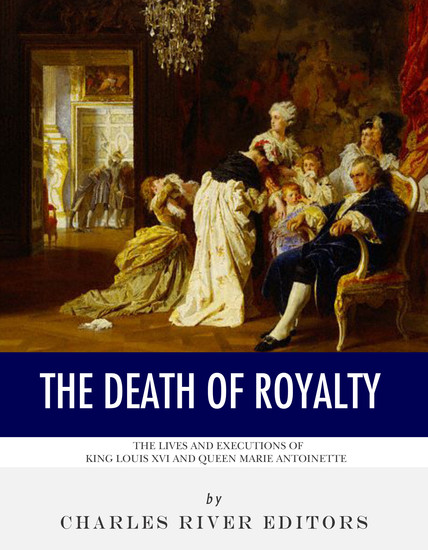
The Death of Royalty - The Lives and Executions of King Louis XVI and Queen Marie Antoinette - cover

The Death of Royalty - The Lives and Executions of King Louis XVI and Queen Marie Antoinette

Editors Charles River

Casa editrice: Charles River Editors

  • 0
  • 0
  • 0

Sinossi

“I die perfectly innocent of the so-called crimes of which I am accused. I pardon those who are the cause of my misfortunes.” – Louis XVI
 
Louis XVI is one of the most famous Kings of France, but for reasons he would have much rather avoided. Coming of age in the wake of the reign of the Sun King, Louis XIV, and his father, Louis XV, Louis XVI initially intended to be one of France’s most enlightened Kings. Instead, he was destined to be the only French King ever executed. Indeed, it is his death and his role in fomenting the French Revolution (along with his infamous Queen, Marie Antoinette) that continue to play the central role in Louis XVI’s legacy.   
 
The abrupt demise of Louis XVI and his reign capped a tumultuous but important historical period for both France and the rest of the world. It was Louis XVI’s wish to reform France in the mold of the Enlightenment and his failure to push those reforms against a reluctant aristocracy that emboldened and spurred those who would rebel against him. At the same time, his support for the American cause during the American Revolution in the 1770s was integral in securing that nation’s freedom and further adding to France’s financial woes. Ironically, France’s role in assuring the success of the American Revolution provided a hopeful example for those who would overthrow him less than 15 years later.
 
The same cautious conservatism that marred his reign in the eyes of so many ultimately led to the chain of events that made him a victim of the guillotine. With French society in open revolt by the late 1780s, the King appeared indecisive at a number of crucial moments, including during a famous attempted escape that was thwarted at Vergennes, and he had to literally run for his life when a mob stormed the royal palace at Tuileries. Soon after, he was stripped of his dignity and his royal name, convicted of high treason in a sham trial as Citizen Louis Capet. Ironically, in death, some historians have asserted that his execution and the sympathy it engendered helped bring about the Restoration a generation later.
 
Throughout history, a countless number of historical figures have had their lives overshadowed by the myths and legends that surround them to the extent that their legacy comes to define them. In French history, this is truer of Marie Antoinette than just about everyone else. Nearly 220 years after she was put to the guillotine, Marie Antoinette is more famous than ever, fairly or unfairly coming to epitomize royalty and everything that was wrong with it.  
 
As France slid toward its own Revolution, rumors and innuendo against the queen took hold, and she was accused of being promiscuous and even defrauding a jeweler in what became known as the “Diamond Necklace Affair”. Though the rumors had no basis in truth, they were widely accepted and eventually used as partial justification for her execution. By 1792, with the Revolution in full swing, the Royal Family’s attempt to escape Paris was thwarted, and in January 1793, Louis XVI lost his head at the hands of the Jacobins. With her own health failing, the Queen herself was tried the following October, accused of sexually abusing the sickly Dauphin. Given that she had spent the last few years of her life carefully doting on her children at the expense of almost everything else, it was a particularly heinous accusation. On October 16, 1793, Antoinette herself was executed at the guillotine.
 
Since her death, Marie Antoinette has been the subject of sharp historical debate over whether she was actually a catalyst in the French Revolution or simply an insignificant scapegoat who was unfairly made a target. At the same time, the one thing everybody associates with Antoinette is the phrase “Let them eat cake”, a spoiled and ignorant comment supposedly made in response to being informed that the peasants had no bread. 
Disponibile da: 06/05/2025.
Lunghezza di stampa: 71 pagine.
Altri libri che potrebbero interessarti

  • Liberty Equality Fashion - The Women who Styled the French Revolution - cover

    Liberty Equality Fashion - The...

    Anne Higonnet

    • 0
    • 0
    • 0
    Joséphine Bonaparte, future Empress of France; Térézia Tallien, the most beautiful woman in Europe; and Juliette Récamier, muse of intellectuals, had nothing left to lose. After surviving incarceration and forced incestuous marriage during the worst violence of the French Revolution of 1789, they dared sartorial revolt. Together, Joséphine and Térézia shed the underwear cages and massive, rigid garments that women had been obliged to wear for centuries. They slipped into light, mobile dresses, cropped their hair short, wrapped themselves in shawls, and championed the handbag. Juliette made the new style stand for individual liberty. 


    The erotic audacity of these fashion revolutionaries conquered Europe, starting with Napoleon. Everywhere a fashion magazine could reach, women imitated the news coming from Paris. It was the fastest and most total change in clothing history. Two centuries ahead of its time, it was rolled back after only a decade by misogynist rumors of obscene extravagance. 


    New evidence allows the real fashion revolution to be told. This is a story for our time: of a revolution that demanded universal human rights, of self-creation, of women empowering each other, and of transcendent glamor. 


    This audiobook includes bonus lectures from the author's "Clothing" course she teaches as professor of art history at Barnard College, Columbia University.
    Mostra libro
  • A Rare Recording of Film Icon Anne Baxter - cover

    A Rare Recording of Film Icon...

    Anne Baxter

    • 0
    • 0
    • 0
    Granddaughter of renowned architect Frank Lloyd Wright, Anne Baxter, born in Michigan City, IN, (May 7, 1923 - December 12, 1985) was a star of Hollywood films, Broadway productions, and television series. She won a Best Supporting Actress Academy Award and a Golden Globe in 1947 for The Razor's Edge, was nominated for a Best Actress Oscar in 1951 for All About Eve, and received an Emmy nomination in 1969. The following is from an interview in 1985.
    Mostra libro
  • Death in Old Mexico - The 1789 Dongo Murders and How They Shaped the History of a Nation - cover

    Death in Old Mexico - The 1789...

    Nicole von Germeten

    • 0
    • 0
    • 0
    In a Mexico City mansion on October 23, 1789, Don Joaquín Dongo and ten of his employees were brutally murdered by three killers armed with machetes. Investigators worked tirelessly to find the perpetrators, who were publicly executed two weeks later. Labelled the "crime of the century," these events and their aftermath have intrigued writers of fiction and nonfiction for over two centuries. Using a vast range of sources, Nicole von Germeten recreates a paper trail of Enlightenment-era greed and savagery, and highlights how the violence of the Mexican judiciary echoed the acts of the murderers. The Spanish government conducted dozens of executions in Mexico City's central square in this era, revealing how European imperialism in the Americas influenced perceptions of violence and how it was tolerated, encouraged, or suppressed. An evocative history, Death in Old Mexico provides a compelling new perspective on late colonial Mexico City.
    Mostra libro
  • Amazon Book Description Hacks - An Author's Guide to Boosting Your Ranking and Sales - cover

    Amazon Book Description Hacks -...

    Alex Wong

    • 0
    • 0
    • 0
    How to Create Compelling Amazon Book Descriptions That Boost Your Ranking, Sales, and Profits 
    Are you an author that is struggling to make an impact? 
    Is the competition strong and eating into your sales? 
    Do you want to learn their secrets and beat them at their own game? 
    Writing books and selling them has never been easier. With online platforms, like Amazon, almost anyone can write a book and publish it for a worldwide audience to read. But writing and publishing is one thing; making sales is another altogether. 
    Inside the pages of Amazon Book Description Hacks: An Author’s Guide to Boosting your Ranking and Sales, you will discover the secrets that others already know and put to good use, like: 
    •	The secret to standing out on Amazon 
    •	How to learn about your customers 
    •	How to rank your books 
    •	10+ FREE resources for finding keywords 
    •	Tips to optimize your search terms  
    •	How to write compelling book descriptions 
    •	Writing an effective headline/tagline 
    •	Formatting book descriptions 
    •	Action plans to practice what you learn 
    •	And much more… 
    This comprehensive guide teaches authors how to write and optimize their Amazon book descriptions and listings. Suitable for both nonfiction and fiction books, it includes many examples and tips that are designed so you can quickly implement them to get results right away.  
    So, if you want better sales for your book, look no further and get a copy of Amazon Book Description Hacks now! Get it now!
    Mostra libro
  • Skirts - Fashioning Modern Femininity in the Twentieth Century - cover

    Skirts - Fashioning Modern...

    Kimberly Chrisman-Campbell

    • 0
    • 0
    • 0
    In a sparkling social history, Skirts traces the shifting roles of women over the twentieth century through the era's most iconic and influential dresses. 


    While the story of women's liberation has often been framed by the growing acceptance of pants over the twentieth century, the most important and influential female fashions of the era featured skirts. Suffragists and soldiers marched in skirts; the heroines of the Civil Rights Movement took a stand in skirts. As women made strides towards equality in the vote, the workforce, and the world at large, their wardrobes evolved with them. 


    Kimberly Chrisman-Campbell's Skirts looks at the history of twentieth-century womenswear through the lens of game-changing styles like the little black dress and the Bar Suit, as well as more obscure innovations like the Taxi dress or the Pop-Over dress, which came with a matching potholder. These influential garments illuminate the times in which they were first worn—and the women who wore them—while continuing to shape contemporary fashion and even opening the door for a genderfluid future of skirts. At once an authoritative work of history and a delightfully entertaining romp through decades of fashion, Skirts charts the changing fortunes, freedoms, and aspirations of women themselves.
    Mostra libro
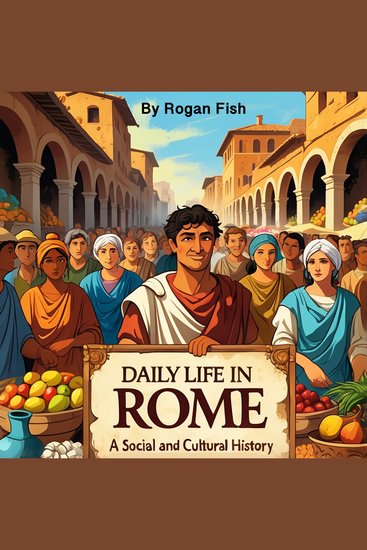
  • Daily Life in Rome - A Social and Cultural History - cover

    Daily Life in Rome - A Social...

    Rogan Fish

    • 0
    • 0
    • 0
    The foundation of Roman society was built upon a complex hierarchy that influenced daily life, social interactions, and political structures. At its core, the Roman family served as the most fundamental unit, shaping personal identity, social standing, and economic stability. The paterfamilias, or male head of the household, wielded significant authority over his family, including his wife, children, and even enslaved individuals. Roman families emphasized duty, tradition, and respect for elders, with ancestral lineage playing a crucial role in societal reputation. Women, while largely confined to domestic roles, could exert influence within the household and, in some cases, in business affairs. Marriage alliances were also instrumental in forging political and social ties, reinforcing the interconnected nature of Roman society. 
    Beyond the family, Roman society was stratified into distinct classes, each with its own privileges and restrictions. At the top were the patricians, an elite group of aristocratic families who traditionally held political power. Their wealth and influence allowed them to dominate the Senate and other governing bodies. Below them were the plebeians, a broad class of commoners that included farmers, artisans, and merchants. Although they had fewer political rights in the early Republic, the plebeians gradually gained influence through social and political struggles, such as the Conflict of the Orders. The lowest tier of society consisted of enslaved individuals and freedmen. Slaves were often prisoners of war or those born into servitude, playing essential roles in both households and large-scale economic activities. Freedmen, formerly enslaved individuals who had gained their freedom, occupied an intermediate status, often working as skilled laborers or entrepreneurs while still facing social limitations.
    Mostra libro