Unisciti a noi in un viaggio nel mondo dei libri!
Aggiungi questo libro allo scaffale
Grey
Scrivi un nuovo commento Default profile 50px
Grey
Iscriviti per leggere l'intero libro o leggi le prime pagine gratuitamente!
All characters reduced
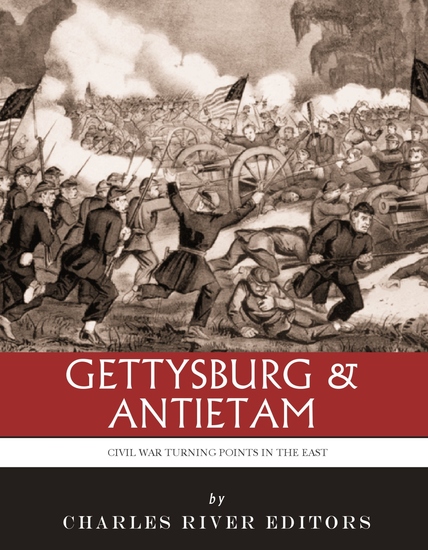
The Civil War Turning Points in the East - The Battle of Antietam and the Battle of Gettysburg - cover

The Civil War Turning Points in the East - The Battle of Antietam and the Battle of Gettysburg

Editors Charles River

Casa editrice: Charles River Editors

  • 0
  • 0
  • 0

Sinossi

The bloodiest day in American history took place on the 75th anniversary of the signing of the Constitution. On September 17, 1862, Robert E. Lee’s Confederate Army of Northern Virginia fought George McClellan’s Union Army of the Potomac outside Sharpsburg along Antietam Creek. That day, nearly 25,000 would become casualties, and Lee’s army would barely survive fighting the much bigger Northern army. Although the battle was tactically a draw, it resulted in forcing Lee’s army out of Maryland and back into Virginia, making it a strategic victory for the North and an opportune time for President Abraham Lincoln to issue the Emancipation Proclamation, freeing all slaves in the rebellious states.
 
For those reasons, Antietam is remembered as one of the major turning points of the Civil War, but it is often overlooked that the bloody battle only represented the climactic culmination of a 3 week campaign that saw George McClellan cautiously pull a fragmented Union army together and begin tracking Lee’s army into Maryland. Sizing up McClellan, Lee had split his army up during its invasion, including sending Stonewall Jackson’s men to Harpers Ferry, but the whole course of the campaign and possibly the war changed when the Union Army somehow found a copy of Lee’s marching orders, telling them where the Confederate army would be and when. To Lee’s surprise, McClellan’s army began advancing far more rapidly, including attacking them at South Mountain before cornering them along Antietam Creek outside of Sharpsburg.
 
Without question, the most famous battle of the American Civil War took place outside of the small town of Gettysburg, Pennsylvania, which happened to be a transportation hub, serving as the center of a wheel with several roads leading out to other Pennsylvanian towns. From July 1-3, Robert E. Lee’s Confederate Army of Northern Virginia tried everything in its power to decisively defeat George Meade’s Union Army of the Potomac, unleashing ferocious assaults that inflicted nearly 50,000 casualties in all.
 
Day 1 of the battle would have been one of the 25 biggest battles of the Civil War itself, and it ended with a tactical Confederate victory. But over the next two days, Lee would try and fail to dislodge the Union army with attacks on both of its flanks during the second day and Pickett’s Charge on the third and final day. Meade’s stout defense held, barely, repulsing each attempted assault, handing the Union a desperately needed victory that ended up being one of the Civil War’s turning points.
 
After the South had lost the war, the importance of Gettysburg as one of the “high tide” marks of the Confederacy became apparent to everyone, making the battle all the more important in the years after it had been fought. While former Confederate generals cast about for scapegoats, with various officers pointing fingers at Robert E. Lee, James Longstreet, and James Stuart, historians and avid Civil War fans became obsessed with studying and analyzing all the command decisions and army movements during the entire campaign. Despite the saturation of coverage, Americans refuse to grow tired of visiting the battlefield and reliving the biggest battle fought in North America.
 
The Civil War Turning Points in the East comprehensively covers the entire Pennsylvania campaign, analyzes the decisions made by the battles' most important leaders, and explains the aftermath of the Union victory and the legacies that were made and tarnished by the battles. Along with bibliographies, maps of the battles, and pictures of important people and places, you will learn about the battles like you never have before.
Disponibile da: 02/05/2025.
Lunghezza di stampa: 132 pagine.
Altri libri che potrebbero interessarti

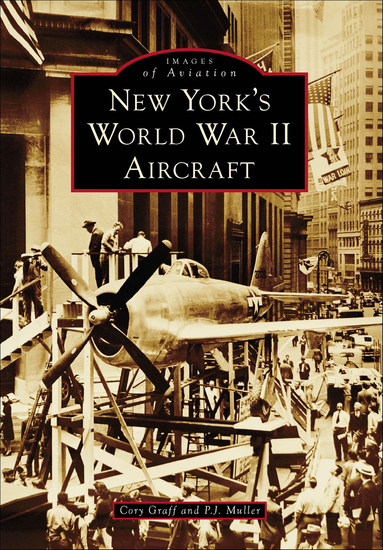
  • New York's World War II Aircraft - cover

    New York's World War II Aircraft

    Cory P. Graff, P.J. Muller

    • 0
    • 0
    • 0
    New York State was a center of industry during World War II. New York aviation companies designed many of the greatest combat aircraft of the era, and bustling armies of women and men helped quickly churn them out by the thousands. More than one fourth of all US warplanes came from New York drawing boards during the war. These planes saw combat service everywhere, holding the line in the deserts of North Africa and flying from aircraft carriers plying the vast Pacific Ocean. Others operated over the frozen tundra of Alaska and Siberia. New York aircraft flew tons of fuel, ammunition, and supplies over the treacherous Himalayan Mountains into China, relentlessly hounded enemy submarines and ships, and battered Axis strongholds all the way to victory.
    Mostra libro
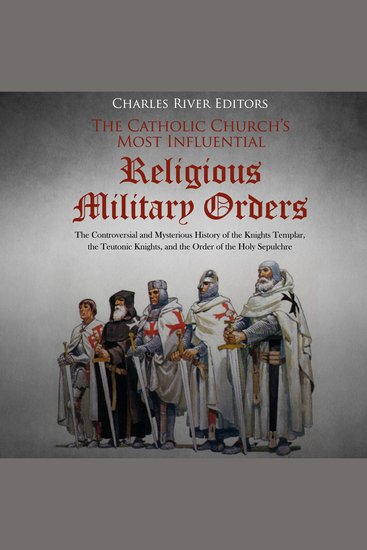
  • Catholic Church’s Most Influential Religious Military Orders The: The Controversial and Mysterious History of the Knights Templar the Teutonic Knights and the Order of the Holy Sepulchre - cover

    Catholic Church’s Most...

    Editors Charles River

    • 0
    • 0
    • 0
    For centuries, Christians and Muslims were embroiled in one of the most infamous territorial disputes of all time, viciously and relentlessly battling one another for the Holy Land. In the heart of Jerusalem sat one of the shining jewels of the Christian faith, the Church of the Holy Sepulchre. Legend has it that this was where their Savior had been buried before his fabled resurrection. What was more, it was said to house the very cross Jesus Christ had died upon. It was for precisely these reasons that fearless pilgrims, near and far, risked their lives and made the treacherous trek to Jerusalem.  
    	The Order of the Temple of Solomon, also known as the Templars or the Knights Templar, is one of the best-known and least-understood groups in history. They appear prominently in everything from novels (The Da Vinci Code) to films (as the Knights of the Cruciform Sword in Indiana Jones and the Last Crusade) to videogames (Assassin's Creed). In these stories, they are a sinister cult that manipulated historical events since the Middle Ages, via intimidation and assassination. They are usually connected to the Freemasons and, sometimes, to other historical cults like the Hindu Thuggees. 
    	The knights of the Teutonic Order have since been compared to the surreal creature that appeared to the biblical Ezekiel, one that bore 2 faces – one of a man's, and one of a lion's. The human side of the creature is said to symbolize the order's charity, whereas the lion was a metaphor for its valor and gallant spirit, which they relied on to vanquish the heathens of the world. 	Like other secretive groups, the mystery surrounding these military orders helped their legacies endure. While some conspiracy theorists attempt to tie the groups to other alleged secret societies like the Illuminati, other groups have tried to assert connections with them to bolster their own credentials.
    Mostra libro
  • Reflections on Happiness - cover

    Reflections on Happiness

    Emilie du Châtelet

    • 0
    • 0
    • 0
    Reflections on Happiness by Gabrielle Émilie Le Tonnelier de Breteuil, Marquise du Châtelet, is a philosophical essay exploring the nature of happiness and its relationship to human life. Written in the 18th century, the work reflects the marquise's deep engagement with the intellectual currents of her time, particularly the Enlightenment. In this piece, she examines the concept of happiness, questioning what it truly means to live a fulfilled and meaningful life. 
    Du Châtelet argues that happiness is not simply a passive state of contentment but is closely linked to the pursuit of reason, virtue, and intellectual growth. She critiques the idea that material wealth or external circumstances alone can bring lasting happiness, suggesting instead that a person’s inner life—shaped by rational thought, self-control, and personal development—plays a crucial role in achieving fulfillment. Moreover, she posits that happiness is a complex and individual experience, shaped by both reason and emotions, and that it is more sustainable when it is aligned with one’s own nature and values. 
    Throughout the work, du Châtelet blends insights from philosophy, science, and personal reflection, offering a nuanced understanding of happiness as both a goal and a process. The essay reflects her belief in the power of human agency and the importance of intellectual and emotional balance in the pursuit of a meaningful life.
    Mostra libro
  • Knowledge and Learning are Two Different Things - Eight Public Meetings with Young People Claremont Colleges USA 1968 - cover

    Knowledge and Learning are Two...

    Jiddu Krishnamurti

    • 0
    • 0
    • 0
    A radical transformation in the psyche itself," 8 November 1968. Duration: 80 minutes.To communicate we must know that the word is not the thing and also be in that state of mind whose quality is attention, care. That can take place only if we are serious.We are the world, and the world is us. To bring about a radical transformation, which is so essential in society, there must be radical transformation in ourselves.Analysis of violence does not end violence, nor is violence ended by thinking of nonviolence.There is no teacher outside, no saviour, no master; you yourself have to change, and therefore you have to learn to observe, to know yourself.Knowledge and learning are two different things.What is this silence you talk about? The silence that I am experiencing comes and goes."Thought is the cause of fear," 10 November 1968. Duration: 76 minutes.Though we have plenty of energy, apparently we lack the drive, enthusiasm, vitality to bring about a change in ourselves.As long as there is fear, there must be violence, aggression, anger, hatred. Thought is the source of fear.Is it possible to live everyday life without thought interfering?
    Mostra libro
  • Mars and Venus in Love - cover

    Mars and Venus in Love

    John Gray

    • 0
    • 0
    • 0
    Straight from the heart—real-life couples share inspiring, edifying stories of Mars and Venus in love. 
    Millions of readers have learned about relationships from John Gray's previous bestsellers, such as Men Are from Mars, Women Are from Venus; Mars and Venus on a Date; and Mars and Venus in the Bedroom. Inspired by this enthusiasm, Gray asked a number of readers to share their own stories of how they've put his principles to work in their relationships. The result is this amazing collection of first-person accounts—along with Gray's own enlightening commentary—that will have you laughing, crying, and nodding in recognition. 
    Gray's contributors answer such questions as:What problems have you had in your relationship, and how have you overcome them?What special things do you and your partner do for each other?How do you best communicate with each other?How do you practice what you've learned?How does your love feel different now from how it felt before? 
    Their answers illustrate more eloquently than any textbook how to use Gray's advice and counsel to create your own fulfilling, healthy, and loving relationships.
    Mostra libro
  • Tenskwatawa: The Life of the Shawnee Prophet and Tecumseh’s Brother - cover

    Tenskwatawa: The Life of the...

    Editors Charles River

    • 0
    • 0
    • 0
    As settlers continued to encroach further west, the Shawnee, who were attempting to put together a confederacy of Native Americans to resist, stood firm and ready to fight them. Before America fought Britain in the War of 1812, they were engaged in Tecumseh’s War around the Great Lakes. The fighting made him famous and made a military hero (and eventually a president) out of William Henry Harrison, whose victory at Tippecanoe is considered the end of that war.  
    	Despite being one of their most tenacious opponents, Tecumseh almost immediately became a celebrated folk hero and respected leader in American history, all while continuing to be one of the most poignant symbols of resistance among Native Americans. He continues to be a household name across the United States today, nearly 200 years after his death.  
    	What makes Tecumseh’s legacy ironic is that the Shawnee were nominally led by a different man altogether, and that man just so happened to be Tecumseh’s brother. Lalawethika’s early life mostly consisted of abject failures, and he became an alcoholic, but in one of his alcohol-soaked stupors, he began to have visions of the Master of Life that turned him into the Open Door, the prophet named Tenskwatawa. It was Tenskwatawa who brought a new vision to the Shawnee, transforming himself from an object of pity and contempt into a religious leader who had thousands of followers. When the Americans fought at Tippecanoe, the gathering of Native Americans who they were attempting to disperse had congregated at a place colloquially known as Prophetstown. 
    Mostra libro