Join us on a literary world trip!
Add this book to bookshelf
Grey
Write a new comment Default profile 50px
Grey
Subscribe to read the full book or read the first pages for free!
All characters reduced
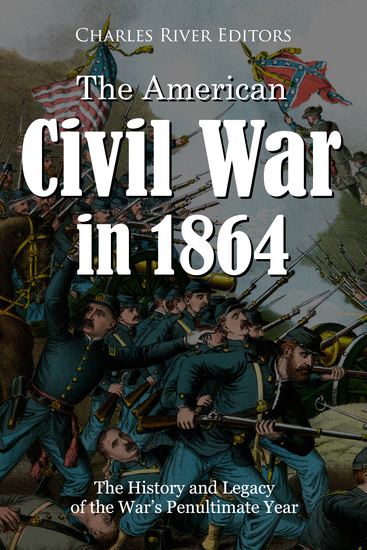
The American Civil War in 1864 - The History and Legacy of the War’s Penultimate Year - cover

The American Civil War in 1864 - The History and Legacy of the War’s Penultimate Year

Editors Charles River

Publisher: Charles River Editors

  • 0
  • 0
  • 0

Summary

With Robert E. Lee’s Army of Northern Virginia continuing to frustrate the Union Army of the Potomac’s attempts to take Richmond in 1862 and 1863, President Lincoln shook things up by turning command of all the armies of the United States to Ulysses S. Grant in March 1864. , Lee had won stunning victories at battles like Chancellorsville and Second Bull Run by going on the offensive and taking the strategic initiative, but Grant and Lincoln had no intention of letting him do so anymore. Attaching himself to the Army of the Potomac, Grant ordered Army of the Potomac commander George Meade, "Lee's army is your objective point. Wherever Lee goes, there you will go also."
 
From May 5-7, the two most famous generals of the Civil War squared off for the first time. The 100,000 strong Army of the Potomac was double the size of Lee’s hardened but battered Army of Northern Virginia. It was a similar position to the one George McClellan had in 1862 and Joe Hooker had in 1863, and Grant’s first attack, at the Battle of the Wilderness, followed a similar pattern. Nevertheless, Lee proved more than capable on the defensive.
 
The Battle of the Wilderness was fought so close to where the Battle of Chancellorsville took place a year earlier that soldiers encountered skeletons that had been buried in shallow graves in 1863. Moreover, the  woods were so thick that neither side could actually see who they were shooting at, and whole brigades at times got lost in the forest. Both armies sustained heavy casualties while Grant kept attempting to move the fighting to a setting more to his advantage, but the heavy forest made coordinated movements almost impossible.
 
On May 5 and May 6, both armies attempted desperate attacks and counterattacks to strike a knockout blow, but they were ultimately unable to dislodge each other. Given the terrain and the nature of the fighting, it was one of the most horrendous battles of the war, with some wounded men literally burning to death in fires ignited by the battle that sparked the nearby underbrush and spread rapidly. The defending Confederates technically won a tactical victory by holding their ground, but they did so at a staggering cost, inflicting 17,000 casualties on the Army of the Potomac and suffering 11,000 of their own.
 
On May 7, Grant disengaged his army from the battle. His objective had been frustrated by Lee’s skillful defense, the same position as Hooker at Chancellorsville, McClellan on the Virginian Peninsula, and Burnside after Fredericksburg. His men got the familiar dreadful feeling that they would retreat back toward Washington, as they had too many times before. This time, however, Grant made the fateful decision to keep moving south, inspiring his men by telling them that he was prepared to “fight it out on this line if it takes all Summer.” The Battle of the Wilderness would only be the beginning of the Overland Campaign, not the end of it.
 
Despite the fierce fighting, Grant continued to push his battered but resilient army south, hoping to beat Lee’s army to the crossroads at Spotsylvania Court House, but Lee’s army beat Grant’s to Spotsylvania and began digging in, setting the scene for on and off fighting from May 8-21 that ultimately inflicted more casualties than the Battle of the Wilderness. In fact, with over 32,000 casualties among the two sides, it was the deadliest battle of the Overland Campaign.
 
Although the Battle of Spotsylvania technically lasted nearly 2 weeks, it is best remembered for the fighting that took place on May 12 at a salient in the Confederate line manned by Richard S. Ewell’s corps. Known as the Mule Shoe, a Union assault on the salient produced 24 hours of the most savage fighting conducted during the war, forever christening that point in the line as the Bloody Angle. 
Available since: 05/01/2025.
Print length: 279 pages.

Other books that might interest you

  • Recognize and Ward off Dark Psychology: How to Recognize Emotional Manipulation Expose a Personality Disorder and Lies and Skillfully Fend Off Manipulation Techniques - cover

    Recognize and Ward off Dark...

    Martina Richter

    • 0
    • 0
    • 0
    Do you feel manipulated and deceived? Do you trust people too easily and allow yourself to be blinded by them? Do you have the feeling that you always end up with the wrong people and end up being surprised by their cold-heartedness? Or have you caught a manipulator and want to understand their behavior? Then you have made the right decision by buying this guide.
    A dark side lurks in many people. They use psychological tricks to manipulate the people around them and play them off against each other. They use people cold-heartedly to achieve their own goals and rarely feel remorse or regret. Have you also had experiences with cold-hearted people and want to understand their behavior? This guide will give you answers to all your questions about dark psychology. You will learn all about the dark side of psychology. What constitutes it and how to recognize people with a dark side.
    Show book
  • The Parts of Him I Kept - The Gifts of My Father's Madness - cover

    The Parts of Him I Kept - The...

    Anonymous

    • 0
    • 0
    • 0
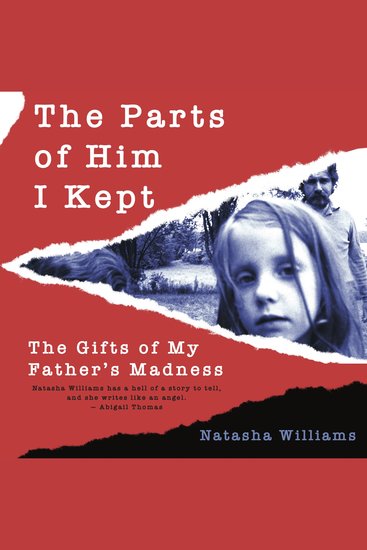
    William’s memoir, THE PARTS OF HIM I KEPT (Apprentice House. 2025), is an intimate account of a daughter’s coming of age in the face of her father’s schizophrenic unraveling. Williams investigates the limits of our medical and cultural understanding of schizophrenia while chronicling the shared burden and benefits of caring for a mentally ill family member. In the tradition of Ocean Vuong’s On Earth We Are Briefly Gorgeous and Robert Kolker’s Hidden Valley Road, this is one family’s story that asks us to consider the ways mental illness is as much a social issue as a biological condition and illuminates ways we find hope, and even thrive in the face of the extraordinary challenge of mental illness
    Show book
  • Shut Up and Sell Your First Book - 48 Ways to Market Your Way to Success - cover

    Shut Up and Sell Your First Book...

    Natasa Denman

    • 0
    • 0
    • 0
    ·        Have you written a book and are keen to get it in as many hands as possible? 
    ·        Do you want to know how to avoid ending up with a garage full of books? 
    ·        Have you tried a few strategies that you read online without success? 
    As a self-published author, if you want to people to notice and buy your book you need to have a plan. In Shut Up and Sell Your First Book international book mentor Natasa Denman shares her easy-to-follow blueprint for book sales success. Following on from Shut Up and Write Your First Book and Ultimate 48 Hour Author, this trilogy is essential reading for first-time authors. 
    Natasa has written, sold, and profited from all 12 of her own books - and she has helped over 500 clients from all around the world to do the same thing. She knows a thing or two about the book industry and in this book she unpacks 48 unique ways that you can market and sell copies of your book, with most involving little or no cost to do so.  
    Utilising resources that are readily available to us all, Natasa shares her intimate knowledge of the buying habits of book purchasers as well as guiding you through ways to increase your online presence to maximise your reach. 
    While getting your book in bookstores is many people's idea of success, when it comes to monetising your book, this isn't an option for most self-published authors. But, as Natasa explains, there are lots of other ways you can sell your book and make a profit, and in this book you'll find out how. 
    So, if you are ready to SELL YOUR FIRST BOOK, it's time to Shut-Up and get to it!
    Show book
  • The Sicilian Journey - cover

    The Sicilian Journey

    MARCELLO BONI'

    • 0
    • 0
    • 0
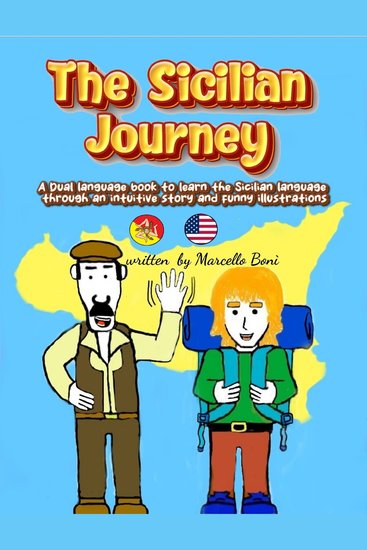
    A dual language English / Sicilian book easy to use. Good introduction for beginners and ideal manual for language learners. It also includes fast grammar tricks.
    Show book
  • Wartime Britain - The Darkest Hours of World War 2 in Great Britain - cover

    Wartime Britain - The Darkest...

    Liam Dale

    • 0
    • 0
    • 0
    Join The History Journals for an hourly historical exploration of the war's diverse aspects. In this edition, uncover the impact of Hitler's forces on the people of Great Britain. 
     
    Travel back to London in 1940, and while familiar landmarks like Buckingham Palace and St. Paul's Cathedral still stand tall, you'd witness a city and a nation under siege. This year marked a stark realization for the people of Great Britain as they faced the impact of a world at war for the second time in the 20th century. 
     
    Winston Churchill's resounding leadership resonated with the nation, and as he called upon the British people to rally to the battle cry, they responded with unwavering determination. It was, without a doubt, the finest hour of a nation. 
     
    Explore: 
    - Winston Churchill's timely leadership 
    - British wartime economizing 
    - The coveted Christmas gift during wartime 
    - The Treaty of Versailles as a precursor to WW2
    Show book
  • Information Science - The Basics - cover

    Information Science - The Basics

    Judith Pintar, David Hopping

    • 0
    • 0
    • 0
    Information Science: The Basics provides an accessible introduction to the multifaceted field of Information Science (IS). 


    Inviting listeners to explore a modern field of study with deep historical foundations, the book begins by considering the complexities of the term "information" and the information life cycle from classification to preservation. Each chapter examines a different area within IS, surveying its history, technologies, and practices with a critical eye. This interdisciplinary field incorporates a wide range of approaches which it shares with humanities, social science, and technology fields. What makes IS unique is its emphasis on the connections between information, technology, and society. The need to share information more effectively in response to social, environmental, and biomedical challenges has never been so urgent; the volume discusses the risks as well as benefits that come with the emerging technologies that make it possible. The book also explores how IS, with its long-standing commitment to intellectual freedom and digital inclusion, and its keen attention to the protection of privacy, data ethics, and algorithmic transparency, can contribute to the creation of a more open and equitable society.
    Show book